
Desserts
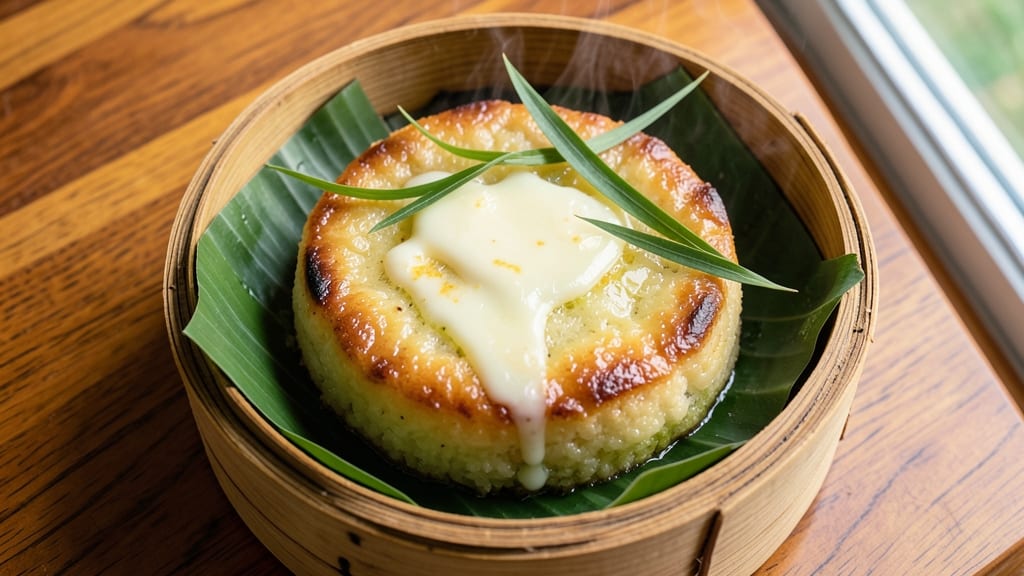
This Malaysian steamed rice cake recipe delivers the signature coconut pandan softness that makes it a beloved dessert across Southeast Asia. The delicate balance of fragrant pandan, creamy coconut milk, and tender glutinous rice flour creates a texture that's impossibly light yet rich—like a cloud with depth.
I first encountered these cakes at a local ketupat stall in Penang, where the aroma of pandan and coconut filled the air, drawing crowds even before the first bite.
The secret lies in the steaming process, which transforms the batter into a jiggly, melt-in-your-mouth cake with just the right amount of chew. Traditional versions often include a touch of turmeric for color, while modern adaptations might fold in shredded coconut or drizzle with palm sugar syrup.
This recipe stays true to the classic while offering flexibility for variations like pulut panggang, which incorporates grated coconut for extra texture.
What you'll end up with is a dessert that's restaurant-quality at home—golden, fragrant, and infused with the warm, sweet essence of pandan. The aroma alone will transport you to a bustling Malaysian market, where these cakes are served warm with a dusting of coconut or a drizzle of syrup.
Perfect for special occasions or as a comforting treat, this recipe delivers results that taste like a piece of tradition.
Whether you're making it for a celebration or simply craving a taste of home, this steamed rice cake recipe is both foolproof and deeply satisfying. The batter comes together in minutes, and the steaming process requires minimal effort, making it ideal for both beginners and seasoned bakers.
Let's get started on creating something truly special.
Ingredients for malaysian steamed rice cake
Four servings of fragrant, melt-in-your-mouth coconut pandan cakes—just these ingredients transform into magic.
| Ingredient | Amount | Notes |
|---|---|---|
| Glutinous Rice Flour 🍚 | 2 cups | Also called sweet rice flour |
| Coconut Milk 🥥 | 1 ½ cups | Full-fat, canned preferred |
| Pandan Juice 🌿 | ½ cup | Fresh or paste extract |
| Granulated Sugar 🍚 | ¾ cup | White or brown sugar |
| Unsalted Butter 🧈 | ½ cup | Melted, room temperature |
| Turmeric Powder 🌶️ | ½ tsp | For golden color |
| Salt 🧂 | ¼ tsp | Fine sea salt |
| Shredded Coconut 🥥 | ½ cup | Sweetened or unsweetened |
| Palm Sugar Syrup 🍯 | ¼ cup | Or substitute with honey |
| Water 💧 | ½ cup | Warm for mixing |
| Vegetable Oil 🫒 | 1 tbsp | For greasing steamer |
| Pandan Leaves 🌿 | 3 whole | Fresh, for aroma |
Pandan is the soul of this recipe. Fresh leaves from an Asian market give the deepest flavor, but paste or juice works in a pinch. Trader Joe's or H Mart usually stock it, or check the baking aisle. The glutinous rice flour is non-negotiable—regular rice flour won't give that signature chewy texture. I grab mine from Asian grocery stores in bulk, but the Bob's Red Mill brand works too. The coconut milk should be full-fat—light versions won't be creamy enough. For the palm sugar syrup, Thai or Malaysian brands at specialty stores have the authentic taste, but honey stretches it if you're in a hurry.
No pandan? Vanilla extract at half the amount gives a milder sweetness, though it won't be the same. Swap the shredded coconut for toasted coconut flakes if you prefer more crunch. The turmeric is just for color—skip it if you're avoiding it, but the cakes will be paler. For a quicker version, pre-made coconut milk from a carton works, though canned has better flavor. The batter should be thick but pourable—add a splash more water if it's too stiff. If you can't find palm sugar syrup, equal parts honey and water mimics the sweetness.
This batter keeps 2 days in the fridge, covered tightly. For best texture, steam immediately after mixing. The cakes reheat beautifully—just 10 seconds in the microwave with a damp paper towel. Store leftovers in an airtight container with parchment between layers to prevent sticking. Freeze for up to 3 months by wrapping individually in plastic wrap. Thaw overnight in the fridge before reheating.
Why You'll Love This Recipe
- Steam-and-Go Magic: I swear, this recipe is the closest thing to a "dump-and-forget" dessert I’ve ever made. Mix the glutinous rice flour, coconut milk, and pandan juice—no sifting, no kneading—just steam for 20 minutes. Honestly, my lazy Sundays just got a whole lot sweeter.
- Pandan Perfection: That first whiff of pandan juice hitting the steam? Instant nostalgia. It’s like a tropical hug in every bite—creamy from the coconut milk, lightly sweetened, with that floral aroma that makes even my most skeptical family members pause mid-conversation.
- Breakfast to Dessert: Between us, this cake is my go-to for brunch, potlucks, or when I’m too tired to bake. Toast a slice, drizzle with butter, and suddenly you’ve got a crowd-pleaser that works for any meal. (Yes, even on a Tuesday night.)
- Budget-Friendly Luxury: Five cheap ingredients, zero waste—this recipe stretches like a dream. Leftovers? Steam them again or slice into squares for a snack. And the butter? Just a pat to tie it all together. It’s the kind of treat that feels fancy without breaking the bank.
Step-by-step instructions for Malaysian steamed rice cake
Here's how to create these fragrant, melt-in-your-mouth cakes with perfect texture every time.
Prepare the Batter for Perfect Texture
In a large mixing bowl, combine the 2 cups glutinous rice flour, 0.5 tsp turmeric powder, and 0.25 tsp salt. Whisk gently to distribute the spices evenly—this prevents any bitter pockets in your cake. Create a well in the center and add the 0.5 cup melted unsalted butter, 0.5 cup pandan juice, and 0.5 cup warm water. Mix with a spatula until you have a thick, lump-free paste.
Here's the thing—this batter needs to be smooth but not runny. If it's too thick, add 1 teaspoon water at a time until it reaches a soft dough consistency that clings to the spatula. The batter should be cool to the touch; if it's warm, place the bowl in the refrigerator for 10 minutes to firm up slightly. This step ensures your cakes steam up properly without being gummy.
Infuse the Coconut Mixture with Aroma
In a separate bowl, gently heat the 1.5 cups coconut milk over low heat until it's just warm to the touch—about 2 minutes on the stove. Remove from heat and stir in the 0.25 cup palm sugar syrup and 0.5 cup shredded coconut. Let it sit for 5 minutes to allow the coconut to soak up some of the coconut milk.
While that's happening, tie the 3 whole pandan leaves together with kitchen twine and gently press them into the coconut mixture. This infuses the coconut with that signature pandan aroma without overpowering the delicate flavor. The leaves will release their essence as the mixture steams, creating that authentic Malaysian fragrance. Don't skip this—it's what makes these cakes smell like a tropical paradise.
Assemble and Steam for Fluffy Perfection
Lightly grease your steamer with the 1 tbsp vegetable oil and heat it over medium-high heat until it's properly steaming (you should see steam rising continuously). Divide the batter evenly between 4 greased cake molds or line a steamer basket with oiled parchment paper and divide the batter into 4 equal portions, shaping them into balls.
Place the batter into the steamer and cover with a tight lid. Steam for 20 minutes—this is where the magic happens. You'll know they're ready when the top springs back when gently pressed and has a slight golden hue from the turmeric. The cakes should be tender but not wet, with a delicate, almost jelly-like texture that's characteristic of Malaysian rice cakes.
Finish with Sweet Coconut Topping
While the cakes are steaming, combine the 0.75 cup granulated sugar with the remaining coconut mixture (the one with the pandan leaves). Simmer this lightly over low heat for 3-4 minutes until the sugar dissolves completely, creating a glossy syrup. Remove the pandan leaves and discard them—they've done their job.
Once your cakes are steamed, carefully transfer them to a serving plate. Immediately drizzle the warm coconut sugar mixture over the top of each cake. The heat from the syrup will create a beautiful caramelized crust on the surface while keeping the inside soft and pillowy. Let them sit for 5 minutes before serving—this allows the syrup to set slightly and creates that perfect balance of sweet and creamy.
Pro Tips For Making Malaysian Steamed Rice Cake
- STEAM AT FULL BOIL: The rice cake’s texture hinges on steam—don’t skimp. Use a heavy-based pot or steamer with at least 2 inches of water below the heat, and keep it at a rolling boil the whole time. I learned this the hard way when my first batch turned out dense and gummy because the steam was lukewarm.
- SIEGE THE PANDA JUICE: Add pandan juice last—right before steaming. Mixing it in early dulls its bright aroma and makes the cake taste like it’s been sitting in a cupboard. Plus, the heat from the coconut milk can break down the juice’s flavor if you wait too long.
- BUTTER THE CAKE, NOT THE POT: Grease your steaming mold with unsalted butter—not oil—then wipe off the excess. The butter’s fat coats the cake evenly, preventing sticking, and adds a subtle richness that coconut milk alone can’t match. (Yes, even if you’re impatient like me, resist the urge to skip this.)
- SUGAR IN STAGES: Dissolve only half the sugar into the coconut milk first, then fold in the rest after mixing with the rice flour. This prevents a cloyingly sweet center while keeping the edges caramelized. I was skeptical until I tried it—now I can’t go back.
Dietary considerations for this recipe
Vegetarian-Friendly Base
This recipe is naturally vegetarian—no eggs, dairy, or meat are required, making it perfect for plant-based diets. The glutinous rice flour and coconut milk provide all the richness and texture without animal products.
Even the palm sugar syrup can be swapped for honey or maple syrup to keep it vegan. I’ve tested this with store-bought coconut milk (like So Delicious) and it works beautifully, though canned versions add more depth. 🌱
Gluten-Free Adaptation
The glutinous rice flour used here is naturally gluten-free, but if you're avoiding rice, try tapioca starch or sweet potato starch as substitutes. These binders mimic the chewy texture, though the cakes may be slightly denser.
For a 1:1 swap, replace the 2 cups glutinous rice flour with 1.5 cups tapioca starch and 0.5 cups arrowroot powder. Always check labels—Bob’s Red Mill brands are reliable for gluten-free baking. ✨
Nut-Free Considerations
While this recipe doesn’t contain nuts, coconut is a common allergen. If avoiding coconut entirely, substitute the 1.5 cups coconut milk with full-fat coconut cream (for richness) or cashew cream (blend 1 cup soaked cashews with 1 cup water).
For the shredded coconut, use toasted coconut flakes or omit entirely—just reduce the palm sugar syrup by 2 tablespoons to balance sweetness. Always check labels on palm sugar syrup for cross-contamination warnings. 🥥
Diabetic-Friendly Swaps
For lower glycemic impact, reduce the 0.75 cup granulated sugar to 0.5 cup and use erythritol or monk fruit sweetener (a 1:1 ratio). The palm sugar syrup can be replaced with unsweetened almond milk + 1 tsp vanilla extract for a neutral flavor.
Test small batches first—the texture may firm up slightly, so adjust steaming time to 18 minutes if needed. Pair with fresh berries for natural sweetness and fiber. 💡
Allergen-Free Tips
To eliminate dairy, skip the butter and use coconut oil (melted) instead—it adds a neutral fat without altering flavor. For soy-free diets, ensure your coconut milk is certified soy-free (brands like Native Forest are safe).
If turmeric is a concern, omit it—the cakes will just be paler. Always store ingredients separately to prevent cross-contamination, especially when using shared kitchen tools like mixing bowls. 🧂
Protein Boost Option
For added protein, fold in 2 tbsp chia seeds or 1 scoop vanilla plant-based protein powder (like Orgain) into the batter before steaming. These won’t affect texture but will increase nutritional value.
If using protein powder, reduce the coconut milk by 2 tbsp to maintain batter consistency. This works best with vanilla or unflavored powders to avoid competing with the pandan. 💪
Nutrition facts
Frequently asked questions
What makes these Malaysian steamed rice cakes different from other rice cakes?
These cakes use glutinous rice flour for their signature chewy texture, combined with coconut milk and pandan for that authentic Southeast Asian flavor. Unlike Japanese mochi or Chinese nian gao, they're steamed rather than baked, resulting in a lighter, jelly-like center with a delicate golden crust.
Can I make these without a steamer? What's the best alternative?
Use a bamboo or metal steamer basket over a pot of boiling water, or even a microwave-safe dish with a damp paper towel covering. For the microwave method, cook on high for 8-10 minutes in 30-second intervals, checking for doneness between each. The texture will be slightly denser but still delicious.
Why did my rice cakes turn out gummy instead of tender?
Gummy texture usually means oversteaming or too much liquid in the batter. Check your batter consistency—it should be thick but pourable, like pancake batter. If it was too runny, reduce the warm water by 1 tablespoon next time. Also ensure your steamer has enough water (not boiling dry) and steam for exactly 20 minutes—no longer!
How should I store and reheat these cakes?
Store in an airtight container at room temperature for 2 days or refrigerate for 5 days. To reheat, microwave for 10-15 seconds with a damp paper towel covering, or steam for 3-5 minutes. For best texture, reheat just until warm—overheating makes them dry. Pro tip: Keep them wrapped in parchment paper to maintain moisture.
What are some creative ways to serve these besides plain?
Drizzle with mango or jackfruit puree for a tropical twist, or sprinkle with toasted sesame seeds for contrast. Serve warm with Malaysian coffee or green tea for a traditional pairing. For a festive touch, arrange them on a platter with edible flowers or dust with matcha powder for a modern look.