
Main Courses
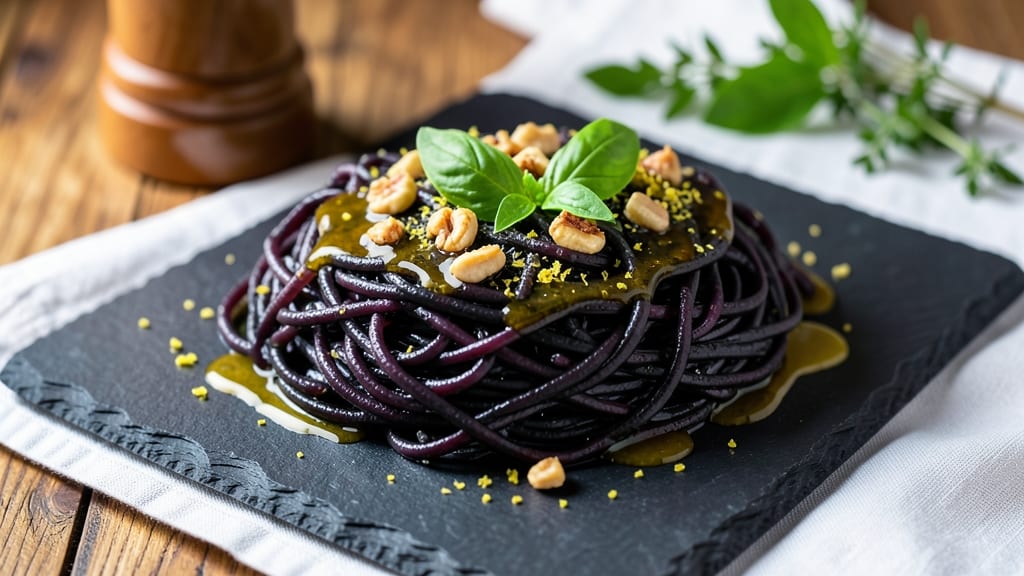
This black rice pasta recipe delivers restaurant-quality depth with its nutty earthiness and antioxidant power—all in just 25 minutes. The deep purple hue isn’t just striking; it’s packed with anthocyanins, the same superfood found in blueberries.
What sets this apart is how the pasta’s chewy texture absorbs bold sauces like pesto or agrodolce while keeping its vibrant color intact.
Start with al dente black rice pasta (cook time: 10-12 minutes), then toss it with a sauce that balances its earthy notes—think creamy pesto with toasted pine nuts or a tangy agrodolce.
The key is finishing with fresh herbs (basil or parsley) to brighten the dish and elevate it to restaurant-quality presentation. Serve with roasted vegetables or a simple arugula salad for a complete, nutrient-packed meal.
Ingredients for black rice pasta
These nutrient-packed ingredients transform simple black rice pasta into an antioxidant-rich masterpiece.
| Ingredient | Amount | Notes |
|---|---|---|
| Black Rice Pasta 🍜 | 12 oz | Al dente texture preferred |
| Extra-Virgin Olive Oil 🫒 | ¼ cup | High-quality, fruity variety |
| Garlic Cloves 🧄 | 4 cloves | Freshly minced for aroma |
| Fresh Basil Leaves 🌿 | ½ cup | Packed, stems removed |
| Lemon Zest 🍋 | 1 tbsp | Brightens flavor profile |
| Lemon Juice 🍋 | 2 tbsp | Freshly squeezed |
| Pine Nuts 🥜 | ¼ cup | Toasted for nutty crunch |
| Vegetable Broth 💧 | 1 cup | Low-sodium preferred |
| Hemp Seeds 🌱 | 2 tbsp | For protein boost |
| Red Wine Vinegar 🍷 | 1 tbsp | Balances richness |
| Sea Salt 🧂 | 1 ½ tsp | Diamond Crystal preferred |
| Black Peppercorns 🌶️ | ½ tsp | Freshly cracked |
| Fresh Arugula 🥬 | 2 cups | For serving |
The black rice pasta is the foundation—look for brands like Barilla or Jovial that source high-quality black rice for maximum anthocyanin content. The deep purple hue fades with overcooking, so test for al dente at 10 minutes. For the pesto base, fresh basil and toasted pine nuts are non-negotiable; the nuts should be lightly browned for optimal flavor. Whole Foods or specialty Italian markets carry the best quality nuts, though Costco's bulk section works too. Fresh garlic and lemon zest elevate the dish's brightness, so don't skip these—organic garlic from the farmers' market has the most robust flavor.
No pine nuts? Walnuts or cashews toasted to the same level work beautifully, though the flavor shifts slightly. Substitute white wine vinegar at half the amount if red wine vinegar isn't available, though it'll be less complex. For extra protein, add 1/4 cup cooked lentils to the finished dish. The hemp seeds can be omitted if unavailable, but they provide that perfect crunch and omega-3 boost. When selecting arugula, choose young, vibrant leaves—older leaves get bitter. The vegetable broth should be homemade or a high-quality low-sodium brand like Pacific Foods to avoid sodium overload.
Store cooked pasta in an airtight container with a thin layer of olive oil on top to preserve its vibrant color for up to 3 days in the fridge. For longer storage, freeze portions for up to 3 months—thaw in cold water before reheating. The pesto components keep separately for 5 days in the fridge if stored properly: basil in a damp paper towel-wrapped bag, nuts in a sealed container. Assemble the dish just before serving to maintain its restaurant-quality presentation and vibrant colors.
Why You'll Love This Recipe
- No-Cook Sides Needed: That deep, nutty flavor from the black rice pasta carries the whole dish—no extra veggies or proteins required. I’ve served it as-is with just a sprinkle of flaky salt, and it’s still ridiculously satisfying.
- Garlic-Basil Magic: The moment the garlic sizzles in olive oil and those basil leaves hit the pan, your kitchen smells like a sunlit Italian terrace. Honestly, the lemon zest ties it all together—bright, fresh, and impossible to resist.
- Lunchbox Hero: Between us, this pasta reheats like a dream. Pack it cold for work or school—it holds up perfectly, and the black rice gives it that chef’s special look. My kids actually eat their lunches now.
- Pantry Staple Power: You’re already using olive oil, garlic, and basil? This recipe costs next to nothing to make. Plus, black rice pasta keeps for weeks in the pantry, so you’re not scrambling for last-minute ingredients.
Step-by-step instructions for black rice pasta with nutty earthiness
Transform antioxidant-rich black rice pasta into a vibrant, nutrient-packed dish with bold Mediterranean flavors.
Toast the Pine Nuts and Prepare Aromatics
Heat a small dry skillet over medium heat and add the 0.25 cup pine nuts. Toast them for 2-3 minutes, stirring constantly, until they turn a rich golden brown and emit a nutty fragrance. Remove immediately to prevent burning—they should be crisp yet still pliable. Let them cool slightly on a plate.
While the pine nuts toast, finely mince the 4 cloves garlic using a microplane or sharp knife. Pack the 0.5 cup fresh basil leaves into a bowl and set aside. This prep ensures your aromatics are ready when you need them, creating layers of flavor that elevate the dish.
Cook the Black Rice Pasta Al Dente
Bring a large pot of well-salted water to a rolling boil, using about 1.5 teaspoons sea salt (Diamond Crystal preferred). Add the 12 oz black rice pasta and cook for 1 minute less than the package instructions specify. Black rice pasta has a denser texture, so it requires careful timing to achieve al dente perfection.
Reserve 1 cup of pasta water before draining, as it contains starch that will help emulsify the sauce. Drain the pasta and return it to the pot, tossing immediately with 2 tablespoons hemp seeds and 1 tablespoon lemon zest. This step infuses the pasta with nutty richness and bright citrus notes while keeping it warm.
Build the Lemon-Vinegar Broth Base
In a separate saucepan, combine the 1 cup vegetable broth, 1 tablespoon red wine vinegar, and 0.5 teaspoon black peppercorns (freshly cracked). Bring to a gentle simmer over medium-low heat and let it reduce by half—about 3-4 minutes. This concentrated broth forms the backbone of your sauce, balancing acidity and depth.
Stir in the minced garlic and toasted pine nuts, simmering for another 1 minute until fragrant. The garlic should soften slightly but not brown, releasing its sweet, aromatic essence. Remove from heat and set aside, keeping the mixture warm.
Emulsify the Sauce and Finish
Return the cooked pasta to the pot and add the reduced broth mixture. Toss vigorously over low heat for 2 minutes, gradually incorporating 2 tablespoons lemon juice. The acidity brightens the dish while helping to emulsify the sauce. If the mixture looks too thick, add reserved pasta water 1 tablespoon at a time until it reaches a silky, clinging consistency.
Remove from heat and stir in the packed 0.5 cup fresh basil leaves, allowing them to wilt and release their aromatic oils. The sauce should now be vibrant green with flecks of toasted pine nuts and a glossy sheen. Taste and adjust seasoning with additional sea salt or lemon juice as needed.
Assemble and Serve Immediately
Divide the pasta among four plates, reserving the sauce. Toss each portion with a generous drizzle of 0.25 cup extra-virgin olive oil to enhance the dish's richness. Arrange the 2 cups fresh arugula on the side or as a bed for the pasta, adding a peppery contrast to the nutty, earthy flavors.
Serve immediately while the pasta is hot and the arugula retains its crisp texture. The combination of antioxidant-rich black rice, toasted pine nuts, and bright citrus creates a dish that's as visually striking as it is nutritious—a perfect balance of earthy depth and vibrant freshness.
Pro Tips For Making Black Rice Pasta
- Cook Al Dente, Not Mush: Black rice pasta turns to glue faster than you’d think—test a piece at the earliest suggested cook time, then pull it 1-2 minutes early. Undercooked pasta is easier to fix than overcooked; underdone black rice stays chewy and holds its deep color.
- Toast the Garlic Low: I used to blast garlic in olive oil until it burned—now I simmer it at low heat for 5-6 minutes until golden and sweet. High heat makes it bitter; patience here makes the whole dish sing.
- Zest First, Juice Later: Grate lemon zest before cooking and toss it into the pasta water—it infuses better than adding it at the end. Save the juice for finishing; fresh zest brightens the dish without overpowering the basil.
- Reserve That Starch: Before draining, scoop out a ladle of pasta water (about ½ cup) and mix it into your sauce. The starch clings to the pasta, making it silky instead of dry—especially important with black rice, which can feel heavier.
Regional styles of this dish
Italian Mediterranean Style
In Italy, black rice pasta is often paired with agrodolce sauce—a sweet-and-sour reduction made with 1 cup crushed tomatoes, 1 tbsp honey, and 1 tsp red wine vinegar. Simmer this mixture for 15 minutes until thickened, then toss with the pasta.
Top with toasted breadcrumbs and fresh basil for a rustic finish. This approach highlights the pasta's earthy notes while adding a touch of sweetness that balances its natural bitterness. 🍷
Japanese Udon-Inspired
For a Japanese-inspired twist, swap the lemon-vinegar broth for a miso-ginger sauce. Blend 2 tbsp white miso paste, 1 tbsp grated ginger, 1 tbsp soy sauce, and 2 tbsp water until smooth.
Toss with the cooked pasta and garnish with thinly sliced scallions and sesame seeds. The umami-rich miso complements the pasta’s nutty depth while adding a subtle heat. 🌿
Mexican-Inspired Mole
Transform your dish into a vibrant Mexican-inspired mole by adding 1 cup roasted chiles de árbol, 1/2 cup almonds, and 1 cinnamon stick to the sauce. Blend with 1 cup vegetable broth and 1 tbsp cocoa powder until smooth.
Simmer for 10 minutes and finish with 1 tsp cumin. The smoky, spicy-sweet profile creates a stunning contrast with the pasta’s deep purple hue. 🌶️
Southern U.S. Pesto Twist
Give it a Southern flair by blending 1 cup fresh basil, 1/2 cup roasted peanuts, 1/4 cup grated Parmesan, 2 cloves garlic, and 1/2 cup olive oil into a creamy pesto.
Toss with the pasta and top with crispy fried shallots for a crunchy contrast. The Southern-inspired pesto adds a rich, nutty depth that pairs perfectly with the pasta’s antioxidant power. 🥜
French Herb Sauce
For a French-inspired touch, create a herb butter sauce by melting 4 tbsp unsalted butter with 2 tbsp chopped tarragon, 1 tbsp chopped chives, and 1/2 tsp lemon zest.
Drizzle over the pasta and finish with toasted hazelnuts for texture. The delicate herby notes elevate the pasta’s earthiness without overpowering it, making it feel like a refined bistro dish. 🌿
Nutrition facts
Frequently asked questions
Why does black rice pasta turn gray when cooked?
The deep purple hue fades to a grayish-brown when cooked—that's completely normal! The anthocyanins (the antioxidants giving it its color) react to heat and acidity. To preserve some color, avoid overcooking and don't add acidic ingredients (like lemon juice) until the very end. The flavor remains nutty and rich despite the color change.
Can I substitute regular pasta for black rice pasta?
While you can use regular pasta, you'll miss the nutritional benefits and unique texture. Black rice pasta has a slightly chewier bite and higher protein content. For a similar experience, try whole wheat or chickpea pasta—they hold up better to bold sauces. The earthy flavor pairs best with the antioxidant-rich rice, though.
How do I prevent the sauce from turning the pasta mushy?
Always cook the pasta 1 minute less than package instructions and finish it in the sauce off the heat. Use reserved pasta water (not milk or cream) to adjust consistency—it contains starch that helps coat the strands. Toss gently over low heat for just 2 minutes to combine. The key is timing and minimal handling.
What's the best way to store leftovers?
Store cooked pasta in an airtight container with a thin layer of extra-virgin olive oil on top to preserve color and texture. Keep refrigerated for up to 3 days or freeze for 3 months. Reheat gently in a skillet with a splash of water or broth—never microwave directly. The sauce may separate slightly when reheated, so stir vigorously.
Is black rice pasta gluten-free?
Most black rice pasta contains wheat flour, but brands like Jovial and Barilla offer certified gluten-free versions. Always check the packaging—look for "100% black rice" or "gluten-free" labels. For a completely grain-free option, try chickpea or lentil-based pasta instead. The texture will differ slightly but still pairs well with the nutty sauce.