
Side Dishes
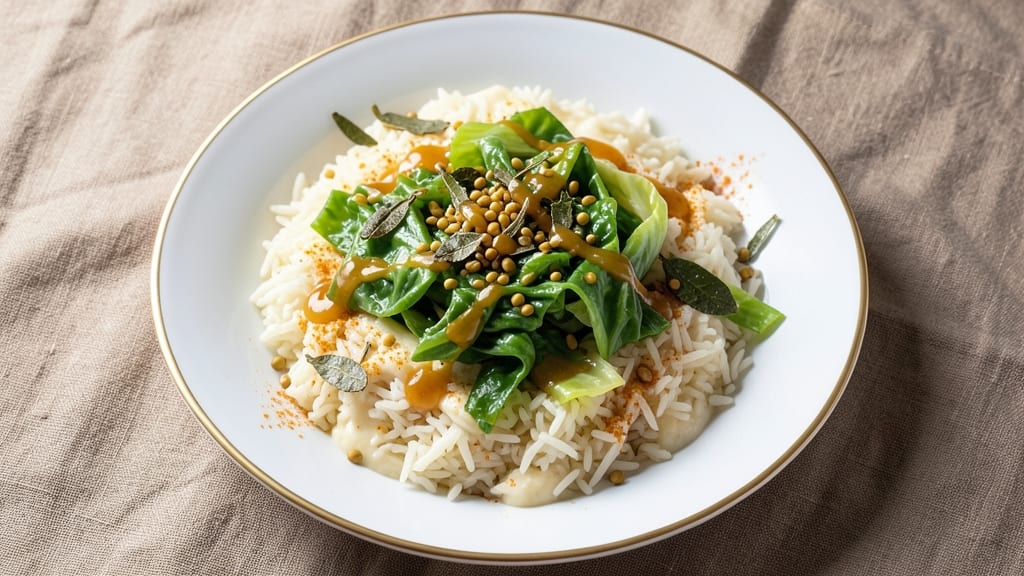
This cabbage rice Indian recipe transforms simple basmati rice into a fragrant, spiced side dish that pairs perfectly with curries or stands alone as a hearty meal. The secret lies in tempering whole spices—mustard seeds, curry leaves, and turmeric—that infuse every grain with aromatic warmth.
My version keeps it vegetarian but rich, using ghee for that authentic South Indian touch that makes the rice taste like a restaurant favorite.
What sets this apart is the crisp-tender cabbage, sautéed until just wilted but still holding its crunch, then folded into the fragrant rice. The spices—cumin, black pepper, and a pinch of asafoetida—create layers of flavor that build as you cook.
Ready in about 30 minutes, it’s the kind of dish that elevates a simple meal into something special without requiring fancy ingredients or techniques.
Ingredients for cabbage rice indian
Nine spices, one pot, restaurant-style flavor without the fuss—just good stuff.
| Ingredient | Amount | Notes |
|---|---|---|
| Basmati Rice 🍚 | 1 cup | Uncooked, long-grain preferred |
| Green Cabbage 🥬 | 4 cups | Shredded, medium size |
| Ghee 🧈 | ½ cup | Clarified butter, unsalted |
| Mustard Seeds 🌶️ | 1 tbsp | Whole, yellow variety |
| Curry Leaves 🌿 | ¼ cup | Fresh, packed, dried if unavailable |
| Turmeric Powder 🌶️ | ½ tsp | Freshly ground preferred |
| Cumin Seeds 🌿 | ½ tsp | Toasted for depth |
| Black Peppercorns 🌶️ | ½ tsp | Freshly cracked |
| Asafoetida Powder 🧂 | ¼ tsp | Pinch for authentic flavor |
| Yellow Onion 🧅 | 1 whole | Medium size, finely chopped |
| Tomato 🍅 | 1 whole | Medium, ripe, diced |
| Salt 🧂 | 1 tsp | Kosher or sea salt |
| Fresh Coriander Leaves 🌿 | ¼ cup | Chopped, for garnish |
The ghee is non-negotiable here—it’s what gives that authentic South Indian richness. Indian grocery stores usually have it in small tubs, but Whole Foods or Trader Joe's carry it too. If you can’t find ghee, unsalted butter works in a pinch, but it’ll have a slightly different texture. Mustard seeds are key—skip them, and you lose that signature crunch and flavor. Penzeys sells whole mustard seeds in bulk if your grocery store doesn’t carry them. Curry leaves? They’re the magic ingredient—if you can’t find fresh, dried works at half the amount, but it won’t be the same. Look for them in the international aisle or online.
No asafoetida? Skip it or use a pinch of garlic powder—it’s that umami bomb that makes this taste like home. Fresh coriander is ideal, but dried works at one-third the amount if you’re in a bind. The cabbage should be shredded into thin strips—mandoline or food processor makes this easier, but a sharp knife works too. For the tomato, I usually grab a ripe but firm one—Roma tomatoes hold up better when diced. If you’re short on time, frozen chopped onions work, but fresh is always better.
This dish tastes even better the next day—honestly, the flavors meld and deepen. Store leftovers in an airtight container for up to 4 days in the fridge. If you’re prepping ahead, cook the rice and cabbage separately, then combine when reheating. The spices lose potency after 3 months in the pantry, so buy small amounts if you don’t cook this often. I always make extra because it reheats beautifully—perfect for lunches or curry pairings all week.
Why You'll Love This Recipe
- One-Pot Magic: I swear by this recipe when I’m too tired to scrub three bowls—just rice, cabbage, and spices all simmering together in one pot. The ghee infuses everything with that rich, nutty aroma while it cooks, so you end up with perfectly fragrant rice without extra effort.
- Ghee Love: That first golden swirl of ghee hitting the mustard seeds and curry leaves? It’s like a flavor bomb. The cabbage softens into tender, slightly sweet bites that soak up all the spice, and the rice comes out fluffy with just the right bite—no mushy texture here.
- Lunchbox Hero: Between us, this is my go-to for packed lunches. The cabbage stays crisp enough to eat cold, and the rice doesn’t turn to glue after sitting overnight. Honestly, it’s the only midweek meal I don’t dread pulling out of the fridge.
- Budget Bright Spot: A whole head of cabbage and a bag of rice stretch this dish for four servings—no fancy ingredients, just big flavor. I’ll be real: it’s the kind of meal that makes grocery day feel like a win, especially when leftovers taste just as good reheated.
Step-by-step instructions for spiced turmeric cabbage rice
Here's how to transform simple ingredients into a fragrant, flavor-packed Indian cabbage rice dish that's ready in under an hour.
Prepare the Rice Perfectly
Rinse the 1 cup basmati rice thoroughly under cold water until the water runs clear. This removes excess starch that can make the rice mushy. Soak the rice for 20 minutes in a bowl of water, then drain well before cooking. In a separate pot, bring 2 cups water to a boil and add the drained rice along with ½ teaspoon salt. Reduce heat to medium-low and simmer for 12-15 minutes until the rice is tender but still has a slight bite. Drain any excess water and set aside, fluffing gently with a fork.
This soaking and cooking method ensures each grain stays distinct rather than clumping together. The rice should be al dente—it'll finish cooking in the ghee later, absorbing all those incredible flavors. Don't skip this step; properly cooked rice is the foundation of this dish.
Sauté the Aromatic Spice Base
Heat the ½ cup ghee in a large, heavy-bottomed pan over medium heat. Add the 1 tablespoon mustard seeds and let them splutter for 30 seconds—this is where the magic begins. As they pop, add the 0.25 cup curry leaves, 0.5 teaspoon cumin seeds, and 0.5 teaspoon black peppercorns. Stir constantly for 1 minute until the spices turn fragrant and the cumin begins to darken slightly.
Here's the thing—these whole spices need to bloom properly to release their full flavor. If you rush this step, your dish will taste flat. Watch for the mustard seeds to turn golden and the curry leaves to darken at the edges. That's your cue to add the 0.25 teaspoon asafoetida powder and 0.5 teaspoon turmeric powder, stirring for another 20 seconds until the spices are evenly distributed and the ghee becomes aromatic.
Cook the Onion and Tomato Mixture
Add the 1 whole yellow onion, finely chopped, to the pan and sauté for 5-6 minutes over medium heat until the onions turn golden brown and translucent. This caramelization adds sweetness that balances the spices. Next, add the 1 whole tomato, diced, along with 1 teaspoon salt. Cook for 4-5 minutes until the tomatoes soften and the mixture becomes a thick, oil-rich paste.
I like to press the tomatoes against the sides of the pan with a spoon during this time—it helps break them down faster and creates a smoother texture. You'll know it's ready when the raw tomato flavor disappears and you're left with a rich, jam-like consistency. This step builds the flavor foundation that ties everything together.
Combine Rice and Cabbage
Add the cooked rice to the pan and gently mix to coat each grain with the spiced ghee mixture. Then add the 4 cups shredded green cabbage, spreading it evenly over the rice. Cover the pan with a tight-fitting lid and cook over low heat for 10-12 minutes, stirring gently once or twice to prevent sticking. The cabbage should soften while absorbing all those incredible flavors.
This is where patience pays off. The cabbage needs time to wilt and meld with the rice, but don't let it steam too long or it'll turn mushy. You're aiming for tender cabbage that still has a slight crunch. If the mixture looks dry, add 1-2 tablespoons water and stir gently to distribute the moisture evenly.
Finish and Garnish
Once the cabbage is tender, remove the pan from heat and let it sit covered for 2 minutes to allow the flavors to meld. Then stir in the 0.25 cup chopped fresh coriander leaves and give it one final taste adjustment—add more salt if needed. The dish should be vibrant, aromatic, and perfectly balanced between the earthy cabbage, fragrant spices, and nutty ghee.
Serve immediately while still warm, garnished with extra coriander leaves if desired. The rice should be distinct yet coated in the spiced ghee, with tender cabbage pieces scattered throughout. This dish tastes even better the next day as the flavors deepen, but it's best enjoyed fresh when the cabbage is still slightly crisp.
Pro Tips For Making Cabbage Rice Indian
- SOAK RICE 20 MINUTES: I used to skip this, but basmati rice absorbs water faster when soaked—just 20 minutes in warm water before cooking. The grains stay separate and fluffy instead of clumping, which is especially important when mixing with cabbage later. (Yes, even if you're impatient like me.)
- SHRED CABBAGE FINE: Thin, even shreds cook faster and blend better with the rice. Use a sharp knife and cut the cabbage against the grain—this prevents tough, chewy bits that turn to mush. If you’re lazy, pulse it in a food processor but don’t overdo it; you want texture, not paste.
- LOW HEAT FOR GHEE: Ghee burns fast, and once it’s scorched, the whole dish tastes bitter. Keep the flame low when tempering mustard seeds and curry leaves—just enough to sizzle, not smoke. If your pan gets too hot, pull it off for 30 seconds and restart. Trust me, your nose will thank you.
- COOK RICE AL DENTE: Stop the rice before it’s fully done—aim for 85% doneness. Finish cooking it in the cabbage mixture, where the residual steam and ghee will tenderize it perfectly. Overcooked rice turns mushy when mixed with cabbage; undercooked rice tastes raw. The 5-minute window here is non-negotiable.
Pro cooking tips for perfect results
Spice Bloom Mastery
Let those mustard seeds splutter and pop for at least 30 seconds before adding other spices—this releases their full aroma. I use a heavy-bottomed stainless steel pan (like All-Clad) because it distributes heat evenly and prevents burning.
If your mustard seeds don't pop, they're old—replace them with fresh from Penzeys Spices. The curry leaves should darken slightly at the edges, signaling they're ready to release their magic. 🌿
Ghee Temperature Control
Heat the ½ cup ghee over medium heat—never high—until it shimmers but doesn't smoke. Too hot and the spices burn; too cool and they won't bloom properly. I test with a wooden chopstick: if tiny bubbles form around it, the ghee is ready.
This step is where the dish gets its signature richness—don't substitute with oil unless absolutely necessary.
Cabbage Texture Secret
Shred the cabbage into ¼-inch strips for even cooking. I use a mandoline slicer for consistency, but a sharp knife works too. The key is low heat during the final 10-12 minutes—this keeps the cabbage tender-crisp rather than mushy.
Stir gently once or twice to prevent sticking, and if it looks dry, add 1 tbsp water to maintain moisture.
Tomato Paste Technique
Press diced tomatoes against the pan sides with a spoon to break them down faster. You're aiming for a thick, jam-like consistency—this builds the flavor base. If the mixture sticks, add ½ tsp water to loosen it.
The raw tomato flavor should completely disappear by the end of this step, leaving behind a rich, sweet undertone that balances the spices.
Final Flavor Rest
After cooking, let the dish sit covered for 2 minutes—this allows the spices to meld and the cabbage to absorb all the ghee's flavor. I always taste at this stage and adjust salt if needed.
The rice should be distinct yet coated in the spiced ghee, with cabbage pieces that are tender but still hold their shape. This resting step makes all the difference in flavor development.
Nutrition facts
Frequently asked questions
Can I make this cabbage rice dish vegan?
Yes! Replace the ½ cup ghee with ¼ cup coconut oil or vegetable oil for a vegan version. The flavor will be slightly different but still delicious. You can also use vegan butter if you prefer. The dish will still have that rich, aromatic quality, just without the dairy.
How do I adjust the recipe for fewer servings?
For 2 servings, halve all ingredients: use ½ cup basmati rice, 2 cups shredded cabbage, and ¼ cup ghee. Keep the spice ratios the same (e.g., ½ tsp cumin) to maintain flavor intensity. The cooking times remain unchanged.
What if I can't find curry leaves?
Don't worry! Use ½ tsp dried curry powder as a substitute, or omit them entirely—the dish will still taste great. For extra depth, add 1 sprig fresh thyme or ½ tsp dried oregano while cooking. The mustard seeds and other spices will still carry the flavor.
Can I use frozen cabbage instead of fresh?
Frozen cabbage works, but thaw and drain it first to avoid excess moisture. Use 3 cups frozen chopped cabbage (instead of 4 cups fresh) since it's denser. Stir it in 2 minutes earlier to account for the thawing time. The texture will be slightly softer but still flavorful.
Why does my cabbage rice turn out mushy?
Mushy cabbage usually happens from overcooking or too much moisture. Cook the cabbage on low heat for 10-12 minutes max and stir gently. If the rice is undercooked, it absorbs more liquid. For next time, use 1 cup less water when boiling the rice.