
Main Courses
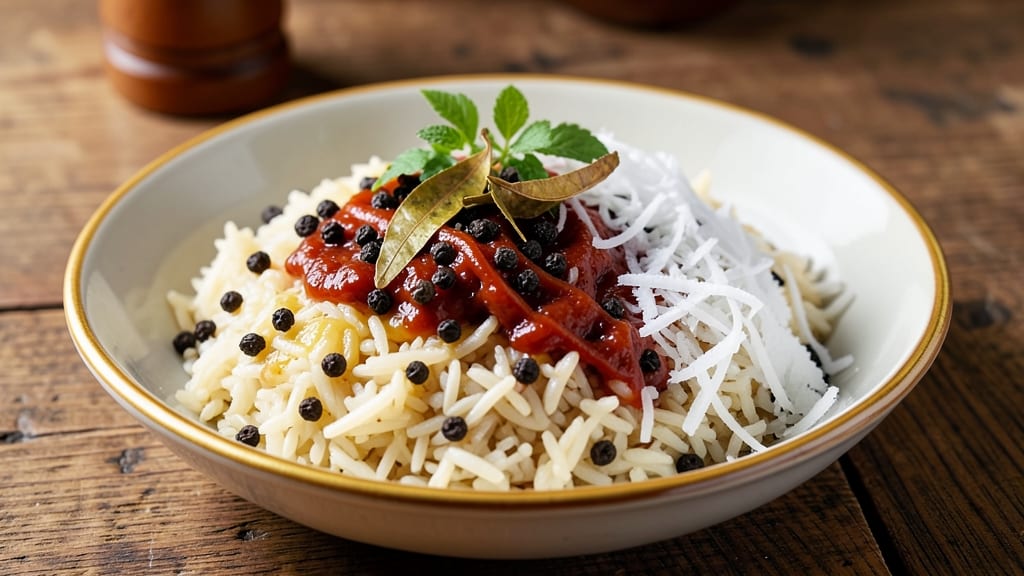
This South Indian black pepper rice transforms simple basmati into a fragrant, crunchy masterpiece with toasted peppercorns and coconut. The secret lies in tempering spices with curry leaves and tamarind, creating layers of warmth and tang that elevate every bite.
What starts as plain rice becomes a symphony of textures and aromas—crispy peppercorns nestled in soft, fluffy grains, finished with a garnish of fresh cilantro.
The dish balances tradition with simplicity, requiring just a few key ingredients: basmati rice, black peppercorns, coconut, and a touch of tamarind for brightness. Whether served as a standalone vegetarian meal or paired with protein like chicken or fish, it delivers restaurant-quality flavor with minimal effort.
The toasted spices infuse the rice with a nutty, aromatic depth that stays with you long after the last bite.
Ingredients for black pepper rice south indian
Toasted peppercorns, fragrant coconut, and tamarind create this aromatic South Indian masterpiece.
| Ingredient | Amount | Notes |
|---|---|---|
| Long-Grain Basmati Rice 🍚 | 1 ½ cups | Uncooked, rinsed thoroughly |
| Black Peppercorns 🌶️ | ½ cup | Whole, lightly toasted |
| Shredded Coconut 🥥 | ¼ cup | Unsweetened, freshly grated |
| Tamarind Paste 🍈 | 1 tbsp | Concentrated, no seeds |
| Curry Leaves 🌿 | ¼ cup | Fresh, whole leaves |
| Ghee or Coconut Oil 🫒 | 3 tbsp | For tempering, high smoke point |
| Mustard Seeds 🌱 | ½ tsp | Whole, lightly toasted |
| Cumin Seeds 🌿 | ½ tsp | Whole, toasted lightly |
| Asafoetida Powder 🌶️ | ⅛ tsp | Pinch for depth (optional) |
| Salt 🧂 | 1 tsp | Diamond Crystal kosher |
| Fresh Cilantro Leaves 🌿 | ¼ cup | Chopped, for garnish |
| Water 💧 | 3 cups | Filtered, room temperature |
The black peppercorns are the heart of this dish—lightly toast them in a dry pan until fragrant but not burnt (about 2-3 minutes). Whole spices from Penzeys or local Indian markets deliver the most authentic flavor, but grocery store brands work in a pinch. Curry leaves should be fresh and vibrant—wilted leaves lose their aromatic punch. For tamarind paste, Trader Joe's or Indian specialty stores carry concentrated versions that simplify measurements. Ghee adds richness, but coconut oil is a suitable vegan alternative that complements the coconut flavor beautifully.
No fresh curry leaves? Dried curry powder at half the amount works, though it lacks the same floral note. Pre-toasted peppercorns from the spice aisle save time, but toasting fresh unlocks deeper flavor. Tamarind concentrate can be substituted with lemon juice plus a pinch of sugar for brightness, though the tang won't be identical. Asafoetida (hing) is optional but adds a savory depth—omit entirely if unavailable. For the rice, basmati from India (like India Gate or Tilda) yields the best texture, but jasmine rice can stand in if that's what you have on hand.
Toasted peppercorns and coconut retain their crunch best when stored in airtight containers at room temperature for up to 2 weeks. Cooked rice keeps for 4-5 days in the fridge, though the texture softens over time. For longer storage, freeze portions for up to 3 months—reheat gently with a splash of water to restore moisture. Garnish with fresh cilantro just before serving to preserve its vibrant color and aroma. This dish tastes even better the next day as flavors meld, making it perfect for meal prep.
Why You'll Love This Recipe
- No-Soak Needed: I swear by this trick—just rinse the basmati, toss it in boiling salted water with the peppercorns and curry leaves, and let it simmer. The rice absorbs the pepper’s warmth and the tamarind’s tang while cooking, so no extra steps or waiting around.
- Tangy Pepper Magic: That first bite? Crisp rice with a crack of black pepper heat, balanced by the tamarind’s sour punch and coconut’s sweet finish. It’s like a mini flavor explosion—simple ingredients, but the combo hits different. (My picky-eater son actually licks his plate.)
- Picnic-Proof Perfection: Pack it in a thermos for work lunches or toss it in a bento box for school—it stays warm, holds up for hours, and tastes just as good cold. Honestly, I’ve eaten this straight from the fridge after a long day, and it’s still the star of the meal.
- Pantry Staple Power: You’re already using rice, coconut, and spices you’ve got lying around. Tamarind paste is cheap, and a little goes a long way. I make this when I’m broke or lazy (or both), and no one ever complains—because this dish delivers every time.
Step-by-step instructions for black pepper rice South Indian style
Mastering this recipe transforms simple basmati rice into a fragrant, textured dish where toasted spices meet tender grains.
Toast the Black Peppercorns and Spices
Heat a dry heavy-bottomed skillet over medium heat. Add the 0.5 cup black peppercorns and toast for 3-4 minutes until they darken slightly and release their aroma. Remove from heat immediately to prevent burning.
Return the skillet to medium heat and add 3 tablespoons ghee or coconut oil. Once the oil shimmers, add the 0.5 teaspoon mustard seeds and 0.5 teaspoon cumin seeds. Let them sizzle for 30 seconds until they begin to pop. Quickly add the 0.125 teaspoon asafoetida powder and 0.25 cup curry leaves, stirring constantly for 10 seconds until the leaves darken and release their fragrance.
Prepare and Cook the Rice
In a separate pot, combine the 1.5 cups long-grain basmati rice with the 3 cups water and 1 teaspoon salt. Bring to a boil over high heat, then immediately reduce to low heat, cover tightly with a lid, and cook for 12-15 minutes until the water is completely absorbed and the rice is tender. Avoid lifting the lid during cooking to maintain steam.
Once the rice is cooked, remove from heat and let it sit covered for 5 minutes. Gently fluff the rice with a fork, then transfer it to a large serving bowl. Sprinkle the toasted 0.5 cup black peppercorns evenly over the rice, pressing them lightly into the grains so they infuse flavor as the dish cools.
Temper the Rice with Spiced Coconut
In the same skillet used for toasting spices, melt 1 tablespoon ghee or coconut oil over low heat. Add the 1 tablespoon tamarind paste and stir for 1 minute until it dissolves completely, creating a glossy, slightly tangy base. Remove from heat and immediately stir in the 0.25 cup shredded coconut.
Pour this coconut-tamarind mixture evenly over the warm rice, gently folding it in with a spatula. The residual heat will help the coconut soften slightly while maintaining its texture. Let the rice sit for 5 minutes to absorb the flavors completely.
Garnish and Serve
Transfer the black pepper rice to a serving platter. Using a fine-mesh strainer, sprinkle the 0.25 cup chopped fresh cilantro leaves evenly over the top, pressing them gently into the rice. The herbs will release their fresh aroma, balancing the toasted spices.
Serve immediately while the rice is still warm. Each bite should deliver the crunch of toasted peppercorns, the warmth of tempered spices, and the subtle sweetness of coconut. The tamarind adds a bright tang that cuts through the richness, creating a harmonious flavor profile that defines South Indian cuisine.
Pro Tips For Making Black Pepper Rice South Indian
- Toast Peppercorns First: I learned this the hard way—raw peppercorns taste bitter and overpower the dish. Dry-toast them in a pan for 30 seconds until fragrant before grinding, or they’ll just sit there like dull gravel instead of waking up your rice.
- Soak Tamarind Properly: Tamarind paste clumps like glue if you don’t handle it right. Mix it with 3x its volume of warm water and strain through a fine sieve—no fiber left means no weird texture in your rice. (Yes, even if you’re impatient like me.)
- Cook Rice on Low Flame: After burning three batches, I finally figured out: basmati needs a whisper of heat after the initial boil. Once water’s absorbed, drop to the lowest flame and let it steam—no peeking, no stirring. That’s how you get fluffy, not gummy, rice.
- Stir in Coconut Late: Sounds weird, but it works: add shredded coconut only in the last 2 minutes of cooking. If you toss it in early, it’ll turn into a sad, mushy paste instead of staying crisp and bright. (Your future self will thank you.)
Wine and beer pairings for this recipe
Indian Pale Ale
An Indian Pale Ale (IPA) with its bold hop bitterness and citrusy notes creates a refreshing contrast to the rich, spiced flavors of black pepper rice.
I recommend a West Coast-style IPA like Stone Ruination or Sierra Nevada Pale Ale—their piney, grapefruit-forward profiles cut through the coconut and peppercorn intensity beautifully. The slight malt sweetness in these beers also complements the tamarind's tang. 🍺
Crisp Lager
For a lighter option, a crisp German lager such as Oettinger Premium Lager or Heineken works wonders. The clean, effervescent character of these beers helps reset your palate between bites of the spiced rice.
The subtle malt backbone enhances the dish's nutty undertones without overpowering the toasted peppercorns. Serve chilled at 40-45°F for best results.
White Wine Pairings
If you prefer wine, a dry Riesling from Germany or a Vermentino from Italy offers excellent acidity to balance the dish's richness. Look for a Klinger Riesling Kabinett—its bright citrus and mineral notes mirror the tamarind's tang while standing up to the peppercorn's heat.
The wine's crisp finish also cleanses the palate, making each bite of rice feel fresh.
Spiced Rum Cocktail
For a festive touch, mix a dark rum cocktail with 1.5 oz Appleton Estate rum, 0.5 oz lime juice, and a dash of Angostura bitters. Serve over ice with a lime wedge—this drink's caramel and spice notes echo the toasted peppercorns while the lime brightens the tamarind.
It’s perfect for special occasions or when you want to elevate the meal to a celebratory level. 🍹
Herbal Tea Option
For a non-alcoholic pairing, a mango-ginger herbal tea from Tazo or Yogi Tea complements the dish beautifully. The ginger’s warmth enhances the peppercorn’s heat, while the mango’s sweetness balances the tamarind’s tang.
Brew a strong cup and serve it warm—it’s a refreshing yet sophisticated choice that highlights the dish’s South Indian roots.
Nutrition facts
Frequently asked questions
Can I make this black pepper rice vegetarian?
This dish is naturally vegetarian as written, but you can enhance it further by adding tofu, chickpeas, or steamed vegetables like okra or drumsticks. The spiced coconut rice pairs beautifully with protein-rich lentils or paneer for a heartier meal.
How do I prevent the black peppercorns from burning?
Toast them over medium heat for just 2-3 minutes until fragrant, then remove immediately. Use a heavy-bottomed pan to distribute heat evenly and avoid overcrowding the peppercorns. A 1-minute check every 30 seconds prevents burning while maximizing flavor.
What's the best way to store leftovers?
Store in an airtight container in the fridge for 4-5 days. The peppercorns and coconut will soften slightly but retain flavor. For longer storage, freeze portions for up to 3 months—reheat gently with a splash of water to restore texture. Garnish with fresh cilantro just before serving.
Can I substitute tamarind paste with something else?
Yes! Use lemon juice (1 tbsp) plus ½ tsp sugar for brightness, though tamarind's unique tang won't be identical. For a deeper South Indian flavor, try ½ tsp white vinegar or amchur (dry mango powder) (½ tsp). The key is balancing the dish's richness with acidity.
Why does my rice turn out mushy?
Overcooking or lifting the lid releases steam too soon. Cook rice on low heat, cover tightly, and avoid peeking for 12-15 minutes. After cooking, let it rest 5 minutes covered before fluffing. Using basmati rice (not jasmine) and the correct 1:2 rice-to-water ratio prevents mushiness.