
Main Courses
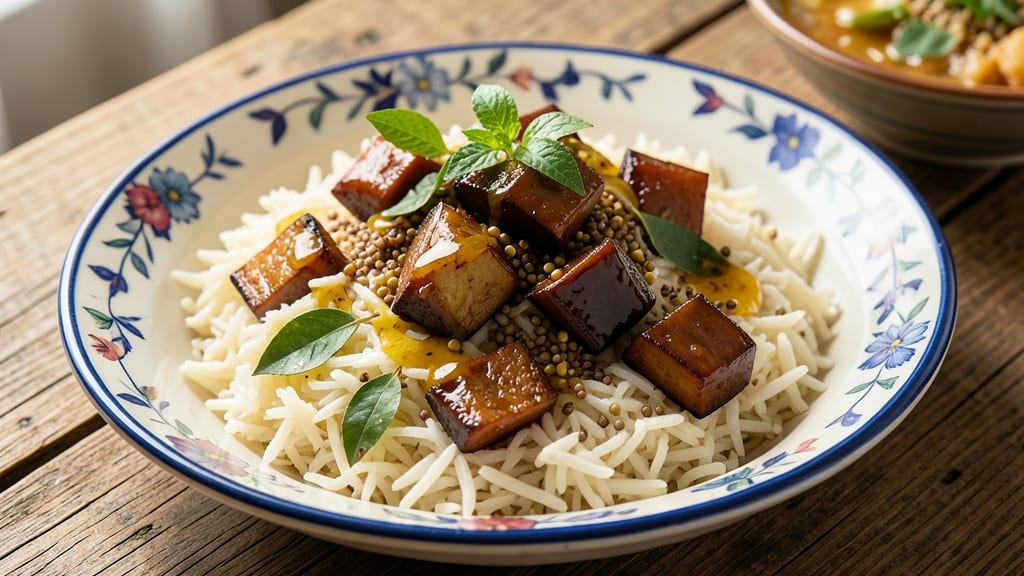
This brinjal rice recipe in Tamil brings the soulful flavors of Tamil Nadu to your kitchen, where tender eggplant meets perfectly spiced rice in a symphony of toasted cumin and fragrant spices.
The secret lies in slow-cooking the eggplant until it's silky, then layering it with aromatic basmati rice that absorbs the rich, earthy flavors of mustard seeds, curry leaves, and coconut.
What makes this dish truly special is the traditional tadka—a tempering of spices in hot oil that transforms simple ingredients into something deeply comforting and authentic.
The result is a harmonious one-pot meal where each bite delivers the crunch of toasted cumin, the creamy texture of eggplant, and the nutty warmth of rice infused with Tamil spices.
This vegetarian dish is not only hearty and satisfying but also pairs beautifully with a side of sambar or a cooling raita. Whether you're serving it for a family meal or a special gathering, this recipe captures the essence of home-cooked Tamil cuisine—simple yet profound, flavorful yet balanced.
Ingredients for brinjal rice recipe in tamil
Authentic Tamil spices and tender eggplant create a symphony of flavors in this comforting one-pot dish.
| Ingredient | Amount | Notes |
|---|---|---|
| Long-Grain Basmati Rice 🍚 | 1 ½ cups | Uncooked, rinsed thoroughly |
| Eggplant (Brinjal) 🍆 | 1 ½ lb | Medium-sized, peeled and cubed |
| Coconut Oil 🥥 | ½ cup | For authentic Tamil flavor |
| Mustard Seeds 🌿 | 1 tbsp | Whole, for tempering |
| Curry Leaves 🌿 | ¼ cup | Fresh, slightly crushed |
| Ground Cumin Seeds 🌶️ | 1 ½ tbsp | Toasted for deeper aroma |
| Dried Red Chilies 🌶️ | 4 whole | Split lengthwise for tempering |
| Asafoetida (Hing) 🌿 | ¼ tsp | Essential for authentic taste |
| Fresh Cilantro (Coriander) 🌿 | ¼ cup | Chopped, for garnish |
| Ghee 🧈 | 2 tbsp | For rich flavor development |
| Salt 🧂 | 1 ½ tsp | Adjust to taste |
| Water 💧 | 3 cups | For rice cooking |
| Shallots 🧅 | 3 whole | Finely chopped for tempering |
| Turmeric Powder 🌿 | ½ tsp | For vibrant color |
The eggplant is the heart of this dish—look for firm, glossy brinjals with no soft spots. Local Indian grocery stores often carry the best varieties, but any medium-sized eggplant will work. Peeled and cubed, it cooks down beautifully to a silky texture. For the spices, Whole Foods or Patanjali offer excellent quality mustard seeds and curry leaves. Toast your cumin seeds lightly in a dry pan before grinding for an authentic depth of flavor that store-bought powder can't match. The shallots should be fresh and firm, not sprouting or limp—this ensures they'll caramelize beautifully during the tempering process.
No fresh curry leaves? Dried curry leaves work at half the amount, but they lack the same aromatic punch. Running short on ghee? Coconut oil or olive oil will work, though ghee's rich flavor is ideal. The asafoetida is non-negotiable for authentic taste—it's that umami bomb that makes this dish sing. For the chilies, Kashmiri red chilies add color without excessive heat, but any dried red chili will do. If you're using pre-ground cumin, toast it first in a dry pan for 30 seconds to wake up its flavors. The turmeric powder should be bright orange, not grayish—this indicates freshness and potency.
This dish tastes even better the next day as the flavors meld together. Store in an airtight container in the fridge for up to 4 days. For longer storage, freeze portions for up to 3 months. The rice portion can be cooked separately and combined with the eggplant mixture just before serving if preferred. Double the recipe—it freezes beautifully for quick weeknight meals. The tempering spices lose potency after 3 days, so make fresh when reheating. Garnish with extra cilantro just before serving to preserve its vibrant color and fresh aroma.
Why You'll Love This Recipe
- One-Pot Magic: I swear by this method—just toss everything in one pot, let the coconut oil sing with mustard seeds and curry leaves, and walk away. The eggplant softens into that perfect, slightly caramelized texture while the rice absorbs all the fragrant goodness, no extra pans needed.
- Tamil Comfort in Every Bite: That first whiff of coconut oil hitting the mustard seeds? Pure nostalgia. The eggplant soaks up the spices like a sponge, giving you that deep, smoky-sweet flavor that makes you reach for seconds without even thinking. Honestly, it’s the kind of dish that feels like a hug in bowl form.
- Lunchbox Hero: Between us, this is my go-to for meal prep—packs perfectly, stays fresh for days, and tastes like you just made it. The rice holds its shape, the eggplant stays tender, and the coconut oil keeps it from drying out. My kids argue over who gets the leftovers, and that’s never a bad sign.
- Pocketbook-Friendly Feast: Eggplant and rice? Two of the most affordable staples out there. A single coconut oil splash and a handful of mustard seeds stretch this meal to feed four (or more, if you’re like me). Plus, the leftovers reheat like a dream—no sad, mushy rice here. Solid win for both my wallet and my taste buds.
Step-by-step instructions for brinjal rice in Tamil style
Aromatic, spice-forward and perfectly balanced—this traditional Tamil method delivers restaurant-quality brinjal rice every time.
Prepare the Eggplant for Cooking
Wash the 1.5 lb eggplant (brinjal) thoroughly and peel off the skin using a vegetable peeler. Cut it into 1-inch cubes—uniform size ensures even cooking. Place the cubed eggplant in a colander and sprinkle with ½ tsp salt. Let it sit for 10 minutes to draw out excess moisture, then rinse and pat completely dry with paper towels. This step prevents a soggy texture in your final dish.
Heat 0.25 cup coconut oil in a large skillet over medium heat. Add the prepared eggplant cubes in a single layer and cook for 8-10 minutes, stirring occasionally, until they turn golden brown and tender. The eggplant should be soft enough to pierce easily with a fork but still hold its shape. Remove from heat and set aside—these will be incorporated later in the rice cooking process.
Cook the Basmati Rice to Perfection
Rinse the 1.5 cups long-grain basmati rice thoroughly under cold water until the water runs clear. This removes excess starch that would make the rice mushy. In a medium saucepan, combine the rinsed rice with 3 cups water and bring to a boil over high heat. Once boiling, reduce heat to low, cover tightly with a lid, and simmer for 15 minutes without lifting the lid.
After 15 minutes, turn off the heat and let the rice steam undisturbed for an additional 5 minutes. This resting period allows the rice to absorb remaining moisture and develop a fluffy, separate grain texture. Fluff the rice gently with a fork and transfer it to a serving bowl, making a well in the center. The rice should be light and fluffy, with no liquid remaining at the bottom of the pan.
Prepare the Authentic Tamil Tempering
In a small heavy-bottomed pan, heat 2 tbsp ghee over medium heat until it begins to shimmer. Add the 3 whole shallots and sauté for 2 minutes until they turn golden brown. Add the 1.5 tbsp ground cumin seeds and toast for 30 seconds until fragrant—this releases their full aromatic potential.
Next, add the 4 whole dried red chilies (split lengthwise) and 0.25 cup curry leaves. Sauté for 1 minute until the chilies turn slightly darker and the curry leaves release their vibrant aroma. Stir in the 0.25 tsp asafoetida (hing) and 0.5 tsp turmeric powder, cooking for an additional 30 seconds until the spices meld together. This tempering forms the flavor base for the entire dish.
Combine and Finish the Brinjal Rice
Pour the tempering mixture over the cooked rice in the serving bowl. Gently fold the rice with a spatula to distribute the spices evenly. Add the cooked eggplant cubes and mix lightly—just enough to combine without breaking the eggplant. Sprinkle the 0.25 cup chopped fresh cilantro (coriander) over the top and mix once more.
For the final touch, heat 1 tbsp mustard seeds in a small pan over low heat until they begin to pop. Immediately pour this tempering over the rice mixture. The mustard seeds should sizzle and release their nutty aroma, adding a final layer of complexity to the dish. Serve immediately while the spices are still fragrant and the rice is hot.
Pro Tips For Making Brinjal Rice Recipe In Tamil
- CHAR THE BRINJAL FIRST: I learned this the hard way—charred eggplant makes the dish sing. Cut the brinjal into thick chunks (no need for perfect slices), then sear them directly over medium-high flame until deep black patches form. This caramelizes the sugars and cuts through the bitterness, giving that smoky depth you taste in the best Tamil brinjal rice.
- SALT THE RICE WATER LATE: Add salt only when the water boils, not before. Basmati rice absorbs too much water early, leading to mushy grains. Wait until the liquid is at a rolling boil, then toss in the salt and rice together—this keeps the texture fluffy and distinct. (Yes, even if you're impatient like me.)
- CRUSH MUSTARD SEEDS HALFWAY: Don’t wait for the mustard seeds to pop before adding curry leaves. After 10 seconds in hot coconut oil, lightly crush them with a spoon—this releases their aroma without burning. Add curry leaves immediately after; they’ll wilt and infuse the oil properly. (Your future self will notice the difference.)
- USE LESS COCONUT OIL: Two tablespoons is enough—enough to coat the pan but not drown the brinjal. Too much oil makes the dish greasy, and the mustard seeds won’t sizzle properly. If your oil is smoking before the seeds pop, turn the heat down just a notch. (Sounds weird, but it works.)
Regional styles of this recipe
Tamil Nadu Classic
The most traditional version of brinjal rice in Tamil Nadu uses long-grain basmati rice cooked with whole spices and coconut oil for that authentic South Indian aroma. The key here is the two-stage tempering—first with shallots, cumin, and curry leaves, then finishing with mustard seeds for that signature crunch.
I remember my grandmother always using freshly ground cumin and homemade coconut oil for the richest flavor. 🌿
Kerala's Spiced Twist
In Kerala, they take brinjal rice to another level by adding grated coconut and green chilies to the eggplant before cooking. The coconut gives a sweet contrast to the earthy brinjal, while the green chilies add a fresh, tangy kick.
For this version, sauté ½ cup grated coconut with the eggplant and finish with 2-3 chopped green chilies when combining with rice. This variation is perfect for those who love a bit of heat and texture.
Madurai's Slow-Cooked Style
Madurai, known for its rich culinary traditions, prepares brinjal rice with a slow-cooked eggplant that's almost caramelized. After cooking the eggplant in coconut oil, transfer it to a pressure cooker with ½ cup water, ½ tsp turmeric, and ¼ tsp black pepper.
Cook on medium heat for 2 whistles, then mix into the rice. This method gives the eggplant a deep, smoky flavor that pairs beautifully with the spices. 🔥
Chettinad's Bold Version
The Chettinad region is famous for its fiery dishes, and their brinjal rice is no exception. Here, they use extra dried red chilies (up to 6-7 whole chilies) and add 1 tsp black pepper to the tempering.
For an authentic touch, include ½ tsp fennel seeds in the tempering—this adds a unique anise-like warmth. Serve this version with a cooling cucumber raita to balance the heat.
Modern Fusion Adaptation
For a contemporary twist, try replacing half the basmati rice with brown rice or quinoa for added nutrition. Use olive oil instead of coconut oil and add 1 tsp smoked paprika to the eggplant while cooking.
Garnish with toasted pumpkin seeds and micro cilantro for a visually stunning dish that still honors the traditional flavors. This version is perfect for health-conscious eaters who want to keep the soul of Tamil cuisine intact.
Festive Special Version
For special occasions like Pongal or Diwali, elevate your brinjal rice by adding gold leaf (varak) and saffron strands to the rice while cooking. Garnish with edible silver leaf and serve in a banana leaf-lined bowl for an elegant presentation.
This version is often paired with milk-based sweets like payasam to create a perfect balance of savory and sweet flavors. The banana leaf adds a subtle aroma that enhances the overall dining experience. ✨
Nutrition facts
Frequently asked questions
Can I use any type of eggplant for this Tamil brinjal rice?
For authentic results, choose small to medium-sized eggplants with glossy, firm skin. Long, slender varieties work best as they're less bitter. Avoid large, seedy eggplants—they can make the dish watery. If you only find big eggplants, remove the seeds and cut them into smaller pieces for even cooking.
What makes the tempering so important in this recipe?
The tempering is the flavor soul of Tamil brinjal rice! The mustard seeds, curry leaves, and cumin release aromatic oils when toasted in hot oil, creating that signature nutty, earthy taste. Skipping it would leave your dish flat. Pro tip: Toast the spices low and slow to prevent burning—this preserves their delicate flavors.
How do I prevent the eggplant from turning mushy?
Salt the eggplant cubes 10 minutes before cooking to draw out moisture, then pat them completely dry. Cook them in small batches over medium heat until golden brown, not blackened. The key is even heat distribution—don't overcrowd the pan. For extra insurance, add a pinch of turmeric to the eggplant while cooking.
Can I make this dish ahead of time?
Yes! Cook the rice and eggplant separately, then combine them just before serving. Store components in airtight containers for up to 3 days. Reheat gently with a splash of water to restore moisture. The flavors actually improve overnight as the spices meld. For the tempering, prepare it fresh when reheating—it loses potency when stored.
What are the best sides to serve with Tamil brinjal rice?
Traditional pairings include sambar (lentil stew) for protein, cucumber raita to cool the palate, or papadums for crunch. For a complete meal, add yogurt-based curd and a mango pickle. The tangy-sweet contrast balances the dish's earthy flavors beautifully.