
Main Courses
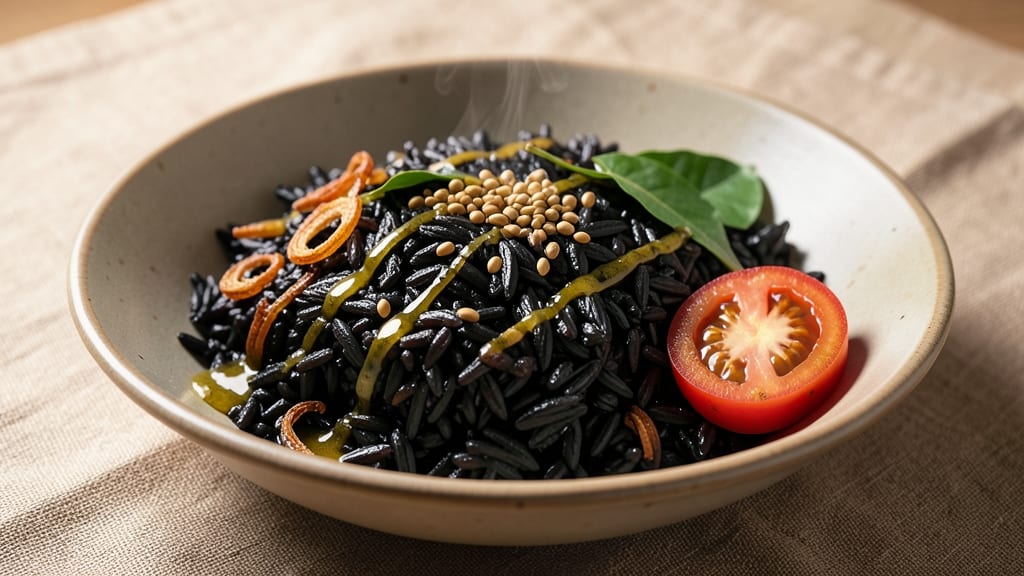
This black rice South Indian recipe transforms humble grains into a fragrant, nutritious dish with layers of mustard seed aroma and curry leaf magic. 🌟 The secret lies in slow-cooking black rice with spices until each grain absorbs deep, earthy flavors—no shortcuts here, just tradition perfected.
Perfect for special occasions or everyday meals, this dish delivers both cultural richness and modern convenience.
What sets this recipe apart is the tempering—mustard seeds sizzling in hot oil until they pop, releasing their signature aroma while curry leaves infuse the rice with their citrusy depth.
The result? A dish that’s naturally vegetarian, packed with protein, and ready in under an hour. Serve it with sambar or coconut chutney for the full South Indian experience.
Ingredients for black rice south indian
Black rice, mustard seeds, and curry leaves—this trio creates a fragrant vegetarian masterpiece with South Indian tradition.
| Ingredient | Amount | Notes |
|---|---|---|
| Black Rice (Forbidden Rice) 🌾 | 1 ½ cups | Uncooked, rinsed thoroughly |
| Vegetable Stock 💧 | 2 cups | Low-sodium preferred |
| Mustard Seeds 🌶️ | 1 tbsp | Whole, yellow variety |
| Curry Leaves 🌿 | ¼ cup | Fresh, tightly packed |
| Asafoetida (Hing) 🌶️ | ⅛ tsp | Pinch for aroma |
| Coconut Oil 🫒 | ¼ cup | Unrefined for flavor |
| Cumin Seeds 🌿 | ½ tsp | Toasted lightly |
| Dried Red Chilies 🌶️ | 2 whole | Kashmiri or red chili |
| Peanuts 🥜 | ¼ cup | Roasted, unsalted |
| Salt 🧂 | 1 ½ tsp | Adjust to taste |
| Fresh Cilantro 🌿 | ¼ cup | Chopped for garnish |
| Lemon Juice 🍋 | 1 tbsp | Freshly squeezed |
| Ghee 🧈 | 2 tbsp | For finishing |
The black rice is the star—look for it in the bulk section of Whole Foods or Indian grocery stores like Patel Brothers. It's pricier than white rice but worth it for its nutty flavor and deep color. Soak it for 20 minutes before cooking to reduce cooking time. For curry leaves, fresh is non-negotiable—dried leaves won't give that signature aroma. Mustard seeds should be yellow and plump, not gray or shriveled. The asafoetida might be tricky to find outside Indian markets, but a pinch makes all the difference in that unmistakable South Indian aroma.
No mustard seeds? Cumin seeds at double the amount won't replicate the flavor, but it's better than nothing. Fresh curry leaves unavailable? Dried thyme at one-third the amount is a distant substitute. For the peanuts, roast your own for 5 minutes in coconut oil—store-bought versions often taste bland. The dried red chilies can be swapped for Kashmiri red chili powder if you prefer less heat. And if you're out of ghee, coconut oil works perfectly for finishing. The lemon juice is crucial—use freshly squeezed for that bright finish that cuts through the richness.
Rice keeps for 3-4 days in the fridge, but the flavor deepens overnight. For longer storage, freeze portions for up to 3 months—just thaw in the fridge before reheating. The peanuts and cilantro can be stored separately for up to 1 week in airtight containers. To reheat, add a splash of water and cover tightly. This dish tastes even better the next day as the flavors meld together—perfect for meal prep. The ghee finishing touch should be added just before serving to maintain its rich aroma.
Why You'll Love This Recipe
- I’ll be real: I used to dread soaking rice. Not with this. Black rice here cooks up tender in just 20 minutes—no pre-soaking, no fuss—thanks to the vegetable stock’s magic. Toss it in with the mustard seeds and curry leaves, and it’s basically hands-off.
- No-Soak Needed: I’ll be real: I used to dread soaking rice. Not with this. Black rice here cooks up tender in just 20 minutes—no pre-soaking, no fuss—thanks to the vegetable stock’s magic. Toss it in with the mustard seeds and curry leaves, and it’s basically hands-off.
- Umami Bomb: That first crackle of mustard seeds in hot oil? Instant flavor party. Add a pinch of asafoetida (yes, it’s potent), and the stock transforms into something deep—earthy, slightly sweet, with a warmth that lingers. It’s the kind of taste that makes you pause mid-bite.
- Lunchbox Hero: Between us, this rice is my go-to for meal prep. Pack it cold or reheat it, and it’s still hearty enough for lunch. The texture holds up, the flavors don’t fade, and honestly? My kids would rather eat this than their fancy school lunches. (Shhh, don’t tell.)
Step-by-step instructions for black rice South Indian stir-fry
Transform humble black rice into a fragrant, nutty masterpiece with this South Indian technique.
🍳 Step 1: Toast the Spice Base for Maximum Flavor
Heat the 0.25 cup coconut oil in a heavy-bottomed pot over medium-low heat. Add the 2 whole dried red chilies and 0.5 tsp cumin seeds, stirring constantly for 1 minute until the cumin begins to pop and release its aroma. This is where the magic starts—those tiny seeds should dance and sizzle before turning golden.
Next, add the 1 tbsp mustard seeds and let them splutter and pop for 30 seconds. Watch closely—they'll turn from pale yellow to deep amber as they toast. Immediately add the 0.25 cup curry leaves and 0.125 tsp asafoetida (hing), stirring for another 1 minute until the leaves darken slightly and the hing releases its pungent aroma. This aromatic base forms the flavor foundation for your entire dish.
👨🍳 Step 2: Cook the Black Rice to Perfect Texture
Add the 1.5 cups black rice (forbidden rice) to the pot and stir to coat it thoroughly with the spice oil. Cook for 2-3 minutes on medium heat, stirring frequently, until the rice becomes translucent at the edges and releases its nutty aroma. This dry-toasting step prevents the rice from becoming mushy later.
Now pour in the 2 cups vegetable stock and bring to a gentle boil. Reduce heat to low and cover with a tight-fitting lid. Let it simmer for 25-30 minutes until the liquid is completely absorbed and the rice is tender but still slightly firm to the bite. The rice should be moist but not sticky—if it looks dry, add 2-3 tablespoons water and cook another 5 minutes.
🥘 Step 3: Finish with Ghee and Garnishes
Once the rice is perfectly cooked, remove it from heat and let it sit covered for 5 minutes. This resting period allows the flavors to meld. Then stir in the 2 tbsp ghee and 0.25 cup roasted peanuts, distributing them evenly throughout the rice. The ghee adds richness while the peanuts contribute crunch and earthy flavor.
Finally, fold in the 0.25 cup fresh cilantro and 1 tbsp lemon juice, mixing gently to combine. The lemon brightens the dish while the cilantro adds freshness. Taste and adjust seasoning with additional salt if needed. Serve immediately while the rice is still warm, garnished with extra peanuts and cilantro for presentation.
Pro Tips For Making Black Rice South Indian
- SOAK BLACK RICE OVERNIGHT: I learned this the hard way—rushing the soak leaves the grains hard and undercooked. Black rice needs at least 8 hours (or overnight) in water to soften properly. Drain and rinse just before cooking, or the stock will turn murky.
- CRACK THE MUSTARD SEEDS: Skip this, and your tempering loses depth. Dry-toast the mustard seeds in a hot pan until they pop audibly—about 30 seconds. This releases their nutty oils, which is the thing that makes the dish sing.
- LOW AND SLOW WITH STOCK: After the initial tempering, reduce heat to a gentle simmer and cover the pot. Black rice needs 25-30 minutes to cook through, and boiling too hard turns it mushy. Stir once halfway—just enough to check the grains.
- SAVE TIME WITH PRE-CHOPPED VEGETABLES: I know, I know—fresh is better. But if you’re short on time, frozen diced onions and carrots work fine for the stock base. Just thaw and drain them first, or your rice will absorb extra water. (Yes, even if you’re impatient like me.)
Regional styles of black rice south indian
Kerala-Style Kara Arisi
In Kerala, black rice is often cooked with coconut milk instead of stock, creating a richer, creamier texture. Replace the 2 cups vegetable stock with 1 cup coconut milk and 1 cup water, then add ½ tsp turmeric during the tempering step.
The result is a fragrant, slightly sweet dish that pairs beautifully with Kerala-style fish curry or avial. 🌿
Tamil Nadu Pongal
Tamil Nadu transforms black rice into Kara Arisi Pongal, a savory dish cooked with moong dal (split yellow lentils) and ghee. Use 1 cup moong dal and 1 cup black rice, and reduce the stock to 1.5 cups.
After cooking, finish with 1 tbsp jaggery and ½ tsp black pepper for a sweet-spicy contrast. Serve with sambar and coconut chutney.
Andhra-Style Pulav
Andhra Pradesh’s version, Kara Arisi Pulav, includes whole spices like cardamom and cloves in the tempering. Add 2 green cardamom pods and 1 clove with the cumin seeds, then stir in ½ cup yogurt after cooking for a tangy twist.
Garnish with fried cashews instead of peanuts for a luxurious touch. 🥜
Hyderabadi Biryani Twist
For a biryani-inspired take, layer the cooked rice with saffron-infused milk and fried onions. After the initial cooking, spread the rice on a tray, drizzle with 2 tbsp saffron milk, and top with caramelized onions and fried cashews. Steam for 10 minutes for a fragrant, restaurant-style finish.
Modern Fusion Adaptations
Swap traditional spices for a global twist: Use smoked paprika instead of mustard seeds and fresh thyme for curry leaves. Add chopped scallions and toasted pumpkin seeds for a Middle Eastern-inspired dish. This version works well with grilled chicken or roasted vegetables for a protein boost.
Vegan Protein Boost
For extra protein, stir in ½ cup cooked chickpeas or tofu cubes during the final step. Add 1 tsp garam masala and ½ tsp cumin powder to the chickpeas before mixing. This version is perfect for plant-based diets while keeping the dish authentically South Indian. 💪
Nutrition facts
Frequently asked questions
Why does black rice turn dark purple when cooked?
The deep purple-black color comes from high levels of anthocyanins, powerful antioxidants that darken when heated. This nutrient-rich pigment is what gives black rice its unique appearance and health benefits. The color intensifies as the rice cooks, creating that stunning visual contrast with the peanuts and ghee.
Can I substitute coconut oil with another oil?
Yes, but coconut oil's mild sweetness enhances the dish. Use ghee or sesame oil for similar depth, or vegetable oil in a pinch. Avoid strong-flavored oils like olive oil, which may overpower the delicate spices. The key is using enough oil to properly toast the mustard seeds and cumin.
How do I prevent black rice from becoming mushy? Never overcook it! The rice should be tender but still slightly firm with a tiny bite in the center. Use the 25-30 minute cooking time as a guideline, then check for doneness. If it looks dry, add just 2-3 tablespoons of water and cook another 5 minutes. Also,
What's the best way to store leftover black rice?
Store in an airtight container in the fridge for 3-4 days or freeze for up to 3 months. To reheat, add a splash of water and cover tightly—microwaving works best. The flavors actually improve overnight as the spices meld together. For best texture, reheat gently over low heat with a little ghee.
Can I make this recipe gluten-free?
Black rice is naturally gluten-free, and all the ingredients in this recipe are safe for gluten-free diets. Just ensure your vegetable stock is certified gluten-free. The mustard seeds, peanuts, and coconut oil are all typically gluten-free, but always check labels if you have severe sensitivities.