
Salads
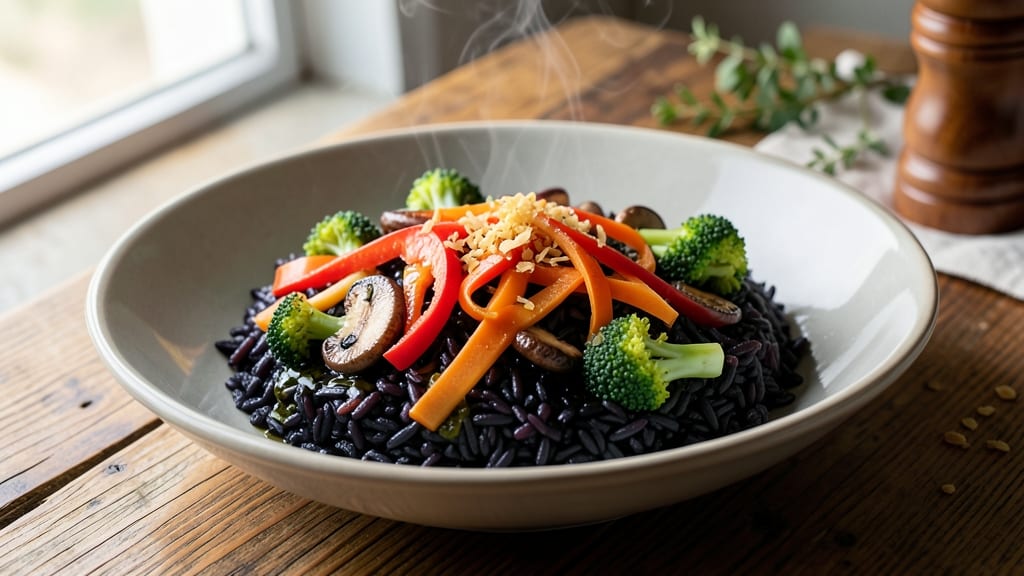
This black rice and vegetables recipe transforms simple ingredients into a vibrant, antioxidant-rich bowl that's as nutritious as it is visually stunning. The deep purple hue of black rice isn't just beautiful—it's packed with anthocyanins, powerful antioxidants that give this dish its health halo.
I've perfected a method that ensures perfectly tender rice with a subtle nutty flavor, paired with vegetables that retain their crisp texture and natural sweetness.
What makes this recipe stand out is the balance of textures and flavors—creamy black rice meets the satisfying crunch of stir-fried or roasted vegetables, all tied together with a light sesame-ginger dressing.
The preparation is straightforward yet impressive, requiring just 30 minutes of active time and delivering a dish that feels both comforting and sophisticated. Whether you're meal prepping for the week or serving as a centerpiece for dinner, this bowl delivers restaurant-quality results with minimal effort.
Ingredients for black rice and vegetables
Vibrant black rice paired with nutrient-dense vegetables creates this antioxidant powerhouse bowl.
| Ingredient | Amount | Notes |
|---|---|---|
| Black Rice (Forbidden Rice) 🌾 | 1 cup | Uncooked, rinsed thoroughly |
| Water 💧 | 2 cups | Filtered preferred for clarity |
| Carrots 🥕 | 1 cup | Julienned or matchstick cut |
| Bell Peppers (Red, Yellow, or Orange) 🧅 | 1 cup | Diced, any color variety |
| Broccoli Florets 🥦 | 1 ½ cups | Small florets for even cooking |
| Shiitake Mushrooms 🍄 | 4 whole | Stemmed, sliced thin |
| Red Onion 🧅 | ½ cup | Thinly sliced, white or red |
| Sesame Oil 🫒 | 1 tbsp | Toasted sesame preferred |
| Fresh Ginger 🌿 | 1 tbsp | Grated, organic preferred |
| Low-Sodium Soy Sauce 🍶 | 2 tbsp | Tamari for gluten-free option |
| Rice Vinegar 🍶 | 1 tbsp | Seasoned or unseasoned |
| Maple Syrup 🍯 | 1 tbsp | Pure, grade A preferred |
| Toasted Sesame Seeds 🌱 | 1 tbsp | For garnish |
| Sea Salt 🧂 | ½ tsp | Diamond Crystal preferred |
| Black Pepper 🌶️ | ¼ tsp | Freshly cracked |
The black rice is the star here—look for organic forbidden rice at specialty stores or well-stocked grocery chains like Whole Foods or Sprouts. Its deep purple hue comes from anthocyanins, so choose the darkest, most vibrant grains you can find. For the vegetables, freshness matters most—aim for crisp broccoli florets and firm shiitake mushrooms. The red onion adds a satisfying crunch, so slice it thinly for even cooking. If you can't find shiitake mushrooms, cremini or oyster mushrooms make excellent substitutes—they just need a slightly longer cook time.
No sesame oil? Toasted peanut oil works beautifully, though the flavor profile shifts slightly. The ginger should be fresh—dried won't provide the same zesty kick. For a sweeter touch, agave nectar can replace the maple syrup one-to-one. If you're using pre-cut vegetables, rinse them thoroughly to remove any excess moisture that could dilute your dressing. The soy sauce is non-negotiable for umami depth, but if you need gluten-free, tamari is the perfect alternative. For extra crunch, lightly toast your sesame seeds in a dry pan before using them as garnish—it amplifies their nutty flavor.
Black rice keeps best in an airtight container in the fridge for 4-5 days, though it's even better the next day as flavors meld. The vegetables should be cooked fresh—this isn't a dish that reheats well. For meal prep, store the dressing separately and toss everything together just before serving. The bowl reheats beautifully in the microwave for 30 seconds, but for best texture, eat it at room temperature. Portion into individual containers for grab-and-go lunches, or serve family-style for a visually stunning centerpiece.
Why You'll Love This Recipe
- One-Pot Magic: I swear by this recipe when I’m too tired to wash extra bowls—just toss everything into one pot, add water, and let it simmer. The black rice soaks up all the veggie flavors while staying tender, and honestly? No stirring required after the initial boil.
- Deep Umami Pop: That dark, nutty aroma from the forbidden rice? It’s not just visual—it’s flavor. The carrots caramelize slightly, the bell peppers add a bright crunch, and the broccoli stays vibrant. Between us, it’s the kind of dish where every bite tastes like you put in effort (even if you didn’t).
- Lunchbox Hero: I make this on Sundays because it’s my go-to for work lunches—holds up perfectly for days in the fridge. The rice stays separate enough to reheat quickly, and the veggies don’t turn mushy. My coworkers think I’m a meal-prep genius, but really, I’m just lazy in the best way.
- Budget Superstar: Black rice might sound fancy, but a single bag lasts me weeks for multiple meals. Carrots, bell peppers, and broccoli are cheap staples, and you’re not sacrificing taste—just look at that rich, earthy color. It’s the kind of recipe that makes grocery day feel like a win.
Step-by-step instructions for black rice and vegetables
Transform simple ingredients into a vibrant, nutrient-packed bowl with this precise method.
Prepare and Cook the Black Rice
Rinse the 1 cup Black Rice (Forbidden Rice) thoroughly under cold water until the water runs clear. This removes excess starch that can make the rice gummy. Transfer the rinsed rice to a medium saucepan and add the 2 cups Water. I like to use filtered water here—it makes a noticeable difference in clarity and texture.
Bring the water to a boil over medium-high heat, then immediately reduce to low heat. Cover with a tight-fitting lid and simmer for 35-40 minutes without lifting the lid. The rice will absorb all the water and develop its signature deep purple hue. If you peek too early, steam will escape and the rice may cook unevenly. After cooking, let it sit covered for 5 minutes before fluffing with a fork.
Sauté the Vegetable Base
While the rice cooks, heat the 1 tbsp Sesame Oil in a large skillet over medium heat. Add the 0.5 cup Red Onion and the 1 tbsp Fresh Ginger, cooking for 2-3 minutes until the onion becomes translucent and the ginger releases its aromatic oils. This step builds the flavor foundation—don't skip it.
Add the 1 cup Carrots and 1 cup Bell Peppers (Red, Yellow, or Orange) to the skillet. Cook for 5-6 minutes, stirring occasionally, until the vegetables begin to soften but still retain their vibrant colors. The goal is to develop flavor without fully cooking them—you'll finish them in the sauce. Season with the 0.5 tsp Sea Salt and 0.25 tsp Black Pepper at this stage to enhance their natural sweetness.
Incorporate Mushrooms and Sauce Components
Push the sautéed vegetables to one side of the skillet and add the 4 whole Shiitake Mushrooms (sliced thin) to the empty space. Cook for 3-4 minutes until the mushrooms release their moisture and begin to brown slightly. This caramelization adds depth to the dish.
Return the vegetables to the center of the skillet and pour in the 2 tbsp Low-Sodium Soy Sauce, 1 tbsp Rice Vinegar, and 1 tbsp Maple Syrup. Stir well to combine, then add the 1.5 cups Broccoli Florets. Cook for an additional 3-4 minutes until the broccoli is tender-crisp and the sauce begins to thicken slightly. The maple syrup here balances the savory flavors with subtle sweetness.
Combine and Garnish
Transfer the cooked black rice to a large serving bowl. Top with the vegetable mixture and gently fold everything together using two large spoons. This ensures even distribution of the vibrant purple rice throughout the dish. The contrast between the deep purple rice and colorful vegetables creates a visually stunning presentation.
Finish by drizzling with any remaining sauce from the skillet and sprinkling the 1 tbsp Toasted Sesame Seeds evenly over the top. Serve immediately while the vegetables are still warm and the rice maintains its perfect texture. Each bite delivers a balance of earthy mushrooms, crisp vegetables, and the nutty depth of black rice.
Pro Tips For Making Black Rice And Vegetables
- SOAK THE RICE FIRST: Black rice stays stubbornly firm if you skip this step. Toss it in water for at least 4 hours—or overnight if you remember—then rinse before cooking. I learned this the hard way when my first batch turned out like birdseed.
- CUT VEGETABLES UNIFORM: Chop carrots and bell peppers into similar-sized pieces, around ½-inch thick. Broccoli florets should be the same size too—this ensures even cooking and keeps the texture consistent. Uneven cuts mean some veggies turn mushy while others stay crunchy.
- USE A TIGHT-FITTING LID: If you’re steaming the rice and veggies together, don’t skimp on the lid. A loose one means moisture escapes, and your black rice will dry out faster than a summer sidewalk. Press it down gently to seal the heat inside.
- SAUTÉ THE VEGGIES FIRST: Don’t toss everything raw into the pot. Quickly stir-fry the carrots, bell peppers, and broccoli in a splash of oil for 3–4 minutes before adding the rice. This jumpstarts their flavor and keeps them from turning into a sad, soggy pile. (Yes, even if you’re impatient like me.)
Flavor customization for black rice and vegetables
Spicy Kick
For a bold flavor twist, add ½ tsp of chili crisp or 1 tsp of sriracha to the sauce mixture before combining with the vegetables. This injects a fiery heat that pairs beautifully with the earthy mushrooms and sweet carrots.
I like to balance it with an extra ½ tsp maple syrup to keep the flavors harmonious. 🌶️
Citrus Brightness
Brighten the bowl with 1 tbsp freshly squeezed lime juice and 1 tsp lime zest mixed into the dressing. The acidity cuts through the richness of the black rice and enhances the natural sweetness of the bell peppers. For extra zing, garnish with thin lime wedges on the side. 🍋
Smoky Depth
Infuse the dish with smoky flavor by adding ½ tsp smoked paprika to the soy sauce mixture or by lightly charring the vegetables. For a quick char, toss the broccoli and mushrooms in a hot skillet for 1-2 minutes before adding them to the sauce.
The smoky notes complement the nutty black rice perfectly. 🔥
Herbaceous Freshness
Add fresh herbs like cilantro, mint, or Thai basil for a bright, herbal finish. Chop 2 tbsp of cilantro finely and sprinkle it over the top just before serving. For a more sophisticated touch, blend 1 tbsp of mint into the dressing for a refreshing twist. 🌿
Creamy Texture
For a creamier texture, stir 1 tbsp of tahini or ½ cup of coconut yogurt into the dressing. This adds a velvety richness that contrasts beautifully with the crisp vegetables. I recommend using unsweetened coconut yogurt to keep the dish vegan-friendly. 🥥
Nutty Crunch
Finish the bowl with toasted almonds or cashews for added crunch. Lightly toast 2 tbsp of sliced almonds in a dry pan for 2-3 minutes until golden, then sprinkle them over the top. The nutty flavor complements the black rice and adds a satisfying texture. 🌰
Nutrition facts
Frequently asked questions
Why does black rice turn purple when cooked?
That stunning color comes from anthocyanins—powerful antioxidants naturally found in black rice! These pigments react to heat, intensifying the deep purple hue while adding nutritional benefits like anti-inflammatory properties. The darker the rice, the higher the anthocyanin content.
Can I substitute regular brown rice for black rice?
While it'll work in a pinch, you'll miss the nutritional punch and visual drama! Black rice has 4x more anthocyanins than brown rice, and its nutty flavor profile is distinct. For a similar texture, try purple rice (a lighter black rice variety), but expect less vibrant color.
How do I prevent the vegetables from getting mushy?
Cook them in batches with high heat for short times—3-4 minutes max for mushrooms, 5-6 minutes for harder veggies like carrots. Use a wok or large skillet and keep stirring. For broccoli, add it last (just 2-3 minutes) to maintain crispness.
What's the best way to reheat leftovers?
Microwave for 30-45 seconds with a damp paper towel covering the bowl to retain moisture. For best texture, eat within 2 days—black rice reheats better than most grains, but vegetables lose crispness. Alternatively, store components separately and assemble fresh.
Can I make this gluten-free?
Just swap the soy sauce for tamari (gluten-free soy sauce) and ensure your sesame oil is certified gluten-free. All other ingredients in this recipe are naturally gluten-free. The dish remains just as flavorful with these simple adjustments.