
Main Courses
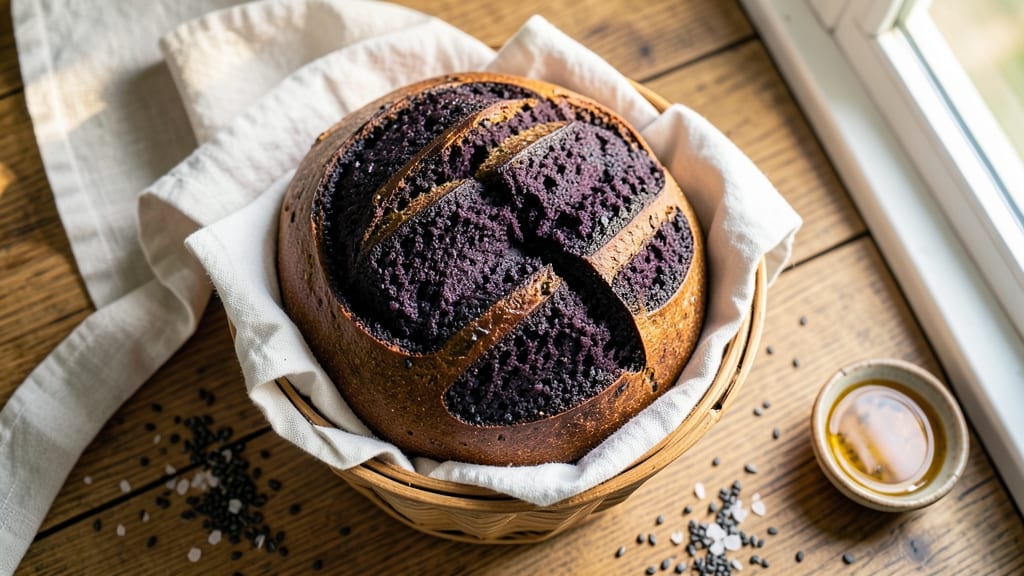
This black rice bread recipe transforms humble ingredients into a deep purple loaf with a nutty, earthy crunch that stands apart from traditional breads. The secret lies in black rice flour, which lends both striking color and a subtle sweetness that deepens with baking.
I developed this recipe after years of experimenting with alternative flours, and it delivers a texture that's both tender and satisfying.
What makes this bread truly special is its complex flavor profile—the black rice flour contributes a mild, almost caramel-like sweetness, while the whole grains add a satisfying bite. The crust develops a golden-brown hue with a crisp exterior, while the interior remains soft and moist.
Perfect for sandwiches, toast, or simply enjoyed on its own, this bread is a showstopper that will elevate any meal.
Ingredients for black rice bread
Transform humble ingredients into a striking purple loaf with this artisanal black rice bread recipe.
| Ingredient | Amount | Notes |
|---|---|---|
| Black Rice Flour 🌾 | 2 cups | High-quality, finely milled |
| All-Purpose Flour 🌾 | 1 ½ cups | Unbleached preferred |
| Whole Wheat Flour 🌾 | 1 cup | Stone-ground for texture |
| Active Dry Yeast 🍞 | 2 ¼ tsp | Freshly opened for potency |
| Granulated Sugar 🍬 | ½ cup | Organic preferred |
| Unsweetened Almond Milk 🥛 | 1 cup | Room temperature |
| Extra-Virgin Olive Oil 🫒 | ⅓ cup | Cold-pressed for flavor |
| Apple Cider Vinegar 🍎 | 1 tbsp | Raw, unfiltered preferred |
| Salt 🧂 | 1 ½ tsp | Diamond Crystal preferred |
| Flaxseed Meal 🌱 | 1 tbsp | Ground fresh for binding |
| Water 💧 | ¾ cup | Lukewarm for yeast activation |
| Sesame Seeds 🌻 | 1 tbsp | Toasted for garnish |
| Poppy Seeds 🌱 | 1 tbsp | Optional for texture |
| Black Sesame Seeds 🌻 | 1 tbsp | For visual contrast |
The black rice flour is the cornerstone of this recipe—Bob’s Red Mill or Anthony’s Goods are excellent sources for high-quality, finely milled black rice flour. Look for a vibrant purple hue in the flour, which indicates freshness and optimal flavor development. Whole wheat flour adds depth, so opt for stone-ground varieties like King Arthur or Arrowhead Mills for a more robust texture. The yeast should be freshly opened to ensure maximum potency; if using a jar, check the expiration date and store it in the refrigerator for longevity. Sesame seeds can be found in the baking aisle or international foods section of most grocery stores, with Trader Joe’s offering a reliable pre-toasted option.
No black rice flour? Substitute with 1.5 cups of whole wheat flour plus 0.5 cup of purple sweet potato puree for color, though the flavor will differ slightly. Swap almond milk for soy milk or oat milk if preferred, but avoid dairy-based alternatives. For a lighter crumb, reduce whole wheat flour by 0.25 cup and add 0.25 cup of all-purpose flour. The flaxseed meal acts as an egg substitute, so ensure it's freshly ground for optimal binding. If you're short on time, pre-mixed gluten-free flour blends can replace up to 0.5 cup of the all-purpose flour, though texture may vary. Toast the sesame seeds in a dry pan for 2-3 minutes to enhance their nutty aroma before sprinkling on top.
Store the loaf in an airtight container at room temperature for up to 3 days to maintain freshness, or wrap tightly in plastic wrap for extended shelf life. For longer storage, freeze the bread in slices, separated by parchment paper, for up to 3 months. Reheat slices in a toaster or oven at 350°F (175°C) for 5-7 minutes to restore crispness. This bread freezes exceptionally well, making it perfect for batch baking. To prevent drying, avoid storing in the refrigerator unless necessary, as the moisture content can accelerate staling. The crust benefits from a quick reheat before serving, especially if using for sandwiches.
Why You'll Love This Recipe
- No-Fuss Mixing: This dough comes together in one bowl—no kneading, no fuss. Just toss in the black rice flour, whole wheat flour, and a pinch of yeast, then let the sugar feed that yeast while you sip your coffee. Honestly, my hands stay cleaner than with most bread recipes.
- Earthy Sweetness: That black rice flour? It’s like a secret superpower—nutty, slightly sweet, and packed with antioxidants. The whole wheat adds a chewy bite, and the yeast gives it a light, airy crumb. Between us, it’s the kind of bread that makes toast taste like a treat.
- Weeknight Hero: Slice it fresh for breakfast or pack it for lunches—it stays soft for days. I’ve even used it to soak up marinara for a lazy dinner. Not the prettiest loaf, but the taste makes up for it every time.
- Budget-Friendly Staple: Whole wheat and black rice flour stretch further than white flour, and yeast is dirt cheap. A single batch feeds my family for days, and the leftovers? Perfect for croutons or breadcrumbs. My wallet and my freezer both thank me.
Step-by-step instructions for black rice bread
Transform these vibrant ingredients into a striking loaf with deep purple hues and nutty complexity.
Activate the Yeast Mixture
In a medium bowl, combine the lukewarm water, 2.25 teaspoons active dry yeast, and 0.5 cup granulated sugar. Let this mixture sit for 5-10 minutes until it develops a frothy, bubbly surface—this confirms the yeast is active. If no bubbles form within 10 minutes, your yeast may be expired or the water too hot; start fresh with new yeast.
Next, whisk in the 1 cup unsweetened almond milk and 1 tablespoon apple cider vinegar. The vinegar adds subtle tang while balancing the bread's earthy notes. Set this mixture aside while you prepare the dry ingredients. The liquid should remain at 105-110°F—ideal for yeast activation without killing it.
Combine Dry Ingredients
In a large mixing bowl, sift together the 2 cups black rice flour, 1.5 cups all-purpose flour, and 1 cup whole wheat flour. This blend creates the bread's signature deep purple hue and dense, nutty crumb. Whisk in the 1.5 teaspoons salt and 1 tablespoon flaxseed meal, which acts as a natural binder without eggs.
Make a well in the center of the dry ingredients and pour in the yeast mixture. Using a wooden spoon or dough whisk, gradually incorporate the liquid until a shaggy dough forms. Avoid overmixing at this stage—you want to preserve the gluten development for later. The dough should be sticky but manageable, resembling thick pancake batter.
Knead and Develop Gluten
Transfer the dough to a lightly floured surface and knead for 8-10 minutes by hand, or use a stand mixer with a dough hook attachment on medium speed for 6-7 minutes. You're aiming for a smooth, elastic dough that springs back when poked. The black rice flour will make the dough slightly denser than traditional bread dough, so work gently to avoid overdeveloping the gluten.
If the dough feels too sticky, wet your hands slightly and continue kneading. Once properly kneaded, place the dough in a lightly oiled bowl, cover with a damp towel, and let it rise in a warm place for 1-1.5 hours, or until it has doubled in size. The dough should feel light and airy, with a slight jiggle when shaken gently.
Shape and Proof the Loaf
Punch down the risen dough to release air, then shape it into a 9x5-inch loaf pan by folding the edges inward and pressing gently to fill the pan evenly. Brush the top with a mixture of 0.33 cup extra-virgin olive oil and 1 tablespoon water for a glossy finish. Sprinkle the 1 tablespoon sesame seeds, 1 tablespoon poppy seeds, and 1 tablespoon black sesame seeds over the top for texture and visual contrast.
Cover the pan with a damp towel and let the dough proof for an additional 30-45 minutes until it rises 1-2 inches above the pan. The seeds should be embedded slightly into the dough, not just resting on top. Preheat your oven to 375°F while the bread proofs—this ensures a hot oven when the loaf goes in.
Bake to Golden Perfection
Bake the loaf for 45-50 minutes until the top is deep golden brown and an instant-read thermometer inserted into the center reads 205-210°F. The bread will have a subtle crack on top and pull away slightly from the sides of the pan. If the top browns too quickly, tent the loaf with aluminum foil to prevent overbrowning while ensuring it cooks through.
Remove the bread from the oven and let it cool in the pan for 10 minutes, then transfer to a wire rack. The internal temperature will rise slightly as it cools, but the bread should remain moist and tender. Slice when fully cooled—the deep purple crumb and nutty aroma will be even more pronounced. Store wrapped at room temperature for up to 3 days or freeze for longer storage.
Pro Tips For Making Black Rice Bread
- Mix the flours first: Black rice flour is heavy—don’t just dump it in. Sift the all-purpose and whole wheat together first, then fold in the black rice flour last. This keeps the dough from turning into a sticky mess before the yeast even wakes up.
- Proof the yeast in warm water: Skip the milk or cold water—this isn’t brioche. Use water heated to 105°F (just warm to the touch) to activate the yeast fast. If the water’s too hot, you’ll kill it; too cold, and you’ll waste 30 minutes waiting. Test it: dip your finger in—should feel like bathwater, not a sauna.
- Knead until the dough passes the windowpane test: Black rice flour makes dough dense, so resist the urge to stop early. Stretch a small piece—if it doesn’t tear but thins to translucent (like a bubble wrap sheet), you’re good. I learned this the hard way: under-kneaded dough collapses like a sad soufflé.
- Let the dough rest twice: First rise is for the yeast; second rise (after shaping) is for the gluten to relax. Cover the shaped loaf and let it sit for at least 30 minutes before baking. Rushed? The bread will be dense. Patience here = that perfect airy crumb you crave. (Yes, even if you’re impatient like me.)
Essential equipment for this recipe
Must-Have Mixing Tools
Start with a large mixing bowl (I prefer stainless steel for durability) to combine your dry ingredients. A wooden spoon or dough whisk works best for incorporating the wet mixture—avoid metal utensils that can damage yeast cells.
For kneading, use either a lightly floured surface (like a marble or granite board) or a stand mixer with a dough hook attachment (like the KitchenAid Artisan Series). 🌾
Yeast Activation Essentials
Your yeast needs the perfect environment to activate, so grab a medium bowl and a whisk (I use a silicone whisk for easy cleanup). A digital thermometer (like the OXO Good Grips) ensures your water stays at 105-110°F—critical for yeast success.
A damp towel keeps your yeast mixture warm during the 5-10 minute activation period.
Kneading and Shaping Gear
For hand-kneading, a lightly floured surface prevents sticking, and damp hands help manage the sticky dough. If using a mixer, the KitchenAid 5-Qt Bowl Lift makes dough handling easier.
Shape your loaf in a 9x5-inch loaf pan (I recommend Nordic Ware for even baking). A small offset spatula helps spread the oil mixture evenly before adding seeds.
Baking and Cooling Tools
An instant-read thermometer (like Thermoworks ThermoPop) ensures your bread reaches 205-210°F for perfect doneness. A wire cooling rack prevents soggy bottoms while cooling. For seed topping, toast sesame seeds in a dry nonstick skillet over medium heat for 2-3 minutes to enhance their flavor.
A parchment-lined baking sheet catches any crumbs during cooling.
Storage and Reheating Supplies
Store your bread in an airtight container (like Rubbermaid Brilliance) to maintain freshness for 3 days. For freezing, use quart-sized freezer bags with parchment paper between slices. Reheat slices in a toaster or 350°F oven for 5-7 minutes—I use a Breville Smart Oven for even results.
A sharp serrated knife (like Mercer Culinary) gives clean slices through the dense crumb.
Nutrition facts
Frequently asked questions about black rice bread
Why does my black rice bread turn out pale purple instead of deep purple?
The vibrant purple color comes from the black rice flour, so using lower-quality flour or insufficient quantity will dull the hue. Always use 2 cups of high-quality black rice flour (like Bob's Red Mill) and ensure it's freshly milled. The color deepens as it bakes, so don't worry if the raw dough looks lighter.
Can I make this bread without a stand mixer?
This recipe works perfectly with hand-kneading. Give the dough 8-10 minutes of vigorous kneading on a lightly floured surface until smooth and elastic. The black rice flour makes the dough slightly denser, so work it gently to avoid overdeveloping the gluten.
How do I prevent my black rice bread from being too dense?
Over-kneading or using too much whole wheat flour can make the bread dense. Knead just until the dough springs back when poked, and reduce whole wheat flour by 0.25 cup if needed. Also, ensure your yeast is active and the dough rises properly in a warm environment.
What's the best way to use up leftover black rice bread?
This bread freezes beautifully for up to 3 months—slice and freeze between parchment paper. Toast frozen slices directly in a toaster for crispy results. For extra flavor, try making black rice bread croutons by cubing and baking at 375°F for 10-12 minutes with olive oil and herbs.
Can I substitute black rice flour with other colored flours?
While black rice flour is key for authentic flavor and color, you can experiment with purple sweet potato puree (0.5 cup) for color and whole wheat flour for texture. However, the nutty depth of black rice flour won't be replicated. For a lighter version, reduce whole wheat flour by 0.25 cup and add 0.25 cup all-purpose flour.