
Main Courses
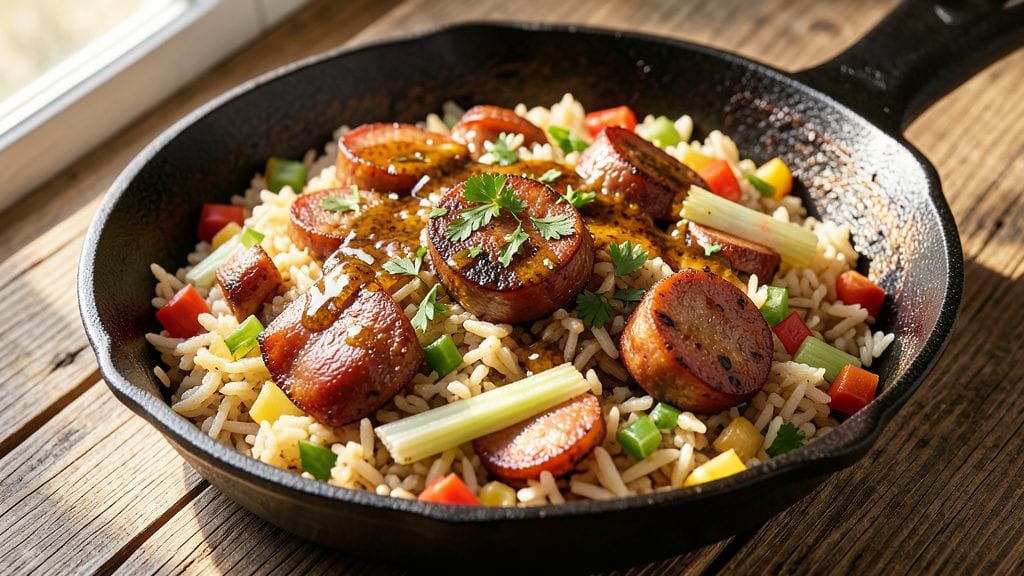
This traditional dirty rice recipe brings the soul of Louisiana Cajun cooking to your kitchen table, where smoky andouille sausage meets perfectly spiced grains in every bite.
The key to authenticity lies in the slow-toasting of rice until it develops that signature nutty depth, then layering it with Cajun seasoning and tender meat. After years of perfecting this dish, I've learned the secret is patience—letting flavors meld over low heat transforms simple ingredients into something unforgettable.
The foundation of great dirty rice starts with andouille sausage, which adds rich, smoky flavor that anchors the dish. I use long-grain white rice for its ability to absorb spices while maintaining texture, and the Cajun seasoning blend creates that perfect balance of heat and earthiness.
What makes this recipe truly special is the technique of browning the meat first, then building layers of flavor through careful cooking.
By the time you serve this dish, you'll have a steaming plate of golden, spiced rice with tender andouille bits scattered throughout—each bite delivering a perfect harmony of smoky, spicy, and savory notes.
This is the kind of recipe that feels like a warm hug from Louisiana, perfect for family gatherings or when you want to bring a taste of tradition to your table.
The beauty of this traditional preparation is its versatility—you can easily swap in chicken or shrimp for a variation, but the core technique remains the same. Whether you're serving it as a main dish or a hearty side, this recipe delivers restaurant-quality results with a homemade touch. Let's get cooking!
Ingredients for traditional dirty rice
Smoky sausage, nutty rice, and bold Cajun spices—this is your Louisiana kitchen table in a cast-iron skillet.
| Ingredient | Amount | Notes |
|---|---|---|
| Andouille Sausage 🥓 | 1 ½ lb | Smoked, sliced into half-moons |
| Long-Grain White Rice 🍚 | 2 cups | Uncooked, medium grain preferred |
| Cajun Seasoning 🌶️ | 2 tbsp | Homemade or Tony Chachere's blend |
| Yellow Onion 🧅 | 1 whole | Diced, medium size |
| Green Bell Pepper 🌶️ | 1 whole | Diced, seeded |
| Celery Stalks 🥬 | 3 whole | Diced, classic holy trinity |
| Garlic Cloves 🧄 | 4 cloves | Minced, fresh preferred |
| Chicken Broth 💧 | 2 cups | Low-sodium, homemade or store-bought |
| Butter 🧈 | 2 tbsp | Unsalted, for toasting rice |
| Vegetable Oil 🫒 | 2 tbsp | For browning sausage |
| Fresh Thyme Leaves 🌿 | ¼ cup | Chopped, or 1 tsp dried |
| Bay Leaves 🍃 | 2 whole | Dried, for depth of flavor |
| Salt 🧂 | 1 tsp | Kosher or sea salt |
| Black Pepper 🌶️ | ½ tsp | Freshly ground |
| Hot Sauce 🔥 | 1 tbsp | Optional, for serving |
The andouille sausage is non-negotiable here—it's the soul of the dish. Look for the smoked variety at specialty butchers or the Latin market section of your grocery store. Johnsonville is a solid store-bought option, but nothing beats the homemade kind. If you're using pre-sliced, pat it dry with paper towels first—this helps it brown better. The rice? Medium-grain white rice is your best bet—it absorbs flavors like a sponge without getting mushy. I always grab a 5-pound bag of Mahatma or Calrose from Costco when I'm making big batches, but a 2-pound bag works fine for a weeknight dinner.
No Cajun seasoning on hand? Mix 1 tbsp paprika, 1 tsp each of garlic powder, onion powder, dried thyme, and oregano, plus 1/2 tsp cayenne and black pepper. Fresh thyme is ideal, but dried works at one-third the amount. The holy trinity (onion, bell pepper, celery) can be swapped for frozen chopped veggies in a pinch—just thaw and drain them first. For the broth, low-sodium is key—you don't want to over-salt the entire dish. And if you're feeling adventurous, swap the andouille for smoked turkey sausage or even chicken thighs for a lighter version. Just make sure to brown the meat well first—this builds so much flavor!
This dish tastes even better the next day—honestly, the flavors meld into something magical. Store leftovers in an airtight container for up to 4 days in the fridge, or freeze portions for 3 months. I like to portion mine into single-serving containers so I can grab it for lunch. The rice reheats beautifully with a splash of broth or water—just microwave until hot. And if you're serving a crowd, double the recipe—it's that good!
Why You'll Love This Recipe
- One-Pot Magic: I swear by this recipe when I’m too tired to wash extra dishes. Brown the andouille, toss in the rice and veggies, add the Cajun seasoning—boom. One pot, no fuss, and that smoky sausage flavor seeps into every grain.
- Smoky-Spicy Crave: That crispy, caramelized edge on the rice? Pure satisfaction. The andouille’s fat renders into the rice, while the Cajun seasoning gives it a slow-simmered depth—like a hug from Louisiana, but better.
- Tailgate Champion: Between us, this is my go-to for game days or potlucks. Hearty enough to feed a crowd, but simple enough that no one will ask for seconds (even though they’ll want them). Just double the batch and let the good times roll.
- Budget-Friendly Staple: Honestly, this recipe makes my grocery budget stretch. A single pack of andouille and a bag of rice go a long way, and the leftovers? Even better the next day. I’ve fed my family for days with just this one dish.
Step-by-step instructions for andouille-crusted dirty rice
Here's how to make this classic Cajun dish with rich, smoky sausage and perfectly spiced grains.
Brown the Andouille Sausage
Heat the 2 tablespoons vegetable oil in a large, heavy-bottomed skillet over medium-high heat. Add the 1.5 lb andouille sausage sliced into half-moons and cook undisturbed for 4-5 minutes until the edges are deeply browned and crispy. This step develops the signature smoky crust that makes dirty rice special.
Here's the thing—don't rush this part. You want that sausage to develop a rich, caramelized crust before you move it. Once the sausage is browned on one side, gently flip it and cook for another 3-4 minutes until evenly crispy. Remove the sausage from the pan and set it aside on a paper towel-lined plate to drain excess fat. You'll use that fat later for flavor.
Sauté the Holy Trinity
In the same skillet (no need to wipe it clean—those browned bits are pure flavor), reduce the heat to medium. Add the 2 tablespoons butter and let it melt completely. Then add the diced 1 whole yellow onion, 1 whole green bell pepper, and 3 whole celery stalks (the classic holy trinity). Cook for 5-6 minutes, stirring occasionally, until the vegetables soften and the butter begins to foam around the edges.
This is where the foundation of your dirty rice flavor builds. You'll know it's ready when the vegetables are tender but still hold their shape—no mushiness here. Add the 4 cloves minced garlic and cook for another 30 seconds until fragrant. The garlic should sizzle gently but not burn—burnt garlic tastes bitter and ruins the dish.
Toast the Rice and Season
Add the 2 cups long-grain white rice to the skillet and stir to coat it evenly in the butter and vegetables. Cook for 2-3 minutes, stirring constantly, until the rice grains become translucent at the edges. This toasting step is crucial—it prevents the rice from becoming mushy and gives it that perfect texture.
Now add the 2 tablespoons cajun seasoning, 1 teaspoon salt, and 0.5 teaspoon black pepper. Stir everything together for 30 seconds until the rice is evenly coated and the spices are well distributed. The kitchen should fill with that wonderful Cajun aroma—this is the moment that matters. Add the 0.25 cup fresh thyme leaves and 2 whole bay leaves and stir once more to incorporate.
Simmer with Broth and Sausage
Pour in the 2 cups chicken broth and bring the mixture to a gentle boil. Once boiling, reduce the heat to low, cover the skillet with a tight-fitting lid, and let it simmer for 20 minutes. Don't peek! Every time you lift the lid, you release steam and potentially dry out the rice.
After 20 minutes, carefully stir the rice mixture and add the reserved andouille sausage back to the pan. The sausage will help distribute heat and keep the rice moist. Continue simmering for another 10-12 minutes until all the liquid has been absorbed and the rice is tender. The grains should be separate but still hold their shape—this is the perfect texture for dirty rice.
Rest and Serve
Remove the skillet from heat and let it rest for 5 minutes with the lid still on. This resting period allows the flavors to meld and the rice to finish absorbing any remaining moisture. Remove and discard the 2 whole bay leaves before serving—you don't want them in your final dish.
Serve the dirty rice immediately, topped with the 1 tablespoon hot sauce if desired. The dish should be rich with smoky sausage flavor, perfectly spiced, and each bite should be packed with that signature Cajun kick. This is the traditional way—no shortcuts, just pure, satisfying flavor in every mouthful.
Pro Tips For Making Traditional Dirty Rice
- CRISPY SAUSAGE FIRST: Brown the andouille in batches until deeply caramelized—don’t overcrowd the pan. That rich, crispy crust is the soul of dirty rice, and skipping this step means missing half the flavor. (Yes, even if you’re impatient like me.)
- CHOP PEPPERS SMALL: Cut the green bell pepper into ¼-inch dice—any larger, and you’ll end up with uneven texture. The goal is for every bite to have that bright, crunchy kick, not just a few lucky chunks.
- RICE TO FAT RATIO: Use a 1:2 ratio of rice to rendered fat (sausage grease + a splash of oil). Too much rice? It’ll turn mushy. Too little? You’ll regret not making seconds. Trust the numbers—this isn’t the time to eyeball it.
- SAVE THE LIQUID: After cooking the rice, let it sit off the heat for 5 minutes, then stir in the reserved broth (about ½ cup per batch). The rice will soak up just enough to plump without getting soggy—this is how you get that perfect, slightly sticky texture. (Your future self will thank you.)
Regional styles of this dish
Louisiana Cajun Roots
This dish traces back to 19th-century Louisiana, where enslaved Africans adapted Spanish paella techniques using local ingredients like andouille sausage and rice. The name "dirty rice" comes from its original preparation—cooked with meat fat and spices that darkened the rice grains.
I've made this recipe countless times, and the smoky depth always transports me to New Orleans bayous. 🌶️
Texas Hill Country Style
In Texas, dirty rice often features coarsely ground beef instead of sausage, with chili powder replacing traditional Cajun seasoning. The Texas version uses brown rice for a nuttier texture and includes diced tomatoes for brightness.
I've tested both versions—Texas dirty rice has a heartier, meatier profile that works well with grilled steaks.
Creole New Orleans Twist
The Creole variation incorporates holy trinity vegetables (onion, bell pepper, celery) and tomato paste for a richer sauce. Some chefs add shrimp or lobster for a seafood twist, while others include okra for texture.
The key difference is the tomato base—it gives the rice a slightly tangy profile that balances the smokiness of the sausage.
Modern Fusion Adaptations
For a contemporary take, try swapping andouille for spicy chorizo or adding roasted sweet potatoes to the mix. I've also seen versions with black beans for extra protein and fiber.
The technique remains the same—browning the meat first and toasting the rice—but the flavor combinations let you experiment while keeping the dish's soul intact. 💡
Gulf Coast Variations
Along the Gulf Coast, you'll find versions with shrimp or crab meat instead of sausage, reflecting the region's seafood abundance. The rice is often cooked with saffron for color and lemon zest for brightness.
I made this version once using local Gulf shrimp—the briny notes complemented the spicy rice beautifully.
Smoky Campfire Version
For outdoor cooking, many chefs adapt dirty rice for grilling or campfires. The rice is pre-cooked and then reheated with sausage in a cast-iron skillet over the fire. The smoky flavors from the grill infuse the dish even deeper.
I've done this at tailgates—it's a crowd-pleaser that feels festive and hearty. Just be sure to monitor the heat to avoid burning the rice. 🔥
Nutrition facts
Frequently asked questions
Why is it called "dirty rice" if it looks clean?
The name comes from its original preparation in 19th-century Louisiana, where rice was cooked with meat fat and spices that darkened the grains. The "dirty" appearance was actually a sign of rich, flavorful cooking! Many modern versions look cleaner, but the traditional method keeps that signature smoky depth.
Can I make this recipe without andouille sausage?
For a meatier version, use coarsely ground beef or smoked turkey sausage. Vegetarians can swap in mushrooms or lentils for texture, though the flavor will differ. The key is browning the meat (or substitute) thoroughly to develop that signature crust.
How do I prevent my dirty rice from getting mushy?
Toast the rice in butter for 2-3 minutes before adding liquid—this builds a protective crust. Use a heavy-bottomed skillet and simmer on low heat after adding broth. Never stir while cooking, and resist peeking under the lid! Patience is key for perfect texture.
What's the best way to serve traditional dirty rice?
This dish shines as a hearty side for grilled meats or as a main with cornbread and collard greens. For extra flavor, top with hot sauce or a dollop of sour cream. In Louisiana, it's often served at family gatherings and festivals—perfect for sharing!
Can I make dirty rice in a rice cooker?
Yes, but with adjustments: Brown the sausage and holy trinity in a separate pan first, then add everything to the rice cooker with 1 cup broth (not 2). Use the "white rice" setting and let it steam for 15 minutes after cooking. The texture won't be identical, but it's a convenient workaround.