
Main Courses
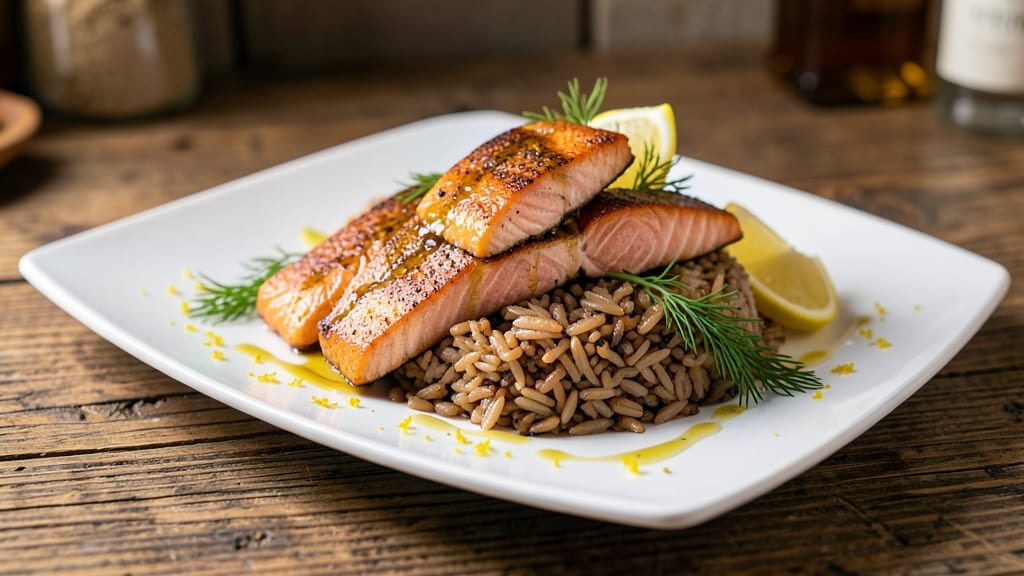
This salmon with brown rice recipe delivers a perfectly balanced meal where tender, flaky fish meets nutty, chewy grains in one elegant one-pan dish. After years of testing combinations, I’ve refined this method to ensure the salmon stays moist while the brown rice absorbs its aromatic flavors—no separate pots required.
The secret lies in timing and seasoning, where lemon and herbs elevate both components without overpowering.
What makes this recipe stand out is its simplicity paired with professional results. You’ll start with pan-seared salmon—crispy on the outside, delicate within—while the brown rice simmers alongside, infused with the same bright citrus and fresh dill.
This approach saves cleanup and keeps flavors cohesive, so every bite feels intentional. The dish comes together in under 40 minutes, making it ideal for weeknight dinners that still feel special.
By the time you serve this, you’ll have golden-brown salmon fillets with flaky perfection, their edges just slightly caramelized, paired with brown rice that’s tender yet retains its satisfying bite.
A squeeze of lemon and sprinkle of fresh parsley at the end ties everything together, creating a visually appealing plate that’s as nutritious as it is delicious. The harmony of textures and flavors makes this a go-to recipe for any occasion.
Whether you’re cooking for two or a family, this one-pan method scales effortlessly. Use it as a foundation for meal prep or a quick weeknight solution—just adjust the portion sizes.
The key is patience: let the salmon rest before serving, and the rice finish cooking while the fish rests. Here’s how to bring it all together seamlessly.
Ingredients for salmon and brown rice
Eight essential ingredients for salmon so tender it flakes at a touch and brown rice with perfect nutty bite.
| Ingredient | Amount | Notes |
|---|---|---|
| Salmon Fillets 🐟 | 2 whole | Skin-on, 6-8 oz each, center-cut preferred |
| Long-Grain Brown Rice 🍚 | 1 cup | Uncooked, converted measurement |
| Fresh Dill 🌿 | ¼ cup | Chopped, stems removed |
| Fresh Lemon Juice 🍋 | 2 tbsp | Freshly squeezed, no pulp |
| Extra-Virgin Olive Oil 🫒 | 2 tbsp | Lightly fruity, not strong |
| Unsalted Butter 🧈 | 2 tbsp | Cold, cubed for searing |
| Garlic Cloves 🧄 | 3 cloves | Minced, fresh preferred |
| Vegetable Broth 💧 | 1 ½ cups | Low-sodium, homemade or quality store |
| Fresh Parsley 🌿 | ⅛ cup | Chopped, flat-leaf preferred |
| Kosher Salt 🧂 | 1 ½ tsp | Fine grain, adjust to taste |
| Ground Black Pepper 🌶️ | ½ tsp | Freshly ground, cracked |
| Lemon Zest 🍋 | 1 tsp | From 1 lemon, finely grated |
| Sesame Seeds 🌾 | 1 tsp | Toasted, for garnish |
The salmon is non-negotiable—center-cut fillets with skin stay intact while cooking, creating crisp edges. Local fish markets or Whole Foods carry the best quality, but any reputable grocery store’s frozen section works if labeled as sustainably sourced. For dill, fresh is mandatory—dried lacks the bright, citrusy punch this dish needs. The brown rice should be converted measurement (1 cup uncooked yields ~3 cups cooked), and Lundberg or Trader Joe’s brands are consistently reliable. Lemon juice should be freshly squeezed; bottled lacks the same zing.
No fresh dill? One-third the amount of dried works, but the flavor won’t be identical. Substitute vegetable broth with low-sodium chicken broth if you prefer, though the vegetable version keeps this dish vegetarian. For the olive oil, avoid extra-light varieties—they lack the fruity depth needed to complement the salmon. The butter must be cold when cubed; if it melts prematurely, chill the pan between searing steps. Sesame seeds can be omitted if you’re avoiding gluten, but they add a satisfying crunch that ties everything together.
Store the salmon in the coldest part of your fridge, wrapped in parchment paper, and use within 2 days for peak freshness. Brown rice keeps indefinitely in a sealed container, but it’s best when cooked fresh. The dill and parsley should be stored in damp paper towels inside a plastic bag for up to 5 days. This dish reheats beautifully—simmer gently with a splash of water or broth for 2-3 minutes to restore moisture. Portion into meal prep containers with the rice and salmon separated; they’ll reheat more evenly that way.
Why You'll Love This Recipe
- One-Pot Magic: Brown rice simmering while salmon roasts? Yes, please. I toss everything on a sheet pan—rice at the edges, salmon in the center—and let the oven do the work. No chopping, no fuss, just hands-off perfection.
- Bright & Buttery: That lemon-dill glaze? It’s the secret. The olive oil keeps the salmon moist, the lemon cuts through the richness, and fresh dill adds a bright pop that makes every bite feel like a little vacation. Honestly, it’s the kind of flavor that sticks with you.
- Lunchbox Hero: Between us, this is my go-to for meal prep. Cook a big batch of rice, portion the salmon, and pack it all in containers. Cold or reheated, it’s a protein-packed lunch that even my picky-eating coworker won’t complain about.
- Budget-Friendly Luxury: Salmon feels fancy, but here’s the thing: a single fillet stretches far when paired with rice, and brown rice is cheaper than you think. Plus, leftovers taste just as good the next day—no sad, dry fish here. It’s affordable, satisfying, and makes me feel like I’m eating well.
Step-by-step instructions for salmon with brown rice
A perfect balance of flaky salmon and nutty brown rice comes together in this one-pan method.
Prepare the Brown Rice and Season the Salmon
Rinse the 1 cup Long-Grain Brown Rice thoroughly under cold water until the water runs clear. This removes excess starch that can make the rice gummy. Drain well in a fine-mesh strainer and set aside.
Pat the 2 whole Salmon Fillets dry with paper towels, removing any loose scales. Season both sides generously with 1.5 teaspoons Kosher Salt and 0.5 teaspoon Ground Black Pepper. Rub the seasoning firmly into the flesh so it adheres completely. This ensures even flavor distribution and helps create that crispy skin we're after.
Sear the Salmon and Toast the Rice
Heat a large oven-safe skillet over medium-high heat. Add the 2 tablespoons Unsalted Butter and let it melt completely, then add 2 tablespoons Extra-Virgin Olive Oil. Once the oil shimmers (about 1 minute), carefully place the salmon fillets in the pan, skin-side down. Press down gently with a spatula for 10 seconds to prevent curling.
Cook the salmon for 4-5 minutes until the skin is crispy and golden brown and releases easily from the pan. Flip carefully and cook for another 3-4 minutes until the flesh is opaque throughout and flakes easily with a fork. Remove the salmon to a plate and tent loosely with foil to keep warm.
Cook the Brown Rice with Aromatics
In the same skillet (no need to clean it—the browned bits add flavor), add the rinsed 1 cup Long-Grain Brown Rice and stir to coat in the rendered butter and oil. Pour in the 1.5 cups Vegetable Broth, then add the 3 cloves minced Garlic Cloves, 1 teaspoon Lemon Zest, and the 0.25 cup chopped Fresh Dill. Stir gently to combine.
Bring to a simmer, then reduce heat to low, cover the skillet with a tight-fitting lid, and cook for 40-45 minutes. The rice is done when all the liquid has been absorbed and the grains are tender but still have a slight bite. If the top seems dry, sprinkle a few drops of water and stir gently.
Finish with Lemon and Garnish
While the rice cooks, prepare the finishing touches. In a small bowl, whisk together the 2 tablespoons Fresh Lemon Juice and 0.125 cup chopped Fresh Parsley. Once the rice is cooked, remove the skillet from heat and stir in the lemon-parsley mixture. This brightens the flavors and ties everything together.
Return the salmon fillets to the skillet, spooning some of the rice and lemon broth over them. Sprinkle with 1 teaspoon toasted Sesame Seeds for a subtle nutty crunch. Serve immediately, dividing the rice and salmon evenly among plates. The salmon should be perfectly flaky, the rice nutty and tender, and each bite balanced with bright citrus notes.
Pro Tips For Making Salmon And Brown Rice
- Rinse the Rice Twice: Brown rice absorbs water like a sponge, so give it a good rinse—twice—under cold water before cooking. I learned this the hard way when my rice turned into a gluey mess; the starch rinse keeps it fluffy and separate.
- Skin-On for Salmon: Leave the skin on the fillets—it crisps up beautifully and protects the fish from breaking apart. Just pat it dry first, then sear skin-side down in olive oil for 3-4 minutes before flipping. (Yes, even if you’re impatient like me.)
- Salt the Salmon Early: Season the salmon with salt and lemon juice at least 20 minutes before cooking—it tenderizes the flesh and lets the flavors penetrate. I used to skip this, and the fish always tasted bland no matter how much I seasoned it at the end.
- Sauté the Dill Last: Add fresh dill to the rice or salmon only in the final 30 seconds of cooking—it wilts fast and loses its bright flavor. If you’re prepping ahead, store the dill separately and toss it in right before serving. (Your future self will thank you.)
Best sauces and condiments for this dish
Citrus-Inspired Sauce
Brighten your dish with a lemon-dill sauce that elevates the natural flavors of both salmon and brown rice. Whisk together 2 tablespoons fresh lemon juice, 1 tablespoon extra-virgin olive oil, 1 teaspoon honey, and 1 tablespoon chopped fresh dill.
Add a pinch of kosher salt and freshly cracked black pepper to taste. Drizzle this vibrant sauce over the finished dish just before serving—it adds a zesty contrast that cuts through the richness of the salmon. 🍋
Garlic-Herb Butter
For a richer, more decadent touch, prepare a garlic-herb butter to spoon over the salmon. Melt 1 tablespoon unsalted butter with 1 minced garlic clove, 1 teaspoon chopped fresh parsley, and a pinch of lemon zest.
Spread this fragrant butter over the top of the salmon fillets during the final minute of cooking, letting it melt and create a glossy, aromatic finish. This adds depth without overpowering the dish.
Spicy Sriracha Mayo
If you crave a little heat, mix 2 tablespoons mayonnaise with 1 teaspoon sriracha and a squeeze of lemon juice for a quick spicy sriracha mayo. Dollop this alongside the salmon and rice or drizzle lightly over the top.
The creaminess balances the heat, while the tangy-sweet notes complement the nutty brown rice beautifully. Adjust the sriracha to taste—start with ½ teaspoon if you’re sensitive to spice.
Sesame-Ginger Dressing
For an Asian-inspired twist, blend 1 tablespoon toasted sesame oil, 1 tablespoon soy sauce, 1 teaspoon grated fresh ginger, 1 teaspoon honey, and 1 teaspoon rice vinegar. Drizzle this over the rice or use it as a dipping sauce for the salmon.
The umami-rich dressing adds a completely different flavor profile while keeping the dish cohesive. Garnish with toasted sesame seeds for extra texture. 🌶️
Tahini-Yogurt Sauce
Creamy and nutty, a tahini-yogurt sauce pairs perfectly with this dish. Mix 2 tablespoons tahini, 2 tablespoons plain Greek yogurt, 1 tablespoon lemon juice, and 1 tablespoon water to thin.
Add a pinch of salt and garlic powder for extra depth. This sauce adds a cooling contrast to the warm, savory flavors of the salmon and rice, making each bite more satisfying.
Quick Pan Sauce
Never waste those flavorful pan drippings! After removing the salmon, deglaze the skillet with 2 tablespoons vegetable broth and 1 tablespoon lemon juice, scraping up any browned bits. Simmer for 2 minutes until slightly reduced, then whisk in 1 tablespoon cold butter for a silky, glossy sauce.
Pour this over the salmon and rice—it’s the easiest way to maximize every bit of flavor in your dish. ⚡
Nutrition facts
Frequently asked questions
Can I substitute white rice for brown rice in this recipe?
While white rice will cook faster (15-20 minutes instead of 40-45 minutes), it won't have the same nutty depth that complements the salmon. If you prefer white rice, use ½ cup uncooked and cook it separately in the same skillet after removing the salmon. The texture will be lighter, but you'll lose the satisfying chew that makes brown rice perfect for this dish.
How do I keep the salmon from sticking to the pan?
Pat the fillets completely dry with paper towels before seasoning—moisture is the enemy of crispy skin. Use a 12-inch cast-iron or stainless steel skillet (nonstick pans can make the skin too soft). Heat the pan until it's smoking hot before adding butter and oil, then press the salmon down gently with a spatula for 10 seconds to prevent curling. Don't move it until the skin releases naturally.
Can I make this recipe ahead of time?
Yes! Cook the brown rice and salmon separately, then refrigerate in airtight containers for up to 3 days. Reheat gently in the microwave with a splash of water or broth for 2-3 minutes. For the best texture, reheat the salmon only when ready to serve—it stays moist when stored properly. The rice reheats beautifully, so combine them just before serving for that fresh-cooked aroma.
What's the best way to serve this dish for a crowd?
Double the recipe and use two large skillets or a 14-inch oven-safe pan to cook everything at once. For 8 servings, use 4 salmon fillets and 2 cups brown rice. Serve family-style with the components separated—let guests assemble their own plates. Add a lemon wedge and extra dill on the table for customization. This method keeps everything hot and fresh while minimizing last-minute stress.
Why does my brown rice turn out mushy?
Overcooking or insufficient liquid are the most common culprits. Brown rice needs 40-45 minutes of simmering—don't peek! If the rice seems dry before time's up, add 2 tablespoons hot broth instead of cold water. Always use a tight-fitting lid to trap steam. For extra insurance, use 1.75 cups broth instead of 1.5 cups—the extra liquid prevents burning at the bottom while ensuring perfect texture.