
Main Courses
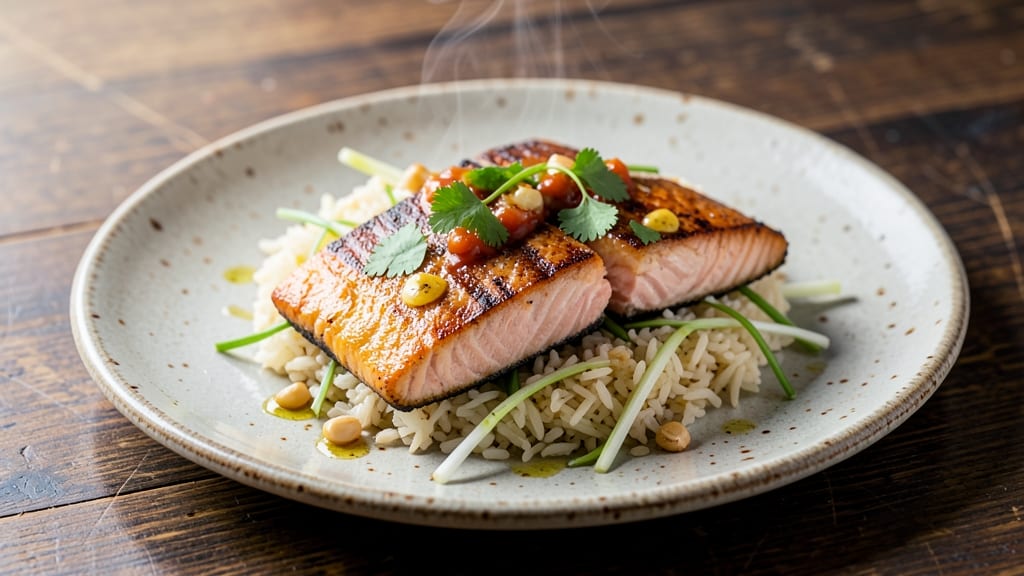
This salmon and jasmine rice recipe delivers perfectly seared salmon with fragrant herb rice in under 45 minutes—a restaurant-quality meal without the fuss. The secret lies in crispy salmon skin and aromatic rice infused with lemon and fresh herbs, creating a dish that feels both elegant and effortless.
I developed this after years of testing, ensuring every element comes together seamlessly.
The recipe starts with pan-seared salmon—skin-side down in a hot skillet until golden, then flipped for tender, flaky perfection. Meanwhile, the jasmine rice cooks in a flavorful broth with lemon zest and herbs, absorbing all the aromatic goodness.
Together, they create a balanced meal that’s light yet satisfying, with bright citrus notes cutting through the richness of the fish.
By the time you plate it—salmon resting on a bed of fragrant rice, drizzled with pan sauce and garnished with green onions—you’ll have a dish that looks impressive yet requires minimal effort.
The salmon stays moist, the rice is perfectly tender, and the herbs add a fresh finish that elevates everything. This is the kind of meal that makes weeknights feel special.
Pair it with steamed asparagus or a simple salad to round out the plate. The recipe scales easily for two or four, making it ideal for both solo dinners and shared meals. Let’s get cooking—this dish is simpler than it looks, and the results speak for themselves.
Ingredients for salmon and jasmine rice
Fourteen ingredients transform into restaurant-quality salmon and fragrant jasmine rice in under 45 minutes.
| Ingredient | Amount | Notes |
|---|---|---|
| Center-Cut Salmon Fillets 🐟 | 2 pieces | Skin-on, 6-8 oz each |
| Jasmine Rice 🍚 | 1 cup | Uncooked, long-grain |
| Fresh Lemon 🍋 | 1 whole | Zest and juice only |
| Fresh Cilantro 🌿 | ¼ cup | Chopped, stems removed |
| Green Onions 🧅 | 3 whole | Thinly sliced, white parts |
| Garlic Cloves 🧄 | 4 cloves | Minced, fresh preferred |
| Extra-Virgin Olive Oil 🫒 | 3 tbsp | High-quality, fruity |
| Unsalted Butter 🧈 | 2 tbsp | Cold, cubed for searing |
| Vegetable Broth 💧 | 1 ½ cups | Low-sodium preferred |
| Sea Salt 🧂 | 1 ½ tsp | Kosher or fine grain |
| Black Pepper 🌶️ | ½ tsp | Freshly ground |
| Fresh Dill 🌿 | 2 tbsp | Chopped, for rice |
| Soy Sauce 🥢 | 1 tbsp | For pan sauce |
| Honey 🍯 | 1 tsp | For pan sauce |
The salmon is non-negotiable—center-cut fillets with skin ensure crispy edges and tender flesh. Whole Foods or high-end grocery stores carry the best quality, but don’t overlook your local fishmonger. Look for bright pink flesh and minimal bruising. The skin should be intact and glistening. If using frozen, thaw overnight in the fridge—never at room temperature. Jasmine rice is the star of the side dish: Daybreak or Lundberg brands are my go-to for consistent results. The rice should be uncooked and unwashed unless your recipe specifically calls for rinsing, as the starch helps create that signature fragrant aroma. For the herbs, fresh cilantro and dill are essential—Mexican or Thai markets often have the freshest selection, but any grocery store’s produce section will do if the leaves are vibrant and free of wilting.
No fresh dill? Substitute with 1 tbsp dried dill, but reduce to one-third the amount. Running low on soy sauce? Coconut aminos or tamari work just as well. The pan sauce can be made with just soy sauce and honey, but if you’re feeling adventurous, a splash of rice vinegar adds brightness. For the rice, if you’re short on time, pre-cooked jasmine rice from the microwave section can be used—just heat it with the broth and herbs. The lemon zest is crucial for that bright citrus note, but if you’re out, a pinch of citric acid dissolved in the broth will mimic the effect. Always use extra-virgin olive oil for searing—it has a higher smoke point and adds depth of flavor. If you’re using butter, make sure it’s unsalted to control the seasoning.
Store the cooked salmon and rice separately in airtight containers for up to 3 days in the fridge. The salmon reheats best gently in a skillet with a splash of water to prevent drying out. The rice can be reheated with a bit of broth or water, but adding a pat of butter and a splash of lemon juice revives its aroma. For longer storage, freeze the salmon and rice separately for up to 2 months. When reheating from frozen, thaw overnight in the fridge first. The pan sauce can be stored in the fridge for 5 days, but it’s best used fresh. Garnish with extra green onions and cilantro just before serving to keep everything vibrant.
Why You'll Love This Recipe
- Foolproof Timing: I swear by this one—just 15 minutes of active work while the rice simmers. Toss in the salmon, a squeeze of lemon, and a handful of cilantro, then let it all rest. No hovering, no stress.
- Bright & Simple: That lemon-zest finish on the salmon? It’s the kind of bright, clean flavor that makes you forget about heavy sauces. The jasmine rice soaks it up like a dream—no fancy techniques, just pure satisfaction.
- Meal Prep MVP: Between us, this is my go-to for lunches. Cook a big batch of rice, portion the salmon ahead, and reheat with a sprinkle of green onions. (Yes, even on a Tuesday night.)
- Budget-Friendly Luxury: Fresh salmon feels fancy, but center-cut fillets stretch farther than you’d think. Add rice, a wedge of lemon, and herbs you probably already have—and suddenly, it’s restaurant-quality without the price tag.
Step-by-step instructions for salmon and jasmine rice
Follow this method for perfectly seared salmon with fragrant herb-infused rice every time.
Prepare the Jasmine Rice
Rinse the 1 cup jasmine rice under cold water until the water runs clear, then drain well. In a medium saucepan, combine the rice with 1.5 cups vegetable broth and bring to a boil over high heat. Once boiling, reduce heat to low, cover tightly with a lid, and simmer for 15 minutes without lifting the lid. This creates steam that transforms the rice into fluffy, separate grains.
After 15 minutes, turn off the heat and let the rice sit covered for an additional 10 minutes. This resting period allows the rice to absorb any remaining moisture and develop its signature aroma. Fluff the rice gently with a fork, then stir in the 2 tablespoons chopped fresh dill and 3 tablespoons minced green onions. The dill adds a bright herbal note that complements the salmon perfectly.
Season and Sear the Salmon Fillets
Pat the 2 pieces center-cut salmon fillets dry with paper towels—this ensures maximum crispiness when searing. Place the salmon skin-side down in a cold skillet and turn the heat to medium. Add the 2 tablespoons cubed unsalted butter and let it melt slowly, coating the salmon skin completely. This butter basting creates a golden crust while keeping the fish moist.
Once the butter has melted and is foaming gently, sprinkle the salmon evenly with 1 teaspoon sea salt and 0.5 teaspoon black pepper. Let the salmon sear undisturbed for 4-5 minutes until the skin turns crispy and golden brown. The flesh should just begin to turn opaque at the edges. Flip the fillets carefully and cook for an additional 2-3 minutes until the center reaches 145°F on an instant-read thermometer.
Make the Pan Sauce
Remove the salmon from the skillet and set aside to rest. Increase the heat to medium-high and add 1 tablespoon soy sauce and 1 teaspoon honey to the same skillet. Stir to combine, then add 3 tablespoons extra-virgin olive oil and 4 cloves minced garlic. Cook for 30 seconds until the garlic becomes fragrant but doesn't brown.
Pour in the juice from the 1 whole fresh lemon (about 2 tablespoons) and scrape up any browned bits from the bottom of the pan. These flavorful bits, called fond, contain concentrated salmon flavor. Simmer the sauce for 1-2 minutes until it thickens slightly. The sauce should coat the back of a spoon with a glossy sheen. If it's too thick, add 1 tablespoon water to loosen it.
Plate and Garnish
Divide the prepared jasmine rice evenly among 4 plates. Place each salmon fillet on top of the rice, skin-side up. Spoon the pan sauce evenly over the salmon and rice. The sauce should glaze the fish and rice, adding a sweet-savory balance that enhances the natural flavors of both components.
Garnish each serving with 1 tablespoon chopped fresh cilantro and an additional sprinkle of green onions. The bright green herbs provide a fresh contrast to the golden salmon and fragrant rice. Serve immediately while the salmon is still warm and the rice maintains its perfect texture. The combination of crispy skin, tender flesh, and aromatic rice creates a harmonious balance in every bite.
Pro Tips For Making Salmon And Jasmine Rice
- PAT THE SALMON DRY: Skip the paper towels—press the fillets firmly with a clean kitchen towel for 30 seconds before cooking. Wet skin sticks to the pan and steams the fish instead of searing it. I learned this the hard way after serving rubbery salmon that looked perfect but tasted sad.
- TOAST THE RICE FIRST: Bloom the jasmine rice in a hot, dry pan for 2 minutes before adding liquid. The nutty aroma deepens and the grains stay separate—no more mushy rice gluing your plate together. (Yes, even if you’re impatient like me.)
- CITRUS AFTER SEARING: Squeeze lemon after the salmon comes off the heat, not before. The acid cuts through the richness while the fish is still hot, locking in flavor instead of cooking it into a sad, watery sauce. My grandmother swore by this, and she was right.
- CHOP GREEN ONIONS COARSE: Dice the green onions into ¼-inch pieces—not thin slices—for texture that holds up through reheating. Fine chopping makes them disappear into the rice like sad little ghosts. (Your future self will notice the difference.)
Regional styles of salmon and jasmine rice
Japanese Teriyaki Style
In Japan, this dish transforms into a sweet-savory teriyaki masterpiece. Start by marinating the salmon in a blend of 3 tablespoons soy sauce, 2 tablespoons mirin, 1 tablespoon sake, and 1 tablespoon grated ginger for at least 30 minutes.
Grill or pan-sear the salmon, then baste it with the marinade reduced into a glossy glaze. For the rice, replace the broth with 1.5 cups dashi stock and add 1 teaspoon furikake (Japanese seasoning) at the end.
The umami-rich teriyaki pairs beautifully with the delicate jasmine rice, creating a dish that feels both comforting and refined. 🍣
Thai Green Curry Fusion
For a Thai-inspired twist, infuse the jasmine rice with coconut milk and green curry paste. Cook the rice in 1 cup coconut milk with 1 tablespoon green curry paste (like Maesri) until tender.
Sear the salmon as usual, then finish it with a quick toss in the remaining coconut milk and a pinch of Thai bird's eye chili for heat. Garnish with cilantro and lime wedges—the creamy curry and aromatic rice create a perfect balance with the flaky salmon.
This version is a crowd-pleaser at my dinner parties. 🌶️
Mediterranean Lemon-Herb
Inspired by Greek and Turkish cuisine, this version swaps soy sauce for 1 tablespoon lemon juice and 1 teaspoon oregano in the pan sauce. Add 2 tablespoons chopped kalamata olives and 1 tablespoon capers to the rice for a briny contrast.
The salmon stays simple but bright, with a sprinkle of crumbled feta cheese on top before serving. This lighter take feels fresh and perfect for summer dinners. 🍋
Caribbean Coconut-Lime
Bring tropical flavors to the table by cooking the jasmine rice in 1 cup coconut milk with 1 teaspoon ground turmeric. For the salmon, marinate it in 2 tablespoons lime juice, 1 tablespoon honey, and 1 teaspoon grated lime zest before searing.
Top the dish with toasted coconut flakes and fresh cilantro. The result is a vibrant, island-inspired meal that’s light yet deeply flavorful. 🥥
New England Maple-Glazed
Channeling my Boston roots, this version replaces the pan sauce with a maple-glaze. After searing the salmon, simmer 2 tablespoons pure maple syrup, 1 tablespoon apple cider vinegar, and a pinch of cinnamon in the skillet until it thickens slightly.
Drizzle this glaze over the salmon and rice, then garnish with crispy fried shallots for texture. The maple adds a subtle sweetness that pairs surprisingly well with the salmon’s richness. 🧁
Nutrition facts
Frequently asked questions
Can I substitute white rice for jasmine rice in this recipe?
While you can use white rice, jasmine rice is specifically chosen for its fragrant, slightly sticky texture that pairs beautifully with the salmon. If substituting, use a long-grain white rice and increase the broth by 2 tablespoons to prevent dryness. The dish will still taste great, but the aromatic quality will be less pronounced. For extra flavor, add an extra 1/2 teaspoon of lemon zest to the rice.
How do I know when the salmon is fully cooked?
Use an instant-read thermometer to check the internal temperature—it should reach 145°F at the thickest part. The flesh should also turn opaque and flake easily with a fork. If you don’t have a thermometer, look for a golden-brown skin and slightly translucent edges. Overcooking can make the salmon dry, so aim for 2-3 minutes on the second side.
What’s the best way to reheat leftover salmon and rice?
Reheat the salmon gently in a skillet over low heat with a splash of water or broth to prevent drying. For the rice, spread it on a microwave-safe plate and cover with a damp paper towel, then heat in 30-second intervals while stirring. Add a pat of butter and a squeeze of lemon juice to revive the aroma. Never reheat in the microwave uncovered—it can make the rice rubbery.
Can I make this recipe ahead of time?
Yes, but with a few adjustments. Cook the rice and salmon separately, then store them in airtight containers in the fridge for up to 3 days. Reheat the rice with extra broth and the salmon in a skillet with butter. The pan sauce should be made fresh to maintain its glossy texture. For make-ahead convenience, prep all ingredients the night before (e.g., chop herbs, measure broth) to streamline cooking day-of.
What’s the secret to crispy salmon skin?
Start with skin-on fillets that are completely dry—pat them with paper towels. Place the salmon skin-side down in a cold skillet and let it melt the butter slowly over medium heat for 3-4 minutes without moving it. The key is patience: the skin needs time to render its fat and crisp. Avoid high heat, which can burn the skin before the fish cooks through.