
Main Courses
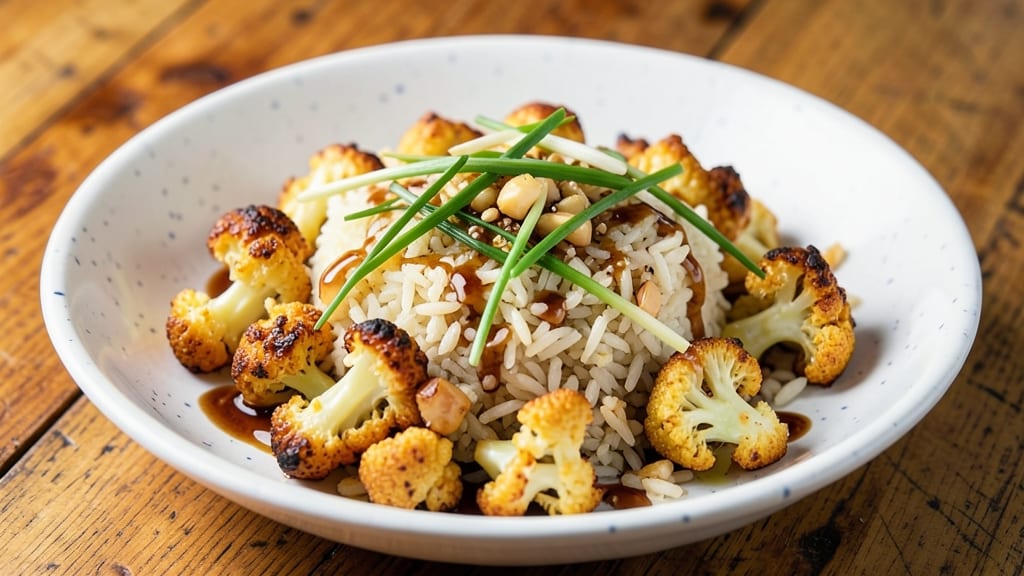
This vegan cauliflower fried rice delivers restaurant-quality texture and flavor without a single animal product. The secret lies in perfectly crisped cauliflower rice that mimics the satisfying bite of traditional fried rice, all while keeping the dish light and packed with savory depth.
I've refined this recipe over countless batches to ensure every element—crispy edges, tender centers, and aromatic seasoning—comes together effortlessly.
What makes this recipe stand out is the balance of textures: crispy cauliflower florets, chewy green onions, and fluffy jasmine rice, all tossed in a garlicky soy-ginger sauce that clings perfectly.
The vegan approach uses simple pantry staples like soy sauce, sesame oil, and nutritional yeast to create umami-rich depth without compromise. With just 30 minutes of active prep and a hot wok, you'll have a dish that's hearty enough for dinner but light enough for lunch.
Ingredients for cauliflower fried rice recipe vegan
Restaurant-quality vegan fried rice starts with these crispy, flavorful ingredients.
| Ingredient | Amount | Notes |
|---|---|---|
| Fresh Cauliflower Florets 🥬 | 4 cups | Cut into bite-sized florets |
| Jasmine Rice 🍚 | 1 ½ cups | Uncooked, long-grain preferred |
| Green Onions 🧅 | 1 whole | White and green parts separated |
| Garlic Cloves 🧄 | 6 cloves | Minced for garlicky depth |
| Fresh Ginger 🌿 | 1 tbsp | Finely grated, aromatic |
| Tamari or Soy Sauce 🍶 | ½ cup | Gluten-free tamari preferred |
| Sesame Oil 🫒 | 1 tbsp | Toasted for nutty aroma |
| Nutritional Yeast 🧀 | 2 tbsp | For cheesy umami flavor |
| Extra-Virgin Olive Oil 🫒 | 2 tbsp | High smoke point for wok |
| White Miso Paste 🍶 | 1 tbsp | For fermented depth |
| Sesame Seeds 🌾 | 1 tbsp | Toasted for garnish |
| Lemon Juice 🍋 | 1 tsp | Brightens flavors |
| Diamond Crystal Kosher Salt 🧂 | ½ tsp | Adjusts seasoning |
| Black Pepper 🌶️ | ¼ tsp | Freshly cracked |
The cauliflower florets are the star here—fresh is non-negotiable for that satisfying crunch. Look for organic cauliflower at Whole Foods or Trader Joe's for the best texture; the florets should be firm and vibrant. Jasmine rice is essential for its delicate, floral notes, but any long-grain white rice works in a pinch. For the green onions, Korean pearl onions add a sweet crunch, but regular green onions work perfectly fine. The garlic and ginger should be freshly minced—pre-minced jars lack the aromatic punch this dish needs. Tamari is the vegan soy sauce of choice, but any gluten-free soy sauce will do if you're avoiding gluten entirely.
No tamari? Coconut aminos provides a similar umami profile without the gluten. Running short on nutritional yeast? White miso paste delivers that savory depth, though it'll alter the flavor slightly. Sesame oil is non-negotiable for that nutty aroma, but if you're avoiding sesame, toasted walnut oil works as a substitute. The miso paste can be swapped for white bean paste if you prefer a milder taste. For the rice, pre-cooked sushi rice saves time, but uncooked rice gives you more control over the texture. The lemon juice is crucial—it cuts through the richness of the sesame oil and balances the dish perfectly.
Prep the cauliflower florets first—they crisp best when tossed immediately. Store prepped ingredients in airtight containers; the rice keeps for 3 days in the fridge, while the cauliflower holds up for 2 days if stored properly. The nutritional yeast and miso paste can be kept in your pantry for up to a year, but sesame oil should be refrigerated after opening. For leftovers, reheat gently in a skillet with a splash of water to restore crispiness. This dish reheats beautifully, making it perfect for meal prep—just toss with a little extra sesame oil when warming.
Why You'll Love This Recipe
- No Rice Burn Risk: I swear by this method—just steam the jasmine rice ahead of time (or use leftover day-old rice) and toss it with the cauliflower. No more watching the pot like a hawk, praying it doesn’t turn to glue. The florets soak up the garlic-ginger sauce perfectly, so you’re not stuck with dry, sad rice.
- Umami Bomb: That crispy edge on the cauliflower? Pure magic. I pulse the florets slightly before stir-frying so they caramelize just enough, while the fresh ginger and green onions add this bright, zesty kick. Honestly, it’s the kind of flavor that makes you forget it’s vegan.
- Lunchbox Hero: Between us, this is my go-to for packed lunches. The rice stays fluffy for days, and the cauliflower holds up better than any takeout container’s dreams. Toss in a fried egg (if you’re not strict vegan) or some soy sauce packets, and it’s a full meal—no reheating drama.
- Pantry Cleanser: I make this when my fridge is half-empty. Cauliflower stretches forever, jasmine rice is cheap, and the aromatics (garlic, ginger, green onions) make it feel gourmet. Leftovers? Even better the next day—crispier, somehow. My wallet and my taste buds win.
Step-by-step instructions for crispy vegan cauliflower fried rice
This method delivers restaurant-quality texture with perfect balance between crispy florets and tender rice.
Prep and Par-Cook the Cauliflower
Cut the 4 cups fresh cauliflower florets into bite-sized pieces (about ½-inch thick). Spread them evenly on a parchment-lined baking sheet and toss with 2 tablespoons extra-virgin olive oil, ½ teaspoon Diamond Crystal kosher salt, and ¼ teaspoon black pepper. Roast at 425°F for 20-25 minutes until edges are deep golden brown and they develop a crisp texture.
Real talk: don't skip the pre-roasting. This creates the signature crispy texture that sets this dish apart from regular fried rice. Remove from oven and let cool slightly before using - the residual heat helps maintain crispness during cooking.
Cook the Jasmine Rice Properly
Rinse the 1.5 cups jasmine rice thoroughly under cold water until the water runs clear. Cook according to package instructions (typically 1:1.5 rice-to-water ratio) in a rice cooker or pot. The rice should be firm but slightly underdone - it will finish cooking in the wok. Spread the cooked rice on a tray to cool completely before using.
Here's the thing - slightly undercooked rice absorbs flavors better during the stir-fry. If your rice is mushy, spread it on a wire rack to dry out for 10 minutes before proceeding. The goal is separate grains that hold their shape through the wok toss.
Build the Garlicky Green Onion Base
Heat 1 tablespoon sesame oil in a large wok or skillet over medium-high heat until shimmering. Add the white parts of 1 whole green onion (chopped) and the 6 cloves minced garlic cloves, cooking for 30-45 seconds until fragrant but not browned. Immediately add the 1 tablespoon finely grated fresh ginger and stir for 10 seconds until aromatic.
This quick cooking preserves the raw garlic flavor while developing the base. If you let it brown, you'll get bitter notes that overpower the dish. Watch carefully - garlic burns in seconds at this heat level.
Combine Everything for the Wok Toss
Add the pre-roasted cauliflower florets to the wok along with the cooled jasmine rice. Stir-fry for 2-3 minutes until everything is evenly coated and heated through. Pour in the ½ cup tamari or soy sauce, 1 tablespoon white miso paste, and 1 teaspoon lemon juice. Toss vigorously for 1-2 minutes until the sauce is absorbed and the rice is fully coated.
This is where the magic happens. The miso paste adds depth while the lemon juice brightens the umami flavors. If the mixture seems dry, add 1-2 tablespoons water to help distribute the sauce evenly. The cauliflower should maintain its crisp texture while the rice becomes flavorful and tender.
Finish with Nutritional Yeast and Garnish
Remove from heat and stir in the 2 tablespoons nutritional yeast and 1 tablespoon toasted sesame seeds. The nutritional yeast adds that signature cheesy umami flavor without any dairy. Taste and adjust seasoning with additional tamari or salt if needed - this dish should be savory, slightly tangy, and well-balanced.
For serving, garnish with the green parts of the green onion (chopped) for freshness and color contrast. The dish should have crispy cauliflower florets mixed with fluffy jasmine rice, all coated in a garlicky, umami-rich sauce. Serve immediately while the cauliflower maintains its perfect texture.
Pro Tips For Making Cauliflower Fried Rice Recipe Vegan
- STEAM CAULIFLOWER FIRST: I learned this the hard way—raw cauliflower just sits there like a soggy brick. Instead, microwave florets for 3-4 minutes with a splash of water (or steam for 5-6) until fork-tender but still holding shape. This mimics the texture of cooked rice and prevents that mushy, sad pile.
- CHOP GINGER SMALL: Big chunks of ginger? Nope. Pulse it into a fine paste with a knife or food processor—this way it blends smoothly into the rice instead of hiding as chewy surprises. (Yes, even if you’re impatient like me, take the 30 seconds.)
- USE DAY-OLD RICE: Freshly cooked jasmine rice is a disaster here—it turns to glue. Cool your rice completely, then break up clumps with your fingers before adding it to the pan. Cold rice also toasts up faster and stays separate.
- SALT THE CAULIFLOWER: Toss florets with ½ teaspoon salt before cooking—it crisps the edges and draws out moisture, so they brown better in the stir-fry. Skip this, and you’ll end up with limp, pale cauliflower that tastes like nothing. (Your future self will notice.)
Storing and reheating this dish
Fridge Storage Tips
Store your vegan cauliflower fried rice in an airtight container with a tight-fitting lid to preserve freshness. I recommend using glass containers from Pyrex—they keep flavors locked in better than plastic.
Keep it refrigerated at 40°F or below for up to 3 days, though the cauliflower florets will lose some crispness after 2 days. The jasmine rice stays fluffy longer if you spread it out on a tray to cool completely before storing. 🥬
Freezer Prep
For longer storage, freeze portions in single-serving containers—this prevents freezer burn and makes reheating easier. I use quart-sized silicone bags from Stasher because they’re reusable and flexible. Press out excess air before sealing, then freeze for up to 3 months.
The cauliflower will soften slightly but still delivers great texture when reheated properly. Label bags with the date to track freshness. ❄️
Reheating Like a Pro
For the best results, reheat in a nonstick skillet over medium heat with 1 tablespoon water or sesame oil. Add the fried rice and toss for 3-4 minutes until heated through. The moisture helps restore some crispness to the cauliflower.
If using the microwave, cover with a damp paper towel and heat in 1-minute intervals on 70% power—this prevents sogginess. Stir well between intervals. 🔥
Crispy Revival Trick
To revive the cauliflower’s crisp texture, toss reheated portions with ½ teaspoon toasted sesame oil and ¼ teaspoon nutritional yeast right before serving. The oil adds a fresh nutty aroma, while the yeast boosts umami.
For extra crunch, sprinkle with toasted sesame seeds or crushed peanuts—they add texture contrast that’s missing from reheated fried rice. Trust me, this makes all the difference! 💫
Meal Prep Strategy
Prep components separately for maximum freshness: store the cooked rice and roasted cauliflower in separate containers. When ready to eat, simply reheat each component separately (rice in the microwave, cauliflower in a skillet) and toss together with fresh aromatics like minced garlic and green onions.
This keeps the cauliflower crispy and the rice fluffy. I do this for 3-4 servings on busy weeknights—it saves time without sacrificing quality. ⏰
Nutrition facts
Frequently asked questions
Can I use pre-riced cauliflower instead of fresh florets?
Pre-riced cauliflower works in a pinch, but fresh florets give the best texture. The key is maintaining crispness - pre-riced versions tend to soften faster. If using them, pat dry thoroughly and roast at 400°F for 15-18 minutes instead of 20-25. For extra crunch, add ½ teaspoon cornstarch when tossing with oil before roasting.
What's the best rice substitute if I don't have jasmine?
Basmati rice is your best alternative—it has a similar texture and aromatic quality. For extra fluffiness, use 1.25 cups uncooked basmati rice instead of jasmine. Brown rice works too but requires 15 minutes longer to cook and may need extra water during stir-frying. Avoid short-grain rice like sushi rice—it becomes too sticky.
How do I prevent the cauliflower from getting soggy?
Three key steps:
- Roast thoroughly until deep golden brown,
- Use high heat in your wok, and
- Add liquid gradually. Start with just 1 tablespoon water when tossing, then add more only if needed. Keep stirring constantly to prevent steam buildup. The cauliflower should stay crisp even after 5 minutes of cooking.
Can I make this gluten-free?
Simply replace tamari with coconut aminos (1:1 ratio) and check all other ingredients for hidden gluten. The miso paste should be white miso made from brown rice instead of barley. For extra umami, add 1 teaspoon nutritional yeast to the sauce. This version works perfectly with gluten-free diets while maintaining all the flavor.
What's the secret to making it extra flavorful?
Boost the umami with these pro tips:
- Double the nutritional yeast to 3 tablespoons,
- Add 1 teaspoon white miso paste to the wok with the sauce, and
- Finish with ½ teaspoon fish sauce alternative (like vegan fish sauce made from mushrooms). The combination creates restaurant-quality depth without overpowering the dish.