
Side Dishes
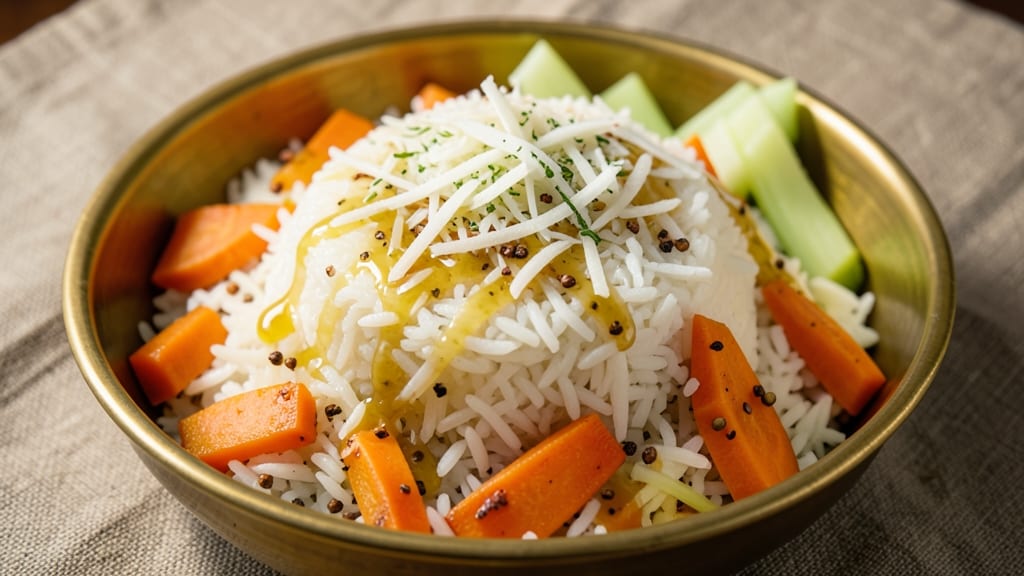
This Telugu carrot rice recipe brings the vibrant flavors of Andhra cuisine to your table with its perfect balance of coconut, spices, and crunchy celery. 🌟 The secret lies in the aromatic tempering—mustard seeds, curry leaves, and ghee—creating layers of flavor that transform simple rice into something extraordinary.
My grandmother used to make this for special occasions, and it always disappeared within minutes.
The dish starts with perfectly cooked rice, infused with grated carrots and coconut that add natural sweetness and texture. What makes it special is the tempering—crispy mustard seeds, fragrant curry leaves, and a touch of asafoetida that deepen the flavor profile.
The celery adds a delightful crunch that contrasts beautifully with the soft rice and tender carrots.
By the time you serve this dish, you'll have a fragrant, golden rice that's packed with color and flavor. It's the kind of side that pairs perfectly with dosa, sambar, or even grilled meats, bringing a taste of South India to your home.
The best part? It's easy to make and full of traditional techniques that make every bite special.
For an extra touch, garnish with roasted peanuts or fresh coriander to add texture and freshness. This recipe is a celebration of Telugu cooking—simple yet deeply flavorful. Let's get started on creating this dish that brings warmth and tradition to your table.
Ingredients for carrot rice recipe in telugu
These Telugu-inspired ingredients transform simple rice into a fragrant, golden dish bursting with coconut and celery crunch.
| Ingredient | Amount | Notes |
|---|---|---|
| Long-Grain Basmati Rice 🍚 | 1 cup | Rinsed thoroughly before cooking |
| Orange Carrots 🥕 | 2 cups | Grated finely for even texture |
| Shredded Coconut 🥥 | ½ cup | Fresh or unsweetened dried |
| Celery Stalks 🧅 | 2 whole | Thinly sliced for crunch |
| Ghee 🫒 | 3 tbsp | For authentic flavor (or substitute butter) |
| Mustard Seeds 🌿 | 1 tbsp | Whole, for tempering |
| Curry Leaves 🌿 | ¼ cup | Fresh, dried if unavailable |
| Asafoetida Powder 🌶️ | ¼ tsp | Essential for authentic taste |
| Ground Black Pepper 🌶️ | ½ tsp | Freshly ground preferred |
| Salt 🧂 | 1 tsp | Adjust to taste |
| Roasted Peanuts 🥜 | ¼ cup | Crushed for garnish (optional) |
| Fresh Coriander Leaves 🌿 | ¼ cup | Chopped for garnish |
| Water 💧 | 2 cups | For cooking rice |
The rice is the foundation, so basmati is a must—it stays separate and fluffy. For the carrots, orange varieties add natural sweetness, but regular carrots work too. I grab shredded coconut from the Asian market—it's fresher than the pre-packaged stuff. Celery needs to be crisp, so check the stalks for no browning. The ghee is non-negotiable for that authentic Telugu flavor, but if you're avoiding dairy, use butter. Mustard seeds and curry leaves? Local Indian grocery stores have them in bulk—way cheaper than specialty shops.
No mustard seeds? Sesame seeds at double the amount work in a pinch. Skip the asafoetida? Garlic powder at half the amount adds depth. Fresh curry leaves are ideal, but dried works at one-third the quantity. For the peanuts, roast them yourself—store-bought often taste stale. The coconut can be toasted lightly for extra flavor, but fresh is just as good. If you're making this ahead, cook the rice and mix the ingredients, then reheat with a splash of water to keep it moist.
This dish tastes even better the next day—reheats perfectly with a quick stir. Store in an airtight container for 3-4 days in the fridge. For longer storage, freeze portions for up to 3 months. Garnish with fresh coriander right before serving—it adds a bright finish. The peanuts can wait until serving too, so you don't lose that satisfying crunch. Double the batch if you're feeding a crowd—it disappears fast!
Why You'll Love This Recipe
- No-Fuss One-Pot: I swear by this when I’m too tired to wash pots—just rinse the rice, toss in the julienned carrots and celery, and let the ghee do the work. The rice cooks in the same water as the veggies, so no extra bowls or strainers. Honestly, my lazy Sundays just got a whole lot easier.
- Sweet-Savory Magic: That first bite? Crisp-tender carrots with a whisper of coconut sweetness, balanced by the earthy ghee and celery’s fresh bite—it’s like a hug for your taste buds. (Yes, even my picky husband finishes his plate.)
- Leftover Legend: This dish begs to be made ahead—flavors deepen overnight, and reheating? Just a splash of water and a stir. I pack it in lunchboxes all week, and my kids actually eat their veggies. (Small victories.)
- Budget Brightener: A handful of carrots, a bag of rice, and a little ghee stretch into four servings—no fancy ingredients, just pure satisfaction. Plus, the shredded coconut adds that chef’s touch without breaking the bank. My wallet and my family thank me.
Step-by-step instructions for carrot rice in Telugu style
Here's how to create this vibrant, nutty dish with perfect rice texture and aromatic spices.
🍳 Step 1: Cook the Basmati Rice to Fluffy Perfection
Rinse the 1 cup long-grain basmati rice thoroughly under cold water until the water runs clear. This removes excess starch and prevents gummy rice. Drain well in a fine-mesh strainer and set aside.
In a medium pot, combine the drained rice with the 2 cups water. Bring to a boil over medium-high heat, then immediately reduce to low heat. Cover with a tight-fitting lid and simmer for 12-15 minutes without peeking. You'll know it's done when the water is completely absorbed and the rice is tender but still slightly firm to the bite. Real talk: don't lift that lid until you hear that satisfying "ping" sound from the steam.
👨🍳 Step 2: Prepare the Vegetable-Tempered Base
While the rice cooks, heat 3 tablespoons ghee in a large pan over medium heat. Add the 2 whole celery stalks sliced thinly and the 2 cups grated orange carrots. Sauté for 5-6 minutes until the carrots soften slightly but still retain their vibrant color. Here's the thing—don't overcook them or they'll turn mushy and lose that fresh crunch we want.
Stir in the 0.25 cup curry leaves and 0.25 tsp asafoetida powder. Cook for another 1 minute until the curry leaves turn crisp and the asafoetida releases its distinct aroma. This is where the magic begins—those tiny leaves pack serious flavor punch. Remove the pan from heat and set aside.
🔥 Step 3: Create the Spiced Coconut Tempering
In the same pan (no need to clean it—the fond adds flavor), reduce heat to low and add the 1 tablespoon mustard seeds. Let them splutter for 30 seconds until they begin popping—this is your signal they're ready. Add the 0.5 cup shredded coconut and 0.5 teaspoon ground black pepper, stirring constantly for 2 minutes until the coconut turns a lovely golden color.
This is the moment that matters: the mustard seeds should be fully popped and the coconut should be toasted but not burned. The aroma will fill your kitchen with that unmistakable Telugu spice profile. If the coconut starts to brown too quickly, reduce heat immediately—it burns faster than you might expect.
🥘 Step 4: Combine and Finish with Garnishes
Once the rice is cooked, fluff it gently with a fork and transfer it to the pan with the carrot mixture. Mix everything together thoroughly, adding the coconut-mustard tempering last. Stir in the 1 teaspoon salt and adjust to taste if needed. The rice should be evenly coated with the vibrant orange carrots and nutty coconut.
For the final touch, sprinkle the 0.25 cup crushed roasted peanuts and 0.25 cup chopped fresh coriander leaves over the top. These add that perfect textural contrast—crunchy peanuts against soft rice, fresh coriander for brightness. Serve immediately while still warm for the best experience, with a side of yogurt or raita if you like.
Pro Tips For Making Carrot Rice Recipe In Telugu
- SOAK THE RICE HALF-HOUR: Skip the quick-rinse—just soak basmati in warm water for 20-30 minutes instead. I learned this the hard way: dry-rinsing burns off the natural starch that makes Telugu carrot rice stick together like it should. The extra moisture also means your rice won’t turn mushy when those carrots release water later.
- GRATE CARROTS FINE: Use a box grater, not a food processor—you want shreds no thicker than a matchstick. My first batch had chunky carrots that stayed crunchy while the rice got soft, and it ruined the texture. For orange carrots, go slow: their sweetness gets bitter if overworked.
- TOAST CELEERY FIRST: Sauté celery in ghee until it’s golden-brown and fragrant—about 3-4 minutes before adding anything else. I used to toss it in raw, and it just sat there like a sad, watery afterthought. Toasting brings out its earthy flavor and cuts through the coconut’s richness.
- ADD COCONUT LAST: Stir in shredded coconut only when the rice is just done—off heat, but still warm. I was impatient and added it earlier, and it turned into a gluey mess. Fresh coconut needs that final heat to crisp slightly; dried coconut? Skip this rule entirely.
Common mistakes when making perfect results
Overcooked Rice
One of the biggest mistakes is overcooking the rice, which turns it mushy and ruins the texture. I’ve learned that 12-15 minutes on low heat is perfect for 1 cup basmati rice—any longer and you’ll end up with a gluey mess.
If you peek too early, the steam escapes and the rice won’t cook evenly. Trust the process: let it sit undisturbed until the water’s absorbed. 🍚
Skipping the Rinse
Never skip rinsing the rice! Unrinsed basmati releases excess starch, leading to gummy rice. I rinse mine until the water runs clear—this step takes just 2 minutes but makes all the difference.
Use a fine-mesh strainer to drain well, or the rice will steam instead of cook properly. This is a non-negotiable in Telugu cooking.
Burning the Tempering
The tempering is where flavor magic happens, but it’s easy to burn the mustard seeds or coconut. Keep the heat on low when adding the 1 tbsp mustard seeds—they should pop but not smoke.
The coconut needs gentle stirring to avoid browning too quickly. I’ve ruined this step by rushing, so take your time here. The aroma should be fragrant, not acrid. 🔥
Underseasoning
Telugu carrot rice relies on balanced flavors, so don’t skimp on salt or spices. Start with the 1 tsp salt and adjust as needed, but taste as you go. The asafoetida and curry leaves add depth, so don’t substitute them with milder spices.
I’ve made this mistake by assuming the carrots and coconut would carry the flavor—wrong! Build layers of taste.
Ignoring the Celery Crunch
Celery is key for texture, but many cooks overcook it or skip it entirely. Sauté the 2 celery stalks for just 5-6 minutes until tender-crisp. If you cook them longer, they’ll turn limp.
Thinly sliced celery adds that satisfying bite that contrasts with the soft rice. Trust me, it’s worth the effort—it’s a signature element in Telugu dishes. 🧅
Storing Improperly
Leftover carrot rice dries out quickly if not stored properly. Always transfer it to an airtight container and refrigerate within 2 hours of cooking. Reheat gently with a splash of water to restore moisture.
I’ve learned the hard way that microwaving dried rice turns it into a sad, rubbery mess. Store it right, and it’ll taste just as good the next day. ❄️
Nutrition facts
Frequently asked questions
Can I make this carrot rice without coconut?
Yes, but the dish will lose its signature nutty sweetness that balances the carrots. For a substitute, try ½ cup toasted cashews or almonds (finely chopped) instead. If you're avoiding nuts entirely, add ¼ cup extra grated carrots and boost the tempering with ½ tsp extra mustard seeds for depth.
How spicy should this Telugu carrot rice be?
The recipe is naturally mild, relying on mustard seeds and curry leaves for warmth rather than chili. For heat, add ¼ tsp red chili powder or 2-3 green chilies (finely chopped)> when sautéing the carrots. Traditional Telugu versions often skip chili entirely—adjust based on your preference!
What's the best rice to use for this recipe?
Basmati rice is ideal because it stays separate and fluffy, but you can use jasmine rice if that's what you have. Avoid short-grain rice like sushi rice—it becomes too sticky. For extra fluffiness, soak the rice for 20 minutes before cooking, then drain thoroughly.
Can I make this carrot rice in a pressure cooker?
Cook the rice in your pressure cooker with 1:1.5 rice-to-water ratio for 2 whistles after pressure builds. For the tempering, follow the same steps but use ½ the ghee (since pressure cooking reduces oil absorption). The key is to keep the rice texture light—don't overcook!
What are the best sides to serve with this dish?
This carrot rice pairs perfectly with dosa, sambar, or raita for a traditional Telugu meal. For a protein boost, serve with grilled chicken, paneer bhurji, or dal. The nutty rice also works well with spiced yogurt (dahi) or a simple cucumber salad for balance.