
Main Courses
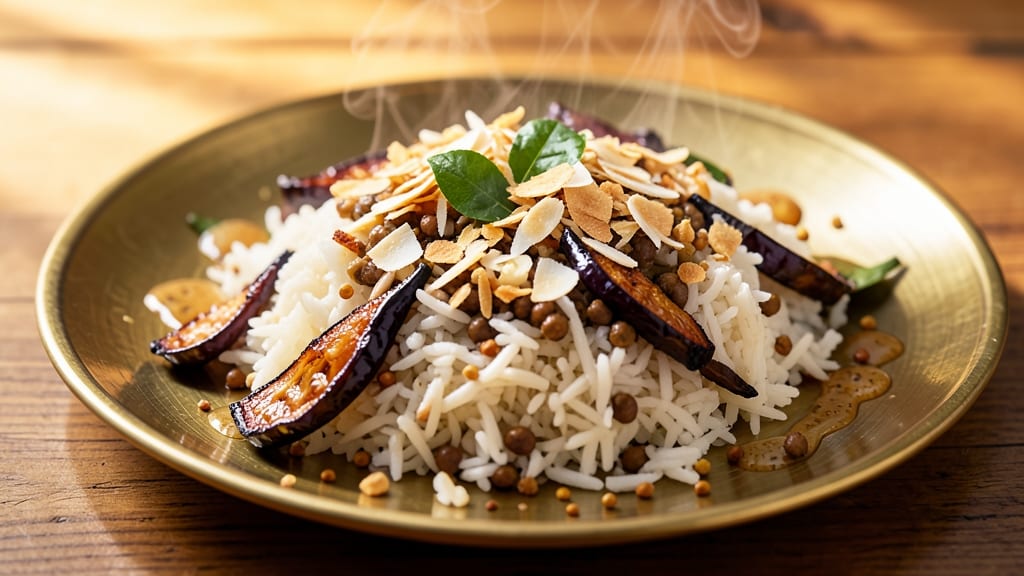
Brinji rice recipe by Venkatesh Bhat brings the soul of South Indian kitchens to your pot—where toasted coconut, urad dal, and aromatic spices create a fragrant, one-pot masterpiece. This dish, perfected in Venkatesh Bhat’s style, transforms simple rice into a symphony of flavors through tempering and slow cooking. The result? A dish that’s as comforting as it is elegant, with every grain infused with coconut richness and spiced harmony.
The secret lies in the tempering—where mustard seeds, curry leaves, and dried red chilies sizzle in ghee, releasing their essential oils before being poured over the rice. This technique, central to South Indian cooking, ensures every bite carries layers of flavor.
Serve it with a side of sambar or a dollop of yogurt to balance the richness, and you’ll understand why this dish has been a staple for generations.
Ingredients for brinji rice recipe venkatesh bhat
Toasted coconut, aromatic spices, and urad dal create Venkatesh Bhat's signature brinji rice harmony.
| Ingredient | Amount | Notes |
|---|---|---|
| Basmati Rice 🍚 | 1 cup | Uncooked, long-grain preferred |
| Urad Dal 🌾 | ½ cup | Split, washed and soaked |
| Toasted Coconut 🥥 | ¼ cup | Freshly grated, unsweetened |
| Ghee 🧈 | ½ cup | Pure, unsalted preferred |
| Mustard Seeds 🌿 | 1 tbsp | Whole, yellow variety |
| Curry Leaves 🌿 | ¼ cup | Fresh, whole leaves |
| Dried Red Chilies 🌶️ | 3 pieces | Whole, medium heat |
| Asafoetida 🌿 | ⅛ tsp | Powdered, pure |
| Cumin Seeds 🌿 | ½ tsp | Whole, toasted |
| Turmeric Powder 🌶️ | ¼ tsp | Freshly ground preferred |
| Coriander Powder 🌿 | ½ tsp | Freshly ground preferred |
| Salt 🧂 | 1 tsp | Adjust to taste |
| Water 💧 | 2 ½ cups | Filtered preferred |
| Fresh Cilantro 🌿 | ⅛ cup | Chopped, for garnish |
The urad dal is the heart of this dish—soak it for at least 2 hours to soften properly. Indian grocery stores carry the best quality, often pre-split and ready to use. For curry leaves, fresh is non-negotiable—dried leaves lose their essential oils. If you can't find them, substitute with 1 tsp curry leaf powder, though fresh is ideal. The toasted coconut should be freshly grated for maximum flavor—store-bought versions often contain additives. Buy unsweetened coconut flakes and toast them yourself in a dry pan until golden.
No curry leaves? Dried thyme at half the amount mimics the earthy notes, though it won't be identical. Running short on ghee? Coconut oil works in a pinch, though it has a different flavor profile. For the dried red chilies, adjust quantity based on heat preference—start with 2 pieces and add more if you like it spicier. The asafoetida is crucial for that authentic South Indian aroma—never skip it. If unavailable, garlic powder at 1/4 tsp offers a milder alternative. For the rice, basmati is essential—long-grain varieties hold up better during cooking.
The urad dal keeps well in the fridge for 3 days once cooked, though it's best enjoyed fresh. Store the toasted coconut in an airtight container in the freezer for up to 3 months to preserve its flavor. This dish reheats beautifully—simply add a splash of water and steam for 2-3 minutes. For meal prep, cook a double batch and freeze portions for up to 2 weeks. The flavors actually deepen overnight, making it even more comforting the next day.
Why You'll Love This Recipe
- One-Pot Magic: I swear by this recipe when I’m too tired to wash pots—just one heavy-bottomed pan, a splash of ghee, and you’re done. The urad dal caramelizes right into the rice, so no extra bowls or straining.
- Toasted Coconut Crunch: Honestly, that crispy coconut on top is the star. It’s not just garnish—it’s the little flavor bomb that makes this dish feel special, even when it’s a weeknight dinner.
- Meal Prep MVP: Between us, this keeps perfectly for four days. The ghee keeps it from drying out, and the coconut stays fresh if you store it in an airtight container. My lunchbox hero.
- Budget Luxury: Urad dal and basmati rice are cheap, but the ghee and toasted coconut make it taste like you splurged. It’s the kind of dish where the ingredients work harder than you do—no fancy tricks, just good flavors.
Step-by-step instructions for brinji rice
Master this traditional Karnataka dish with its signature toasted coconut aroma and aromatic spice layers.
Prepare the Dal and Spice Base
In a heavy-bottomed pot, heat the 0.5 cup Ghee over medium-low heat. Add the 0.5 cup Urad Dal that's been soaked and drained, along with the 2.5 cups Water. Bring to a gentle boil, then reduce heat to low and simmer uncovered for 15 minutes, stirring occasionally to prevent sticking.
Once the dal begins to soften, add the 1 tbsp Mustard Seeds, 3 pieces Dried Red Chilies, and 0.25 cup Curry Leaves. Let them sizzle for 30 seconds until the mustard seeds pop and the chilies turn vibrant. This is where the magic begins - the spices will infuse the dal with their distinct flavors. Stir in the 0.125 tsp Asafoetida and 0.5 tsp Cumin Seeds, cooking for another 2 minutes until the cumin releases its earthy aroma.
Incorporate Rice and Seasonings
Add the 1 cup Basmati Rice to the pot, mixing gently to coat each grain with the spiced dal. Stir in the 0.25 tsp Turmeric Powder, 0.5 tsp Coriander Powder, and 1 tsp Salt, ensuring everything is well combined. The rice should now be surrounded by the aromatic spice mixture, which will infuse it with flavor as it cooks.
Pour in an additional 1 cup Water (bringing the total liquid to 3.5 cups) and bring the mixture to a rolling boil. Once boiling vigorously, reduce heat to low, cover the pot with a tight lid, and cook for 12 minutes. This initial cooking phase allows the rice to absorb the dal's flavors before we add the coconut layer.
Add Toasted Coconut and Finish Cooking
After 12 minutes, gently fluff the rice with a fork to separate the grains. Stir in the 0.25 cup Toasted Coconut, ensuring it's evenly distributed throughout the mixture. The coconut will add its characteristic nutty aroma and creamy texture to the dish. Cover the pot again and cook on low heat for an additional 8-10 minutes, until the rice is tender and all liquid has been absorbed.
During the final cooking phase, occasionally press down on the rice with a spoon to check for doneness. The rice should be tender but still have a slight bite, with the coconut pieces evenly distributed. If the mixture appears too dry before the rice is fully cooked, add 1-2 tablespoons of water and continue cooking.
Rest and Garnish
Once the rice is perfectly cooked, turn off the heat and let the pot sit covered for 5 minutes. This resting period allows the rice to steam gently and absorb any remaining moisture, resulting in a more uniform texture. The coconut will soften slightly, enhancing its flavor.
Finally, transfer the brinji rice to a serving bowl and garnish with the 0.125 cup Fresh Cilantro, chopped finely. The bright green cilantro provides a fresh contrast to the rich, spiced coconut rice. Serve immediately while hot, accompanied by a side of yogurt or a simple salad to balance the dish's richness.
Pro Tips For Making Brinji Rice Recipe Venkatesh Bhat
- TOAST DAL UNTIL GOLDEN: I learned this the hard way—black urad dal straight from the packet will taste bitter no matter how long you cook it. Dry-toast the dal in a heavy pan until it’s a deep golden brown, almost nutty-smelling. That’s when the natural sugars caramelize and the texture gets that perfect bite—skip this, and you’ll end up with mushy, flavorless dal.
- HALF-COOK RICE FIRST: Brinji rice needs fluffy, separate grains, not sticky clumps. Parboil the basmati rice for 5 minutes in salted water, then drain and spread it on a tray to dry slightly before finishing in ghee. This two-step method guarantees the grains stay distinct—no matter how much you stir later.
- CRACK MUSTARD SEEDS: Whole mustard seeds burn faster than you think, and burnt seeds ruin the whole dish. Instead of tossing them in raw, dry-toast them in ghee for 10 seconds until they just start to pop—then add the curry leaves and onions. This tiny pause keeps them crisp and aromatic, not bitter.
- COCONUT TOASTING TRICK: Freshly toasted coconut is non-negotiable here, but grinding it raw is a waste of time. Pulse it in short bursts while the pan’s still hot from toasting—this keeps the oil from turning rancid and gives you that perfect, fragrant powder. (Yes, even if you’re impatient like me.)
Make-ahead tips for brinji rice recipe venkatesh bhat
Prep Ahead Strategy
Start by soaking the 0.5 cup urad dal for 4-6 hours (or overnight) in the refrigerator. This not only softens the dal but also enhances its flavor. Store it in an airtight container with 2 cups water—this keeps it fresh for 2 days in the fridge.
I always prep this step first because it’s the most time-consuming part of the process. 🌾
Spice Tempering Shortcut
Toast your 0.25 cup toasted coconut and 1 tbsp mustard seeds together in a dry pan until golden. Store them in separate airtight containers in the freezer for up to 3 months.
When ready to cook, simply reheat the coconut in a dry pan for 1 minute to revive its aroma before adding it to the rice. This step saves 15 minutes of active prep time. 🥥
Cooking Timeline
For a stress-free cooking experience, follow this timeline: Soak the dal in the morning, then cook the rice and dal mixture in the evening. The dish holds well at room temperature for 2 hours before serving, making it perfect for meal preppers.
If you’re making it ahead for a gathering, cook the entire batch and store it in an insulated container to keep it warm. 🕒
Freezer-Friendly Portions
Divide the cooked brinji rice into 1-cup portions and freeze them in airtight containers. To reheat, thaw overnight in the fridge, then warm on the stovetop with 1 tbsp water over medium heat for 5-7 minutes.
The coconut will soften slightly, and the rice will retain its texture beautifully. This method works especially well for busy weeknights. ❄️
Garnish Prep
Chop the 0.125 cup fresh cilantro and store it in a small airtight container with a damp paper towel to keep it fresh for 3 days in the fridge.
If you’re prepping for a larger group, you can even freeze the chopped cilantro for up to 1 month—just thaw it before garnishing. This ensures your dish always looks as vibrant as it tastes. 🌿
Make-Ahead Serving
For a restaurant-style presentation, serve the brinji rice in individual bowls with a side of warm yogurt or a simple cucumber raita. If you’re prepping for a party, assemble the dishes in advance and keep them warm in a slow cooker set to 140°F.
The flavors actually deepen as the dish sits, making it even more delicious when served later. 💫
Nutrition facts
Frequently asked questions
What makes Venkatesh Bhat's brinji rice different from regular dal rice?
The key difference is the toasted coconut and the spice tempering technique. Unlike regular dal rice, this version incorporates freshly toasted coconut that infuses the rice with a nutty aroma, while the mustard seeds, curry leaves, and dried chilies create a fragrant oil that coats every grain. The dal is also cooked separately to soften before combining with rice, ensuring a creamier texture.
Can I substitute urad dal with another type of lentil?
While you can use moong dal or masoor dal, urad dal is essential for the authentic texture and flavor. These alternatives will change the dish's creaminess and nutritional profile. If you must substitute, use toor dal (split pigeon peas), which is closest in texture, though the flavor will differ slightly.
How do I know when the rice is perfectly cooked?
Look for tender but slightly firm grains with no hard center. Press a grain gently with a spoon—it should hold its shape but still feel soft. The rice should also be evenly coated with coconut and have a fragrant aroma from the spices. If it's too dry, add 1-2 tablespoons of water and cook for 2 more minutes.
What's the best way to store leftovers?
Store in an airtight container in the fridge for up to 3 days. For longer storage, freeze portions in 1-cup servings for up to 2 months. To reheat, thaw overnight in the fridge, then warm on the stovetop with 1 tablespoon of water over medium heat for 5 minutes. The coconut may soften further, enhancing the dish's richness.
Can I make this dish without ghee?
Yes, but expect a different flavor profile. Use coconut oil for a similar richness or vegetable oil for a neutral base. For the tempering, coconut oil works best as it complements the coconut flavor. If using vegetable oil, add an extra 0.25 tsp asafoetida to enhance the aroma. The dish will still be delicious but may lack the traditional depth.