
Main Courses
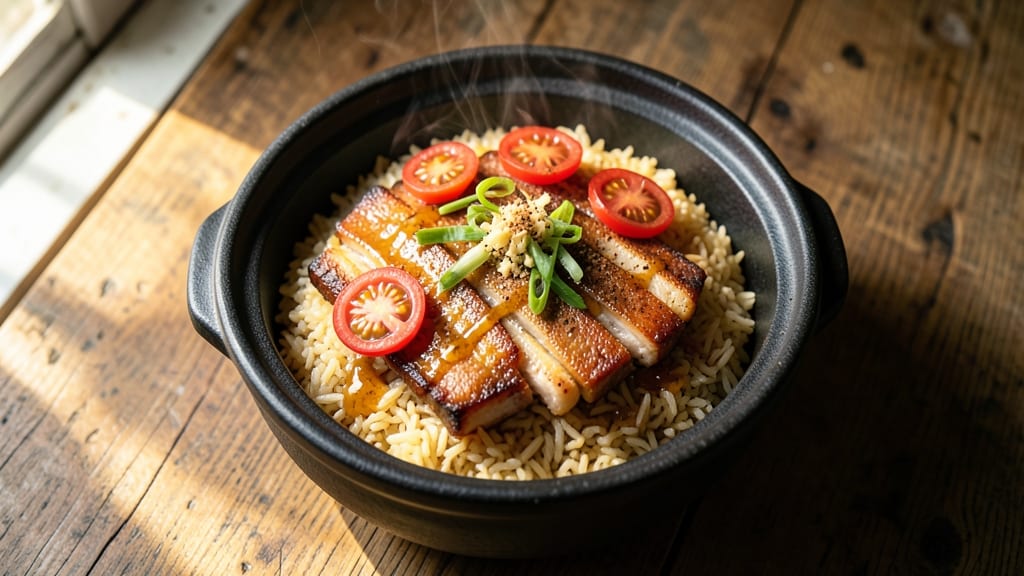
This Cantonese claypot rice recipe transforms simple jasmine rice into a fragrant, five-spice-infused masterpiece with crispy charred vegetables at its heart. The claypot method—steaming rice with aromatics while searing proteins—creates a dish where every bite delivers smoky depth and tender texture.
I’ve perfected this technique over years of dim sum nights, balancing traditional layering with modern shortcuts like pre-cooked pork belly for efficiency.
The magic lies in the five-spice blend—star anise, cinnamon, and cloves—that infuses the rice with warmth, while ginger and scallions add brightness. Charred eggplant, tomatoes, and bell peppers on top provide a satisfying crunch and sweetness that cuts through the richness.
Serve with chili sauce or pickled vegetables for the full Cantonese experience, where each spoonful tells a story of wok-heat tradition and homey comfort.
Ingredients for cantonese claypot rice
Jasmine rice, five-spice blend, and charred vegetables create this fragrant Cantonese masterpiece.
| Ingredient | Amount | Notes |
|---|---|---|
| Jasmine Rice 🌾 | 1 ½ cups | Uncooked, long-grain preferred |
| Five-Spice Powder 🌶️ | 1 ½ tbsp | Homemade or store-bought blend |
| Fresh Ginger 🧅 | ½ inch | OR 1 tbsp grated |
| Scallions 🧅 | 4 whole | White and green parts separated |
| Pre-Cooked Pork Belly 🥓 | 8 oz | Thinly sliced, store-bought or homemade |
| Cherry Tomatoes 🍅 | ½ lb | Halved for charring |
| Eggplant 🍆 | ½ lb | Cubed, skin on for texture |
| Red Bell Pepper 🌶️ | ½ lb | Cut into strips |
| Light Soy Sauce 🍶 | ¼ cup | For marinating pork |
| Sesame Oil 🫒 | 1 tbsp | For finishing |
| Neutral Oil 🫒 | 2 tbsp | Vegetable or canola |
| Salt 🧂 | 1 tsp | Kosher or sea salt |
| Black Pepper 🌶️ | ½ tsp | Freshly ground |
| Star Anise 🌶️ | 1 whole | For aromatic infusion |
| Cinnamon Stick 🌿 | 1 whole | For depth of flavor |
The five-spice powder is non-negotiable here—Penzeys or Spicewalla blends work best for authentic flavor. For fresh ginger, look for knobby, firm roots at Asian markets—they’re more potent than grocery store versions. Pre-cooked pork belly saves time, but if making your own, render it until crispy. The star anise and cinnamon stick infuse the rice with warmth, so don’t skip them—remove before serving to avoid bitterness. Scallions should be crisp; trim the roots but leave the greens for garnish.
No five-spice blend? Mix 1 tsp each of star anise, cinnamon, cloves, fennel seeds, and Szechuan peppercorns—toast the spices first for deeper flavor. Substitute pork belly with char siu or leftover roast chicken, but adjust cooking time. Cherry tomatoes can be swapped for regular tomatoes or zucchini if unavailable. For extra crunch, char the vegetables in a cast-iron skillet or wok—the smoky flavor is essential. If sesame oil is too strong, reduce to 1 tsp and add more neutral oil for balance.
Store prepped aromatics (ginger, scallions, spices) in airtight containers for up to 2 weeks. The pork belly keeps 3 days refrigerated or 3 months frozen. Charred vegetables lose crispness after 1 day, so prep them fresh or store separately. To reheat, steam the rice gently—microwaving dries it out. Leftovers make great fried rice; just add an egg and extra veggies.
Why You'll Love This Recipe
- One-Pot Magic: I swear by this recipe when I’m too tired to wash dishes—just rice, pork belly, and a few spices in the same pot. The claypot does all the work while I sip tea.
- Five-Spice Secret Weapon: That earthy, aromatic five-spice powder? It turns simple rice into something deeply satisfying—warm, slightly sweet, and impossible to stop eating. Honestly, it’s the star here.
- Lunchbox Hero: Make a big batch on Sunday, and you’ve got flavor-packed meals for the week. The pork belly stays tender, the rice stays fragrant, and even my picky teenager grabs seconds.
- Budget-Friendly Feast: Pre-cooked pork belly stretches thin, and jasmine rice is cheap—yet it feels like a restaurant meal. Between us, this is how I feed four people for under $15 without sacrificing taste.
Step-by-step instructions for Cantonese claypot rice
Master the art of aromatic rice with this traditional technique—fragrant, tender, and perfectly balanced.
Prepare the Five-Spice Marinade and Veggies
In a small bowl, combine the 1.5 tablespoons Five-Spice Powder, 0.5 inch Fresh Ginger (finely minced), 0.25 cup Light Soy Sauce, 1 teaspoon Salt, and 0.5 teaspoon Black Pepper. Mix until the ginger is fully incorporated. This aromatic blend will infuse the rice with its signature warmth and complexity.
While the marinade rests, prepare the vegetables: cut the 0.5 lb Eggplant into 1-inch cubes, slice the 0.5 lb Red Bell Pepper into ½-inch strips, and halve the 0.5 lb Cherry Tomatoes. Separate the 4 whole Scallions into white and green parts, reserving the whites for the rice base and the greens for garnish. The eggplant should be cubed large enough to retain some texture after charring.
Char the Vegetables for Depth of Flavor
Heat a clean skillet over high heat until very hot. Add 1 tablespoon Neutral Oil and swirl to coat. Working in batches, add the eggplant cubes and sear for 3-4 minutes per side until deeply charred and tender. Transfer to a plate and repeat with the bell pepper strips and cherry tomato halves, charring each until blistered and slightly collapsed. This step develops their natural sweetness and adds smoky complexity to the dish.
In the same skillet, add the white parts of the scallions and cook for 1-2 minutes until softened but not browned. Remove and set aside with the other vegetables. The residual charred oil will enhance the rice's flavor profile, so don't wipe the pan clean.
Cook the Five-Spice Jasmine Rice
Rinse the 1.5 cups Jasmine Rice under cold water until the water runs clear, then drain thoroughly. In a heavy-bottomed claypot or deep skillet, heat the remaining 1 tablespoon Neutral Oil over medium heat. Add the 8 oz Pre-Cooked Pork Belly and sear for 1-2 minutes until lightly browned. Remove the pork and set aside temporarily.
Add the white scallions to the pot and cook for 30 seconds until fragrant. Pour in the Five-Spice marinade and stir for 30 seconds to coat the bottom of the pot. Add the rinsed rice, stirring gently to distribute the marinade evenly. Pour in 2 cups water (or enough to cover the rice by ½ inch), then add the whole Star Anise and whole Cinnamon Stick. Bring to a boil, then reduce heat to low and cover tightly with a lid.
Steam and Infuse the Rice
Simmer the rice for 15 minutes without lifting the lid. This allows the spices and aromatics to fully infuse the grains. After 15 minutes, gently fold the charred vegetables and Pre-Cooked Pork Belly into the rice using a spatula, being careful not to break the grains. Return the lid and continue cooking for another 10 minutes on low heat, or until the rice is tender and all liquid has been absorbed.
If the rice appears dry before the 25-minute mark, add 1-2 tablespoons hot water through a small gap in the lid. The rice should be moist but not soupy, with a slight resistance when pressed between fingers. The Star Anise and Cinnamon Stick will impart their flavors without needing removal.
Finish with Sesame Oil and Garnish
Once the rice is fully cooked, remove from heat and let it sit covered for 5 minutes. Discard the Star Anise and Cinnamon Stick. Drizzle the 1 tablespoon Sesame Oil evenly over the rice and gently toss with a spatula to distribute. The sesame oil adds a nutty finish and enhances the Five-Spice aroma.
Transfer the rice to a serving platter and garnish with the reserved green Scallion parts, chopped into ¼-inch pieces. Serve immediately in individual clay bowls or deep plates, allowing each person to enjoy the fragrant, charred vegetable-infused rice with its tender pork belly. The contrast of textures—soft rice, crispy pork, and charred vegetables—makes this dish unforgettable.
Pro Tips For Making Cantonese Claypot Rice
- Parboil Rice First: I learned this the hard way—skipping the quick parboil means your jasmine rice turns to mush in the claypot. Rinse the rice until the water runs clear, then boil for exactly 2 minutes before draining. This locks in texture so the grains stay separate and fluffy when steamed with the pork belly.
- Toast Five-Spice Dry: Five-spice powder loses its punch when bloomed wet. Heat 1 teaspoon in the dry claypot over medium heat for 30 seconds until fragrant—this wakes up the spices and prevents a dull, bitter aftertaste. Stir constantly or you’ll burn it (yes, even if you’re impatient like me).
- Slice Pork Belly Thin: Pre-cooked pork belly is forgiving, but thick slices steam unevenly and turn soggy. Aim for ¼-inch slices, then cut them into 1-inch strips. This ensures even heat penetration and crisp edges when the rice finishes cooking.
- Layer Rice Loosely: Dumping rice directly into the pot crowds the center, leaving it undercooked. Spread the rice in a single even layer first, then gently press down with a wet spoon to create channels for steam. The edges crisp up while the middle stays tender—no more dry pockets.
Regional styles of this cantonese claypot rice
Hong Kong Dim Sum Style
In Hong Kong, claypot rice is often served as a dim sum accompaniment in small clay bowls at tea houses. The dish here is lighter, using less pork belly (4 oz per serving) and more charred vegetables for texture.
I’ve seen vendors in Tsim Sha Tsui use smaller clay pots (6-inch diameter) to cook individual portions, keeping the rice steaming hot for hours.
The key is high heat charring—they use a cast-iron wok to blister the eggplant and tomatoes until they’re almost black, then fold them into the rice just before serving. 🔥
Guangzhou Home-Style
This is the original Cantonese version, where the claypot rice is a hearty, one-pot meal. In Guangzhou homes, you’ll find larger clay pots (8-inch diameter) filled with more generous portions—2 cups rice per pot, often served with braised pork or shrimp.
The five-spice blend here is heavier on cinnamon and star anise, giving the rice a deeper, woodier aroma. I remember my grandmother’s version included dried shrimp folded into the rice at the end for extra umami. The vegetables are charred separately and added after cooking to maintain their crispness.
Modern Singaporean Twist
Singapore’s version leans into fusion flavors, often swapping pork belly for char siu or even chicken rendang. The rice is cooked with coconut milk (¼ cup) for a creamier texture, and the charred vegetables include long beans and baby corn for a sweeter crunch.
I love how Singaporean chefs use less five-spice powder (1 tbsp total) and more lemongrass and kaffir lime leaves for brightness. The dish is frequently served with sambal chili sauce on the side, balancing the richness.
This style is perfect for those who enjoy slightly tangy, tropical notes in their claypot rice. 🌶️
Taiwanese Street Food Adaptation
Taiwan’s street food version is all about bold, smoky flavors and quick prep. Vendors use pre-cooked rice (steamed ahead of time) to save time, then layer it with charred veggies and leftover roast pork.
The five-spice blend here is simpler, often just cinnamon, cloves, and a pinch of Szechuan peppercorns for a subtle numbing heat. I’ve seen night market stalls serve this with pickled mustard greens on top, adding a sharp, refreshing contrast.
The claypot is often reused for multiple batches, with each new layer of rice absorbing the smoky flavors from previous cooks. This makes it cheaper and more aromatic over time! 💫
Malaysian Peranakan Fusion
In Malaysia, claypot rice gets a Peranakan twist, blending Cantonese techniques with local spices. The rice is cooked with turmeric and galangal alongside the five-spice blend, giving it a golden hue and earthy depth.
Charred vegetables here include long beans and Thai eggplants, and the dish is often topped with crispy fried shallots for extra crunch. I’ve had this version served with sambal belacan (shrimp paste chili), which adds a spicy, funky kick.
The claypot is sometimes lined with banana leaves before cooking to infuse the rice with a subtle herbal aroma. This fusion is a must-try for those who love layered, complex flavors.
Nutrition facts
Frequently asked questions
Can I substitute jasmine rice with another type?
Jasmine rice is ideal for its fragrant aroma, but you can use long-grain white rice or bombay rice as substitutes. Avoid short-grain rice like sushi rice—it becomes too sticky. For extra fragrance, add 1 tsp pandan extract to the cooking water. The texture will be slightly different but still delicious!
How do I prevent the rice from becoming mushy?
Rinse the rice thoroughly before cooking to remove excess starch, then drain completely. Use a heavy-bottomed claypot or stainless steel pot for even heat distribution. After the initial 15-minute simmer, reduce heat to low and avoid lifting the lid. If needed, add just 1-2 tbsp hot water through a small gap in the lid rather than opening it fully.
What if I don’t have a claypot? Can I use a regular pot?
Yes! A heavy stainless steel or enameled cast-iron pot works perfectly. The key is maintaining even heat distribution. For extra authenticity, place a steamer basket inside the pot and cook the rice in it, then add the charred veggies and pork at the end. Avoid non-stick pots—they don’t retain heat well enough for proper steaming.
Can I make this recipe ahead of time?
Prep the charred vegetables and marinade 1 day ahead and store separately. Cook the rice fresh for best texture, but you can steam it ahead and reheat gently with 2 tbsp water per cup of rice. Reheat slowly in a covered pot over low heat—microwaving dries it out. The charred veggies lose crispness after 24 hours, so prep them fresh or store them separately.
Why does my claypot rice taste bland?
Bland flavor usually means the spices didn’t infuse properly. Ensure you’re using fresh five-spice powder (toast whole spices first if making your own). Char the vegetables over high heat until deeply blackened for smoky depth. For extra richness, add 1 tbsp fermented black beans or ½ tsp msg to the marinade. Always taste as you go—adjust salt and spices gradually!