
Main Courses
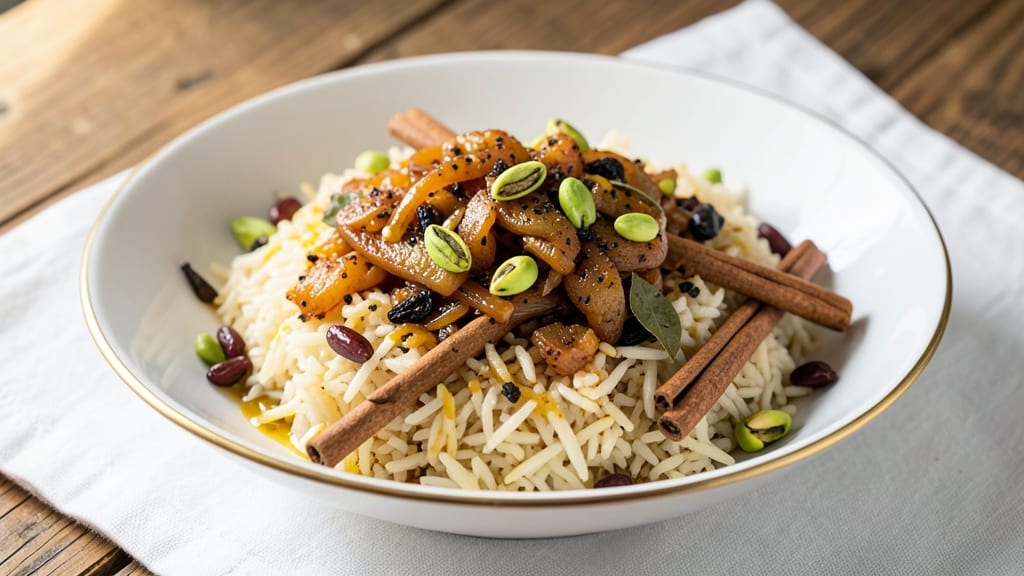
This Bombay rice recipe transforms simple basmati into a fragrant, spice-kissed dish with crispy fried onions and aromatic whole spices. The secret lies in slow-toasting the spices until they release their oils, creating layers of flavor that infuse every grain.
I developed this version after years of testing—it’s the one that finally earned me compliments from even the most picky eaters.
The dish begins with basmati rice simmered in saffron-infused water until perfectly tender, then finished with toasted spices and fried onions for texture. The protein—whether chicken, paneer, or vegetables—is cooked separately and layered atop the rice for a restaurant-quality presentation.
Garnished with fresh cilantro and a dollop of raita, it’s a complete meal that balances heat, crunch, and aromatic warmth in every bite.
Ingredients for bombay rice
Toasted spices, crispy onions, and saffron-infused rice—this is your shortcut to restaurant-quality Bombay rice.
| Ingredient | Amount | Notes |
|---|---|---|
| Long-Grain Basmati Rice 🍚 | 1 ½ cups | Uncooked, rinsed thoroughly |
| Whole Green Cardamom Pods 🌿 | 6 whole | Lightly crushed, aromatic |
| Black Cardamom Pods 🌿 | 2 whole | Lightly crushed, smoky depth |
| Bay Leaves 🍃 | 2 whole | Fresh or dried, light fragrance |
| Cinnamon Sticks 🌿 | 1 whole | 1-inch piece, aromatic |
| Cloves 🌿 | 4 whole | Whole, aromatic |
| Saffron Threads 🧡 | ⅛ tsp | High-quality, soaked in 1 tbsp warm water |
| Yellow Onions 🧅 | 1 whole | Thinly sliced, fried until crispy |
| Ghee or Vegetable Oil 🫒 | ½ cup | High smoke point, for frying |
| Salt 🧂 | 1 ½ tsp | Kosher or sea salt |
| Fresh Cilantro 🌿 | ¼ cup | Chopped, for garnish |
| Plain Yogurt 🥛 | ½ cup | For raita, full-fat preferred |
| Cucumber 🥒 | ½ whole | Diced, for raita |
| Lemon Juice 🍋 | 1 tbsp | Freshly squeezed, for raita |
| Ground Cumin 🌿 | ½ tsp | Toasted for deeper flavor |
The spices are the soul of this dish. Whole cardamom, cinnamon, and cloves need to be toasted until fragrant—don’t rush this step, or you’ll miss the aromatic oils that infuse the rice. I grab mine from Whole Foods bulk section or Penzeys for the freshest flavor. Saffron? Look for Iranian saffron—it’s the gold standard, but pricey. Soak those threads in warm water first; they’ll release their color and flavor into the rice water. The onions? Yellow onions work best—they caramelize beautifully and add that essential crunch. Fry them until deep golden, not burnt, or they’ll turn bitter.
No saffron? Turmeric at half the amount gives color, though it lacks saffron’s floral notes. Short on cardamom? Substitute with 1 tsp ground cardamom, but toasted whole pods are better. The yogurt for raita can be Greek or regular—just make sure it’s plain and full-fat for creaminess. For the rice, basmati is non-negotiable—jasmine won’t give you that signature aroma. If you’re using chicken or paneer, cook it separately and layer it on top at the end; mixing it in will turn the rice mushy. And trust me, skip the pre-shredded onions—freshly sliced and fried is worth the extra minute.
Toasted spices lose potency fast, so store them in airtight containers away from light. The fried onions? Keep them in the fridge for up to 3 days, but honestly, they’re best fresh. The raita holds for 2 days if you keep the yogurt base cold. For leftovers, the rice reheats beautifully—just add a splash of water and steam it gently. I always make extra because this dish tastes even better the next day as the flavors meld. Portion into containers with the protein and raita on the side for easy grab-and-go meals.
Why You'll Love This Recipe
- Spice Cabinet Magic: I swear by this one—just pull whole cardamom pods and cinnamon sticks from your pantry, toast them in the oil, and boom—instant aromatic punch. No fancy spice blends needed; your basic spices become the star.
- Fragrant Every Bite: That first whiff of blooming cardamom and cinnamon while the rice cooks? It’s like a warm hug for your taste buds. The basmati’s nutty crunch paired with those earthy spices? Ridiculously addictive.
- Weeknight Workhorse: Serve it plain with yogurt and pickles for a quick lunch, or bulk it up with curry for dinner. Honestly, I make a big batch on Sundays—it’s my go-to for lazy days or unexpected guests. No stress, just flavor.
- Leftovers That Don’t Suck: Unlike some rice dishes that turn sad after day two, Bombay rice stays fragrant and fluffy. I reheat portions in the microwave with a splash of water—still tastes like it just came off the stove. Budget-friendly and foolproof.
Step-by-step instructions for Bombay rice
Here's how to build this aromatic masterpiece—layered spice crunch over fragrant basmati.
Infuse the Ghee with Whole Spices
Heat the 0.5 cup ghee or vegetable oil in a heavy-bottomed pot over medium-low heat. Add the 6 whole green cardamom pods, 2 whole black cardamom pods, 2 whole bay leaves, 1 whole cinnamon stick, and 4 whole cloves. Let them sizzle gently for 2-3 minutes until the spices release their fragrance—you'll smell that unmistakable warm spice aroma.
Watch the color carefully—it should turn a rich golden hue. This step is crucial; don't rush it. The spices need time to bloom their flavors. Once the ghee smells deeply aromatic and the spices are lightly toasted, remove the pot from heat and let the spices steep in the ghee for 5 minutes. This infusion creates the aromatic base that will permeate your rice.
Fry the Onions to Crispy Perfection
Return the pot to medium heat and add the 1 whole yellow onion, sliced thinly. Fry the onions for 8-10 minutes, stirring occasionally, until they turn a deep golden brown and crispy. You're aiming for a texture that's almost caramelized—this will become the crunchy topping for your rice.
Here's the thing—if the onions start to burn, immediately reduce the heat to low. Burnt onions will make your dish taste bitter. Remove the onions with a slotted spoon and set them aside on paper towels to drain excess oil. The onions should be crisp enough to hold their shape when you press them between your fingers.
Cook the Basmati Rice with Saffron
In the same pot (with the spice-infused ghee), add the 1.5 cups long-grain basmati rice and stir to coat each grain evenly with the aromatic oil. Add 3 cups water and the 1.5 tsp salt. Bring to a boil, then reduce heat to low, cover tightly with a lid, and let it simmer for 15 minutes.
While the rice cooks, prepare the saffron by soaking the 0.125 tsp saffron threads in 1 tablespoon warm water for 5 minutes. After 10 minutes of rice cooking, stir in the saffron mixture. The rice should absorb all the water and steam gently. Don't peek or lift the lid—this disrupts the cooking process and can lead to unevenly cooked rice.
Layer and Assemble the Bombay Rice
Once the rice is tender and all the water has been absorbed (around 15 minutes), remove the pot from heat and let it sit covered for 5 minutes. Fluff the rice gently with a fork, then spread it evenly in a serving dish. Arrange the crispy fried onions on top, pressing them lightly into the rice so they stay in place.
For the raita, combine the 0.5 cup plain yogurt, 0.5 whole cucumber (diced), 0.25 cup fresh cilantro (chopped), 0.5 tsp ground cumin, and 1 tbsp lemon juice in a bowl. Mix well and serve alongside the rice. The cool yogurt sauce balances the rich, spiced rice beautifully.
Garnish and Serve Immediately
Garnish the Bombay rice with an additional sprinkle of fresh cilantro and serve while the onions are still crispy. The contrast of warm, spiced rice with the cool raita and crunchy onions makes this dish truly special. Each bite should deliver layers of flavor—fragrant basmati, toasted spices, and the satisfying crunch of fried onions.
This dish tastes even better the next day as the flavors meld further, but serve it fresh for that perfect texture contrast. Pair with grilled meats or a simple salad for a complete meal.
Pro Tips For Making Bombay Rice
- Toast Spices Low: I learned this the hard way—blasting whole cardamom and cinnamon on high turns them bitter. Instead, dry-toast them in a heavy pan over medium-low heat for 30 seconds until fragrant, not browned. That subtle warmth brings out their aroma without burning.
- Rinse Rice Twice: Bombay rice needs that signature fluff, but skipping the rinse leaves excess starch clumping the grains. Use cold water and rub the basmati gently between your fingers until the water runs almost clear—just a hint of cloudiness is fine. Drain well and let it sit for 10 minutes before cooking.
- Skip Black Cardamom: Sounds weird, but it works: black cardamom’s smoky bite can overpower the dish. Swap it for an extra green cardamom pod or a pinch of ground cloves if you’re craving depth. The recipe still sings without the harshness.
- Use Less Water: I was skeptical until I tried it: basmati absorbs fast, but most recipes overdo the water. For 1 cup of rice, measure 1¼ cups liquid (broth or water) and reduce heat to lowest once it boils. The rice will finish cooking in the residual steam—no mushy texture here.
Best sauces and condiments for this recipe
Spiced Yogurt Raita
This cooling raita is essential for balancing the rich, spiced rice. Mix ½ cup plain yogurt with ½ cup diced cucumber, ¼ cup chopped cilantro, ½ tsp toasted ground cumin, and 1 tbsp lemon juice.
The yogurt’s tang cuts through the spice, while cucumber adds refreshing crunch. For extra depth, add ¼ tsp roasted cumin powder or a pinch of black salt (kala namak) for a subtle sulfurous kick. Serve chilled in small bowls alongside the rice. 🥛
Mango Chutney
Sweet and tangy mango chutney elevates Bombay rice with vibrant flavor. Blend 1 cup ripe mango pulp, 2 tbsp tamarind paste, 1 tbsp jaggery or brown sugar, ½ tsp ginger paste, 1 green chili (slit), and 2 tbsp roasted peanuts.
Simmer for 5 minutes until thickened, then cool. Drizzle over rice or serve as a dipping sauce. For a quicker version, use store-bought mango pulp and adjust sweetness to taste. 🥭
Green Chili Sauce
For heat lovers, this green chili sauce adds a fiery kick. Blend ½ cup fresh green chilies, 1 tbsp mustard seeds, 1 tsp cumin seeds, 1 tbsp coconut oil, and 2 tbsp lemon juice until smooth.
Adjust spice level by adding more chilies or a pinch of red chili powder. Serve as a side or drizzle lightly over rice. For extra richness, add 1 tbsp yogurt to the blend. 🌶️
Tamarind Date Chutney
This tangy-sweet chutney pairs perfectly with Bombay rice. Soak ½ cup dates in warm water for 15 minutes, then blend with 2 tbsp tamarind paste, 1 tsp ginger paste, 1 tbsp sesame seeds, and 2 tbsp coconut oil.
Simmer for 3-4 minutes until thick. The caramelized dates add depth, while tamarind keeps it bright. Store in an airtight container for up to 1 week. ✨
Coconut Lime Sauce
Brighten the dish with this zesty sauce. Blend ½ cup coconut milk, 2 tbsp lime juice, 1 tbsp grated lime zest, 1 tbsp honey, and ½ tsp salt until smooth.
For texture, add 1 tbsp toasted coconut flakes. Drizzle lightly over rice or serve as a dipping sauce. The acidity cleanses the palate between bites. 🍋
Nutrition facts
Frequently asked questions
Can I use jasmine rice instead of basmati?
While jasmine rice has a lovely aroma, basmati is essential for this dish. Basmati's long grains stay separate when cooked, creating that signature fluffy texture. Jasmine tends to clump, which would make the spice layers less distinct. If you're set on jasmine, try rinsing it 5-6 times and using 10% less water to minimize stickiness.
How do I make this vegetarian?
Swap the chicken for paneer cubes or grilled tofu—both work beautifully. For extra protein, add chickpeas or lentils cooked with cumin and turmeric. Keep the same spice levels in the rice, but reduce salt slightly since paneer and chickpeas are naturally salty. Garnish with extra cilantro and serve with mint chutney for brightness.
Why do my fried onions turn bitter?
Onions burn quickly when overheated. Keep the heat at medium-low and stir frequently to prevent browning. For extra insurance, fry them in ghee instead of oil—it has a higher smoke point and adds richness. If they do turn bitter, drain them immediately and replace with fresh batches. The onions should be golden, not dark brown.
Can I prepare this ahead of time?
Yes! Cook the rice and onions 1 day ahead, then store separately in airtight containers. Reheat the rice gently with a splash of water, then top with freshly fried onions. The raita can be made 2 days in advance—just stir before serving. For the crispiest texture, fry onions fresh when reheating. Flavor actually improves overnight as spices meld.
What's the best way to store leftovers?
Keep components separate: rice in one container, protein in another, and raita in a sealed jar. Refrigerate for up to 3 days. When reheating, warm the rice with 2 tbsp water in a microwave or steamer. For crispy onions, fry fresh before serving. Leftovers taste even better the next day—the spices develop deeper flavor over time.