
Main Courses
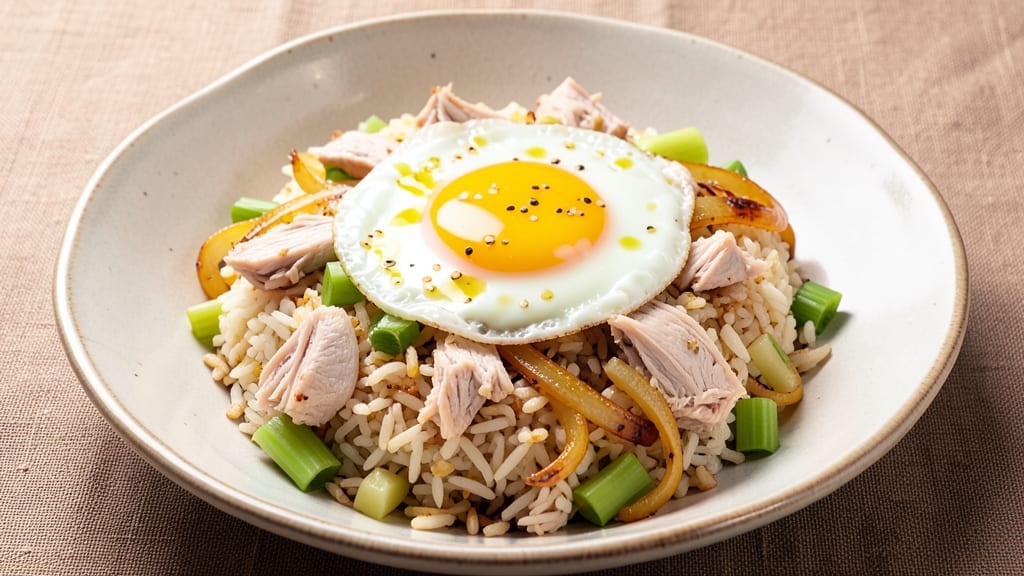
This canned tuna fried rice recipe transforms pantry staples into a restaurant-worthy dish with crispy celery bites and eggy richness in under 30 minutes. The secret lies in properly cooling and drying the rice first—this prevents soggy results and ensures each grain stays distinct and flavorful.
I developed this version after years of testing, balancing simplicity with depth using just a few key ingredients: high-quality rice, fresh garlic, and a touch of sesame oil for that signature aroma.
The magic happens in the stir-fry: searing the tuna until just cooked preserves its delicate texture, while the celery and onions caramelize for natural sweetness. A perfectly scrambled egg binds everything together, adding creaminess that makes this dish feel indulgent.
For extra depth, I recommend finishing with a splash of soy sauce and a sprinkle of green onions—this elevates the dish from simple to spectacular without complicating the process.
Ingredients for canned tuna fried rice
High-quality rice, fresh aromatics, and crispy vegetables create this restaurant-style tuna fried rice.
| Ingredient | Amount | Notes |
|---|---|---|
| Long-Grain White Rice 🍚 | 2 cups | Uncooked, jasmine or basmati preferred |
| Canned Tuna in Water 🐟 | 2 cans | 5 oz each, drained well |
| Large Eggs 🥚 | 2 whole | Fresh, cold for scrambling |
| Yellow Onion 🧅 | 1 whole | Medium size, thinly sliced |
| Celery Stalks 🥬 | 2 whole | Fresh, thinly sliced |
| Garlic Cloves 🧄 | 3 cloves | Fresh, minced |
| Sesame Oil 🫒 | 1 tbsp | Toasted, for aroma |
| Soy Sauce 🍶 | 3 tbsp | Light or all-purpose |
| Vegetable Oil 🫒 | 2 tbsp | Neutral, high smoke point |
| Green Onions 🌱 | 2 whole | Thinly sliced, for garnish |
| Salt 🧂 | 1 tsp | Diamond Crystal kosher |
| Black Pepper 🌶️ | ½ tsp | Freshly ground |
| Sesame Seeds 🌾 | 1 tbsp | Toasted, for garnish |
The rice is the foundation—jasmine or basmati cooks up light and distinct, avoiding the mushy texture that ruins fried rice. Cook it al dente, then spread it on a tray to cool completely before stirring. This step is critical for achieving those signature crispy grains. For the tuna, 5 oz cans in water (not oil) provide the cleanest flavor without overpowering the dish. Fresh garlic and thinly sliced celery add the signature crunch and sweetness, so don't skip these. I always grab organic celery from the grocery store's produce section—it's sweeter and more tender.
No sesame oil? Toasted peanut oil works in a pinch, though it lacks that signature aroma. The soy sauce matters here—light or all-purpose is ideal, but if you only have dark, use half the amount. For the eggs, cold eggs scramble more gently and create that silky texture. If you're short on time, pre-cooked rice can be used, but it won't be as crispy. The green onions and sesame seeds are purely for garnish, but they add that restaurant-quality finish. Store-bought fried rice mixes? Skip them—this recipe delivers far superior texture and flavor with just a few extra minutes of effort.
Rice reheats beautifully, but never microwave it—the texture turns gummy. Instead, use a skillet over medium heat with a splash of water to revive it. The cooked dish keeps for 3-4 days in the fridge, though it's best enjoyed fresh. For leftovers, portion into containers and freeze for up to 3 months. The celery and green onions can be prepped ahead and stored in airtight containers for 5 days, making assembly a breeze. If you're serving a crowd, double the batch—this recipe scales perfectly while maintaining its signature crispy texture.
Why You'll Love This Recipe
- Pantry Powerhouse: I swear by this when my fridge is bare—just rice, tuna, and a few basics. No fancy ingredients, no last-minute grocery runs. That celery and onion combo adds just enough crunch to keep it interesting, even when I’m grabbing whatever’s left.
- Crispy Egg Magic: The secret’s in the egg—scrambled just enough to get that crispy edge while staying creamy inside. One egg per serving (or two if you’re hungry) turns this into something hearty, not sad.
- Lunchbox Hero: Between us, this is my go-to for meal prep. Cold or reheated, it’s the same great taste—perfect for work lunches or packing for the kids. The tuna keeps it protein-packed, and the rice soaks up any extra flavor.
- Budget Win: Honestly, I make this at least twice a month. Canned tuna is cheap, rice lasts forever, and you can stretch it into leftovers for days. Plus, it’s the kind of dish where a little goes a long way—great for feeding a crowd without breaking the bank.
Step-by-step instructions for canned tuna fried rice
Perfectly balanced texture and flavor—crispy celery, tender rice, and fluffy eggs—come together in this efficient method.
Prepare the Base Ingredients for Even Cooking
Begin by slicing the 1 whole yellow onion into thin half-moons and cutting the 2 whole celery stalks into small, even dice—about ¼-inch pieces. This size ensures they cook quickly and develop that signature crisp-tender texture. Transfer both to a mixing bowl and set aside. For the 3 cloves garlic, mince them finely so they dissolve into the rice rather than remaining as distinct cloves.
In a separate small bowl, whisk together the 3 tablespoons soy sauce, 1 teaspoon salt, and ½ teaspoon black pepper. This pre-mixed seasoning ensures even distribution throughout the rice. I like to toast the 1 tablespoon sesame seeds in a dry skillet over medium heat for 30 seconds until fragrant—this adds depth of flavor that you won't get from store-bought toasted seeds.
Cook the Rice to Ideal Texture
Rinse the 2 cups long-grain white rice under cold water until the water runs clear, then drain well. This removes excess starch that would make the rice gummy. In a medium saucepan, combine the rice with 2 cups water and bring to a boil over high heat. Once boiling, reduce to medium-low heat, cover with a tight-fitting lid, and cook for 15 minutes without peeking.
After 15 minutes, remove from heat and let the rice steam uncovered for 5 minutes. This resting period allows the steam to redistribute, resulting in perfectly separate grains with minimal moisture. Fluff the rice gently with a fork, then spread it on a baking sheet to cool completely before mixing with other ingredients—this prevents the rice from turning mushy when combined with cold tuna and eggs.
Scramble the Eggs to Fluffy Perfection
Heat 1 tablespoon vegetable oil in a large nonstick skillet over medium-low heat. Crack the 2 whole large eggs into a bowl and whisk vigorously until the yolks and whites are fully combined. Pour the eggs into the skillet and let them sit undisturbed for 10 seconds—this allows the eggs to set slightly on the bottom before gently stirring with a spatula.
Continue cooking the eggs on low heat for 2-3 minutes, stirring constantly, until they reach soft curds with a slightly runny consistency. Remove from heat and transfer to a plate. The eggs should be creamy rather than dry—this texture ensures they blend seamlessly into the fried rice without overwhelming it. Keep the skillet warm for the next step.
Sauté Aromatics and Combine All Ingredients
Return the skillet to medium-high heat and add the remaining 1 tablespoon vegetable oil. Add the sliced onion and celery, cooking for 3-4 minutes until the celery begins to soften but still maintains a slight crispness. Add the minced garlic and cook for 30 seconds until fragrant—don't let it brown or it will turn bitter.
Push the vegetables to one side of the skillet, then add the scrambled eggs and the pre-mixed soy sauce seasoning. Stir to combine, then add the cooled rice and the 2 cans drained tuna. Using a spatula, fold everything together gently but thoroughly for 2-3 minutes until the rice is heated through and the tuna is evenly distributed. The mixture should look moist but not wet—if it's too dry, add 1-2 tablespoons water to loosen it.
Finish with Sesame Oil and Garnish
Remove the skillet from heat and drizzle in the 1 tablespoon sesame oil, stirring immediately to distribute it evenly. This step adds a nutty aroma and ties all the flavors together. Taste and adjust seasoning—you may need an additional ½ teaspoon soy sauce or a pinch of salt depending on the brand of tuna used.
Transfer the fried rice to serving plates and garnish with the thinly sliced green onions and the toasted sesame seeds. Serve immediately while the celery remains crisp and the rice stays separate. The dish should have a balance of textures—crisp celery, fluffy eggs, and tender rice—with each bite delivering that umami-rich tuna flavor.
Pro Tips For Making Canned Tuna Fried Rice
- STIR FAST, STOP LATE: Use a wok or large skillet—get that rice moving immediately after adding oil, and keep the heat high. I learned this the hard way: dragging a spatula through stuck rice makes it gummy. Once the tuna and veggies are in, stop stirring 30 seconds before it looks done—let the rice crisp slightly from residual heat.
- DRAIN AND PRESS TUNA: Skip the watery mess: drain the tuna, then press it hard in a colander for 10 seconds to squeeze out excess liquid. Wet tuna turns fried rice soggy, and no one wants mushy rice. (Yes, even if you’re impatient like me.)
- CHOP ONION AND CELERY SMALL: Big chunks of onion or celery stay crunchy while the rice turns to paste—no one wants a textural fight in their bowl. Dice both into ¼-inch pieces; they’ll soften just enough to mingle without overpowering. (Your future self will thank you.)
- SCRAMBLE EGGS FIRST: Cook the eggs separately in a little oil until just set, then chop them into tiny pieces before adding to the rice. This keeps them creamy instead of rubbery, and it’s easier than trying to scramble them in the rice pan. (I skip this when I’m lazy, but the dish is noticeably better when I don’t.)
Perfect pairings for this recipe
Classic Side Dishes
Miso soup is my go-to pairing—its salty, fermented depth complements the fried rice's umami perfectly. Use 1 packet miso paste (about 2 tablespoons) dissolved in 2 cups hot dashi broth, then add ½ cup silken tofu and 2 green onions.
The contrast between the creamy soup and crispy fried rice makes every bite exciting. 🍜
Fresh Vegetable Sides
Steamed broccoli with a sprinkle of toasted sesame seeds and a drizzle of light soy sauce adds a vibrant, fresh element.
For extra crunch, try quick-pickled cucumbers—slice ½ English cucumber into thin rounds, then toss with 1 tbsp rice vinegar, ½ tsp sugar, and a pinch of red pepper flakes. Let sit for 15 minutes before serving.
Warm Bread Pairings
A warm, crusty steamed bun or Japanese milk bread soaks up any stray bits of fried rice beautifully. For a more substantial option, try garlic butter toast made with 1 slice sourdough, melted 1 tbsp butter, and a pinch of garlic powder.
The buttery richness balances the dish's savory notes. ✨
Drink Recommendations
For a refreshing contrast, serve with jasmine tea—its floral notes harmonize with the fried rice's savory profile. If you prefer something bubbly, try a cold Japanese lager like Asahi Super Dry, which cuts through the dish's richness without overpowering it.
For a non-alcoholic option, sparkling yuzu soda adds a citrusy brightness.
Spicy Additions
If you love heat, add 1 tsp sriracha or ½ tsp gochujang to the fried rice before serving. For an extra kick, top with chopped Thai chilies and a squeeze of lime. The acidity and spice elevate the dish to new heights while keeping the texture balanced. 🌶️
Dessert Pairings
Finish the meal with something light like matcha mochi or red bean ice cream. The sweet, earthy flavors provide a satisfying contrast to the savory fried rice. For a quicker option, serve fresh fruit salad with mango, kiwi, and lychee—the tropical notes cleanse the palate beautifully.
Nutrition facts
Frequently asked questions
Can I use leftover rice for this canned tuna fried rice?
Yes, but with a few adjustments! Use day-old, cold rice (never freshly cooked) to prevent a gummy texture. Spread it on a tray to dry slightly before stirring in the tuna and eggs. If your rice is too moist, cook it in a dry skillet for 2-3 minutes to remove excess steam before adding other ingredients.
What's the best way to keep the rice from turning mushy?
The key is cooling the rice completely before mixing. Spread freshly cooked rice on a baking sheet and let it cool for 15-20 minutes while you prep other ingredients. This removes moisture, ensuring each grain stays distinct. Also, use jasmine or basmati rice—they hold up better to stir-frying than short-grain varieties.
Can I make this recipe without eggs?
For a vegan version, omit the eggs and add ½ cup chopped bell peppers or 1 cup frozen peas (thawed and drained) for extra texture. Boost umami with 1 tbsp soy sauce or a dash of fish sauce (if pescatarian). The dish will still be flavorful, though the eggs add a creamy richness that's hard to replace.
How do I store leftovers to maintain texture?
Store in an airtight container for up to 4 days in the fridge. To reheat, use a skillet over medium heat with a splash of water—this prevents drying out. For freezing, portion into single servings and freeze for up to 3 months. Thaw overnight in the fridge before reheating. The celery may soften further, but the rice and tuna flavors stay intact.
Why does my fried rice taste bland?
Most likely, you need more umami depth! Try these fixes: Add ½ tsp fish sauce (if pescatarian) or 1 tsp soy sauce to the seasoning mix. For extra flavor, toast 1 tsp sesame seeds in the skillet before adding other ingredients. If using canned tuna in oil, drain it well—excess fat can mute flavors. Finally, taste as you cook and adjust seasoning gradually.