
Main Courses
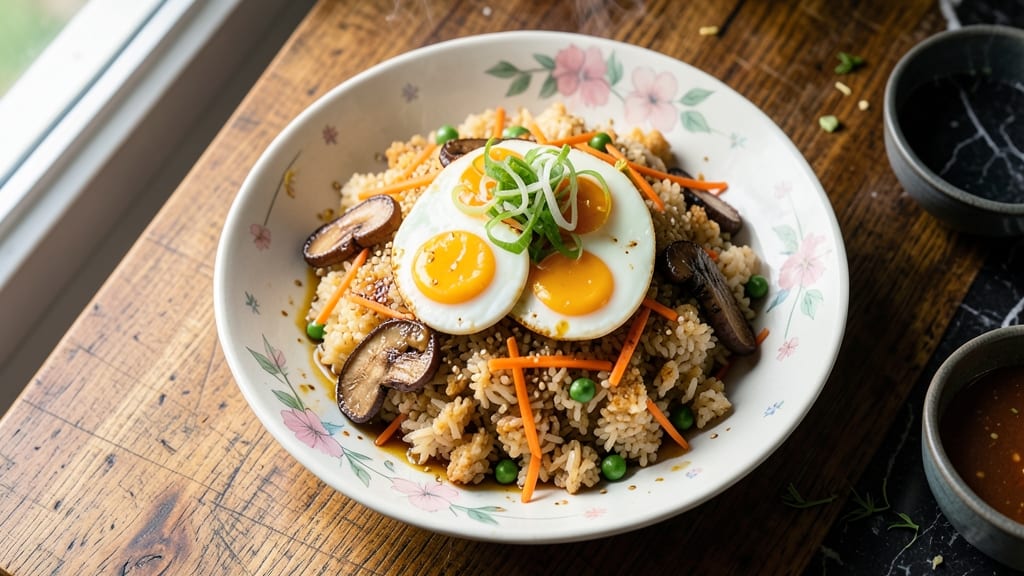
This bonsai fried rice recipe transforms a classic wok dish into a visually stunning, bite-sized masterpiece—where every grain is perfectly cooked and every bite delivers that signature eggy richness. The secret lies in high-heat wok tossing and precise shaping, creating delicate "bonsai" portions that look as impressive as they taste.
What makes this recipe special is the balance of textures: crisp veggie bites, tender egg ribbons, and perfectly cooked rice that stays separate yet cohesive.
The presentation is just as important as the flavor—each portion is shaped and garnished to resemble a miniature bonsai tree, making it ideal for appetizers, party platters, or an artistic main course. Ready in under 20 minutes, it’s a restaurant-quality dish you can make at home.
Ingredients for bonsai fried rice
Transform classic fried rice into delicate bonsai portions with these carefully chosen ingredients.
| Ingredient | Amount | Notes |
|---|---|---|
| Day-Old Jasmine Rice 🍚 | 4 cups | Cold, broken into clumps |
| Large Eggs 🥚 | 4 whole | Room temperature, beaten |
| Carrots 🥕 | ½ cup | Julienned into matchsticks |
| Green Onions 🧅 | ½ cup | White and green parts, sliced |
| Shiitake Mushrooms 🍄 | ½ lb | Stems removed, sliced thin |
| Peas 🌱 | ½ cup | Frozen, thawed and drained |
| Garlic Cloves 🧄 | 4 cloves | Minced, not pressed |
| Ginger Root 🌿 | 1 tbsp | Fresh, finely grated |
| Vegetable Oil 🫒 | ½ cup | High smoke point preferred |
| Soy Sauce 🍶 | ¼ cup | Light or all-purpose |
| Sesame Oil 🫒 | 1 tbsp | Toasted, for finishing |
| Toasted Sesame Seeds 🌾 | 1 tbsp | For garnish |
| Diamond Crystal Kosher Salt 🧂 | 1 tsp | Adjust to taste |
| Ground White Pepper 🌶️ | ½ tsp | Freshly ground preferred |
The rice is non-negotiable—day-old, cold jasmine rice creates the perfect texture. Day-Rice from the Asian market is ideal, but any leftover jasmine rice works. For the veggies, shoppers should look for fresh shiitake mushrooms with intact caps at specialty stores like Whole Foods or H Mart. The green onions need to be fresh, with vibrant green tops. If using frozen peas, thaw and drain them thoroughly—they should be cold before adding to the wok. The ginger should be peeled and grated fresh for maximum zing; pre-grated ginger from jars lacks potency.
No shiitake mushrooms? Substitute cremini mushrooms or oyster mushrooms for similar texture. Fresh peas unavailable? Snap peas or snow peas work beautifully, sliced into thin strips. The soy sauce can be swapped for tamari for gluten-free or coconut aminos for a different flavor profile. For the sesame oil, Kadoya brand is top-tier, but any quality toasted sesame oil will do. The key is to toast it in the wok at the end—don't skip this step, it's what gives that nutty aroma. If you're short on time, pre-grated ginger works, though freshly grated is ideal.
Rice keeps for 3 days in the fridge, but for this recipe, it's best used day-old. Store all veggies separately in airtight containers—carrots and mushrooms last 5 days, while green onions stay fresh up to 1 week wrapped in damp paper towels. The sesame seeds and oil can be stored 6 months in a cool, dark place. For presentation, portion the rice into 1.5-inch mounds before shaping into bonsai trees—this ensures consistent portions. The dish reheats beautifully, though the texture will be slightly softer.
Why You'll Love This Recipe
- Here’s what sold me: those shiitake mushrooms soak up the wok’s heat and turn meaty without extra sauce. The day-old jasmine rice? Perfectly toasted at the edges while staying tender inside—like a hug in every bite. Honestly, the first time I made it, I kept going back for seconds just to taste that deep, savory punch.
- I’ll be real: this feeds four for under $8. Eggs are cheap, mushrooms last forever in the fridge, and day-old rice? That’s just rice you already paid for. No fancy ingredients, no wasted leftovers—just a hearty, satisfying meal that doesn’t break the bank. Plus, the green onions add freshness without costing a fortune.
Step-by-step instructions for wok-tossed crunch with eggy richness and veggie bites
Master the art of fried rice with this refined technique that balances texture and flavor.
Prep All Ingredients for Perfect Texture
Break the 4 cups day-old jasmine rice into rough clumps with your fingers—this ensures even browning and prevents mushiness. In a bowl, whisk together the 4 whole large eggs until frothy but not too stiff. For the vegetables, julienne the 0.5 cup carrots into matchsticks, slice the 0.5 cup green onions into 1-inch pieces, and thinly slice the 0.5 lb shiitake mushrooms (stems removed). Finely grate the 1 tbsp ginger root and mince the 4 cloves garlic. Thaw and drain the 0.5 cup peas—they should be cold when you add them later.
This prep work is critical. Cold ingredients cook more evenly, and uniform cuts mean consistent texture in every bite. Keep the rice, eggs, and vegetables at room temperature while you work—cold components can make the rice gummy.
Create the Egg Base for Richness
Heat 0.25 cup vegetable oil in a wok or large skillet over medium-high heat until shimmering. Pour in the beaten eggs and let them sit undisturbed for 5-7 seconds—this creates a firm base that won't break apart when tossed. Gently push the eggs to one side of the pan and scramble them just until set, then mix everything together. Remove the egg mixture and set aside.
The key here is patience. Over-stirring the eggs makes them rubbery, while undercooking leaves them too soft. You want a custard-like texture that will blend seamlessly with the rice. If the eggs look too wet, cook them another 10 seconds—they should hold their shape when pushed with a spatula.
Stir-Fry Aromatics and Vegetables
Return the wok to medium-high heat and add the remaining 0.25 cup vegetable oil. Toss in the minced garlic and grated ginger, cooking for 20 seconds until fragrant but not browned. Add the shiitake mushrooms and cook for 2 minutes until they release their moisture and begin to brown. Push them to one side, then add the carrots and cook for 1 minute until slightly softened but still crisp. Toss in the green onions and cook for 30 seconds until bright green.
High heat is essential here—it prevents vegetables from steaming and keeps them crisp. If your pan isn't hot enough, the mushrooms will release too much water, making the rice soggy. Work quickly but deliberately, using a wide spatula to keep everything moving.
Combine Everything for Perfect Balance
Add the 4 cups day-old jasmine rice to the wok and break up any large clumps with your spatula. Drizzle in the 0.25 cup soy sauce and toss everything together for 1 minute until the rice is evenly coated. Return the egg mixture to the wok and add the 0.5 cup peas. Cook for 2-3 minutes until the peas are heated through and the rice is evenly distributed.
This is where the magic happens. The rice should be hot but not crispy—it should hold its shape when pressed between your fingers. If it's too dry, add 1 tablespoon water at a time. The peas should pop with each bite, and the mushrooms should still have a slight chew. Season with 1 tsp diamond crystal kosher salt and 0.5 tsp ground white pepper, adjusting to taste.
Finish with Sesame Oil and Garnish
Remove the wok from heat and stir in the 1 tbsp toasted sesame oil and 1 tbsp toasted sesame seeds. The sesame oil adds depth of flavor and a nutty aroma, while the seeds provide texture. Taste and adjust seasoning—you might need a touch more soy sauce or salt to balance the flavors. Serve immediately, garnished with extra green onions if desired.
The dish should be vibrant, with each bite delivering a mix of textures: crisp vegetables, tender rice, creamy eggs, and nutty sesame. If you wait too long, the rice will soften further, but the flavor will still be exceptional. Pair with a simple cucumber salad or steamed greens for a complete meal.
Pro Tips For Making Bonsai Fried Rice
- Prep Carrots Like This: Dice them into ¼-inch cubes—any larger and they’ll stay crunchy like a sad, undercooked afterthought. I learned this the hard way after serving a batch where half the carrots were still rock-hard. (Pro tip: Soak them in cold water for 10 minutes first if they’re stubbornly tough.)
- Scramble Eggs First: Push the eggs to one side of the wok and let them cook undisturbed for 20 seconds—this gives them a chance to set before you fold in the rest. I used to scramble them right away, and half the time, they’d turn into a greasy mess instead of fluffy, tender ribbons.
- Don’t Overcrowd the Wok: Add ingredients in stages—start with mushrooms and carrots, then rice, then eggs—so everything gets a proper sear. I once dumped everything in at once, and by the time the rice was cooked, the mushrooms were soggy and the eggs were rubbery. (Yes, I’ve done this.)
- Use Cold Rice: Chill the day-old rice in the fridge for at least 30 minutes before cooking—it’ll crisp up better and soak up flavors like a sponge. I skipped this once and ended up with gluey, sad rice that stuck together. (Your future self will thank you.)
Common mistakes when making this recipe
Overcooking the Rice
I’ve ruined more fried rice than I’d like to admit by overcooking the rice—turning it mushy and gluey. The key is to work quickly over high heat and stop cooking as soon as the rice is evenly distributed.
Once the rice hits medium heat, it starts breaking down. If yours looks too wet, add 1 tbsp water at a time instead of cooking longer. 🌡️
Skipping the Egg Base
Some recipes omit the egg base, but that’s a big mistake—it’s what gives fried rice its signature richness. The eggs bind everything together and add a creamy texture. If you’re short on time, use 4 large eggs and cook them just until set (not fully scrambled).
Pro tip: Let them sit undisturbed for 5-7 seconds after pouring into the wok to create a firm base.
Using Fresh Rice
Freshly cooked rice is a no-go—it’s too moist and will turn to mush when tossed. Always use day-old jasmine rice (or even better, 2-day-old). If you’re in a pinch, spread freshly cooked rice on a tray and refrigerate for 1 hour to dry it out.
Cold rice also prevents the dish from becoming gummy. ❄️
Low Heat Stir-Frying
Low heat is the enemy of crisp veggies and perfect texture. Your wok needs to be screaming hot before adding anything. If the mushrooms or carrots steam instead of sizzle, they’ll release excess water, making the rice soggy.
Preheat your wok for 2-3 minutes on high heat before starting. A carbon steel wok heats up fastest—it’s worth the investment.
Ignoring the Sesame Oil Finish
Skipping the sesame oil is like leaving out the cherry on top of a sundae—it’s the finishing touch that ties everything together. Stir in 1 tbsp toasted sesame oil off the heat to add nutty depth.
If you’re using a lower-quality oil, toast it in the wok for 10 seconds to enhance its flavor. This step also prevents the rice from drying out further.
Overcrowding the Wok
Overcrowding is a surefire way to steam instead of stir-fry. Keep portions small—use a 14-inch wok for this recipe, and don’t add more than ½ the wok’s capacity at a time.
If you’re cooking for a crowd, work in batches. A wide spatula helps keep everything moving and prevents sticking. 🍳
Nutrition facts
Frequently asked questions
What makes this bonsai fried rice different from regular fried rice?
This recipe transforms traditional fried rice into delicate, bite-sized portions shaped to resemble miniature bonsai trees. The key differences are the precise shaping technique, artistic presentation, and portion control—each serving is designed to be visually striking while maintaining perfect texture and flavor. The dish is ideal for appetizers or elegant small plates.
Can I make this recipe with a regular skillet instead of a wok?
Yes, but you'll need to adjust the cooking method. Use a large, deep skillet with high sides to mimic a wok's shape. Work in smaller batches and stir frequently to prevent overcrowding. The high heat requirement is critical—preheat your skillet for 3-5 minutes on maximum heat before cooking. A carbon steel or cast iron skillet works best for even heat distribution.
How do I shape the fried rice into bonsai trees?
After cooking, spread the rice on a plate and let it cool slightly. Use a small spoon or ring mold to create 1.5-inch mounds. Shape the top into a small tree form by pressing gently with a chopstick or your finger to create a trunk, then adding a tiny "crown" of sesame seeds or green onion slices. For extra flair, use a small amount of sesame paste to draw delicate branches. Practice makes perfect—start with simple shapes if you're new to this technique!
What's the best way to reheat leftovers?
Reheat in a dry skillet over medium heat for 2-3 minutes, stirring constantly to restore crispness. Avoid microwaving as it makes the rice soggy. For best results, add 1 tsp sesame oil when reheating to refresh the flavor. Store leftovers in an airtight container for up to 3 days—the texture will soften slightly but the taste remains excellent.
Can I make this gluten-free?
Simply substitute the soy sauce with tamari or coconut aminos (use the same amount). Check that your sesame oil and seeds are certified gluten-free. All other ingredients in this recipe are naturally gluten-free. The flavor will be slightly different but still delicious—coconut aminos add a subtle sweetness that works beautifully with the umami notes from the mushrooms and eggs.