
Main Courses
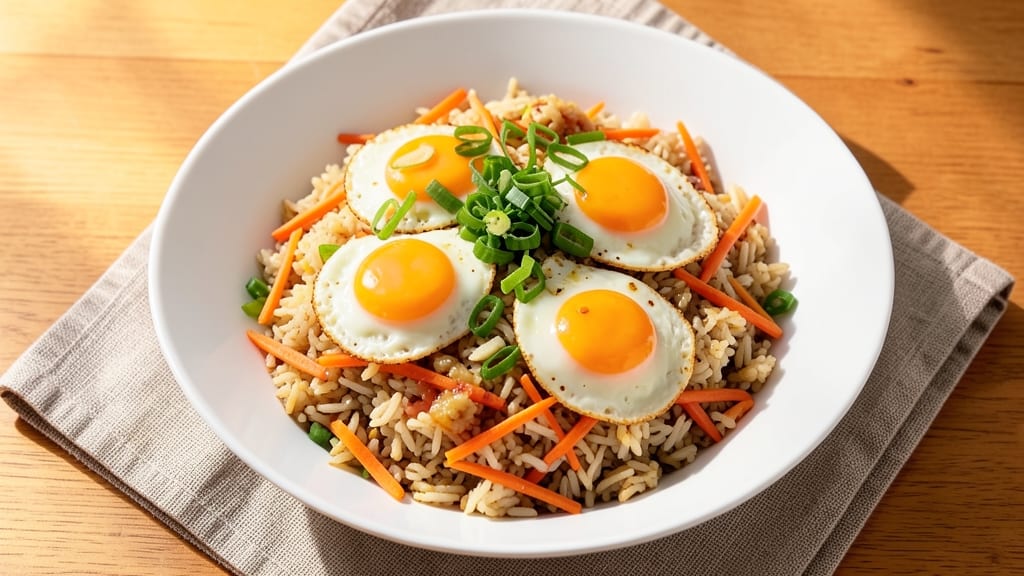
This chahan fried rice recipe delivers the perfect balance of crispy veggies, fluffy rice, and rich, wok-tossed eggs—all in one satisfying dish. The secret lies in high-heat stir-frying and precise seasoning, creating restaurant-quality texture and flavor at home.
Every bite offers a mix of tender protein, caramelized vegetables, and perfectly seasoned rice.
What makes this recipe stand out is the crispy edges on each ingredient, achieved through quick, high-heat cooking. The combination of soy sauce, sesame oil, and a touch of ginger creates a savory, aromatic base that ties everything together.
Once you master this technique, you'll never settle for anything less than homemade again.
Ingredients for chahan fried rice
Crispy edges and restaurant-style flavor start with these carefully chosen ingredients.
| Ingredient | Amount | Notes |
|---|---|---|
| Day-Old Cooked White Rice 🍚 | 4 cups | Cold, unseasoned rice preferred |
| Large Eggs 🥚 | 4 whole | Room temperature for even cooking |
| Carrots 🥕 | 1 cup | Julienned into thin matchsticks |
| Green Onions 🧅 | ½ cup | White and green parts separated |
| Fresh Ginger 🌿 | 1 tbsp | Finely minced for aromatic base |
| Vegetable Oil 🫒 | 3 tbsp | High smoke point preferred |
| Light Soy Sauce 🥄 | 3 tbsp | Kikkoman preferred for balance |
| Dark Soy Sauce 🥄 | 1 tbsp | For deeper umami color |
| Sesame Oil 🫒 | 1 tbsp | Toasted for nutty aroma |
| Garlic Cloves 🧄 | 4 cloves | Minced for aromatic depth |
| Salt 🧂 | ½ tsp | Diamond Crystal kosher salt |
| White Pepper 🌶️ | ¼ tsp | Freshly ground for subtle heat |
| Sesame Seeds 🌰 | 1 tsp | Toasted for garnish |
The rice is non-negotiable—day-old, cold, and unseasoned gives the best texture. Leftover rice from takeout works perfectly, but avoid freshly cooked rice as it releases too much moisture. For the carrots, julienne them yourself—pre-shredded loses crispness when cooked. Fresh ginger is essential; substitute with powdered ginger at half the amount if absolutely necessary, but the flavor won't be the same. Whole Foods Market carries excellent quality for all fresh ingredients, and their pre-minced ginger is a time-saver if you're short on prep time.
No sesame oil? Toasted peanut oil at half the amount works in a pinch, though the flavor will differ slightly. The soy sauce duo—light and dark—creates that signature chahan color and depth. Kikkoman light soy sauce is the gold standard, but any good-quality brand will do. For the eggs, room temperature is crucial—cold eggs will curdle when tossed. If you're vegetarian, omit the eggs entirely and increase the veggie ratio by 50%. The garlic and ginger can be pre-minced and stored in the fridge for up to 3 days in an airtight container.
Store any leftovers in an airtight container for up to 3 days—though it reheats beautifully, the crispy edges soften. For maximum crispiness, reheat in a dry skillet over medium-high heat rather than microwaving. The sesame seeds toast best in a dry pan for 30 seconds—just until fragrant. This dish freezes surprisingly well for up to 1 month, though the texture changes slightly. Portion into single servings before freezing for easy reheats.
Why You'll Love This Recipe
- One-Pan Magic: I swear by this—just toss everything in one skillet, no fancy tools or extra bowls. The eggs scramble right into the rice while the carrots caramelize, and that ginger? It infuses the whole dish with warmth without needing a separate pot.
- Crispy-Creamy Perfection: That first bite—where the edges of the rice get just crispy enough and the eggs stay velvety—is the reason I make this weekly. The green onions add a bright finish that cuts through the richness, and honestly? It tastes like a restaurant dish, not a weeknight hack.
- Leftover Hero: Between us, this gets better the next day. The flavors meld overnight, and reheating it? A microwave zap turns it into a satisfying lunch. I keep a stash in the fridge for lazy mornings or when I’ve got friends over and need something hearty fast.
- Budget Breakthrough: I’m not joking—this feeds four for under $5. Day-old rice? Free. Carrots and eggs are cheap staples, and ginger lasts forever in the freezer. It’s my go-to when groceries are tight but I still want something that feels special. (Yes, even on a Tuesday night.)
Step-by-step instructions for wok-tossed eggy fried rice
Master the wok hei technique for restaurant-quality chahan with perfectly crisp veggies and silky eggs.
Prepare the Base Ingredients for Even Cooking
Break the 4 cups day-old cooked white rice into individual grains using your hands or a fork. Cold rice prevents mushiness and absorbs flavors better. In a separate bowl, whisk together the 4 whole large eggs until the yolks and whites are fully combined and pale yellow. This ensures even cooking and creamy texture when incorporated into the rice.
Finely mince the 4 cloves garlic cloves and 1 tablespoon fresh ginger using a sharp knife. The ginger should resemble fine sand, while the garlic should be almost paste-like. Separate the 0.5 cup green onions into white and green parts - the whites will cook down while the greens provide fresh garnish at the end. These aromatics form the flavor foundation of chahan.
Develop the Umami Base Through Proper Layering
Heat a wok or large skillet over high heat until smoking slightly. Add 2 tablespoons vegetable oil and swirl to coat. Add the minced garlic and ginger, cooking for 30 seconds until fragrant but not browned. Immediately add the julienned 1 cup carrots and toss continuously for 2-3 minutes until they develop a slight char and become tender-crisp.
Pour in 1 tablespoon dark soy sauce and 1 tablespoon light soy sauce, stirring vigorously to coat the vegetables. The dark soy sauce adds color while the light soy sauce provides balance. Cook for another 30 seconds until the vegetables are evenly coated and the sauce begins to caramelize slightly at the edges. This layering creates depth of flavor that simple seasoning can't match.
Incorporate Eggs for Perfect Texture and Color
Push the vegetable mixture to one side of the wok, add 1 tablespoon vegetable oil, then pour in the whisked eggs. Let them sit undisturbed for 10-15 seconds until the edges begin to set. Using a spatula, gently fold the eggs into soft curds while maintaining their shape. The eggs should be just set but still slightly runny in the center.
Combine the egg mixture with the vegetables and toss for 1 minute to distribute the flavors evenly. This step creates the signature "eggy richness" of chahan. If the mixture appears dry, add 1 tablespoon water to maintain moisture. The eggs should be fully incorporated but still visible as delicate strands throughout the rice.
Combine Rice and Season for Optimal Texture
Add the broken-up rice to the wok and toss vigorously for 3-4 minutes over high heat. The rice should sizzle and develop a slight crust on the grains. Add the remaining 2 tablespoons light soy sauce, 1 tablespoon sesame oil, 0.5 teaspoon salt, and 0.25 teaspoon white pepper, tossing continuously to coat evenly.
Watch closely as the rice absorbs the sauce - you want each grain to be glossy but not soggy. If the mixture appears too dry, add 1-2 tablespoons water and toss again. The rice should be hot throughout and each grain should be distinct with a slight crispness. This is where chahan achieves its signature texture - crisp edges with tender centers.
Finish with Garnish and Serve Immediately
Transfer the fried rice to a serving platter and immediately sprinkle with the separated green onion whites and 1 teaspoon toasted sesame seeds. The green onion greens should be reserved for garnishing individual portions. Serve while hot, with additional green onions on the side for freshness.
The final dish should have distinct layers of flavor - the crisp carrots, tender eggs, aromatic ginger and garlic, and umami-rich soy sauce. Each bite should offer contrast between the crisp rice edges and creamy egg centers. Chahan should be served immediately as the texture changes rapidly once removed from heat.
Pro Tips For Making Chahan Fried Rice
- CRACK EGGS FIRST: Scramble the eggs before adding rice—this keeps them tender and prevents them from turning rubbery when mixed in later. I used to add eggs last, and the texture always suffered. Trust me, the first few bites will taste better this way.
- CHOP GINGER SMALL: Dice that ginger into tiny cubes (about 1/8-inch pieces) so it cooks fast and blends evenly. Big chunks stay tough and make the dish taste uneven. My grandmother swore by this, and she was right: it disappears into the rice without fighting for flavor.
- USE DRY RICE: Spread your day-old rice on a tray and let it air-dry for 10 minutes before cooking—this prevents soggy, gluey fried rice. I learned this the hard way after making a batch that stuck together like wet cement.
- SAUTÉ CARROTS FIRST: Cook the carrots in the wok until they’re almost tender (about 3-4 minutes) before adding rice—this ensures they don’t turn to mush later. Sounds weird, but it works: they stay crisp enough to cut through the chew of the rice.
Essential equipment for this recipe
Wok Essentials
A carbon steel wok is my go-to for chahan—its thin base heats up quickly and creates that signature wok hei (breath of the wok) flavor. I recommend a 14-inch wok from Made In or Bhutanese brand for optimal heat distribution.
If you don’t own a wok, a heavy-bottomed cast iron skillet works well, though it may require slightly less oil to prevent sticking. 🔥
High-Heat Tools
For even cooking, invest in a long-handled spatula (like the OXO Good Grips) to toss ingredients without burning your hands. A fish spatula with silicone edges is gentler on nonstick coatings if you’re using a pan instead of a wok.
I also keep a small ladle handy for adding water or oil in precise amounts during cooking.
Knife Prep Station
A sharp chef’s knife (I love the Wüsthof Ikon) is essential for julienning carrots and mincing garlic/ginger efficiently. A microplane speeds up ginger prep, while a cutting board with a juice groove keeps your workspace clean.
For extra convenience, pre-chop all aromatics and store them in an airtight container in the fridge for up to 3 days.
Seasoning Tools
Use a small measuring spoon set for precise soy sauce and sesame oil amounts. A fine-mesh strainer helps toast sesame seeds evenly in a dry pan. For garnish, a tweezers set makes it easy to place green onions neatly on top of each serving.
I also keep a small bowl nearby to mix the final seasonings (soy sauce, sesame oil, salt, and pepper) before tossing.
Oil Control
High-smoke-point oils like avocado oil or vegetable oil (like Mazola) are ideal for chahan. A small oil dispenser (like the OXO Good Grips) lets you add oil in controlled amounts without overdoing it.
For extra crispiness, I sometimes use a paper towel to blot excess oil from the wok after initial heating—this prevents soggy rice. 💡
Nutrition facts
Frequently asked questions
Why does chahan fried rice need day-old rice?
Freshly cooked rice is too moist and releases excess steam when stir-fried, making the final dish mushy. Day-old rice has firmer grains that absorb flavors better and develop those signature crispy edges when tossed at high heat. If you don't have leftovers, spread freshly cooked rice on a tray and refrigerate for 30 minutes to dry it out.
Can I make chahan without eggs?
For a vegetarian version, simply omit the eggs and increase the vegetable ratio by 50%. Try adding mushrooms, bell peppers, or corn for extra texture. The key is maintaining the same high-heat stir-frying technique to achieve crispy edges on all ingredients. Just reduce the soy sauce slightly to balance the increased moisture from extra veggies.
What's the secret to getting crispy edges on the rice?
High heat and proper timing are everything! Use a wok or heavy skillet at maximum heat until smoking, then toss the rice vigorously for 3-4 minutes without adding extra oil. The rice should sizzle and develop a slight crust. If it sticks, you're not using enough heat. For extra crispiness, spread the rice on a baking sheet at 350°F for 5 minutes after cooking.
How do I prevent the eggs from turning rubbery?
Keep the eggs slightly undercooked when incorporating them into the rice. Let them sit undisturbed for only 10-15 seconds in the hot oil before gently folding, and maintain high heat throughout cooking. Overcooking eggs releases moisture that makes the rice soggy. For extra silkiness, whisk the eggs until completely pale yellow before cooking.
Can I make chahan ahead of time?
While chahan tastes best fresh, you can prep components ahead: cook the rice, chop veggies, and mince aromatics. Store separately in the fridge for up to 2 days. To reheat, spread in a single layer on a baking sheet at 375°F for 5 minutes. For maximum crispiness, reheat in a dry skillet over medium-high heat for 2-3 minutes, adding a splash of water if needed.