
Main Courses
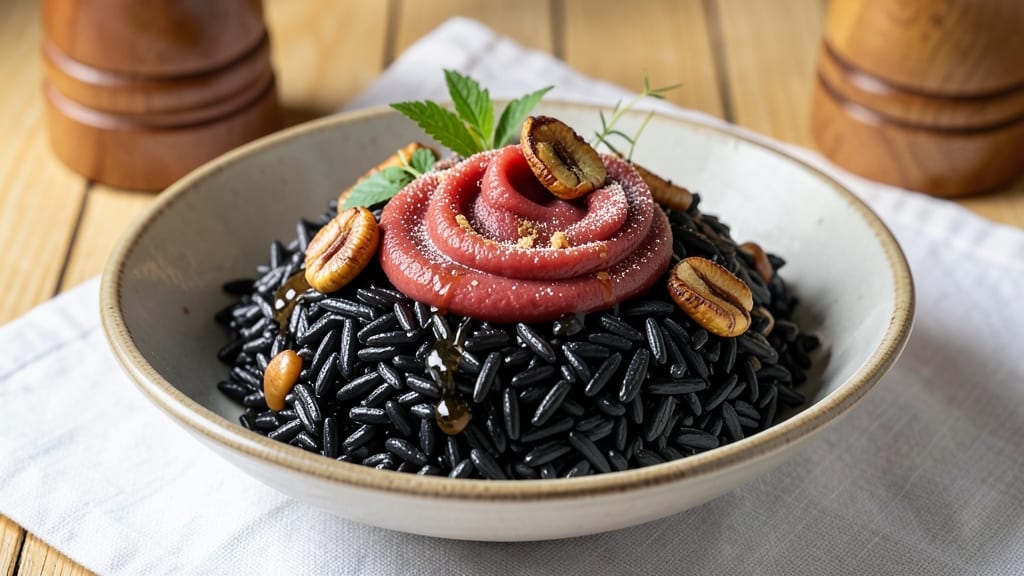
This black rice kanji recipe delivers Japanese comfort food with deep flavors and satisfying texture in every bite. The process begins with soaking black rice until tender, then steaming it to achieve that signature sticky, chewy consistency.
What makes this dish special is the balance of sweet and savory elements—traditional fillings like red bean paste or chestnuts create a harmonious center that pairs perfectly with the earthy rice.
The result is a beautifully shaped rice cake that feels both rustic and elegant, perfect for celebrations or cozy weeknight dinners. Whether you're making it for a special occasion or simply craving a taste of Japan, this recipe captures the essence of traditional kanji with a simple, foolproof method.
Ready to create something truly comforting?
Ingredients for black rice kanji
Earthy black rice meets traditional Japanese fillings for a comforting, one-pot rice cake.
| Ingredient | Amount | Notes |
|---|---|---|
| Black Rice (Forbidden Rice) 🌾 | 1 ½ cups | Uncooked, rinsed well |
| Red Bean Paste (Anko) 🍫 | 1 cup | Sweet or savory variety |
| Chestnuts 🌰 | ½ cup | Canned or roasted, chopped |
| Sugar 🍚 | ¼ cup | Granulated, adjust to taste |
| Kuzu (Kudzu) Powder 🌿 | 1 tbsp | For binding, optional but traditional |
| Water 💧 | 1 ½ cups | For soaking and steaming |
| Salt 🧂 | ½ tsp | Kosher or sea salt |
| Vegetable Oil 🫒 | 1 tbsp | For greasing mold |
| Sesame Seeds 🌻 | 1 tbsp | Toasted, for garnish |
| Mirin 🍶 | 1 tbsp | For sweetness, optional |
| Soy Sauce 🍜 | 1 tbsp | For umami depth |
| Matcha Powder 🍵 | 1 tsp | For subtle green hue, optional |
Black rice is the heart of this dish—look for it at Asian markets or well-stocked grocery stores like Whole Foods. The deeper the black color, the richer the flavor. Red bean paste should be smooth and vibrant; Marukyu brand is a reliable choice. Chestnuts add texture, so toast canned ones briefly for extra depth. If you can't find kuzu powder, agar-agar or cornstarch works in a pinch, though the texture won't be identical. For the sweetness, I prefer organic cane sugar, but coconut sugar adds a subtle caramel note.
No red bean paste? Sweetened mashed beans or even pumpkin puree can stand in. Chestnuts too pricey? Dried apricots or dates work beautifully—just chop finely. Skip the mirin? A touch of honey or maple syrup balances the flavors. The matcha is optional but worth it for that classic kanji color—Itoh or Julian brands are excellent. For the soy sauce, Kikkoman is a safe bet, but any good-quality Japanese soy will do. If your rice is extra sticky, add a splash of water to the filling mixture to keep it pliable.
Black rice soaks best overnight, but 2 hours minimum works in a pinch. Store any leftover filling in an airtight container for up to 3 days—it keeps beautifully. The shaped kanji holds for 2 days refrigerated, but for longer storage, slice and freeze portions. Reheat gently in a steamer or microwave with a damp towel. Garnish with toasted sesame seeds right before serving—they add a satisfying crunch and aroma.
Why You'll Love This Recipe
- No Boil-Over Drama: I swear by the kuzu powder here—it’s my secret weapon for that silky, pudding-like texture without the constant stirring. Just whisk it into the hot water, let it sit, and boom—no lumps, no guesswork.
- Deep Umami Hug: That black rice? It’s like eating a velvet blanket—earthy, nutty, and packed with antioxidants. Toss in chestnuts and anko, and suddenly you’ve got a dessert that tastes like autumn in a bowl. (Yes, even on a Tuesday night.)
- Leftover Luxury: This stuff actually improves the next day. The flavors meld, the kuzu thickens just right, and reheating it? Microwave or stovetop—both work. I’ve sent jars of this to friends, and they’ve all asked for the recipe.
- One-Pot Magic: Honestly, it’s the kind of dish where you mix, simmer, and walk away. No chopping, no peeling, no fancy techniques—just black rice, a handful of chestnuts, and a spoonful of anko. My lazy Sundays just got a whole lot sweeter.
Step-by-step instructions for black rice kanji
This Japanese-style dessert comes together beautifully with minimal effort.
Prepare the Black Rice Base
In a medium saucepan, combine the 1.5 cups Black Rice (Forbidden Rice) with the 1.5 cups Water. Bring to a boil over medium-high heat, then reduce to a simmer. Cook uncovered for 20 minutes, stirring occasionally to prevent sticking. You'll notice the rice darkens as it cooks—this is normal and adds to the dish's striking appearance.
After 20 minutes, the rice should be tender but still slightly firm to the bite. Drain any excess liquid through a fine-mesh strainer, pressing gently with a spoon to remove moisture. Transfer the cooked rice to a large mixing bowl and set aside. This step forms the heart of your kanji, so don't rush it—properly cooked rice ensures the perfect texture later.
Create the Sweet Filling Mixture
In a separate bowl, whisk together the 1 cup Red Bean Paste (Anko), 0.25 cup Sugar, 1 tbsp Mirin, 1 tbsp Soy Sauce, and 1 tsp Matcha Powder until smooth. The matcha will give the mixture a subtle earthy note that complements the sweetness. If using sweet anko, you may reduce the sugar slightly to balance flavors.
Next, add the 0.5 cup Chestnuts and 1 tbsp Kuzu (Kudzu) Powder to the mixture. The kudzu powder acts as a natural thickener, giving the kanji its signature jelly-like texture. Mix thoroughly until all ingredients are evenly incorporated. The chestnuts will add a pleasant crunch that contrasts with the soft rice.
Combine and Set the Kanji
Gently fold the prepared sweet mixture into the cooked black rice until fully combined. The result should be a thick, glossy paste that holds together when pressed. Transfer the mixture to a lightly greased rectangular mold or loaf pan (use the 1 tbsp Vegetable Oil for this). Smooth the top with a spatula for an even surface.
Cover the mold with plastic wrap and refrigerate for at least 4 hours, or until firm. This chilling time is crucial—it allows the kudzu to fully set and creates that perfect jelly-like consistency. For best results, let it set overnight. The longer it chills, the more pronounced the flavors become.
Serve with Traditional Garnishes
Once set, carefully remove the kanji from the mold and slice into 4 equal portions (about 1-inch thick slices). Dust the top of each slice with 1 tbsp Sesame Seeds and sprinkle lightly with 0.5 tsp Salt to enhance the flavors. The sesame adds a nutty contrast to the sweet-savory filling.
Serve chilled with a dusting of additional matcha powder or a drizzle of mirin for an elegant presentation. This kanji delivers a perfect balance of textures—creamy rice, sweet bean paste, and crunchy chestnuts—making it a comforting dessert that feels both traditional and special.
Pro Tips For Making Black Rice Kanji
- Soak Black Rice Overnight: I learned this the hard way—rushing the soak leaves your kanji grainy and underwhelming. Use a 1:4 rice-to-water ratio and let it sit at least 12 hours (or overnight if you can). The longer it soaks, the creamier the final texture, and trust me, that matters more than you’d think.
- Whisk Kuzu Like Mad: Kuzu powder clumps like a stubborn child if you’re lazy. Mix it with cold water first—just enough to form a smooth paste before adding boiling liquid. Stir vigorously for 30 seconds, then let it thicken for 2 minutes. Skimp here, and your kanji turns into glue.
- Toast Chestnuts Until Fragrant: Raw chestnuts taste like nothing and ruin the balance. Dry-toast them in a pan over medium heat for 8–10 minutes, stirring often, until they’re golden and smell like autumn. Overcook? They’ll turn bitter. Undercook? You’ll miss the depth the whole dish needs.
- Simmer Anko Gently: Dumping red bean paste into boiling kanji makes it curdle like a science experiment gone wrong. Warm the anko in a separate pan with 2 tablespoons of the kanji broth first—just until it melts smoothly. Then fold it in at the very end. Your future self will thank you.
Best sauces and condiments for these flavors
Red Bean Glaze
This silky-smooth glaze elevates your kanji with traditional Japanese sweetness. Mix ½ cup red bean paste (anko) with 1 tbsp mirin and 1 tsp soy sauce until perfectly smooth. For extra richness, add ½ tsp matcha powder—it deepens the flavor and gives that signature green tint.
Brush this glaze over your sliced kanji just before serving for a glossy finish that enhances the earthy black rice. 🍵
Sesame-Miso Sauce
For a savory-sweet contrast, blend 2 tbsp white miso paste with 1 tbsp toasted sesame seeds, 1 tsp mirin, and 1 tsp honey. Thin with 1 tbsp warm water until pourable. Drizzle over slices or serve as a dipping sauce.
The umami from miso pairs beautifully with the chestnut filling, while sesame adds nutty depth. Store leftovers in an airtight container for up to 5 days.
Sweet Chestnut Purée
Transform canned chestnuts into a luscious spread by blending ½ cup chopped chestnuts with 1 tbsp maple syrup and ½ tsp cinnamon. Spread this purée between kanji layers for extra richness or serve alongside slices as a dipping sauce.
The natural sweetness of chestnuts complements the black rice perfectly, creating a harmonious texture contrast. 🌰
Yuzu Butter Drizzle
For a citrusy twist, melt 2 tbsp unsalted butter with 1 tsp yuzu zest and ½ tsp sugar until smooth. Drizzle over warmed kanji slices just before serving.
The bright citrus cuts through the richness, adding a refreshing finish. If yuzu isn't available, substitute with lemon zest—it works beautifully too.
Kinako Whipped Cream
Whip ½ cup heavy cream with 1 tbsp kinako (roasted soybean flour) and 1 tsp powdered sugar until soft peaks form. Pipe this onto plates alongside kanji slices for a creamy, nutty contrast.
The kinako adds a toasty flavor that pairs wonderfully with the earthy black rice. Store whipped cream in an airtight container for up to 2 days.
Nutrition facts
Frequently asked questions
Why does black rice turn darker when cooked?
The deep black color intensifies as black rice cooks because of its high anthocyanin content—these antioxidants react with heat and moisture. The darker the rice becomes, the richer its flavor profile. This natural deepening is what gives kanji its striking appearance and earthy taste.
Can I make kanji without kudzu powder?
Yes! If you can't find kudzu, substitute with 1 tbsp cornstarch or agar-agar for binding. The texture will be slightly firmer but still delicious. For extra stickiness, add 1 extra tbsp mirin to the filling mixture to compensate for the lost jelly-like quality.
How do I store leftover kanji?
Wrap slices tightly in plastic wrap and refrigerate for up to 3 days. For longer storage, freeze portions in an airtight container for 2 months. Thaw overnight in the fridge—never microwave directly from frozen. Reheat gently in a steamer or microwave with a damp towel to restore moisture.
What's the best way to shape kanji without a mold?
Use a rectangular baking dish or even a clean, oiled sheet pan. Line it with parchment paper for easy removal. For traditional shapes, press the mixture into a 3-inch wide log and slice into ½-inch rounds after chilling. If you want a more rustic look, shape by hand into small patties or balls before setting.
Can I make kanji without red bean paste?
Try sweet mashed beans, pumpkin purée, or even finely chopped dried apricots mixed with 1 tbsp honey for sweetness. For a savory twist, use miso paste and finely chopped mushrooms. The key is maintaining the same sticky texture—adjust liquid ratios as needed.