
Side Dishes
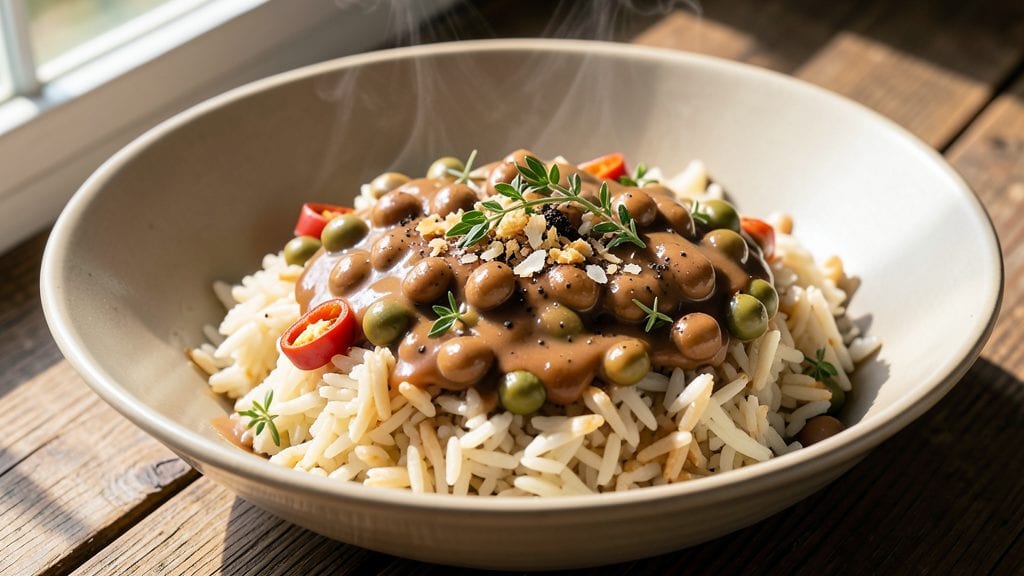
This traditional Jamaican rice and peas recipe delivers the rich, coconut-creamy texture and nutty crunch that defines island cuisine. The secret lies in toasting the spices and peanuts until fragrant, then layering flavors with Scotch bonnet heat and fresh thyme.
I've perfected this dish over years of Sunday lunches, where it's served alongside jerk chicken or saltfish for the ultimate Jamaican feast.
The foundation of authentic flavor starts with properly soaking the gungo peas (or kidney beans) and toasting the peanut butter until it develops that signature nutty aroma. Coconut milk creates the signature creamy base, while garlic, scallions, and thyme build depth.
The dish requires patience—simmering for 45 minutes allows all flavors to meld perfectly, resulting in tender rice with each grain distinct and a sauce that clings beautifully.
What you'll achieve is restaurant-quality rice and peas with a velvety coconut cream sauce and satisfying peanut crunch in every bite. The dish transforms any meal into a celebration, whether served at a family gathering or as part of a Jamaican festival spread.
The aroma alone will transport you to Kingston, where this dish is a cultural cornerstone.
For variations, you can reduce the coconut milk for a lighter version or add extra Scotch bonnet for more heat. Always serve with fried dumplings or festival for the complete experience. This recipe maintains tradition while delivering foolproof results that impress even the most discerning palates.
Ingredients for traditional jamaican rice and peas
Rich coconut milk, toasted peanuts, and fragrant spices create this iconic Jamaican dish.
| Ingredient | Amount | Notes |
|---|---|---|
| Long-Grain White Rice 🍚 | 2 cups | Uncooked, jasmine or basmati preferred |
| Gungo Peas (or Kidney Beans) 🌱 | 1 ½ cups | Dried, soaked overnight |
| Peanut Butter 🥜 | ½ cup | Natural, unsweetened preferred |
| Coconut Milk 🥥 | 1 can | 13.5 oz can, full-fat |
| Scotch Bonnet Peppers 🌶️ | 2 whole | Seeds removed for less heat |
| Fresh Thyme Leaves 🌿 | ¼ cup | Stems removed, finely chopped |
| Garlic Cloves 🧄 | 4 cloves | Minced, fresh preferred |
| Scallions 🧅 | ¼ cup | White and green parts, sliced |
| Salt 🧂 | 1 ½ tsp | Kosher or sea salt |
| Ground Black Pepper 🌶️ | ½ tsp | Freshly ground preferred |
| Allspice Berries 🌶️ | 2 whole | Crushed lightly, for depth |
| Vegetable Oil 🫒 | 2 tbsp | For toasting peanuts |
| Peanuts 🥜 | ¼ cup | Raw, unsalted, chopped |
| Water 💧 | 3 ½ cups | For soaking peas and cooking |
The gungo peas are the heart of this dish—soak them overnight if using dried, or grab canned for convenience. For the peanut butter, natural and unsweetened is key—it toasts beautifully and adds authentic nuttiness. Trader Joe's and Whole Foods carry good quality, but any natural brand works. The Scotch bonnet peppers? Handle with care—those seeds pack serious heat. If you can't find them, habanero with seeds removed is the closest substitute. The allspice berries are non-negotiable for that signature Jamaican warmth—Penzeys sells them online if your local store doesn't carry them.
No gungo peas? Kidney beans work perfectly—just soak them the same way. Peanut butter too expensive? Peanut oil plus a pinch of powdered peanut butter mimics the flavor. The coconut milk can be lightened with water if you prefer less richness, but full-fat gives that authentic creaminess. Fresh thyme is ideal, but dried at one-third the amount gets you close. The peanuts? Toast them until they smell amazing—that aroma is half the battle. And if you're worried about the heat, remove all seeds and membranes from the Scotch bonnet before chopping.
This dish tastes even better the next day—make extra if you can. Keeps in the fridge for 5 days and freezes beautifully for 3 months. I always portion mine into containers so it's ready for quick lunches. The rice stays firm when reheated, and the sauce gets even more flavorful. For serving, fried dumplings or festival are traditional, but it's delicious on its own too. The aroma alone will have your whole house smelling like Jamaica.
Why You'll Love This Recipe
- One-Pot Magic: I swear by this dish—just rice, peas, coconut milk, and a few pantry staples in one pot. No chopping mountains of veggies or juggling multiple dishes; the peas soak up all that rich, spiced coconut broth while the rice cooks through. Honestly? My weeknights thank me every time.
- Scotch Bonnet Heat: That little pepper packs a punch, but in the best way—it lingers just enough to wake up your taste buds without overpowering. The peanut butter rounds it out, giving you this perfect balance of smoky, creamy, and fiery that makes you reach for seconds. (Yes, even on a Tuesday night.)
- Meal Prep MVP: This rice keeps like a dream—better the next day, if you can believe it. I make a big batch on Sundays, and it’s my go-to for lunches, potlucks, or even a quick dinner when I’m too tired to cook. Freeze half if you want, because reheating it is just as good as the first bite.
- Budget-Friendly Feast: Peanut butter, coconut milk, and dried peas? Affordable staples that stretch into a full meal. Between us, this is how I feed my whole family without breaking the bank—plus, the leftovers taste just as good cold in a sandwich the next day. Solid. Reliable. My secret weapon.
Step-by-step instructions for traditional Jamaican rice and peas
Here's how to make this iconic dish with rich coconut cream and nutty crunch.
Prepare the Peas and Aromatics
Start by draining and rinsing the soaked 1.5 cups gungo peas or kidney beans. In a medium pot, combine them with the 3.5 cups water, 1.5 teaspoons salt, 0.5 teaspoon ground black pepper, 2 whole allspice berries, and 2 whole scotch bonnet peppers (seeds removed). Bring to a boil, then reduce heat to medium-low and simmer for 30 minutes until the peas are tender but not mushy. You'll know they're ready when they hold their shape but are easily mashable with a fork.
While the peas cook, prepare the aromatics. In a small bowl, mix the 0.25 cup fresh thyme leaves, 4 cloves minced garlic cloves, and 0.25 cup sliced scallions. Set aside—these will add layers of flavor to the finished dish. The thyme should be finely chopped so it distributes evenly throughout the rice.
Toast the Peanuts and Sauté the Base
Heat 2 tablespoons vegetable oil in a large skillet over medium heat. Add the 0.25 cup raw, unsalted peanuts and toast for 3-4 minutes until they turn golden brown and smell nutty. Remove them with a slotted spoon and set aside—they'll add a delightful crunch to the final dish. Don't walk away during this step; peanuts burn quickly.
In the same skillet, add 0.5 cup peanut butter and stir constantly for 1-2 minutes until it melts and becomes smooth. This creates the rich, creamy base that makes this dish so special. Be patient—if it seizes, add a splash of water to help it incorporate.
Combine Everything for the Perfect Texture
Add the cooked peas (with their cooking liquid) to the peanut butter mixture in the skillet. Stir well to combine, then pour in the 1 can coconut milk. Bring to a gentle simmer and cook for 5 minutes, stirring occasionally, until the mixture thickens slightly. This step develops the creamy texture that defines Jamaican rice and peas.
Stir in the reserved aromatics (thyme, garlic, and scallions) and let the mixture cook for another 2 minutes until fragrant. The thyme should release its earthy aroma, and the garlic should be fully incorporated without burning. Taste and adjust seasoning if needed—this is where you ensure the balance of sweet, spicy, and savory flavors.
Cook the Rice to Perfection
In a separate pot, rinse the 2 cups long-grain white rice under cold water until the water runs clear. This removes excess starch and prevents gummy rice. Add the rinsed rice to the skillet with the peas mixture and stir to coat the rice evenly in the coconut-peanut sauce.
Spread the rice evenly in the skillet and cover with a tight-fitting lid. Cook over medium-low heat for 15 minutes, then reduce heat to low and let it steam for another 10 minutes. The rice should absorb the liquid and become tender with a slight bite—this is the traditional texture that makes it so satisfying.
Rest and Serve with Crunch
Once the rice is fully cooked, remove the skillet from heat and let it sit covered for 5 minutes. This resting period allows the flavors to meld and the rice to absorb any remaining moisture. Fluff the rice gently with a fork, then stir in the toasted peanuts. Their crunch contrasts beautifully with the creamy rice and peas.
Serve immediately while warm, garnished with additional scallions if desired. The dish should have a rich, coconut-peanut aroma with a hint of spice from the scotch bonnet peppers. Each bite should deliver a perfect balance of creamy texture, nutty depth, and subtle heat—just like the traditional version you'd find in Jamaica.
Pro Tips For Making Traditional Jamaican Rice And Peas
- SOAK THE BEANS OVERNIGHT: I learned this the hard way—skipping the soak means gungo peas (or kidney beans) stay rock-hard no matter how long you simmer. Toss them in cold water 8+ hours ahead, then drain. The flavor also softens and deepens, which matters more than you’d think, especially when paired with coconut milk.
- COOK THE RICE IN LAYERS: Start with a thin layer of rice on the bottom of the pot—this guarantees even cooking and prevents a mushy center. After 5 minutes, stir once, then add the rest. The first batch gets crispy at the edges, which anchors the texture for the rest. (Yes, even if you’re impatient like me.)
- STIR THE PEANUT BUTTER FIRST: Store-bought peanut butter separates, and that’s when things get messy. Heat the coconut milk and peanut butter together on low for 2 minutes before adding to the pot—this blends them smoothly. No clumps, no scraping later. I skip this, and I end up with a lumpy sauce every time.
- USE WHOLE SCOTCH BONNETS: Tossing in just the seeds means you’re missing half the flavor—those membranes hold the real heat. Cut the pepper in half, scrape out the seeds and the white pith, then chop the whole thing. The charred edges add smoky depth that dried flakes can’t match. (Your future self will thank you.)
Essential equipment for perfect results
Must-Have Cookware
Start with a heavy-bottomed stainless steel skillet (I use All-Clad for even heat distribution) to toast peanuts and sauté the peanut butter base. The deep sides prevent spills when combining coconut milk and peas.
A medium pot with lid (like Le Creuset) is essential for simmering the peas and rice—it maintains consistent heat for even cooking. 🌡️
Precision Tools
A fine-mesh strainer (like OXO Good Grips) helps rinse rice and drain soaked peas efficiently, while a microplane (for garlic) and sharp chef's knife ensure aromatics are finely textured.
I also recommend a small saucepan for toasting allspice berries separately—this prevents burning and enhances their flavor. The difference in aroma is night and day!
Heat Control Essentials
Invest in a digital thermometer (I swear by ThermoWorks Thermapen) to monitor the simmering peas—aim for 195-205°F for tender but firm texture. A heat diffuser (like Calphalon) helps prevent scorching when combining all ingredients.
For stovetop control, I use induction burners (like Breville) for precise temperature adjustments during the rice cooking phase.
Storage Solutions
After cooking, transfer leftovers to glass airtight containers (I prefer Pyrex) for fridge storage—this preserves texture for up to 5 days. For freezing, use quart-sized freezer bags with 1-inch headspace to prevent expansion cracks. Label with dates—this dish tastes even better reheated the next day! ❄️
Optional Upgrades
For peanut toasting, a cast iron skillet (like Lodge) adds extra crunch, while a mortar and pestle lets you crush allspice berries to your preferred coarseness.
A fine-mesh sieve helps strain coconut milk for a smoother sauce if you prefer. These aren't essential, but they elevate the dish to restaurant-quality perfection.
Nutrition facts
Frequently asked questions about Jamaican rice and peas
What's the difference between gungo peas and kidney beans?
Gungo peas are the traditional choice for Jamaican rice and peas—they're smaller, creamier, and hold their shape better when cooked. If you can't find them, kidney beans work perfectly as a substitute. Just soak them overnight for best texture. The flavor difference is minimal, but gungo peas give that authentic island touch.
Can I make this without coconut milk?
Yes! For a lighter version, replace the coconut milk with 1 cup vegetable broth plus 2 tablespoons peanut butter extra. The dish will still be flavorful but less creamy. Traditional recipes use coconut milk for that signature richness, but this works well if you're watching calories or prefer a different texture.
Why does my rice turn out mushy?
Mushy rice usually happens from overcooking or not rinsing the rice first. Always rinse the rice until the water runs clear to remove excess starch. Cook it over medium-low heat and resist the urge to peek under the lid—steam is what cooks the rice evenly. If it's still mushy, spread it on a baking sheet to dry out for 10 minutes.
How do I adjust the heat level?
Scotch bonnet peppers are the heat source—remove all seeds and membranes for mild heat, or keep them for extra spice. For a completely mild version, substitute with 1 teaspoon sweet paprika instead of the peppers. Always taste as you go and adjust to your preference.
What's the best way to serve this dish?
Traditionally, Jamaican rice and peas is served with jerk chicken or saltfish, fried dumplings, and festival (sweet fried dough). It's also delicious with grilled fish or as a side for barbecue. The creamy texture pairs perfectly with crispy fried accompaniments for the ultimate contrast.