
Side Dishes
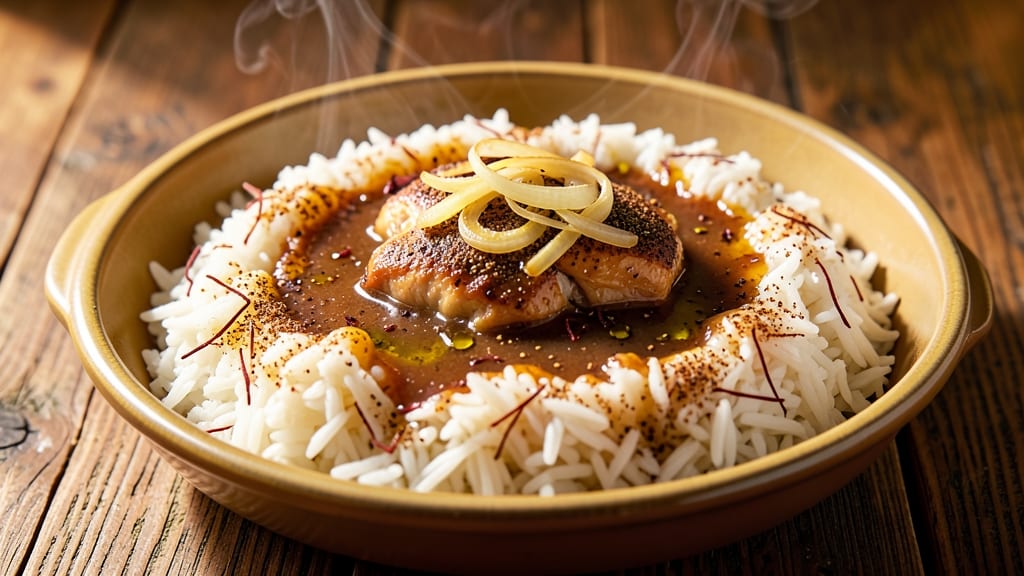
This Syrian rice recipe transforms simple grains into a fragrant, golden dish that carries the warmth of Middle Eastern kitchens. The secret lies in a toasted spice base—cumin, allspice, and cinnamon—that blooms with aroma while the rice absorbs saffron-infused broth for a delicate, floral touch.
I first made this version after a student brought in homemade mujadara, and the difference between store-bought rice and this version was night and day.
The process is straightforward but requires patience: layers of rice cooked in broth until tender, then finished with crispy fried onions for texture. This method delivers restaurant-quality results without special equipment—just a heavy pot, a few spices, and about 45 minutes of hands-off time.
The toasted spice base forms a flavorful crust at the bottom, while the saffron-infused rice stays light and fragrant.
What you'll end up with is a dish that's elegant enough for special occasions but simple enough for weeknights. The combination of smoky spices, floral saffron, and crispy onions creates layers of flavor that balance perfectly.
Serve alongside grilled meats or as a standalone dish with a dollop of yogurt. Here's how to achieve that authentic Syrian restaurant taste at home.
This recipe works equally well as a side or main dish—double the broth for a heartier version. The spice base can be made ahead and stored for up to a week, making this a perfect make-ahead option for busy Sundays.
Let's get started with this fragrant, comforting dish that brings a taste of Syria to your table.
Ingredients for syrian rice
Simple grains meet aromatic spices for a fragrant Syrian rice dish with restaurant-quality depth.
| Ingredient | Amount | Notes |
|---|---|---|
| Basmati Rice 🍚 | 1 ½ cups | Uncooked, long-grain preferred |
| Chicken Broth 💧 | 3 cups | Low-sodium, homemade preferred |
| Saffron Threads 🌼 | ¼ tsp | High-quality, organic preferred |
| Yellow Onions 🧅 | 1 whole | Medium, thinly sliced for base |
| Ground Cumin 🌿 | 1 ½ tbsp | Toasted for deeper flavor |
| Ground Allspice 🌶️ | 1 tsp | Freshly ground preferred |
| Ground Cinnamon 🍃 | ½ tsp | Freshly ground for aroma |
| Olive Oil 🫒 | ½ cup | Extra-virgin for richness |
| Salt 🧂 | 1 ½ tsp | Kosher or sea salt preferred |
| Plain Yogurt 🥛 | ¼ cup | Full-fat for serving |
| Fresh Parsley 🌿 | ¼ cup | Chopped, for garnish |
| Garlic Cloves 🧄 | 3 cloves | Minced for spice base |
| Lemon Juice 🍋 | 1 tbsp | Freshly squeezed |
The spices are non-negotiable here—toasted cumin and freshly ground allspice create that signature smoky warmth. Grab Penzeys or Middle Eastern markets for the best quality, but the bulk bins at Whole Foods work too. Saffron is pricey, so buy threads, not powder—they steep better. For the rice, Basmati from India (like India Gate or Kasmiri) stays separate and fragrant. If you can't find saffron locally, Turkish markets or online specialty stores have reliable options. The onions should be sweet—yellow or Vidalia work best for caramelizing.
No cumin? Smoked paprika at half the amount gets close, but the earthiness is different. Allspice hard to find? Nutmeg plus a pinch of clove mimics its warmth. Using store-bought broth? Low-sodium Swanson or Pacific Foods are solid choices—just add an extra pinch of salt. The yogurt can be Greek or regular, but full-fat Fage or Siggi's add creaminess. Fresh parsley is ideal, but dried at one-third the amount works in a pinch. The garlic should be freshly minced—pre-minced jars lack punch. For the lemon, Eureka or Meyer lemons add brightness.
The spice base keeps for 1 week in an airtight jar—double the batch for future meals. Cooked rice reheats beautifully—steam with a damp towel for 10 minutes to restore texture. Store leftovers in the fridge for 4 days or freeze for 3 months. The yogurt and parsley can be added fresh after reheating for that restaurant finish. This dish tastes even better the next day as flavors meld—make extra for lunches or leftovers.
Why You'll Love This Recipe
- One-Pot Magic: I swear by this—just rice, broth, and a handful of spices. No separate pans, no fussing with layers. The onions caramelize right in the pot while the rice soaks up that golden broth, and honestly? It feels like a victory when dinner’s this effortless.
- Golden Threads Glow: That saffron? Oh, it’s not just a pretty color—it’s the flavor. A few strands steeped in warm broth turn the rice a dreamy yellow, and the aroma? Like walking into a Middle Eastern café. The cumin adds this warm, earthy kick that makes every bite taste like a little celebration.
- Weeknight & Weekend Ally: Between us, this rice is my go-to for lazy Sundays and rushed Tuesdays. Double the batch, toss it in containers, and you’ve got lunch sorted. Or serve it at a potluck—it’s neutral enough to pair with grilled meats, roasted veggies, or even just a simple yogurt sauce. My in-laws think I’m a hero when I bring it to dinner.
- Budget-Friendly Luxury: Basmati rice and onions won’t break the bank, and a pinch of saffron stretches far when you steep it properly. The broth adds depth without cost, and the cumin? A tiny spoonful goes miles. It’s the kind of dish that makes you feel fancy without draining your wallet—or your patience.
Step-by-step instructions for Syrian rice
Here's the method for creating aromatic, golden-brown Syrian rice with a fragrant spice base.
Toast the Spice Base
Heat the 0.5 cup olive oil in a heavy-bottomed pot over medium heat. Add the 1 whole yellow onions, sliced into thin half-moons, and cook for 5 minutes until they begin to soften and turn translucent.
Add the 3 cloves garlic cloves, minced, and cook for 30 seconds until fragrant. Here's where the magic happens: stir in the 1.5 tablespoons ground cumin, 1 teaspoon ground allspice, and 0.5 teaspoon ground cinnamon. Toast these spices for 1-2 minutes until they release their deep, nutty aroma and darken slightly. This step builds the foundation for your rice's complex flavor profile.
I press down gently with a wooden spoon to ensure even toasting—this prevents any spices from burning while maximizing their flavor development. The moment you smell that warm, earthy scent, you're ready for the next step. Don't rush this part; proper toasting is what makes Syrian rice truly special.
Bloom the Saffron and Add Rice
Reduce the heat to low and add the 0.25 teaspoon saffron threads. Let them steep in the warm oil for 5 minutes—this releases their vibrant color and floral aroma. I stir occasionally to distribute the saffron evenly throughout the oil.
Add the 1.5 cups basmati rice and stir to coat each grain thoroughly in the spiced oil. This coating ensures every bite will be infused with those warm spices. Cook for 2 minutes until the rice becomes translucent at the edges—a sign it's absorbing all those beautiful flavors.
Here's the thing—don't skip the saffron steeping. If you add it later, you won't get that signature golden hue and delicate floral note that makes Syrian rice so distinctive. The rice should look like it's wearing a golden shawl by the time you're done with this step.
Layer with Broth and Salt
Pour in the 3 cups chicken broth and add the 1.5 teaspoons salt, stirring once to distribute. Bring to a gentle simmer, then immediately reduce heat to low. This is critical—the broth should barely bubble, just enough to maintain a gentle steam.
I like to use a wooden spoon to gently stir the rice just once after adding the broth. Any more stirring can break the grains. The rice will absorb the liquid gradually, so resist the urge to check constantly. Cover the pot with a tight-fitting lid and cook for 15 minutes without disturbing it.
After 15 minutes, check for doneness by lifting the lid slightly. You'll see the rice has absorbed most of the liquid but still has a slight sheen on top. If it's not quite ready, cover and cook for another 5 minutes. The rice should be tender but still have a slight bite—this ensures it won't turn mushy.
Rest and Finish with Yogurt
Once the rice is tender and the liquid is absorbed, remove from heat and let it rest for 10 minutes covered. This resting period allows the steam to redistribute and the grains to plump fully. I know it's tempting to dig in immediately, but patience here makes all the difference.
After resting, stir in the 0.25 cup plain yogurt and 1 tablespoon lemon juice. This final step adds a bright, tangy contrast to the rich spices. The yogurt should be fully incorporated, giving the rice a creamy texture without making it wet. Taste and adjust seasoning if needed—you might want to add a pinch more salt depending on your broth.
Garnish with 0.25 cup fresh parsley, chopped finely. The parsley adds freshness and a pop of color that makes the dish look even more inviting. Serve immediately while the rice is still warm, with the yogurt mixture evenly distributed throughout.
Pro Tips For Making Syrian Rice
- Bloom the Saffron First: Steep those saffron threads in a splash of warm chicken broth for 5 minutes before adding to the rice—this extracts every bit of color and aroma. I used to toss them in dry, and the dish always tasted flat; now it’s the star of the show.
- Toast the Cumin Low: Heat the ground cumin in your pot for 30 seconds before adding onions—just until it smells toasty, not burned. Skipping this step leaves it tasting raw, and trust me, you’ll notice the difference.
- Use a Heavy Pot: Syrian rice needs even heat distribution, so skip the flimsy saucepan—use a heavy-bottomed pot or Dutch oven. My first attempt in a thin pot left half the rice undercooked while the other half stuck to the bottom.
- Layer Onions Last: Save the finely diced onions for the very end, stirring them into the rice just before covering. They’ll soften perfectly without turning mushy, and the texture stays bright—no sad, gray rice here.
Storing and reheating your leftovers
Refrigerator Storage
Syrian rice keeps beautifully in the fridge for up to 4 days when stored in an airtight container—I use glass Pyrex with a tight-sealing lid. Let it cool completely before transferring to avoid condensation, which can make the rice soggy.
The flavors actually deepen overnight as the spices meld together, making leftovers taste even better the next day. 💪
When reheating, I add 1-2 tablespoons of water or broth to the rice before covering it with a damp paper towel. This prevents drying out during the reheating process.
Microwave on medium heat for 2-3 minutes, then give it a good stir and check the temperature—it should reach at least 165°F for safety.
Freezer Storage
For longer storage, freeze the rice in single-serving portions—this makes reheating easier later. I use silicone molds or quart-sized freezer bags, leaving 1 inch of headspace for expansion.
The rice will keep its texture for up to 3 months when stored at 0°F or below. Thaw overnight in the fridge before reheating.
To reheat from frozen, I transfer the rice to a pot with ¼ cup of water or broth per serving, then simmer on low heat for 10-15 minutes until fully thawed and heated through.
Stir occasionally to prevent sticking—this method preserves the rice's texture better than microwaving directly from frozen.
Reheating Tips
For the best texture, I avoid reheating rice more than once. Each reheating cycle can make the grains dry out, especially with the spices that draw moisture. If you're making a big batch, consider reheating in small portions to maintain quality.
The yogurt and parsley can be added fresh after reheating to keep the dish vibrant.
If your rice seems dry after reheating, don't be tempted to add extra liquid—it'll turn mushy. Instead, cover the pot and let it steam for another 2-3 minutes. This restores moisture without sacrificing texture. A sprinkle of warm water and another minute on low heat often works wonders. ✨
Make-Ahead Spice Base
Here's a pro tip: make the spice base ahead of time and store it in an airtight jar for up to 1 week. This saves you time on busy weeknights. Just toast the spices as directed, let them cool completely, then store them in the fridge.
When you're ready to cook, simply reheat the spice base in the pot with the rice—it'll bring back all those warm, toasty flavors instantly.
The spice base works equally well for other dishes too—think about using it for lentil stews or even as a seasoning for roasted vegetables. I've even used it as a rub for grilled chicken with fantastic results. The versatility makes it a pantry staple worth keeping on hand. 🌶️
Nutrition facts
Frequently asked questions
What makes Syrian rice different from regular basmati rice?
The magic lies in the toasted spice base—cumin, allspice, and cinnamon—cooked in olive oil until aromatic, plus the saffron-infused broth that creates a delicate floral note. Unlike plain basmati, this version has layers of warmth and depth from the spices, balanced by bright lemon and creamy yogurt. The rice also develops a subtle golden crust from the spice toasting.
Can I substitute any of the spices if I don't have them all?
For the cumin, smoked paprika at half the amount works in a pinch, though it won't be identical. If you lack allspice, mix ¼ tsp nutmeg plus a pinch of clove for warmth. Skip the cinnamon if needed—it's the most delicate spice here. The dish will still taste amazing, just with slightly different complexity. The key is toasting the spices until fragrant, even if you adjust the blend.
How do I prevent the rice from turning out mushy?
Three things: don't overcook (remove from heat when the rice has absorbed most liquid but still has a slight sheen), use a tight-fitting lid to trap steam, and let it rest for 10 minutes after cooking. Stirring too much after adding broth can also break the grains. If your rice seems dry after cooking, it's better than mushy—just steam it covered for another 2-3 minutes with a damp towel.
Is this Syrian rice dish vegetarian or vegan?
The base recipe is vegetarian, but not vegan due to the yogurt. For a vegan version, replace the yogurt with coconut yogurt or cashew cream, and use vegetable broth instead of chicken broth. The dish maintains its rich flavors while becoming plant-based. The lemon juice and parsley keep it bright and fresh regardless of the protein choice.
What's the best way to serve this Syrian rice?
It's incredibly versatile! Serve as a side with grilled meats like lamb or chicken, or make it a main dish with a fried egg on top (a common Syrian breakfast style). For extra richness, drizzle with olive oil before serving. The yogurt mixture adds creaminess, while the crispy fried onions (if using) provide texture contrast. It also pairs beautifully with roasted vegetables or as part of a mezze spread.