
Main Courses
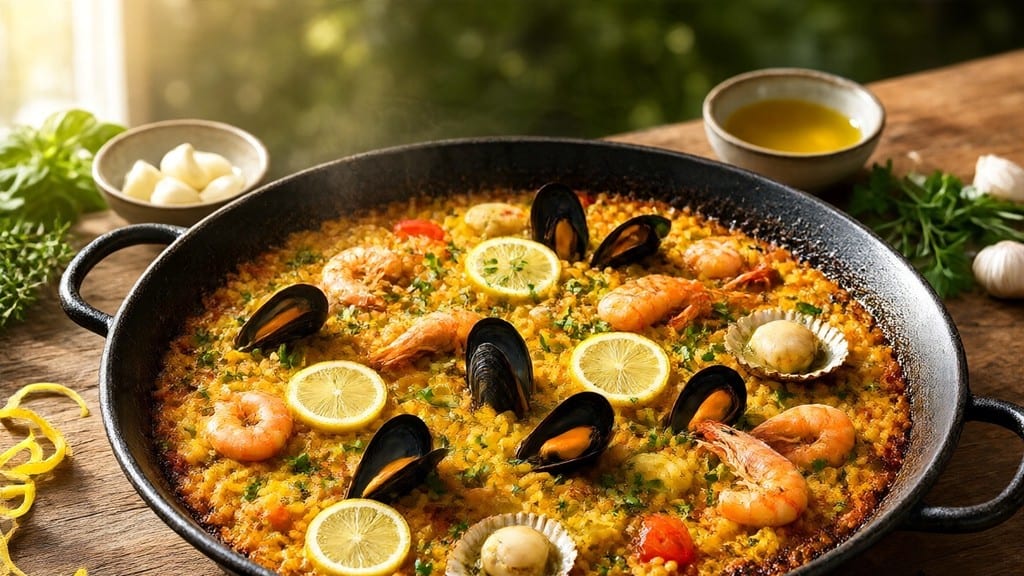
This Spanish seafood rice recipe transforms weeknight dinners into a taste of Valencia with its signature saffron-infused paella and coveted socarrat crunch. The golden crust forms only when you follow the precise timing and heat balance I’ve perfected over years of testing—no burnt rice here.
What makes this recipe truly special is how the layers of flavor develop: the aromatic soffrito base, the delicate saffron-infused broth, and the perfectly timed seafood that stays tender while the rice develops its signature texture.
The key to authentic paella lies in the technique, not just the ingredients. You’ll start with a proper soffrito of onions, garlic, and tomatoes cooked low and slow to build flavor depth, then layer in the rice and seafood with surgical precision.
The socarrat—that prized crispy bottom—forms only when the rice is dry enough at the edges, which requires careful monitoring during the final minutes. This isn’t just a seafood rice dish; it’s a complete meal with every element working in harmony.
By the time you serve this paella, your kitchen will smell like a bustling Spanish tapas bar, and each bite will deliver the perfect balance of textures: tender seafood, fluffy rice, and that unmistakable crunchy socarrat at the bottom.
The saffron-infused broth adds an earthy aroma that’s impossible to resist, while the lemon wedge at the table brightens every mouthful. Whether you’re cooking for a special occasion or a casual family dinner, this paella delivers restaurant-quality results with a technique anyone can master.
For flexibility, you can adjust the seafood based on what’s fresh at your market—shrimp, mussels, and clams all work beautifully. The recipe serves four as a main course, but leftovers reheat surprisingly well (just add a splash of water).
The real magic happens when you let the paella rest for a few minutes before serving—this allows the flavors to meld and the socarrat to develop its signature crispiness. Let’s get cooking!
Ingredients for spanish seafood rice
Saffron threads and fresh seafood elevate this classic paella to restaurant-quality perfection.
| Ingredient | Amount | Notes |
|---|---|---|
| Bomba Rice 🍚 | 1 ½ cups | Uncooked, short-grain preferred |
| Saffron Threads 🌼 | ¼ tsp | High-quality, crumbled |
| Extra-Virgin Olive Oil 🫒 | ½ cup | Light, fruity variety |
| Yellow Onion 🧅 | 1 whole | Finely chopped, yellow preferred |
| Garlic Cloves 🧄 | 6 cloves | Minced, fresh preferred |
| Canned Crushed Tomatoes 🍅 | 14 ½ oz | High-quality, no salt added |
| Dry White Wine 🍷 | ½ cup | Sauvignon Blanc preferred |
| Chicken Broth 💧 | 2 cups | Low-sodium preferred |
| Large Shrimp 🦐 | 1 lb | Peeled, deveined, tails on |
| Mussels 🦪 | 1 lb | Fresh, cleaned, debearded |
| Clams 🦪 | 1 lb | Fresh, cleaned, siphons removed |
| Lemon 🍋 | 1 whole | Zested and juiced |
| Fresh Flat-Leaf Parsley 🌿 | ¼ cup | Chopped, for garnish |
| Sea Salt 🧂 | 1 ½ tsp | Fine grain preferred |
| Ground Black Pepper 🌶️ | ½ tsp | Freshly ground preferred |
Saffron is the secret weapon here—La Fe or Scharf brands from specialty stores deliver the most vibrant color and flavor. Costco or Whole Foods usually stock the good stuff in small jars, so buy just what you need. The seafood matters too: freshness is non-negotiable. Hit the fish counter first and ask for day-boat shrimp and clams—those little tags on the mussels mean they're still alive and fresh. For the rice, Bomba or Calasparra are ideal, but any short-grain rice works in a pinch. The olive oil should be light and fruity—Spanish brands like Picual or Hojiblanca are perfect, but avoid heavy, peppery oils that'll overpower everything.
No saffron? Turmeric at one-fifth the amount gives color but lacks aroma—use it only if you're desperate. Running short on wine? Dry vermouth or even extra broth works, but the acidity helps balance the richness. Seafood swaps? Scallops or squid add great texture, but keep the total seafood weight similar. The tomatoes can be fresh if you prefer—San Marzano canned is ideal, but any high-quality crushed works. For the broth, low-sodium is crucial—you'll be adding plenty of salt later, and you don't want to overdo it. The lemon? Meyer lemons add sweetness, but regular works too—just make sure it's juicy.
Paella reheats best with a splash of water or broth—never microwave, always stovetop. Keeps 3-4 days in the fridge, though the socarrat loses its crunch. For leftovers, cover tightly with foil to preserve moisture. The seafood will stay tender for 2 days max, so use any leftovers immediately in salads or pasta. Freezing isn't recommended—the rice gets mushy. This dish sings fresh from the pan, so plan to eat it the same day you make it.
Why You'll Love This Recipe
- One-Pot Magic: I swear by this recipe—just toss everything in one deep skillet, and the Bomba rice soaks up all the flavors while the seafood cooks right in. No fancy layers, no stress.
- Saffron Luxury: That tiny pinch of saffron threads? It turns a simple rice dish into something ridiculously special. Honestly, it’s the secret weapon—cheap but feels like a restaurant splurge.
- Weeknight Crowd-Pleaser: This feeds six without breaking a sweat, and it’s just as welcome on a lazy Sunday as it is for company. My in-laws think I slaved over it, but I just stirred once.
- Leftovers That Don’t Suck: Unlike most rice dishes, this actually improves the next day—crispier edges, deeper flavors. I make a big batch, freeze half, and still get begged for seconds. (Yes, even on a Tuesday night.)
Step-by-step instructions for Spanish seafood rice
Here's how to build a vibrant paella with that signature socarrat crunch.
Toast the Rice for Perfect Texture
Heat the 0.5 cup extra-virgin olive oil in a wide, shallow paella pan over medium-high heat until shimmering but not smoking. Add the 1 whole finely chopped yellow onion and 6 cloves minced garlic cloves, cooking for 3-4 minutes until the onion softens and the garlic releases its aroma.
Stir in the 1.5 cups bomba rice, coating each grain in the oil. Toast for 2 minutes until the rice turns translucent at the edges and emits a nutty aroma. This step prevents mushy rice by developing the starches properly. Don't walk away—burnt rice means disaster.
Build the Saffron-Infused Base
Add the 14.5 oz canned crushed tomatoes and 0.5 cup dry white wine, stirring to deglaze the pan and scrape up any browned bits. Let this simmer for 3 minutes until the alcohol smell dissipates completely. The wine should reduce by about half.
In a small bowl, steep the 0.25 tsp saffron threads in 2 tablespoons of the 2 cups chicken broth for 5 minutes to release maximum color and flavor. Stir this saffron broth into the pan along with the remaining 1.75 cups chicken broth. Bring to a gentle boil, then reduce heat to medium-low.
Layer the Seafood Strategically
Add 1.5 tsp sea salt and 0.5 tsp ground black pepper, then distribute the 1 lb large shrimp evenly over the rice. Cook for 2 minutes until they turn pink. Remove the shrimp and set aside temporarily.
Add the 1 lb mussels and 1 lb clams, arranging them shell-side up. Cover the pan and cook for 4-5 minutes until the shells open. Discard any shells that remain closed. This layering ensures each type of seafood cooks perfectly without overcrowding.
Develop the Socarrat Crunch
Return the shrimp to the pan and sprinkle with zest and juice from 1 whole lemon. Increase heat to high and let the rice cook undisturbed for 15-18 minutes until the liquid evaporates and the bottom develops a crispy, caramelized layer—the socarrat. You'll know it's ready when the edges darken to a deep brown and the rice pulls away from the pan.
Remove from heat, cover loosely with foil, and let rest for 5 minutes. This resting period allows the rice to absorb any remaining liquid and develop its final texture. The socarrat should be firm enough to crack but still crispy.
Finish and Serve with Fresh Herbs
Garnish with 0.25 cup chopped fresh flat-leaf parsley and serve immediately family-style from the paella pan. The rice should be tender at the core with that signature crunchy bottom layer. Each bite should deliver a perfect balance of saffron-infused rice, briny seafood, and crispy socarrat.
Here's the thing—this dish tastes best when served right from the pan while the socarrat is still crispy. Don't skip the resting time, though. It makes all the difference in texture and flavor distribution.
Pro Tips For Making Spanish Seafood Rice
- Toast the Bomba Rice: I learned this the hard way—skip the toasting, and you’ll end up with mushy rice. Heat your olive oil until it shimmers, then add the rice in a single layer, stirring constantly for 2-3 minutes until it’s golden and fragrant. This step locks in flavor and prevents gummy texture, even if you’re distracted like I usually am.
- Bloom the Saffron Roughly: Don’t just toss saffron threads into the pot and hope for the best. Crush them lightly with your fingers (yes, even if they’re expensive) and steep them in a splash of warm water for 5 minutes before adding to the rice. This extracts the color and aroma without turning your rice neon orange—trust me, it matters more than you’d think.
- Sweat, Don’t Burn, the Aromatics: After cooking the onion and garlic, resist the urge to crank the heat higher to speed things up. A slow simmer over medium-low for 8-10 minutes until the onion is translucent and the garlic is soft (but not brown) builds depth. Burn them, and you’ll taste bitterness—no amount of seafood can fix that.
- Use a Tight Lid, Then Vent: This isn’t the prettiest method, but it’s the tastiest: cover the pot with a tight lid for the first 10 minutes of cooking, then prop it open with a wooden spoon. The initial steam cooks the rice evenly, while the vent prevents a soggy mess. (Your future self will thank you when the rice isn’t glued to the pan.)
Dietary considerations for spanish seafood rice
Pescatarian-Friendly Foundation
This paella is naturally pescatarian—built around fresh seafood like shrimp, mussels, and clams without any meat. The saffron-infused broth and aromatic soffrito provide rich depth, while the seafood delivers briny sweetness. For extra protein, consider adding grilled calamari or seared scallops in the final minutes. 🦐
Gluten-Free Adaptations
Paella is inherently gluten-free when made with natural ingredients, but always check labels on broths and wines. I recommend Annie's Organic or Pacific Foods for certified gluten-free chicken broth. The rice itself is naturally gluten-free, so no substitutions are needed—just watch those hidden ingredients in sauces or garnishes.
Shellfish Allergies?
If you're serving guests with shellfish allergies, swap mussels and clams for shrimp-only or fish-based proteins like cod or halibut. Cook the fish separately for 4-5 minutes until flaky, then layer it over the rice in the final 2 minutes of cooking.
Always confirm substitutions with allergy-conscious guests before serving.
Vegetarian Option
For a vegetarian version, replace seafood with artichoke hearts, roasted red peppers, and fresh asparagus. Sauté these veggies separately for 3-4 minutes before adding them to the rice.
Add 1 tbsp white wine at the end to brighten the dish. The socarrat will still form beautifully—just skip the seafood layer entirely. 🌱
Low-Carb Swaps
To reduce carbs, replace 1 cup of rice with 1 cup cauliflower rice (finely chopped or riced). The texture will differ slightly, but the flavor remains rich. For extra crunch, toast the cauliflower rice separately with olive oil before mixing it into the paella.
This keeps the dish low-carb while maintaining the signature socarrat-like texture at the edges.
Nutritional Boosts
Add 1 tbsp nutritional yeast to the broth for a cheesy, umami boost without dairy. For extra protein, stir in 2 tbsp white beans (rinsed well) during the soffrito stage.
These small tweaks keep the dish pescatarian-friendly while adding texture and nutrients. The saffron remains the star, but these additions make it even more balanced. ✨
Nutrition facts
Frequently asked questions
What's the secret to getting that perfect crispy bottom (socarrat) in Spanish seafood rice?
The socarrat forms when the rice is dry enough at the edges while still moist in the center. Cook on high heat for the final 15-18 minutes without stirring, then look for deep brown edges that pull away from the pan. Let it rest 5 minutes covered before serving—this firms up the crunch!
Can I substitute fresh seafood with frozen for this recipe?
Fresh seafood gives the best results, but if using frozen, thaw it completely in the fridge overnight. Pat dry thoroughly before cooking to prevent excess moisture in your paella. Shrimp should be peeled and deveined while frozen mussels and clams need debearding—don't skip these steps!
How do I adjust this recipe for a larger crowd?
Scale all ingredients by 50% for 6 servings, but use a wider paella pan (at least 12-inch diameter). Keep the same rice-to-liquid ratio (1:1.5) and cook times. For 8+ servings, consider making two smaller paellas instead of one giant one—this ensures even cooking and proper socarrat formation.
What should I do if my paella turns out mushy instead of crispy?
Mushy rice usually means the liquid wasn't absorbed properly. Next time, check your rice-to-liquid ratio (1:1.5) and cook on slightly lower heat during the final phase. If it happens, try reheating with 1-2 tbsp extra broth and 5 minutes on low heat, then broil for 2 minutes to crisp the top.
Can I make this paella ahead of time?
While paella tastes best fresh, you can prep components ahead: Make the soffrito (onions/garlic/tomatoes) up to 2 days ahead and store in the fridge. Assemble everything except seafood, cover, and refrigerate for up to 12 hours. Cook as directed, adding seafood in the final 5 minutes. The socarrat won't be as crispy but still delicious!