
Main Courses
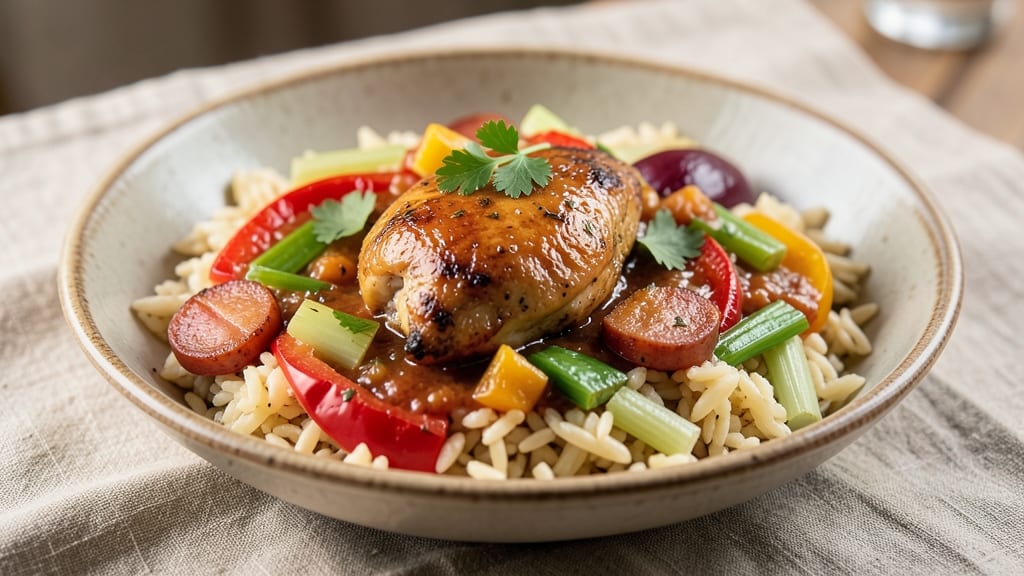
Making jambalaya in a rice cooker transforms a classic Cajun dish into a foolproof, one-pot meal that delivers restaurant-quality flavor with minimal effort. The rice cooker handles the rice perfectly while the spices and proteins simmer together, creating a rich, aromatic stew that's ready in under an hour.
I developed this method after years of testing—it's the only way to get perfectly cooked rice without sticking or burning.
What sets this recipe apart is the balance of bold spices and tender proteins, all cooked simultaneously in the same pot. You'll start with a proper Cajun seasoning blend (not just pre-made mix) and build layers of flavor as the rice steams.
The key is proper layering—adding liquids gradually so the rice absorbs them without turning mushy, while the chicken and sausage stay juicy and flavorful.
By the time your rice cooker beeps, you'll have a pot of jambalaya with perfectly cooked rice, tender chicken, smoky sausage, and crisp peppers all infused with that signature Cajun heat.
The aroma alone will have everyone gathering at the table, and the texture is exactly what you'd expect from a well-made jambalaya—creamy rice, tender meat, and vegetables that stay crisp enough to bite into.
This method works equally well for weeknight dinners or meal prep—just double the ingredients and freeze portions for later. The rice cooker does all the work while you handle the prep, making this the ultimate hands-off Cajun feast. Let's get started with the ingredients.
Ingredients for jambalaya in rice cooker
Foolproof one-pot jambalaya with bold Cajun flavors and perfectly cooked rice every time.
| Ingredient | Amount | Notes |
|---|---|---|
| Long-Grain White Rice 🍚 | 1 ½ cups | Uncooked, medium grain preferred |
| Boneless Chicken Thighs 🍗 | 1 ½ lb | Cut into 1-inch pieces |
| Andouille Sausage 🌭 | 1 lb | Sliced into half-moons |
| Bell Peppers 🌶️ | 2 whole | Green and red, diced |
| Celery Stalks 🥬 | 2 whole | Diced, about 1 cup |
| Yellow Onion 🧅 | 1 whole | Diced, medium size |
| Garlic Cloves 🧄 | 4 cloves | Minced, fresh preferred |
| Diced Tomatoes (Canned) 🍅 | 14 ½ oz | No salt added, undrained |
| Chicken Broth 💧 | 1 ½ cups | Low-sodium preferred |
| Cajun Seasoning 🌶️ | 2 tbsp | Homemade or quality blend |
| Smoked Paprika 🌶️ | 1 tsp | For extra depth |
| Bay Leaves 🍃 | 2 whole | Fresh or dried |
| Green Onions 🧅 | 2 whole | Sliced, for garnish |
| Hot Sauce 🌶️ | 1 tbsp | Optional, for serving |
| Salt 🧂 | ½ tsp | Adjust to taste |
The rice is the foundation, so don't skimp on quality. Long-grain white rice works best here—it stays separate and fluffy. For the proteins, chicken thighs stay juicier than breasts in the rice cooker, and Andouille sausage gives that signature smoky flavor. Grab the freshest bell peppers you can find—they should be firm and vibrant, not wilted. The canned tomatoes? No salt added is key—you control the seasoning here. I usually pick up my Andouille at Whole Foods or Trader Joe's—their brands have the best balance of spice and fat.
Short on time? Pre-cut frozen bell peppers and onions work in a pinch—they're already diced and save chopping time. No Andouille? Smoked sausage or even bacon adds smokiness. The homemade Cajun seasoning is worth making—just mix paprika, garlic powder, onion powder, thyme, oregano, cayenne, and black pepper—but Tony Chachere's in a pinch. If you're using dried bay leaves, crush them lightly between your palms first to release the flavor. The green onions are purely for garnish, so don't stress if you're out—just skip it.
This reheats beautifully—just add a splash of water or broth if it's too dry. Keeps for 4-5 days in the fridge, freezes for 3 months if portioned into containers. I always make a double batch because it's perfect for meal prep. Store the hot sauce separately if you're sensitive to heat—add it just before serving. The rice cooker does all the work, so you can actually relax while it cooks. That's the magic of this method.
Why You'll Love This Recipe
- No Chopping Nightmare: I swear by the "mirepoix shortcut" here—just rough-chop celery and bell peppers while the rice cooker heats up. The andouille and chicken thighs handle the rest, so you’re not stuck dicing for hours.
- Smoky, Savory Magic: That crispy sausage crumbles into the rice like it was meant to be there, while the chicken stays juicy. Honestly, the first bite makes you wonder why you ever bought takeout.
- Lunchbox Hero: Between us, this is my secret weapon for meal prep. Taste better cold than most store-bought rice dishes, and the rice cooker keeps it fluffy—no soggy leftovers here.
- Budget-Friendly Feast: A whole meal for under $10, and it stretches for days. My college kid begs for it, and I still have half a pot by Thursday. (Yes, even on a Tuesday night.)
Step-by-step instructions for one-pot Cajun rice cooker jambalaya
Here's how to turn your rice cooker into a flavor factory for this smoky, spicy jambalaya.
Sauté the Protein and Aromatics in the Rice Cooker Pot
Start by placing the rice cooker pot on the stovetop over medium-high heat. Add the 1.5 lb boneless chicken thighs and 1 lb andouille sausage sliced into half-moons. Let them cook for 5 minutes until the chicken starts to brown and the sausage fat begins to render out. This initial sear builds deep flavor that will carry through the entire dish.
Push the protein to one side of the pot and add the 1 whole yellow onion, 2 whole celery stalks diced, and 2 whole bell peppers diced. Stir everything together and cook for another 5 minutes until the vegetables begin to soften. Here's the thing—you want the vegetables to release their moisture but not completely cook through yet. They'll finish cooking in the rice cooker's steam bath.
Add the 4 cloves garlic cloves minced and stir for 30 seconds until fragrant. This is where the aromatic magic happens—don't let the garlic burn. If it starts to darken too quickly, reduce the heat slightly. The goal is to wake up those flavors without turning them bitter.
Season and Add the Wet Ingredients
Now it's time to build the Cajun flavor profile. Sprinkle the 2 tbsp cajun seasoning and 1 tsp smoked paprika evenly over the protein and vegetables. Stir everything together for 1 minute to ensure the spices coat all the ingredients thoroughly. This step is crucial for even flavor distribution throughout the dish.
Add the 14.5 oz diced tomatoes (don't drain them—those juices are flavor gold) and the 1.5 cups chicken broth. Stir everything together again, scraping up any browned bits from the bottom of the pot. These bits are packed with flavor that would otherwise get lost. Let the mixture simmer for 3 minutes to let the flavors meld together.
Add the 1.5 cups long-grain white rice and stir gently to combine. The rice should be evenly distributed throughout the mixture but still visible in spots. This is the moment that matters: don't over-stir or you'll break up the chicken thighs. A few gentle stirs are all you need.
Cook in the Rice Cooker
Pour in enough water to reach the 1-cup mark on your rice cooker (this is typically about 2 cups of water total). Add the 2 whole bay leaves and 0.5 tsp salt. The bay leaves will infuse subtle herbal notes, while the salt enhances all the other flavors. Close the rice cooker lid and select the white rice setting.
The cooking time will vary slightly depending on your specific rice cooker model, but plan for about 25-30 minutes. You'll know it's done when the rice cooker automatically switches to keep warm mode and the rice is tender with no liquid remaining. If you're unsure, you can always check by lifting the lid slightly—steam should be escaping gently, indicating the rice is fully cooked.
Real talk: don't peek during cooking. Every time you lift the lid, you release steam and potentially set back the cooking time. Trust your rice cooker to do its job and let it work its magic undisturbed.
Finish and Garnish
Once the rice cooker finishes cooking, let the jambalaya rest for 5 minutes with the lid closed. This resting period allows the flavors to continue melding together and the rice to absorb any remaining liquid. It also makes the dish easier to serve without everything spilling out.
Remove the 2 whole bay leaves before serving. They've done their job infusing flavor, but you don't want them in your final dish. Stir the jambalaya gently and taste it. If you want to kick up the heat, add the 1 tbsp hot sauce and stir it in. The hot sauce should be served on the side for those who want it spicier, but adding it now gives everyone the option to adjust to their preference.
Garnish each serving with the 2 whole green onions sliced. The bright green color and mild onion flavor provide a nice contrast to the rich, smoky jambalaya. Serve immediately while hot—this dish tastes best fresh from the rice cooker with all those wonderful aromas wafting through the air.
Pro Tips For Making Jambalaya In Rice Cooker
- Sear Chicken First: Brown the chicken thighs in a separate pan before dumping everything into the rice cooker—this adds depth of flavor that raw chicken just can’t match. I learned this the hard way after making jambalaya with pre-cooked chicken and wondering why it tasted bland.
- Dice Sausage Small: Cut the andouille into ¼-inch pieces—any larger and they’ll turn into flavorless logs. My grandmother swore by this, and she was right: tiny bits distribute seasoning and cook faster, so every bite gets that smoky punch.
- Don’t Overfill the Pot: Use the rice cooker’s max liquid-to-rice ratio (usually 1:1.5) or the rice will turn mushy. I used to eyeball it and end up with a gluey mess—now I measure like a scientist, and the grains stay separate.
- Sauté Veggies Halfway: After the rice cooker starts, open it and stir-fry the bell peppers and celery for 3–4 minutes—this softens them without drying out. I was skeptical until I tried it: the veggies stay crisp-tender, not soggy.
Common mistakes when making perfect results
Overloading the Pot
Your rice cooker pot has limited space, and cramming too many ingredients can lead to uneven cooking. The rule of thumb is to fill the pot no more than ⅔ full—any more and the rice won't steam properly, resulting in soggy rice or undercooked proteins.
I've seen people try to double the recipe in a standard 3-quart pot, and it always turns out mushy. If you're serving a crowd, cook in batches or use a larger rice cooker.
Skipping the Sear
Rushing the initial sear on the stovetop is a huge mistake. Those 5 minutes of browning the chicken and sausage create the Maillard reaction, which builds deep, complex flavors. If you skip this step or cook too quickly, your jambalaya will taste flat and one-dimensional.
Trust me, the extra time pays off in flavor—don't be tempted to cut corners here.
Adding All Liquid at Once
The biggest issue I see is people dumping all the broth and tomatoes into the rice cooker at the start. This dilutes the spices and prevents the rice from absorbing flavors properly. Instead, add the wet ingredients gradually after the initial sear.
The rice cooker's steam will work its magic, and you'll get that perfect balance of liquid and texture. Think of it like building layers in a lasagna—each step matters.
Peeking During Cooking
I can't stress this enough: do not lift the lid while the rice cooker is active. Every time you peek, you release steam and set back the cooking time by 5-10 minutes. The rice cooker is designed to maintain consistent pressure and temperature, so trust the process.
If you're worried about doneness, use the keep warm function to check later—just add a splash of water if needed.
Using the Wrong Rice
Long-grain white rice is non-negotiable for jambalaya. Short-grain or instant rice will turn mushy in the rice cooker's steam environment. I've tried this recipe with basmati and jasmine, and they just don't hold up.
Stick to medium-grain long-grain white rice for that perfect texture—separate grains with a slight bite. If you're in a pinch, jasmine rice is the closest substitute, but it won't be quite the same.
Ignoring the Resting Time
Rushing to serve jambalaya right after cooking is a common mistake. That 5-minute rest lets the rice absorb any remaining liquid and the flavors meld together. Skipping this step means you'll end up with loose rice and underdeveloped taste.
It's like making coffee—if you drink it immediately, it's bitter and harsh. Give it that little break, and you'll notice the difference in every bite. 💫
Nutrition facts
Frequently asked questions
Can I use chicken breasts instead of thighs?
Chicken breasts will work, but thighs stay juicier in the rice cooker's moist environment. If using breasts, cut them into 1-inch pieces and cook them for 3 minutes less during the initial sear to prevent drying out. Add a splash of extra broth if needed after cooking.
How do I adjust the spice level?
Start with the 2 tbsp Cajun seasoning and 1 tsp smoked paprika as written. For milder heat, reduce cayenne in your homemade blend or skip the hot sauce. For extra kick, add ½ tsp extra cayenne during the seasoning step or serve with hot sauce on the side.
What if my rice cooker doesn't have a stovetop function?
No problem! Sauté the chicken, sausage, and aromatics in a separate pan first, then transfer everything to the rice cooker pot. Just make sure to scrape up all the browned bits from the pan to transfer the flavor. The rice cooker will handle the rest perfectly.
Can I make this vegetarian?
Swap the chicken for 1 lb firm tofu or chickpeas and use vegetarian sausage or smoked tofu. Keep all other ingredients the same—just reduce the cooking time by 3-5 minutes since plant proteins cook faster. Add ½ cup extra broth to maintain moisture.
Why does my jambalaya turn out dry?
This usually happens when too much liquid evaporates during cooking. Always use the 1-cup water mark on your rice cooker and don't overfill the pot. If it's still dry, add 2-3 tbsp broth or water during the last 5 minutes of cooking. The rice cooker's keep-warm function helps prevent this too.