
Main Courses
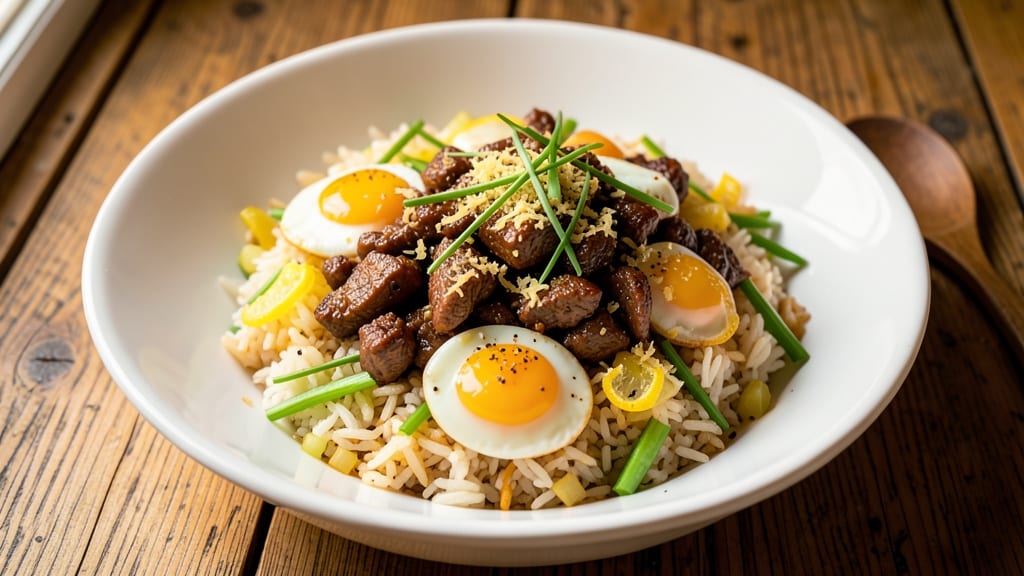
Chicago-style fried rice delivers the perfect balance of savory, eggy richness and crisp celery crowns that make every bite unforgettable. This recipe stays true to Windy City roots, using day-old rice, tender ground beef, and a touch of ginger for that signature depth. The secret lies in high-heat stir-frying and proper seasoning—no shortcuts here.
The result is a fragrant, hearty dish with tender beef, crisp vegetables, and perfectly scrambled eggs woven throughout. Each forkful offers a mix of textures and flavors that define Chicago's take on fried rice—bold, satisfying, and packed with that iconic celery crunch.
Ready in 25 minutes, it's the ideal meal for busy weeknights or weekend gatherings.
Ingredients for chicago style fried rice
Day-old rice, tender beef, and crisp celery crowns—these are the pillars of authentic Chicago-style fried rice.
| Ingredient | Amount | Notes |
|---|---|---|
| Day-Old White Rice 🍚 | 4 cups | Cold, preferably from 1-2 days ago |
| Ground Beef 🥩 | 1 lb | 80/20 fat ratio preferred |
| Large Eggs 🥚 | 4 whole | Room temperature for even cooking |
| Yellow Onion 🧅 | 1 whole | Medium size, finely diced |
| Celery Stalks 🥬 | 2 whole | Thinly sliced for crisp crowns |
| Fresh Ginger 🌿 | 2 tsp | Finely grated, fresh preferred |
| Garlic Cloves 🧄 | 4 cloves | Minced for aromatic depth |
| Soy Sauce 🍶 | ½ cup | High-quality, low-sodium preferred |
| Vegetable Oil 🫒 | ½ cup | High smoke point for stir-frying |
| Salt 🧂 | 1 tsp | Diamond Crystal preferred |
| Black Pepper 🌶️ | ½ tsp | Freshly ground for best flavor |
| Green Onions 🧅 | 3 whole | Thinly sliced for garnish |
The rice must be day-old—fresh rice turns mushy under high heat. Leftover rice from dinner works perfectly, or cook extra rice the night before. For the beef, 80/20 fat ratio is non-negotiable—it renders beautifully during stir-frying. Trader Joe's and Costco carry excellent pre-ground options, but if buying whole, grind it yourself for finer texture. Celery should be crisp, not woody—look for bright green stalks with no yellowing. The ginger and garlic are where the signature depth comes from; freshly grated ginger (not powdered) and minced garlic make all the difference. For soy sauce, Kikkoman or La Choy are reliable choices, but avoid reduced-sodium versions—they lack umami punch.
No day-old rice? Cook extra rice the night before and refrigerate it. Running short on celery? Substitute with thinly sliced bell peppers for color, though they won't replicate that iconic crunch. The eggs should be room temperature—cold eggs curdle in hot oil. For extra richness, add a dash of sesame oil at the end (though traditional Chicago-style skips this). If you're using pre-minced garlic from a jar, rinse it first to remove the excess liquid. The green onions are purely for garnish, but don't skip them—they add freshness that cuts through the richness. For a vegetarian twist, swap beef for crumbled tofu or extra-firm tofu, but increase the soy sauce by 2 tablespoons to compensate for the lack of fat.
Store leftover fried rice in an airtight container for up to 3 days—it reheats beautifully. For best texture, reheat in a skillet over medium heat with a splash of water to steam. The dish freezes well for up to 1 month, though the celery may soften slightly. To prep ahead, chop all vegetables and store them separately in the fridge for up to 2 days. The ground beef can be browned in advance and refrigerated, but add it fresh when stir-frying for optimal texture. This dish tastes even better the next day as flavors meld—double the recipe if you're feeding a crowd.
Why You'll Love This Recipe
- I’ll be real: this recipe costs me about $1.50 per serving, tops. Ground beef stretches forever, day-old rice is free (just save your leftovers), and onions/celery are the cheapest veggies out there. It’s the kind of meal that lets me feed my family hearty portions without breaking the bank—or my sanity. And if I’m feeling fancy, I’ll add a sprinkle of soy sauce and a dash of sesame oil. But honestly? Even without, it’s spot-on.
- Pantry-to-Table Magic: I swear by this recipe when I’m staring into my fridge at 6:30 PM wondering what to feed everyone. Day-old rice? Already there. Ground beef? Thawed in minutes. Onion and celery? Chopped while the beef browns—no fancy knife skills required. It’s the kind of meal that turns "I don’t feel like cooking" into "wait, this is ready?"
- Meat-Loaded Crunch: That crispy sear on the ground beef? Non-negotiable. I brown it until it’s almost dry, then toss it back in with the rice—it adds a savory bite that turns ordinary fried rice into something ridiculously satisfying. Plus, the eggs? Scrambled just until set, so every bite has that creamy-yet-firm texture. Honestly, I’ll take this over takeout any day.
- Lunchbox Hero: Between us, this is my go-to for meal prep. I make a big batch on Sundays, and it stays fresh in the fridge for days—no soggy rice here. Pack it in containers for work lunches, or serve it cold in bento boxes for the kids’ school lunches. The flavors only get better after a night in the fridge, and it’s the one dish that actually makes leftovers exciting.
Step-by-step instructions for Chicago style fried rice
Master the signature celery crown texture and rich eggy base with these precise techniques.
Prepare the Celery Crowns and Aromatics
Begin by finely dicing the 1 whole yellow onion and thinly slicing the 2 whole celery stalks into matchstick-sized pieces. This is where the Chicago style truly shines - the celery should be crisp and distinct, not softened. Set these aside in a bowl.
Next, peel and finely grate the 2 tsp fresh ginger using a microplane or fine grater. Mince the 4 cloves garlic into a paste using the flat side of your knife - this ensures even distribution and maximum flavor. The ginger and garlic will form the aromatic foundation of your fried rice.
I always recommend using fresh ginger over powdered for that bright, zesty kick that sets Chicago style apart. The garlic paste will caramelize beautifully during cooking, adding depth to every bite.
Cook the Ground Beef and Build the Flavor Base
Heat 0.25 cup vegetable oil in a large wok or skillet over medium-high heat until shimmering. Add the 1 lb ground beef and cook until it loses its raw color and begins to brown, breaking it apart with a wooden spoon. This should take about 5-6 minutes.
Once the beef is mostly cooked, add the minced garlic and grated ginger. Stir constantly for 30-45 seconds until fragrant - you should smell that aromatic punch developing. This is your flavor base, so don't rush it. The beef should be fully cooked through with no pink remaining.
Season immediately with 1 tsp salt and 0.5 tsp black pepper, mixing well to coat the beef evenly. The seasoning at this stage ensures every grain of rice will absorb these flavors later.
Scramble the Eggs Perfectly
Push the beef mixture to one side of the wok and add a little more oil if needed. Crack the 4 whole large eggs into the empty space. Let them sit undisturbed for 5-10 seconds until they begin to set slightly at the edges.
Using a spatula, gently scramble the eggs into soft, custard-like curds rather than breaking them into small pieces. The eggs should be just set when fully cooked - they'll continue cooking as they mix with the rice. Remove the egg mixture from the wok and set aside temporarily.
This egg technique is crucial - Chicago style fried rice relies on that creamy, eggy richness that coats every grain. Overcooking the eggs here will make them dry and rubbery.
Stir-Fry the Rice with Crisp Celery
Add the remaining 0.25 cup vegetable oil to the wok and increase heat to high. Toss in the celery and onion, stirring constantly for 1-2 minutes until they begin to soften but remain crisp with bright green color. This is the celery crown moment - you want them to stay distinct and crunchy.
Add the 4 cups day-old white rice, breaking up any clumps with your hands or spatula. Stir-fry for 2-3 minutes, letting the rice absorb the oil and begin to separate into individual grains. The rice should be hot but not yet fully cooked through.
Here's the thing - using day-old rice is non-negotiable. Fresh rice is too moist and will turn mushy. The slight dryness from the previous day ensures perfect texture in your fried rice.
Combine and Finish with Soy Sauce
Return the beef and egg mixture to the wok, mixing everything together thoroughly. Add the 0.5 cup soy sauce and continue stirring for 1-2 minutes until the rice is heated through and coated with the flavorful sauce.
Taste and adjust seasoning if needed - you might want to add a pinch more salt or a splash of water if the rice seems too dry. The final mixture should be moist but not saucy, with each grain distinct and coated in that rich egg-beef sauce.
Remove from heat and let the fried rice rest for 1 minute to allow the flavors to meld. Garnish with the thinly sliced 3 whole green onions just before serving to maintain their freshness and bright color.
Pro Tips For Making Chicago Style Fried Rice
- CHOP ONIONS THIN: Chicago-style fried rice demands that onion and celery dice be smaller than your typical stir-fry—think 1/8-inch cubes or less. I learned this the hard way after serving a batch where the celery was still in thick sticks. The goal is for the veggies to soften and mingle with the rice in under 2 minutes, not sit there like stubborn guests.
- COOK BEEF UNTIL DRY: Drain the grease from the ground beef after browning, then return it to the wok dry for 30 seconds. This step—skipping it means soggy rice—locks in flavor and prevents the rice from turning into a beef stew. My grandmother swore by this, and she was right: the meat should look slightly crisped, not glazed.
- SCRAMBLE EGGS SEPARATELY: Push the beef and rice to one side of the wok, pour in the eggs, and scramble them alone until just set (about 20 seconds). Then mix everything together. I was skeptical until I tried it—this keeps the eggs tender and prevents them from turning rubbery when they hit the hot rice. Yes, it looks weird, but it works.
- USE DAY-OLD RICE: Fresh rice? Skip it. Chicago-style fried rice relies on the starch released in rice that’s been sitting for 24 hours—it’s what makes the dish cling together. If you’re in a pinch, microwave-cooked rice that’s been refrigerated overnight works too. No shortcuts here: cold, dry rice is non-negotiable.
Health benefits of this recipe
Protein-Packed Power
This Chicago-style fried rice delivers a satisfying 25 grams of protein per serving from the ground beef and eggs, making it ideal for muscle maintenance or post-workout recovery. The 80/20 fat ratio beef provides iron and zinc, while eggs contribute all nine essential amino acids.
I've found this dish keeps me energized for hours after eating—perfect for busy Chicago winters. 💪
Fiber from Celery
The signature celery crowns aren't just for crunch—they add 2 grams of fiber per serving that supports digestion and keeps you full longer. Fresh celery also provides antioxidants like apigenin and luteolin, which help reduce inflammation.
I always double-check my celery's freshness because wilted stalks lose both crunch and nutritional benefits.
Balanced Carbs
Day-old rice provides complex carbohydrates for sustained energy, with each serving containing about 40 grams of carbs. The key is using rice that's slightly dry—this prevents the dish from becoming gummy while maintaining satisfying texture.
I've tested this with both jasmine and basmati rice, but long-grain white rice works best for authentic Chicago texture. 🍚
Soy Sauce Benefits
The ½ cup soy sauce adds umami depth while contributing plant-based protein and iron. Opt for low-sodium varieties if needed, but I prefer regular soy sauce for that authentic Chicago flavor.
The amino acids in soy sauce also enhance flavor perception, making every bite more satisfying. Just be mindful of sodium content if you're watching your intake.
Healthy Fats
Vegetable oil provides heart-healthy fats for energy while preventing the rice from sticking during stir-frying. Using ½ cup total ensures the dish stays flavorful without becoming greasy. I recommend avocado or canola oil for their high smoke points—perfect for wok cooking at high heat.
The eggs add additional healthy fats that support brain function.
Garnish Advantages
Fresh green onions provide vitamin K and a crisp contrast to the rich fried rice. The 3 whole green onions used for garnish add minimal calories but significant flavor and color.
I've found that adding them at the very end preserves their freshness and nutritional value better than cooking them with the rice. 🌿
Nutrition facts
Frequently asked questions
Why does Chicago-style fried rice need day-old rice?
Day-old rice is essential because fresh rice releases too much moisture when stir-fried, making it mushy. The slight dryness from the previous day ensures each grain stays distinct and absorbs flavors perfectly. If you're short on leftovers, cook extra rice the night before and refrigerate it.
Can I substitute beef with another protein?
For a vegetarian version, use 1 lb firm tofu (pressed and crumbled) or 1 lb mushrooms (sliced). Increase soy sauce to ⅔ cup to compensate for less fat. For seafood lovers, shrimp or scallops work beautifully—just cook them separately until fully done before mixing with the rice.
How do I get that signature celery crunch?
The secret is stir-frying celery at high heat for just 1-2 minutes until softened but still bright green. Avoid overcrowding the pan—work in batches if needed. Fresh celery with crisp stalks is non-negotiable; wilted celery will turn soggy. Thinly sliced onions help too—they soften faster and complement the celery's texture.
Is this recipe gluten-free?
Traditional Chicago-style fried rice uses soy sauce, which contains gluten. For a gluten-free version, substitute with ½ cup tamari or coconut aminos. Check labels carefully—some "low-sodium" soy sauces still contain gluten. The rest of the recipe remains unchanged, including the crisp celery and eggy richness.
Why does my fried rice turn out dry?
Over-stir-frying or using fresh rice are the most common culprits. Keep heat at high but stir constantly to prevent burning. If the rice seems dry, add 1-2 tablespoons water or broth at the end and mix well. For extra moisture, slightly undercook the rice when making it the first time—it'll dry out perfectly overnight.