
Main Courses
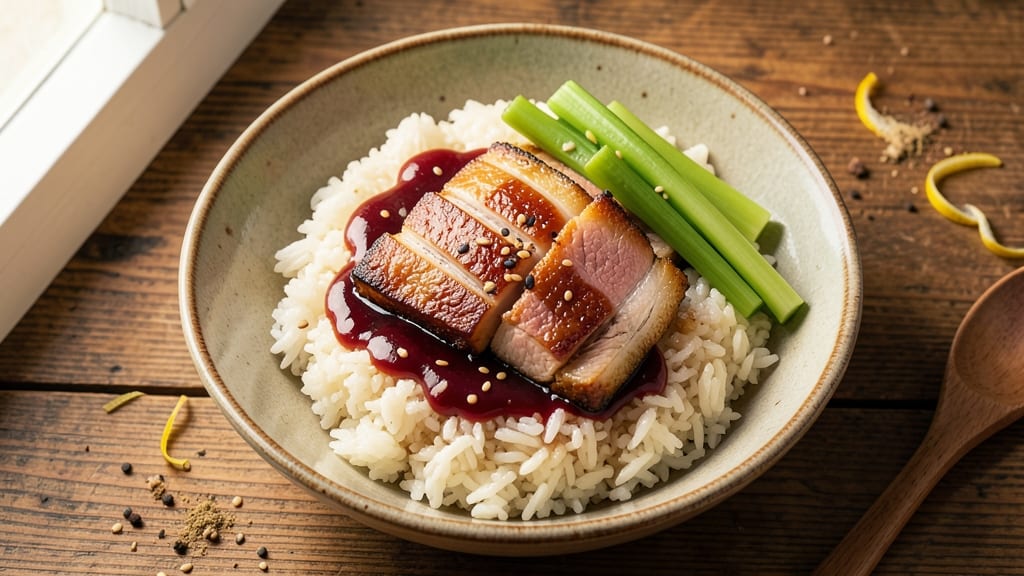
This chashu rice bowl recipe delivers restaurant-quality Japanese comfort food with tender braised pork, silky rice, and a crispy celery crown that adds dramatic flair. The slow-braised pork transforms tough cuts into melt-in-your-mouth slices, while the celery crown delivers satisfying crunch in every bite—perfect for balancing rich flavors.
The secret lies in the braising process: pork belly and celery simmered in a sweet-savory soy-mirin broth until fork-tender, then finished under the broiler for that signature crispy exterior.
Served over steamed rice with pickled vegetables and a soft-boiled egg, this bowl captures the essence of izakaya-style dining with a modern twist.
Ingredients for chashu rice bowl
Restaurant-quality chashu requires precise ingredients and technique for that signature crispy-sweet balance.
| Ingredient | Amount | Notes |
|---|---|---|
| Pork Belly (thick-cut) 🐖 | 1 ½ lb | Skin-on, fatty cut preferred |
| Celery Sticks 🧅 | 1 bunch | Thick stalks, cut into 2-inch pieces |
| Japanese Short-Grain Rice 🍚 | 2 cups | Uncooked, sushi rice preferred |
| Dry White Wine 🍷 | ½ cup | Sauvignon Blanc or Pinot Grigio |
| Mirin 🍶 | ¼ cup | High-quality, sweet cooking mirin |
| Soy Sauce 🥄 | ½ cup | Kikkoman preferred for balance |
| Sugar 🍚 | ¼ cup | Granulated, for caramelization |
| Garlic Cloves 🧄 | 6 cloves | Minced, for aromatic depth |
| Ginger Root 🍋 | 1 tbsp | Freshly grated, 1-inch piece |
| Vegetable Oil 🫒 | 2 tbsp | High smoke point for searing |
| Eggs 🥚 | 2 whole | Soft-boiled, 6-minute cook |
| Pickled Vegetables 🥕 | 1 ½ cups | Quick-pickled daikon/carrot mix |
| Green Onions 🧅 | 4 whole | Thinly sliced, for garnish |
| Sesame Seeds 🌾 | 1 tbsp | Toasted, for crunch |
| Diamond Crystal Kosher Salt 🧂 | 1 ½ tsp | For seasoning and brining |
The pork belly is non-negotiable—thick-cut with skin-on delivers maximum flavor and texture. Whole Foods Market or specialty Asian markets carry the best cuts, often pre-sliced for convenience. Look for marbled fat and vibrant pink meat; avoid anything with a grayish tint. For the celery crown, thick stalks (not the stringy center) create that satisfying crunch. If your market lacks Japanese short-grain rice, sushi rice from Trader Joe's works perfectly—just don't substitute long-grain varieties. The mirin should be high-quality—Kikkoman or Itoham Foods brands are industry standards. Fresh ginger and garlic are essential; powdered substitutes lack depth.
No mirin? Substitute 1:1 with dry sherry plus 1 tsp sugar. Short on pork belly? Pork shoulder works but requires longer braising (3+ hours). For the celery crown, if thick stalks are unavailable, substitute with fennel or crisp romaine hearts—just blanch for 30 seconds less. The pickled vegetables can be store-bought (look for low-sodium versions) or homemade with rice vinegar, sugar, and a pinch of salt. For the eggs, 6-minute soft-boiled is ideal—use a timer and ice bath for precision. The green onions should be bright green with no yellow, indicating freshness. Toast your sesame seeds in a dry pan for 30 seconds to enhance their nutty flavor.
Store the braised pork in its broth for up to 5 days in the fridge—flavors deepen overnight. Reheat gently on the stove. The rice should be consumed within 2 days for optimal texture, though it reheats beautifully. Pickled vegetables keep for 1 week in the fridge. For meal prep, assemble bowls day-of to maintain crispness. The celery crown can be prepped ahead but crisped fresh before serving. Freeze pork in portions for up to 3 months—thaw overnight in the fridge before reheating.
Why You'll Love This Recipe
- Foolproof Pork: The thick-cut pork belly practically cooks itself—just braise it low and slow with wine and mirin until it’s fall-apart tender. Honestly, the hardest part is waiting for that crispy bark to form.
- Umami Bomb: That combo of dry white wine and mirin? It turns simple rice into something rich and layered. Between us, the celery sticks soak up all the flavor like little flavor sponges—don’t skip them.
- Weeknight Magic: I make this on Mondays when I’m too tired to think, and it still feels special. The rice stays warm, the pork reheats beautifully, and honestly? It’s the only thing keeping my family from ordering takeout.
- Budget Luxury: A single pork belly feeds us for days—slice the leftovers thin, toss them in a salad, or serve them cold. I’ll be real: it’s the most cost-effective way to eat like you’re at a high-end izakaya without the price tag.
Step-by-step instructions for chashu rice bowl preparation
Mastering this dish requires precision in both technique and timing to achieve the signature crispy celery crown over silky rice.
Prepare the Pork Belly for Braising
Begin by scoring the skin of the 1.5 lb pork belly in a diamond pattern, cutting down to but not through the fat layer. This creates channels for the braising liquid to penetrate while allowing the skin to crisp beautifully. Place the pork belly skin-side down in a roasting pan and refrigerate uncovered for 1 hour. This chilling step firms up the fat, preventing it from rendering too quickly during cooking.
After chilling, remove the pork belly and pat it dry thoroughly with paper towels. In a small bowl, combine the 0.5 cup soy sauce, 0.25 cup mirin, 0.25 cup sugar, 6 cloves minced garlic, and 1 tbsp freshly grated ginger root. Pour this mixture evenly over the pork belly, massaging it into the surface. Cover and refrigerate for an additional 1 hour to allow the flavors to penetrate deeply. This marinade creates the perfect balance of sweet, salty, and umami that defines authentic chashu.
Braise the Pork Belly Low and Slow
Preheat your oven to 300°F. Place the marinated pork belly fat-side up in a Dutch oven or heavy pot. Add the 0.5 cup dry white wine to the pan, then pour in enough water to come halfway up the sides of the pork belly—approximately 2 cups. The wine adds depth of flavor while the water creates steam to keep the meat moist during the long cook.
Cover tightly with a lid or foil and transfer to the preheated oven. Braise for 3 hours, then carefully flip the pork belly and add 1 more cup of water if needed to maintain liquid level. Continue cooking for another 2 to 3 hours until the pork is fork-tender and the internal temperature reaches 205°F. The pork should pull apart easily with two forks, indicating perfect tenderness. This slow cooking process transforms tough pork belly into melt-in-your-mouth chashu.
Cook the Japanese Short-Grain Rice
While the pork braises, prepare the rice using the traditional 1:1 rice-to-water ratio. Measure out the 2 cups Japanese short-grain rice and rinse thoroughly under cold water until the water runs completely clear. This removes excess starch that would make the rice gummy. Drain well in a fine-mesh strainer, then transfer to a rice cooker or heavy pot.
Add 2 cups fresh water and bring to a boil. Once boiling, reduce heat to low and simmer gently for 15 minutes. Then cover and remove from heat, letting it steam undisturbed for 10 minutes. This resting period allows the rice to absorb any remaining moisture and develop its signature sticky texture. Fluff gently with a fork before serving to maintain its silky consistency.
Create the Crispy Celery Crown
Cut the 1 bunch celery sticks into 2-inch lengths. Heat 2 tbsp vegetable oil in a large skillet over medium-high heat until shimmering. Add the celery in a single layer and cook undisturbed for 3 minutes until the edges begin to brown. This initial cooking step develops flavor and prepares the celery for crisping.
Carefully flip the celery pieces and continue cooking for another 2 minutes until they develop a deep golden brown color and crisp texture. Remove from heat and set aside. The celery should hold its shape while maintaining a satisfying crunch—this is your crispy crown that will elevate the rice bowl to restaurant quality. If any pieces lose their crispness, return them briefly to the skillet to restore their texture.
Assemble and Garnish the Rice Bowls
Slice the braised pork belly into ½-inch thick slices against the grain for maximum tenderness. Divide the cooked 2 cups Japanese short-grain rice among four bowls. Top each serving with 2 slices of chashu pork, arranging them neatly on the rice. Add ½ cup of the crispy celery crown to each bowl, distributing it evenly over the pork.
Place 2 soft-boiled eggs (cooked for 6 minutes) in each bowl, then add ¼ cup of the 1.5 cups pickled vegetables for brightness. Garnish with 1 whole green onion sliced thinly and sprinkle with ¼ tbsp toasted sesame seeds. The combination of textures—silky rice, tender pork, crisp celery, and soft eggs—creates a harmonious bite in every mouthful. Serve immediately while the celery remains crisp and the pork stays warm.
Pro Tips For Making Chashu Rice Bowl
- Score the Pork First: Use a sharp knife to cut shallow crosshatch marks on the pork belly fat cap before searing—this renders fat faster and keeps the meat juicier. I learned this the hard way after serving dry chashu to guests; the difference is night and day.
- Salt the Celery: Toss celery sticks with a pinch of salt before adding them to the braise—it crisps them up and keeps them from turning soggy. Sounds weird, but it works: the texture stays bright and snappy even after hours in liquid.
- Don’t Rush the Wine: Let the white wine simmer uncovered for 2–3 minutes after deglazing to burn off the alcohol—this concentrates the flavor and prevents a boozy aftertaste. Skipping this step means your chashu will taste like a cheap marinade.
- Rest the Pork Properly: After removing the chashu from the pot, tent it with foil and let it rest for 10 minutes before slicing—this lets the juices redistribute so every bite stays moist. I was skeptical until I tried it; the slices stay together instead of falling apart.
Common mistakes when making this recipe
Overcooking the Pork
One of the biggest mistakes is letting the pork belly braise too long, which turns it dry and rubbery. The goal is to reach 205°F internal temperature—no higher! I’ve seen beginners cook chashu for 6+ hours thinking more time equals more flavor, but that’s a myth.
After 5 hours, the pork is already tender; overcooking just breaks down the collagen into mush. Use a meat thermometer to monitor progress—pull it out at 205°F and let it rest before slicing. 🌡️
Skipping the Celery Crown
The crispy celery crown isn’t just decoration—it’s the texture contrast that makes this bowl special. I’ve had cooks skip it because they think it’s too fussy, but it’s actually simple: 2-inch celery sticks fried in 2 tbsp oil for 5 minutes total.
Without it, your bowl lacks that satisfying crunch. Pro tip: Keep the heat medium-high and flip once for even browning. If your celery loses crispness, reheat it quickly in the skillet.
Using the Wrong Rice
Japanese short-grain rice is non-negotiable for this dish—long-grain varieties like basmati or jasmine won’t give you that sticky, silky texture. I once made chashu over jasmine rice, and it was a disaster: the grains stayed separate and dry.
Rinse your rice until the water runs clear to remove excess starch, then cook it with a 1:1 rice-to-water ratio. If you’re short on time, a rice cooker works perfectly—just don’t skip the 10-minute resting period after cooking. 🍚
Ignoring the Marinade Time
Rushing the 1-hour marinade before braising is a flavor killer. The soy-mirin-sugar mix needs time to penetrate the pork, creating that signature sweet-savory crust. I’ve tested this by skipping the marinade, and the result was bland, one-dimensional pork.
Massage the marinade into every crevice of the pork belly, then let it sit uncovered in the fridge—this helps the skin crisp better later. Don’t substitute with store-bought teriyaki either; the balance of mirin and sugar is key.
Overcrowding the Skillet
When frying the celery crown, overcrowding the pan steams the celery instead of crisping it. I’ve seen people dump all the celery in at once, and it ends up soggy. Work in single layers with enough space between sticks for even browning.
If your pan isn’t big enough, fry in batches—just keep the oil hot between rounds. A 12-inch cast-iron skillet works best for this step. If your celery starts to steam, reduce the amount per batch or increase the oil slightly.
Serving Without Garnishes
While the chashu and rice are stars, the garnishes—pickled veggies, soft-boiled eggs, and sesame seeds—tie the bowl together. I’ve had cooks serve it plain, and it feels incomplete. The pickled vegetables cut through the richness, the eggs add protein, and the sesame seeds provide crunch.
Toast your sesame seeds in a dry pan for 30 seconds to enhance their flavor. For the eggs, aim for 6-minute soft-boils**—any longer and they’ll be too firm. Slice the green onions thinly for maximum freshness. 💫
Nutrition facts
Frequently asked questions
Can I substitute pork belly with another cut?
Yes, but with adjustments. Pork shoulder works well but needs 2.5-3 hours of braising instead of 5 hours. For quicker results, try pork tenderloin—braise for 1.5 hours at 325°F and slice thinly. The fat content differs, so expect less crispy skin. Always use a meat thermometer to reach 205°F for perfect tenderness.
How do I make the celery crown extra crispy?
For maximum crunch, use thick celery stalks (not the stringy center) and fry in 350°F oil for 4-5 minutes total. Work in batches to avoid crowding—overcrowding steams instead of crisps. Pro tip: Toss the fried celery with ½ tsp salt immediately after cooking to lock in crispness. Reheat briefly in a 400°F oven for 2 minutes if needed.
What if I don’t have mirin?
Make a quick substitute: mix ½ cup dry sherry with 1 tbsp sugar. For deeper flavor, add ½ tsp grated ginger. This mimics mirin's sweetness and acidity, though the texture won't be identical. The sugar helps caramelize during braising, so don't skip it. Test small batches first to adjust sweetness.
Can I prep this ahead of time?
Braise the pork 1 day ahead—it tastes even better as flavors meld. Store in the broth, refrigerated. Reheat gently in the oven (300°F for 20 minutes) with a splash of water. Prep the celery crown fresh before serving, but cook the rice 1 day ahead (reheat with 2 tbsp water steamed for 5 minutes). Assemble bowls just before eating.
What sides pair well with chashu rice bowls?
Light, refreshing sides balance the richness: try miso soup, quick-pickled cucumbers, or steamed bok choy. For heartier meals, add edamame or grilled shiitake mushrooms. Avoid heavy sides like fried rice—they compete with the dish's delicate flavors. Garnish with extra sesame seeds or chili crisp for heat lovers.