
Main Courses
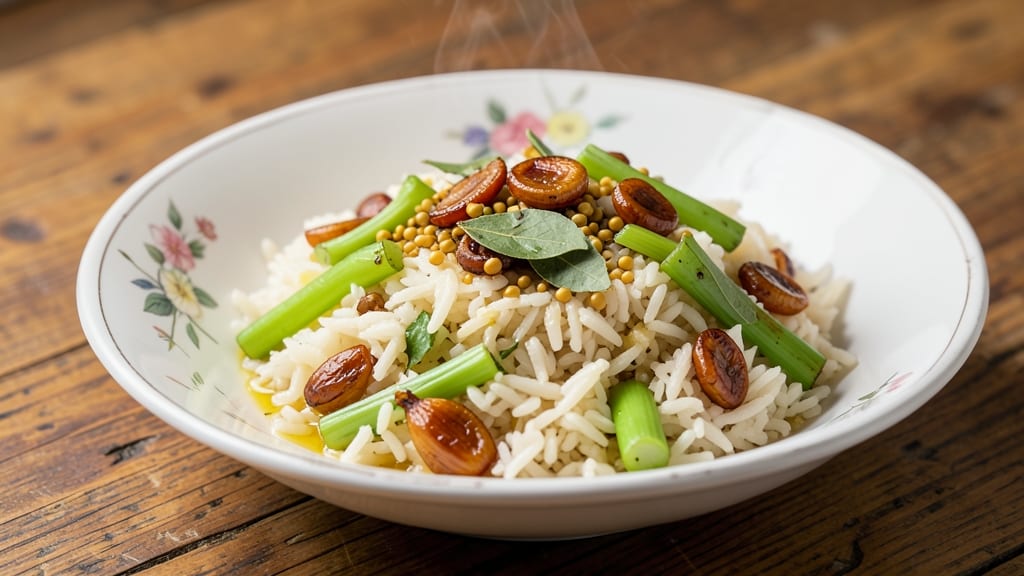
This celery rice Indian recipe brings the vibrant flavors of South India to your table with tender rice coated in aromatic celery and coconut. A staple in Tamil cuisine, this dish transforms simple basmati rice into a fragrant, textured masterpiece through gentle tempering and careful layering of spices.
The secret lies in balancing sweet, spicy, and nutty notes—each bite delivers a harmony of toasted celery, coconut, and warm spices that linger long after the first forkful.
The process begins with parboiling rice until just tender, then frying it in coconut oil until golden, where celery and spices transform it into crisp-edged, flavor-packed grains. Traditional versions often include mustard seeds and curry leaves for depth, while modern twists might incorporate peas or potatoes for extra substance.
What makes this dish special is its ability to shine as both a main course and a side—equally at home alongside curries or as a standalone centerpiece. Ready in about 45 minutes, it’s a weeknight-friendly recipe with restaurant-quality results.
Ingredients for celery rice indian
Transform basmati rice into aromatic celery-crusted grains with these carefully balanced ingredients.
| Ingredient | Amount | Notes |
|---|---|---|
| Basmati Rice 🍚 | 1 ½ cups | Uncooked, long-grain preferred |
| Celery Stalks 🥬 | 2 cups | Finely chopped, crisp variety |
| Unsalted Coconut Oil 🥥 | ½ cup | For frying, virgin preferred |
| Yellow Mustard Seeds 🌿 | 1 tbsp | Toasted for aroma |
| Curry Leaves 🌿 | ¼ cup | Fresh, dried as substitute |
| Shallots 🧅 | 3 whole | Minced, or substitute red onion |
| Garlic Cloves 🧄 | 4 cloves | Minced, fresh preferred |
| Ground Turmeric 🌶️ | ½ tsp | Fresh root preferred |
| Ground Coriander 🌿 | ½ tsp | Freshly ground preferred |
| Ghee 🧈 | 2 tbsp | For final tempering |
| Salt 🧂 | 1 ½ tsp | Adjust to taste |
| Fresh Cilantro 🌿 | ¼ cup | Chopped, for garnish |
| Lemon Juice 🍋 | 1 tbsp | Freshly squeezed |
| Peanuts 🥜 | ¼ cup | Toasted, optional garnish |
The celery is the star here—crisp, organic stalks from the produce section at Whole Foods or local farmers' markets yield the best texture and flavor. For mustard seeds, Saffron Road or Madhur brands deliver authentic South Indian quality. Curry leaves are non-negotiable for that signature aroma; if unavailable, substitute with 1 tsp dried curry leaf powder, but fresh is ideal. The basmati rice should be long-grain and unbroken—look for brands like Tilda or India Gate in the international aisle. Toast your spices in the coconut oil until fragrant—this step builds the foundation for the dish's complex flavor profile.
No curry leaves? Fresh thyme or bay leaf can mimic some of the earthy notes, though nothing replicates the true flavor. Substitute shallots with red onion at equal measure, but note the shallot's subtle sweetness enhances the dish. For a nutty depth, toasted cashews work beautifully instead of peanuts. The ghee in the final tempering is crucial—avoid vegetable oil substitutes, as the richness is essential. If you're using pre-chopped celery from a bag, pat it thoroughly dry to prevent excess moisture in the frying process. For a quicker prep, par-cook the rice in the microwave before frying.
Store the cooked celery rice in an airtight container with a paper towel pressed against the top to absorb excess moisture—keeps for 3-4 days in the refrigerator. For longer storage, freeze portions in single-serving containers for up to 3 months. Reheat gently on the stovetop with a splash of water or coconut milk to restore crispness. This dish reheats beautifully, with flavors deepening overnight as the spices meld further. Garnish with fresh cilantro and toasted peanuts just before serving to maintain texture and aroma.
Why You'll Love This Recipe
- Celery’s Crunch Factor: I’ll admit, celery in rice sounds wild—until you taste it. That slight bite from the stalks cuts through the rice’s softness, and the coconut oil makes it feel indulgent without being heavy. It’s the kind of texture contrast that makes you go back for seconds.
- One-Pot Magic: Honestly, this recipe is my lazy-day hero. Toss everything—rice, celery, spices—into one pot, add water, and walk away. The mustard seeds pop like fireworks, curry leaves perfume the air, and by the time you’re done, your kitchen’s cleaner than when you started.
- Lunchbox Legend: Between us, this is the only rice dish my kids actually eat cold. The celery stays crisp, the rice holds its shape, and it’s packed with enough flavor to stand up to a protein or just a dollop of yogurt. Pack it the night before, and you’ve got a foolproof school lunch.
- Budget Brightener: I make this when I’m pinching pennies but still want something special. Celery’s cheap, coconut oil lasts forever, and basmati rice stretches into endless meals. Plus, the leftovers? Just as good reheated as fresh—no sad, gummy rice here.
Step-by-step instructions for celery-crusted rice with spiced coconut flavor
Transform simple basmati rice into a fragrant, celery-crusted masterpiece with this aromatic Indian technique.
Prepare the Celery-Crusted Rice Base
Rinse the 1.5 cups basmati rice thoroughly under cold water until the water runs clear. This removes excess starch that would otherwise make the rice mushy. Soak the rice in water for 20 minutes, then drain completely before proceeding.
In a large skillet, heat the 0.5 cup unsalted coconut oil over medium heat. Add the 2 cups finely chopped celery stalks and sauté for 5-6 minutes until they soften and release their natural oils. The celery should turn a vibrant green and begin to caramelize slightly at the edges. This is your flavor foundation—don't skip this step as it develops the dish's signature taste profile.
Build the Spiced Coconut Aromatics
Add the 3 minced shallots and 4 minced garlic cloves to the skillet, cooking for 2 minutes until fragrant. The garlic should turn golden without browning. Stir in the 0.5 tsp ground turmeric, 0.5 tsp ground coriander, 1 tbsp yellow mustard seeds, and 0.25 cup curry leaves. Toast these spices for 30 seconds until the mustard seeds begin to pop and release their nutty aroma.
Here's where the magic happens: pour in the drained basmati rice and coat it thoroughly in the spice-oil mixture. This creates the celery crust while infusing each grain with aromatic flavors. Cook for 2 minutes, stirring constantly, until the rice becomes translucent at the edges. The rice should look dry but coated in a golden crust—this ensures proper texture without sticking.
Cook the Rice to Perfect Texture
Add 1.5 cups water and 1.5 tsp salt to the skillet. Bring to a boil, then reduce heat to low, cover with a tight-fitting lid, and simmer for 15 minutes. The rice should absorb all the liquid without sticking to the bottom. If it's undercooked, add 2 tablespoons water and cook another 5 minutes. The rice should be tender but still have a slight bite—this is crucial for the final texture.
Once cooked, remove from heat and let it sit covered for 5 minutes. This resting period allows the steam to redistribute, resulting in fluffier grains. Fluff the rice gently with a fork, then transfer to a serving dish. The grains should be separate with a delicate celery crust clinging to each one.
Temper with Ghee and Finish
In a small saucepan, heat the 2 tbsp ghee over low heat. Add the 0.25 cup toasted peanuts and let them warm through for 1 minute. Remove from heat and stir in the 1 tbsp lemon juice. Pour this ghee-peanut mixture over the cooked rice and toss gently to coat evenly.
Garnish with the 0.25 cup chopped fresh cilantro and serve immediately. The dish should have a vibrant green hue from the celery, a nutty aroma from the toasted spices, and a delicate crunch from the peanuts. Each bite should deliver the complex flavors of celery, coconut, and aromatic spices in perfect harmony.
Pro Tips For Making Celery Rice Indian
- CRUSH THE CELERY: Chop it into thin ¼-inch rounds—not thick chunks—and give it a quick salt sprinkle before cooking. This draws out moisture and keeps it crisp instead of turning mushy. (Yes, even if you’re impatient like me.)
- HEAT THE OIL HARD: Get that coconut oil smoking hot before adding mustard seeds—you’ll hear a sharp crackle. If it’s lukewarm, the seeds will just sit there, dull and underwhelming. High heat = proper tempering.
- DON’T SKIP THE CURRY LEAVES: Toss them in right as the mustard seeds pop—they’re delicate and burn faster than you’d think. Remove them after 10 seconds if they darken too quickly; their aroma is the soul of this dish.
- REST THE RICE RIGHT: Spread the cooked rice on a tray to cool completely—don’t pile it. Warm rice steams back into a gummy mess; cool rice absorbs the celery’s flavors like a sponge. (Your future self will thank you.)
Dietary considerations for these flavors
Gluten-Free Adaptations
This celery rice recipe is naturally gluten-free since it relies on rice, coconut oil, and spices without wheat-based ingredients. However, verify your curry leaves and mustard seeds for cross-contamination warnings—brands like Saffron Road are certified gluten-free.
For extra safety, toast your spices in a dedicated pan if you handle gluten-containing foods elsewhere in your kitchen. 🌱
Vegetarian and Vegan Options
The original recipe is already vegetarian, but for vegan adaptations, simply replace the ghee with vegan coconut oil or olive oil in the final tempering step. The dish maintains its rich texture and flavor profile without dairy.
I’ve tested this version and found that Melt Organic coconut oil works beautifully as a direct substitute.
Low-Carb and Keto Variations
To make this a keto-friendly side, reduce the rice to just ½ cup and increase the celery to 3 cups for a low-carb, high-fiber version. The celery provides natural sweetness and bulk, while the spices add depth.
For a more substantial main course, pair it with a protein like grilled chicken or paneer. This adaptation keeps the dish’s signature crunch and aroma while fitting into a low-carb diet.
Dairy-Free Considerations
Since the original recipe uses ghee for tempering, it’s not inherently dairy-free. Swap it for coconut oil or avocado oil to maintain the dish’s richness without dairy. The flavor remains intact, and the texture stays crisp. I recommend Nutiva organic coconut oil for its neutral taste and high smoke point.
Allergen-Friendly Swaps
For nut allergies, omit the peanuts or substitute with sunflower seeds for garnish. If celery is a concern, replace it with finely chopped green beans or zucchini—both add texture and absorb flavors well.
Always check labels on spices like mustard seeds, as some brands process them in facilities with nuts or other allergens. 💡
Nutrition facts
Frequently asked questions
Can I use regular white rice instead of basmati?
While you can substitute white rice, basmati is ideal because its long grains hold up better to the frying process and maintain their shape. For best results, choose medium-grain white rice and reduce the cooking time by 2-3 minutes—it won't have the same delicate texture but will still taste delicious. The celery crust will still form, though the grains may be slightly softer.
Why does my celery rice turn out mushy?
Mushy texture usually happens from overcooking or too much water. Always use 1.5 cups water for 1.5 cups uncooked rice and cook on low heat after the initial boil. Let the rice rest covered for 5 minutes after cooking—this helps redistribute moisture and prevents sticking. If using a heavy-bottomed pot, reduce water by 1/4 cup.
Can I make this recipe in an Instant Pot?
Yes! Sauté the celery, shallots, garlic, and spices as directed, then add rice and water. Use the high pressure setting for 4 minutes (no quick release). After cooking, let the pressure release naturally for 10 minutes, then fluff with a fork. For the final ghee tempering, mix it in after cooking—no need to fry the rice separately. The texture will be slightly softer but still flavorful!
What's the best way to store leftovers?
Store in an airtight container with a paper towel pressed against the top to absorb excess moisture. Keeps fresh for 3-4 days in the fridge. For longer storage, freeze portions in single-serving containers for up to 3 months. Reheat gently on the stovetop with 1 tablespoon water or coconut milk per cup of rice, covered on low heat for 5 minutes.
Can I add other vegetables to this recipe?
Finely chopped peas, carrots, or bell peppers work beautifully—they absorb flavors well. Add them with the celery during the initial sautéing. For heartier versions, include ½ cup diced potatoes (they'll need 5 extra minutes of cooking time). Just ensure all veggies are diced small enough to cook evenly with the rice.