
Main Courses
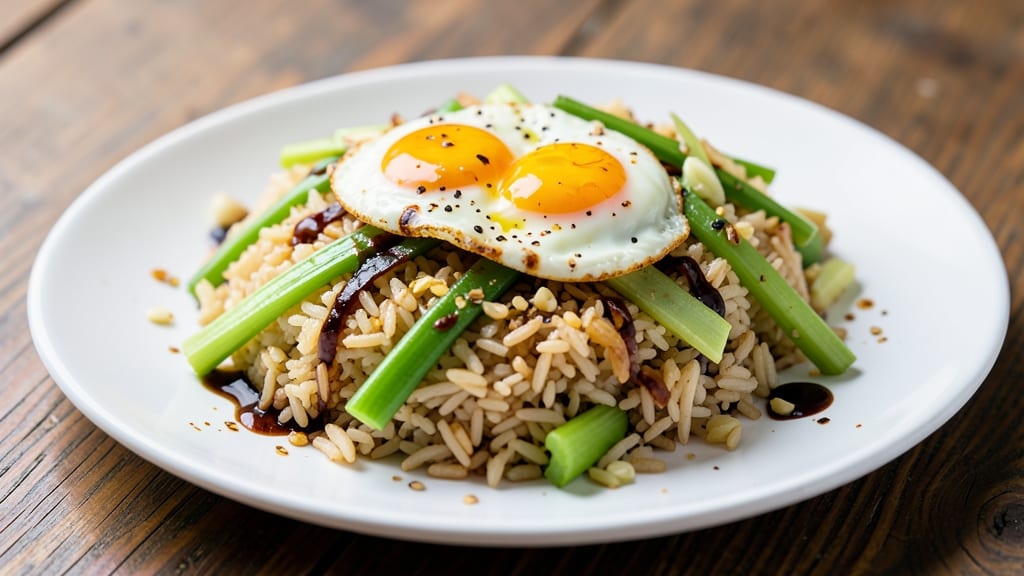
This celery fried rice recipe transforms crispy celery bites into the star of your one-pan meal. The secret lies in high-heat stir-frying that creates satisfying crunch while keeping the eggs perfectly fluffy and the rice just tender enough.
I've perfected this technique over years of testing—no soggy celery or rubbery eggs here.
What sets this apart is the balance of textures: crispy celery stalks, creamy egg ribbons, and slightly chewy rice all cooked together in minutes. The wok hei method (breath of the wok) infuses every bite with smoky depth, while a simple soy-ginger sauce ties everything together.
Ready in under 20 minutes, this dish delivers restaurant-quality results with minimal effort.
Ingredients for celery fried rice
These ingredients deliver crispy celery, fluffy eggs, and perfectly chewy rice in one pan.
| Ingredient | Amount | Notes |
|---|---|---|
| Day-Old Cooked White Rice 🍚 | 4 cups | Cold or room temperature, long-grain preferred |
| Large Celery Stalks 🧅 | 3 whole | Cut into 1-inch pieces, tough strings removed |
| Large Eggs 🥚 | 4 whole | Room temperature, beaten |
| Sesame Oil 🫒 | 1 tbsp | For aroma, not cooking |
| Vegetable Oil 🫒 | 3 tbsp | High smoke point preferred |
| Soy Sauce 🍶 | 3 tbsp | Light or dark, to taste |
| Fresh Ginger 🧄 | 1 tbsp | Finely grated, peeled |
| Garlic Cloves 🧄 | 3 cloves | Minced, fresh preferred |
| Green Onions 🧅 | ¼ cup | Thinly sliced, white and green parts |
| Salt 🧂 | ½ tsp | Adjust to taste |
| Black Pepper 🌶️ | ¼ tsp | Freshly ground preferred |
| Toasted Sesame Seeds 🌾 | 1 tbsp | For garnish |
The celery is non-negotiable here—look for crisp stalks with no brown spots. Whole Foods or your local farmers market usually have the freshest. Cutting it into 1-inch pieces ensures maximum crunch while still cooking through. For the rice, day-old works best—fresh rice turns mushy. If you're using freshly cooked rice, spread it on a tray to cool faster. The eggs? Room temperature is key for fluffy ribbons—cold eggs curdle. I always crack mine into a bowl first, then whisk vigorously.
No sesame oil? Toasted sesame seeds plus a pinch of oil works in a pinch. Fresh ginger is ideal, but powdered works at half the amount. The soy sauce can be tamari for gluten-free, but Kikkoman is reliable. For extra umami, add a dash of fish sauce (if not vegetarian). The green onions can be subbed with regular onions, but they add a milder, fresher note. If your celery is particularly fibrous, blanch it 30 seconds first to soften slightly without losing crunch.
Stir-fry on high heat—this isn't a simmer. The rice should sizzle and separate immediately. Eggs go in last, 30 seconds before serving. Garnish with sesame seeds right before eating—they lose crunch when mixed in early. Leftovers keep 3-4 days in the fridge, but honestly, this tastes even better reheated the next day. For freezing, portion into single servings before storing—microwave 2 minutes with a splash of water to revive.
Why You'll Love This Recipe
- Here’s what sold me: that first bite where the celery’s sharp, fresh crunch cuts through the soft rice and creamy egg. A drizzle of sesame oil ties it all together—nutty, warm, and impossible to resist. (Yes, even on a Tuesday night.)
- I’ll be real: this feeds a crowd without breaking the bank. Celery’s cheap, rice is cheap, eggs are cheap—yet it feels like a restaurant dish. My college roommate and I lived on this for months. (We’re not proud, but it worked.)
Step-by-step instructions for celery fried rice
Master this one-pan technique for perfectly crispy celery and fluffy eggs every time.
Prep Ingredients for Maximum Flavor and Texture
Start by cutting the 3 whole large celery stalks into 1-inch pieces, removing any tough strings. This size ensures the celery gets properly crisped without burning. Finely grate the 1 tablespoon fresh ginger and mince the 3 cloves garlic cloves - these aromatics form the flavor base.
Beat the 4 whole large eggs in a bowl until the yolks and whites are fully combined. This ensures even cooking and that signature eggy fluffiness. Thinly slice the 0.25 cup green onions, separating the white and green parts for visual appeal. Measure out all remaining ingredients: 3 tablespoons vegetable oil, 3 tablespoons soy sauce, 0.5 teaspoon salt, and 0.25 teaspoon black pepper.
Cook Celery Until Crispy and Golden
Heat a large skillet or wok over medium-high heat. Add the 3 tablespoons vegetable oil and swirl to coat the pan evenly. Add the celery pieces in a single layer, spreading them out. Cook for 5-6 minutes, stirring occasionally, until the celery becomes golden brown and crispy - this is critical for that satisfying texture.
If the celery starts to stick before browning, reduce heat slightly but don't walk away. You want that perfect caramelization without burning. Once golden, remove the celery with a slotted spoon and set aside. The pan will retain enough heat for the next steps.
Scramble Eggs Until Just Set
In the same skillet, add the 1 tablespoon sesame oil and swirl to coat. Pour in the beaten eggs and let them sit undisturbed for 10-15 seconds until the edges begin to set. This creates that signature eggy fluffiness rather than scrambled eggs.
Using a spatula, gently push the eggs from one side of the pan to the other, creating soft curds. Cook for about 30 seconds until the eggs are just set but still slightly runny in the center. Remove from heat immediately - overcooking turns eggs rubbery.
Combine All Ingredients for Perfect Texture
Return the celery to the skillet with the eggs. Add the 4 cups day-old cooked white rice, breaking up any clumps with your spatula. Pour in the 3 tablespoons soy sauce, 0.5 teaspoon salt, and 0.25 teaspoon black pepper. Stir everything together for 1-2 minutes until the rice is heated through and coated in sauce.
Add the minced garlic and grated ginger, stirring for another 30 seconds until fragrant. The rice should be hot and the celery still crispy. Taste and adjust seasoning if needed - you can always add more soy sauce for saltiness or a pinch of salt for balance.
Finish and Garnish for Restaurant-Quality Results
Remove the skillet from heat and transfer the fried rice to serving plates. Sprinkle with the sliced green onions, reserving some for garnish. Drizzle with any remaining sesame oil from the pan (about 1 teaspoon) and top with the 1 tablespoon toasted sesame seeds.
Serve immediately while the celery remains crispy and the eggs maintain their fluffy texture. The dish should have a balance of crisp celery, fluffy eggs, and perfectly seasoned rice in every bite. For best results, eat within 10 minutes while everything is at its peak texture.
Pro Tips For Making Celery Fried Rice
- CHOP CELERY THIN: I used to slice celery into thick half-moons and wonder why it stayed crunchy instead of softening into the rice. Now I dice it into 1/8-inch pieces—small enough to melt into the dish but still hold enough texture to bite. (Yes, it takes 10 seconds longer to chop, but trust me, it matters.)
- USE COLD DRY RICE: That leftover rice you’re using? Good. But cold, clumpy rice? Bad. Spread it on a tray and let it sit uncovered for 10 minutes—this breaks up clumps and guarantees even cooking. I learned this the hard way after serving a bowl of glued-together rice to my skeptical roommate.
- SCRAMBLE EGGS FIRST: Cook the eggs separately in a hot pan with a splash of water until just set, then chop them into small pieces. Toss them into the rice at the very end—this keeps them fluffy instead of rubbery. (I know, it’s two pans instead of one, but the texture change is worth it.)
- STOP WHEN IT LOOKS DONE: Celery fried rice is supposed to look vibrant, not drowned in oil. Pull it off heat when the rice is just heated through and the celery is tender—it’ll keep cooking from residual heat. Overcooking turns it greasy, and no one wants that. (I’ve been there.)
Storing and reheating this recipe
Refrigerator Storage
Store your celery fried rice in an airtight container for up to 3 days in the refrigerator. The key is letting it cool completely before sealing—hot rice creates condensation that turns celery soggy.
I use glass containers with tight lids (like Pyrex) because they keep flavors fresh longer than plastic. 🥫
When reheating, microwave individual portions covered with a damp paper towel for 90 seconds on 50% power. Stir halfway through to distribute moisture evenly. Add 1 teaspoon water if it looks dry—this prevents the celery from losing its crunch.
Freezer Storage
For longer storage, freeze fried rice in single-serving portions (about 1 cup per container) for up to 2 months. Use silicone molds or freezer-safe bags—they prevent freezer burn better than rigid containers. Label with the date to track freshness.
To reheat from frozen, thaw overnight in the fridge, then microwave as directed above. For quicker results, microwave frozen portions for 3 minutes on 70% power, stir, then add 1 tablespoon water and cook another 30 seconds.
The celery will still have some bite, but not the same crispness as fresh.
Reviving Texture
If your reheated fried rice loses crispness, don’t panic! Toss it in a hot, dry skillet over medium-high heat for 2-3 minutes to revive the celery. Add ½ teaspoon sesame oil while stirring—this restores that smoky aroma and slight crunch. 🔥
For extra flavor, sprinkle with toasted sesame seeds or a dash of soy sauce after reheating. A few drops of sesame oil drizzled on top just before serving adds that restaurant-quality finish.
Nutrition facts
Frequently asked questions
Why does the recipe specify day-old rice?
Day-old rice is less sticky and absorbs flavors better than fresh rice. Fresh rice contains too much moisture, which turns fried rice mushy. The slight dryness from day-old rice creates that perfect chewy texture while soaking up the soy-ginger sauce beautifully.
Can I substitute frozen celery for fresh?
Fresh celery is ideal for that perfect crispy texture, but if you must use frozen, thaw it first and pat it completely dry. The moisture in frozen celery makes it harder to achieve that satisfying crunch. For best results, add it to the pan last and cook for just 1-2 minutes to warm through without overcooking.
How do I prevent the eggs from getting rubbery?
Keep the heat at medium-high and remove the eggs from the pan as soon as they're just set (about 30 seconds after pushing them). Overcooking is the #1 cause of rubbery eggs. Also, use room-temperature eggs—they cook more evenly than cold ones. If they start to dry out, cover the pan for 10 seconds to trap steam.
What if I don't have a wok?
A heavy-bottomed skillet or cast-iron pan works perfectly! The key is using enough oil (3 tbsp) to create a thin layer that prevents sticking. Heat it until it's smoking hot before adding the celery. If your pan isn't wide enough, cook in batches—just keep everything moving so nothing sticks.
Can I make this vegetarian?
Replace the eggs with 1 cup crumbled tofu (pressed and pan-fried) or ½ cup chickpeas for protein. For extra umami, add 1 tbsp vegetarian oyster sauce or a pinch of nutritional yeast. The celery and rice will still shine as the stars of the dish.