
Main Courses
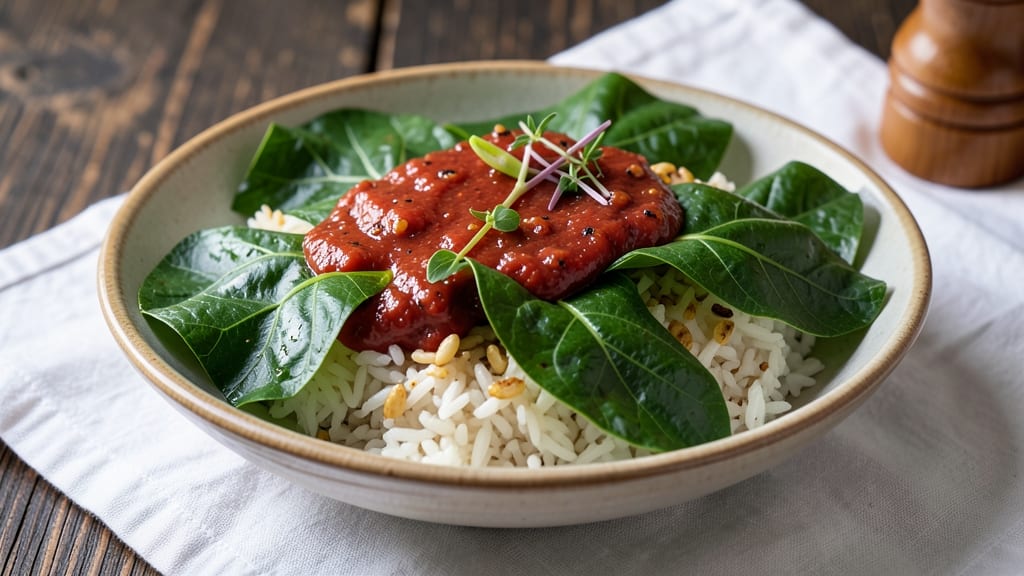
This one-pot cassava leaf and rice recipe brings the vibrant flavors of West Africa to your kitchen with minimal cleanup. The dish transforms tender cassava leaves into a rich, aromatic sauce that perfectly coats fluffy long-grain rice, creating a hearty meal that's as satisfying as it is flavorful.
What makes this recipe special is how it combines traditional techniques with modern convenience—no complicated steps, just layers of savory, earthy goodness in a single pot.
By wilting the cassava leaves and blending them into a velvety base, you create a sauce that's both vibrant and deeply flavorful, infused with the natural umami of the leaves. The rice cooks directly in this sauce, absorbing all the rich flavors while maintaining its perfect texture.
This is a dish that's not only delicious but also deeply rooted in cultural tradition, offering a taste of West African cuisine without the fuss. Ready in about 45 minutes, it's perfect for a weeknight dinner that feels like a celebration.
Ingredients for cassava leaf and rice
These West African staples come together in one aromatic pot for a flavorful, satisfying meal.
| Ingredient | Amount | Notes |
|---|---|---|
| Long-Grain White Rice 🍚 | 1 ½ cups | Uncooked, jasmine or basmati preferred |
| Fresh Cassava Leaves 🌿 | 12 oz | Young leaves, washed thoroughly |
| Tomato Paste 🍅 | 2 tbsp | Squeeze tube or canned |
| Fresh Onions 🧅 | 1 whole | Yellow or red, diced |
| Garlic Cloves 🧄 | 4 cloves | Peeled and minced |
| Fresh Ginger 🌿 | 1 tbsp | Grated, fresh preferred |
| Vegetable Oil 🫒 | 2 tbsp | Light or canola |
| Dried Thyme 🌿 | 1 tsp | Or 1 tbsp fresh thyme |
| Ground Black Pepper 🌶️ | ½ tsp | Freshly cracked preferred |
| Salt 🧂 | 1 ½ tsp | Kosher or sea salt |
| Vegetable Broth 💧 | 2 cups | Low-sodium preferred |
| Scotch Bonnet Peppers 🌶️ | 1 whole | Seeds removed for mild heat |
| Fresh Bell Peppers 🌶️ | 1 whole | Any color, diced |
| Lemon Juice 🍋 | 1 tbsp | Freshly squeezed |
Cassava leaves are the star here, so look for fresh, vibrant green leaves at African markets or specialty grocery stores like Whole Foods or H Mart. If you can't find them, spinach or collard greens work in a pinch—they won't have the exact same flavor but still give that earthy base. For the Scotch bonnet, Trader Joe's usually carries them, but any hot pepper will do if you prefer milder heat. The rice is the foundation, so jasmine or basmati stays fluffier than long-grain white. Pro tip: wash the cassava leaves really well—they're dusty from the fields.
No cassava leaves? Substitute with spinach or collard greens—just use twice the amount since they're milder. Fresh thyme hard to find? Dried works at one-third the amount. The tomato paste can be swapped for 1 cup crushed tomatoes if you prefer. For extra richness, add 2 tbsp coconut milk to the broth. The bell peppers are optional but add sweetness that balances the heat. If you're short on time, pre-chop the onions and garlic before starting—they're the first things to go in the pot.
This dish tastes even better the next day—make extra if you can. Store leftovers in the fridge for 4-5 days or freeze for 3 months. The sauce thickens as it cools, so add a splash of broth when reheating. For meal prep, portion into containers with rice—it reheats perfectly. The cassava leaves soften as they sit, so if you're using spinach, cook it a little longer to mimic the texture. Trust me, the flavors meld beautifully overnight.
Why You'll Love This Recipe
- Foolproof Freshness: I’ll admit—cassava leaves can look intimidating, but they’re so forgiving. Just a quick chop (no julienne skills needed) and a quick wilt in hot oil with onions and garlic, and you’re golden. The leaves soften fast, so even if you’re multitasking, they won’t turn to mush.
- Umami Bomb: That tomato paste isn’t just for color—it’s the secret weapon. When you caramelize it with onions and garlic until it’s deep and sticky, it turns the rice into something ridiculously flavorful. The cassava leaves add this earthy, slightly bitter depth that makes every bite feel like a hug.
- Weeknight Workhorse: Between us, this is my go-to when I need to feed a crowd without stressing. Double the rice, add extra leaves, and boom—leftovers for days. It reheats like a dream, too, so Sunday dinner becomes Monday lunch with zero effort. (Yes, even on a Tuesday night.)
- Pocketbook Hero: Fresh cassava leaves are often cheaper than spinach, and long-grain rice? Always affordable. A single batch stretches to three meals, and the ingredients last longer than takeout menus. I’ll be real: my grocery bill thanks me every time I make this.
Step-by-step instructions for cassava leaf and rice
This West African-inspired dish comes together in one flavorful pot—here's how to nail it every time.
Sauté the Aromatics in Vegetable Oil
Heat the 2 tablespoons vegetable oil in a heavy-bottomed pot over medium heat. Add the 1 whole fresh onions (diced) and cook for 3-4 minutes until they become translucent and just start to soften. This is your flavor foundation—don't rush it.
Next, add the 4 cloves garlic cloves (minced) and 1 tablespoon fresh ginger (grated). Stir constantly for 30 seconds until the garlic becomes fragrant—you'll smell that unmistakable aroma. If the garlic starts to brown too quickly, reduce the heat slightly. This step builds the aromatic base that carries through the entire dish.
I like to press the garlic and ginger into the onions with a wooden spoon for 10 seconds to really infuse those flavors. This ensures every bite will be packed with that bright, fresh taste. Keep the heat at medium—too high and you'll burn these delicate ingredients.
Add Spices and Tomato Paste
Stir in the 1 teaspoon dried thyme, 0.5 teaspoon ground black pepper, and 1.5 teaspoons salt. Let these spices toast in the oil for 30 seconds—you'll see them release their aroma. This quick toasting enhances their flavor dramatically.
Add the 2 tablespoons tomato paste and stir vigorously for 1 minute to break it down completely. You want it to turn into a smooth, rich base rather than stay in clumpy chunks. This tomato paste will deepen the color and add a subtle sweetness that balances the earthy cassava leaves.
Here's a pro tip: After adding the tomato paste, scrape up any browned bits from the bottom of the pot with a wooden spoon. These bits are packed with flavor and will make your dish taste even more complex. Let this mixture cook for another 2 minutes until it becomes slightly darker and more aromatic.
Incorporate the Peppers and Cassava Leaves
Add the 1 whole scotch bonnet peppers (seeds removed, diced) and 1 whole fresh bell peppers (diced). Cook for 3 minutes until the peppers soften slightly. The scotch bonnet will add just enough heat to complement the earthy cassava leaves without overpowering the dish.
Now comes the star: the 12 ounces fresh cassava leaves. Rinse them thoroughly if they're particularly sandy, then chop them into 1-inch pieces. Add them to the pot and stir gently to wilt them slightly—this should take about 3 minutes. The leaves will release their natural bitterness as they cook down, which is normal and actually desirable in this dish.
I know it seems like a lot of leaves, but trust me—this is the perfect amount for 4 servings. If you're worried about bitterness, remember that the tomato paste, peppers, and rice will all help balance those flavors. Stir occasionally to prevent the leaves from sticking to the bottom of the pot.
Build the One-Pot Rice Dish
Add the 1.5 cups long-grain white rice and stir to coat it evenly with all the aromatics and cassava leaves. Pour in the 2 cups vegetable broth and bring the mixture to a gentle boil. Once boiling, reduce the heat to low and cover the pot with a tight-fitting lid.
Let the rice simmer for 20 minutes without lifting the lid. This is where the magic happens—the rice absorbs the flavors while the cassava leaves continue to soften. If you notice the liquid is evaporating too quickly, add 2 tablespoons water to maintain the proper consistency.
After 20 minutes, remove the lid and fluff the rice gently with a fork. Check if the rice is tender and the liquid has mostly been absorbed. If there's still some liquid remaining, cover and cook for another 5 minutes. The rice should be tender but still have a slight bite—this ensures it doesn't turn mushy.
Finish with Lemon Juice and Rest
Remove the pot from heat and stir in the 1 tablespoon lemon juice. This bright citrus note cuts through the richness of the cassava leaves and rice, adding a refreshing finish. Let the dish sit covered for 5 minutes—this resting period allows all the flavors to meld together perfectly.
Before serving, give the rice one final fluff with a fork. The cassava leaves should be tender but still hold their shape slightly, and the rice should be perfectly cooked with a slight texture. If you want extra richness, you can drizzle a little more vegetable oil over the top before serving.
This one-pot wonder serves 4 and comes together beautifully. The earthy cassava leaves pair perfectly with the aromatic rice, creating a dish that's both comforting and full of vibrant flavors. Enjoy it with a side of fried plantains or a simple green salad for a complete meal.
Pro Tips For Making Cassava Leaf And Rice
- Blanch Leaves First: Toss fresh cassava leaves in boiling water for exactly 30 seconds—just enough to wilt them without cooking them through. I learned this the hard way after overcooking leaves and ending up with a mushy, bitter stew that tasted like disappointment. Drain and rinse immediately in cold water to stop the cooking. This keeps the texture tender but still vibrant when they hit the pot.
- Sauté Onions Low and Slow: Caramelize those onions until they’re golden-brown, not crispy—about 10-12 minutes on medium-low heat. I used to rush this step, and the dish always lacked depth. The longer you let them cook, the richer the base for the tomato paste and garlic. Add a splash of water if they stick; it’s not burning, just needing patience.
- Skip the Overcrowded Pot: Cook the rice in two batches if your pot’s too small—crowding turns it into glue. I’ve seen this happen more times than I’d like to admit. Use a heavy-bottomed pot with a 1:1.5 rice-to-water ratio, stir once after 3 minutes, then let it steam undisturbed. The grains will stay separate, and the cassava leaves won’t turn to soup.
- Toast Garlic Until Fragrant: Cook the minced garlic in the pot until it smells like a spice market, not just raw. I was skeptical until I tried it—I used to add it raw, and the flavor was always flat. Let it sizzle for 30-45 seconds until it’s just turning golden, then immediately add the tomato paste. This step makes a real difference in the final bite.
Creative variations of cassava leaf and rice
West African Spicy Twist
For a bolder flavor profile, add 1 extra Scotch bonnet pepper (seeds in) and 1 tsp smoked paprika when sautéing the aromatics. This creates a fiery, smoky depth that’s common in Nigerian versions. I like to serve this with fried plantains to balance the heat. 🌶️
Coconut Milk Creaminess
Swap ½ cup vegetable broth for ½ cup coconut milk when adding liquid to the pot. This adds a luscious, slightly sweet contrast to the earthy cassava leaves—perfect for those who enjoy richer textures. Use full-fat coconut milk for the best results. 🥥
Protein-Packed Additions
Make this dish heartier by adding 1 cup cooked black-eyed peas or ½ lb smoked fish (like mackerel) when incorporating the cassava leaves. Both options are traditional in West African cuisine and add protein without overpowering the flavors. Note: smoked fish is optional but adds incredible depth.
Vegetarian-Friendly Swaps
For a fully plant-based version, replace the vegetable broth with mushroom broth and add ½ cup chickpeas for extra protein. The earthy mushrooms complement the cassava leaves beautifully. Bonus: Toss in 1 tbsp nutritional yeast for a cheesy flavor without dairy. ✨
Slow-Cooker Adaptation
Transform this into a hands-off meal by using a 6-quart slow cooker. Sauté the onions, garlic, and spices as directed, then transfer everything to the slow cooker with 2.5 cups broth.
Cook on low for 4-5 hours—the cassava leaves will soften perfectly while the rice absorbs all the flavors. Stir in lemon juice at the end. ⏳
Garnish Like a Pro
Elevate your dish with fresh toppings: chopped cilantro, toasted peanuts, or sliced avocado. These add texture and brightness that make the meal feel restaurant-worthy. I love a sprinkle of crushed red pepper flakes for extra heat lovers. 🌟
Nutrition facts
Frequently asked questions
Can I substitute cassava leaves with other greens?
If you can't find cassava leaves, use spinach or collard greens—just double the amount since they're milder. For the best flavor match, try taro leaves (if available) or swiss chard. The texture will differ slightly, but the dish will still be delicious.
How do I prevent the cassava leaves from being too bitter? Bitterness comes from undercooked leaves.
Can I make this recipe without a heavy-bottomed pot?
Yes, but use a pot with a tight-fitting lid to prevent sticking. If your pot isn't heavy-bottomed, reduce the heat to low-medium to avoid burning the aromatics. A Dutch oven or even a stainless steel pot works well. The key is patience—let the flavors develop slowly.
What's the best way to store leftovers?
Store in an airtight container in the fridge for 4-5 days or freeze for 3 months. The flavors actually improve overnight! When reheating, add 1-2 tablespoons broth or water to loosen the rice. For best texture, microwave in 1-minute intervals, stirring between each.
How can I adjust the heat level?
Remove the scotch bonnet seeds for milder heat, or use bell peppers only. For extra spice, add ½ tsp cayenne pepper when sautéing the aromatics. Always taste as you go—West African dishes balance heat with acidity (like lemon juice) and sweetness (from tomatoes/peppers).