
Main Courses
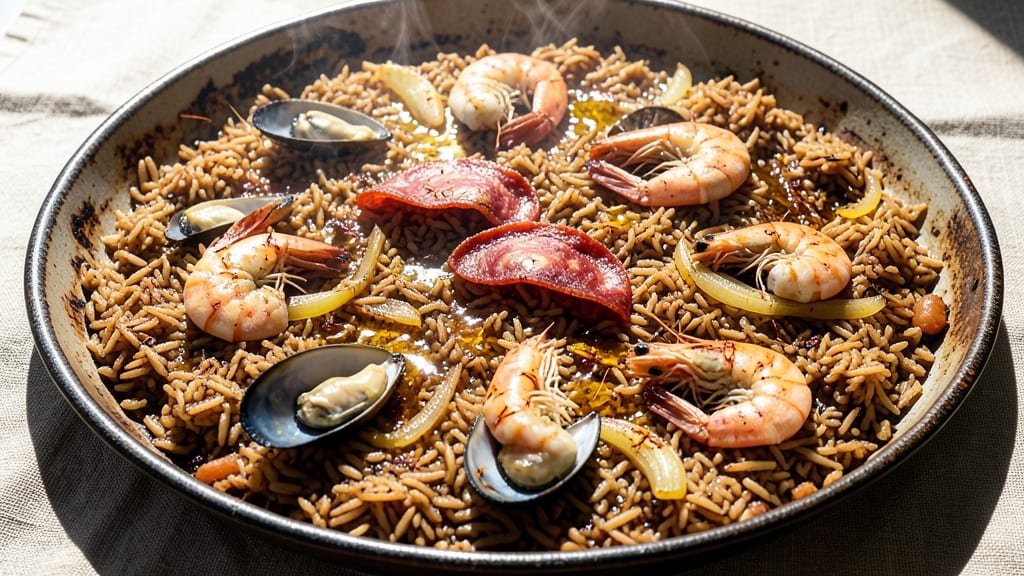
This brown rice paella recipe transforms a weeknight dinner into a restaurant-worthy experience with saffron-infused broth and tender seafood. The key lies in soaking the rice to achieve perfect texture while building layers of flavor through slow cooking.
Unlike white rice versions, brown rice adds nutty depth and chewy satisfaction that keeps every bite interesting.
The magic happens in the crust—socarrat—where caramelized rice meets crispy perfection at the bottom of the pan. With shrimp, mussels, and chorizo layered just right, this paella delivers authentic Spanish flavor without the complexity.
The saffron-infused broth ties everything together, creating a dish that’s both comforting and impressive. Ready to master the one-pot technique?
Ingredients for brown rice paella
Transform weeknight cooking into Spanish restaurant artistry with these carefully chosen ingredients.
| Ingredient | Amount | Notes |
|---|---|---|
| Long-Grain Brown Rice 🍚 | 1 ½ cups | Uncooked, soaked 30 minutes |
| Saffron Threads 🌼 | ¼ tsp | High-quality, culinary grade |
| Large Shrimp 🦐 | 1 lb | Peeled, deveined, tails on |
| Fresh Mussels 🦪 | 1 ½ lbs | Beards removed, scrubbed clean |
| Spanish Chorizo 🌭 | 6 oz | Sliced into 1/4-inch rounds |
| Yellow Onion 🧅 | 1 whole | Diced, medium size |
| Garlic Cloves 🧄 | 6 cloves | Minced, fresh preferred |
| Red Bell Pepper 🍆 | 1 whole | Diced, medium size |
| Tomato Paste 🍅 | 2 tbsp | Smooth, not chunky |
| Dry White Wine 🍷 | 1 cup | Medium-bodied, like Sauvignon Blanc |
| Chicken Stock 💧 | 2 ½ cups | Low-sodium, homemade preferred |
| Lemon Juice 🍋 | 2 tbsp | Freshly squeezed |
| Fresh Parsley 🌿 | ¼ cup | Chopped, for garnish |
| Extra-Virgin Olive Oil 🫒 | ½ cup | High quality, fruity |
| Smoked Paprika 🌶️ | 1 tsp | Sweet, not hot |
| Bay Leaves 🍃 | 2 whole | Dried, for infusion |
| Salt 🧂 | 1 ½ tsp | Diamond Crystal kosher |
| Ground Black Pepper 🌶️ | ½ tsp | Freshly ground |
Saffron is the heart of this paella—Spanish saffron from La Mancha delivers the deepest color and aroma. The brown rice must be soaked to prevent gumminess, a step many skip but shouldn't. For seafood, freshness is non-negotiable: shrimp should smell ocean-fresh, and mussels must close when tapped. Whole Foods or local fish markets are your best bets. The chorizo adds smoky depth—look for Spanish chorizo with paprika in the spice blend, not just pork and vinegar. If you can't find it, Mexican chorizo works in a pinch, though the flavor will differ slightly.
No saffron? Turmeric at one-third the amount mimics the color but lacks the floral notes. Substitute shrimp with scallops or calamari if preferred, but adjust cooking time accordingly. Mussels can be swapped for clams or oysters, though clams require longer cooking. For the wine, dry vermouth works if you're out of white wine. The tomato paste is essential—San Marzano is ideal, but any smooth paste will do. Fresh herbs are best, but dried parsley at half the amount suffices in a pinch. The olive oil should be fruity and peppery, not mild—California Extra Virgin brands excel here.
Soak the rice in cold water until ready to cook—this prevents mushiness. Store saffron in a dark, airtight container to preserve potency for up to 1 year. Fresh seafood should be used within 2 days of purchase. The paella reheats beautifully—cover with foil and warm gently on low heat. Leftovers keep 3-4 days in the fridge, though the socarrat loses crispness. Freeze portions for up to 3 months by wrapping tightly in plastic.
Why You'll Love This Recipe
- This dish works for anything: a lazy Sunday brunch with toasted bread, a weeknight family dinner where the kids fight over the shrimp, or even a fancy-ish date night when you want to impress without stressing. Swap in chicken or roasted veggies if you’re out of mussels—it’s that adaptable.
- One-Pot Magic: I swear by this recipe when I’m too tired to scrub a million dishes—just one deep skillet, and boom. The brown rice soaks up all the chorizo’s smoky depth and the shrimp’s briny sweetness while the mussels steam right in the same pan. (Yes, even on a Tuesday night.)
- Saffron Gold Rush: That tiny saffron thread? It’s the secret weapon. Honestly, the first time I used it, I thought I’d overdone it—until the rice turned that golden, sun-drenched hue and tasted like a Spanish sunset. The chorizo adds a spicy kick, but the saffron ties everything together like a hug.
- Crowd-Pleaser Flex: This dish works for anything: a lazy Sunday brunch with toasted bread, a weeknight family dinner where the kids fight over the shrimp, or even a fancy-ish date night when you want to impress without stressing. Swap in chicken or roasted veggies if you’re out of mussels—it’s that adaptable.
Step-by-step instructions for brown rice paella
Master this saffron-infused Spanish classic with precise technique and layering of flavors.
Infuse the Saffron and Prepare the Base
In a small bowl, steep the 0.25 tsp saffron threads in 1 cup dry white wine for 10 minutes. This draws out the vibrant color and delicate aroma that defines authentic paella. While this infuses, heat 0.5 cup extra-virgin olive oil in a 16-inch paella pan over medium heat. Add the 6 oz sliced Spanish chorizo and cook for 5 minutes until the fat renders and the chorizo begins to crisp.
Remove the chorizo with a slotted spoon and set aside, leaving the rendered fat in the pan. Add the 1 whole diced yellow onion and 1 whole diced red bell pepper to the pan. Cook for 8-10 minutes until the vegetables soften and the onion becomes translucent. Stir in the 6 minced garlic cloves and 1 tsp smoked paprika, cooking for 1 minute until fragrant but not browned. This aromatic base forms the flavor foundation of your paella.
Develop the Tomato Sauce and Toast the Rice
Push the vegetable mixture to one side of the pan and add 2 tbsp tomato paste to the empty space. Cook for 2-3 minutes until it darkens slightly, then stir to combine with the vegetables. Add the 1.5 cups long-grain brown rice, spreading it evenly in the pan to create the classic "socarrat" layer at the bottom. Pour in the 2.5 cups chicken stock and the saffron-infused wine, stirring gently to distribute the liquid evenly.
Bring the mixture to a gentle simmer over medium-low heat and let it cook undisturbed for 10 minutes. This allows the rice to toast slightly at the bottom, developing that signature crispy crust. Add the 2 whole bay leaves and 1.5 tsp salt, then stir once more to distribute the seasoning. The rice should absorb the liquid gradually—this is key for achieving the perfect texture.
Layer the Seafood and Cook to Al Dente
After 10 minutes, arrange the 1 lb large shrimp and 1.5 lbs fresh mussels in a single layer over the rice, leaving space between them for even cooking. Return the chorizo to the pan and sprinkle with 0.5 tsp ground black pepper. Cover the pan with a tight-fitting lid and cook for 15 minutes over low heat. This gentle cooking ensures the seafood steams in its own juices while the rice finishes cooking.
After 15 minutes, check the rice for doneness. It should be tender but still slightly firm in the center with a small amount of liquid remaining. If the rice is undercooked, continue cooking uncovered for another 5 minutes. If it's overcooked, reduce the heat to maintain warmth while you finish the seafood. The mussels should open completely—discard any that remain closed.
Finish with Lemon and Rest Before Serving
Remove the pan from heat and stir in the 2 tbsp fresh lemon juice and 0.25 cup chopped fresh parsley. The acidity brightens the flavors and balances the richness of the chorizo and seafood. Let the paella rest, covered, for 5 minutes to allow the juices to redistribute. This resting period is crucial—it prevents the rice from becoming mushy when served.
Before serving, check for the socarrat, that crispy bottom layer. If it hasn't formed, increase the heat for 1-2 minutes until you achieve a deep golden brown crust in at least one section of the pan. Divide the paella among plates, ensuring each serving includes a portion of the crispy bottom. The contrast between the tender rice, crispy crust, and succulent seafood makes this dish unforgettable.
Pro Tips For Making Brown Rice Paella
- Toast the Chorizo First: Skip the raw crumble—slice the chorizo into ¼-inch pieces and fry them in the paella pan for 3-4 minutes until the fat renders and the edges crisp. This deepens the flavor and prevents it from turning mushy later. (Yes, even if you’re impatient like me, wait for that fat to bubble.)
- Bloom the Saffron Cold: Steep the saffron threads in ¼ cup warm water for at least 10 minutes before adding it to the broth—this extracts the color and aroma without bitterness. I used to toss it in dry, and the rice just looked sad. Don’t be lazy.
- Don’t Stir the Rice: After adding the rice, spread it out evenly and resist the urge to stir. The crust (socarrat) forms from concentrated heat at the bottom, and stirring breaks it up. Let it cook undisturbed for the last 5 minutes.
- Prep Mussels Last: Clean the mussels right before adding them to the pan—scrub, debeard, and discard any open shells. They’ll steam in the hot broth for just 3-4 minutes, so timing matters. Overcook them, and they turn rubbery. (Trust me, you’ll taste the difference.)
Essential equipment for great brown rice paella
Paella Pan Essentials
A 16-inch paella pan is non-negotiable for authentic results—its wide, shallow design ensures even heat distribution and proper socarrat formation. I recommend a carbon steel pan from Lodge or Le Creuset for its superior heat retention and natural non-stick properties when seasoned properly.
Avoid non-stick pans; they can't handle the high, direct heat needed for that perfect crust. 🔥
Heat Source Matters
Use a gas burner for precise temperature control—it's the professional choice for paella. If you only have electric, opt for a flat-top burner with even heat distribution. Never use induction unless your pan is induction-compatible.
The key is maintaining medium-low to low heat throughout cooking to prevent burning while developing the socarrat at the end.
Saffron Infuser Tools
Invest in a saffron infuser (like the La Mancha Saffron Infuser) to maximize flavor extraction. These small, mesh pods steep saffron in warm liquid without breaking the delicate threads.
If you don't have one, a fine-mesh strainer works in a pinch—just steep the threads directly in warm wine for 10 minutes before straining.
Seafood Prep Gear
For mussels, a small hammer and sharp knife are essential for cracking shells and removing beards efficiently. I also keep a fine-mesh colander handy to scrub mussels thoroughly.
For shrimp, a good pair of kitchen shears makes deveining quick work. Always use fresh seafood—this isn't the dish to experiment with frozen substitutes.
Temperature Control
A digital thermometer with a probe is your secret weapon for perfect paella. I use a ThermoWorks Smoke thermometer to monitor both the pan's surface temperature and the rice's internal heat.
The ideal cooking zone hovers between 275-300°F—any hotter risks burning, any cooler risks mushy rice. The probe helps you avoid both extremes. ✨
Resting and Serving
For resting, I use a large baking sheet to create a makeshift warmer—just place the paella pan on the sheet and cover loosely with foil. This keeps the dish warm while you finish any final touches.
For serving, a long-handled spatula helps scoop up those prized socarrat pieces without breaking the crust. Never serve paella straight from the pan—always let it rest first! 🍽️
Nutrition facts
Frequently asked questions
Why does brown rice work better than white rice for paella?
Brown rice adds a nutty depth and chewy texture that white rice can't match. Its longer cooking time allows for better flavor absorption from the saffron-infused broth, while the bran layer creates that satisfying bite. The key is soaking it first—this prevents gumminess and ensures even cooking throughout.
Can I make this paella without a paella pan?
Yes, but you'll miss the socarrat! Use a 14-inch oven-safe skillet with a tight-fitting lid. For the crust, transfer the pan to a 400°F oven for 5 minutes at the end to caramelize the bottom. A cast iron skillet works best for heat retention.
How do I know when the socarrat is ready?
The socarrat should be deep golden brown with crisp edges that resist gentle pressure. Look for small bubbles forming at the bottom and a slightly charred appearance. If it's not forming, increase heat for 1-2 minutes at the very end—just watch it closely to avoid burning.
What if my rice gets mushy?
This usually happens from overcooking or insufficient liquid absorption. If it's still slightly underdone, uncover and cook for 2-3 minutes on high heat to crisp the bottom. For mushy rice, try adding 1 tbsp extra olive oil at the end to improve texture, though it won't restore the perfect al dente bite.
Can I make this vegetarian?
Replace seafood with artichoke hearts, roasted red peppers, and grilled zucchini. Add 1 cup cooked chickpeas for protein and 1 tbsp nutritional yeast for umami depth. Keep the chorizo for smoky flavor or use smoked paprika to enhance the vegetable profile.