
Main Courses
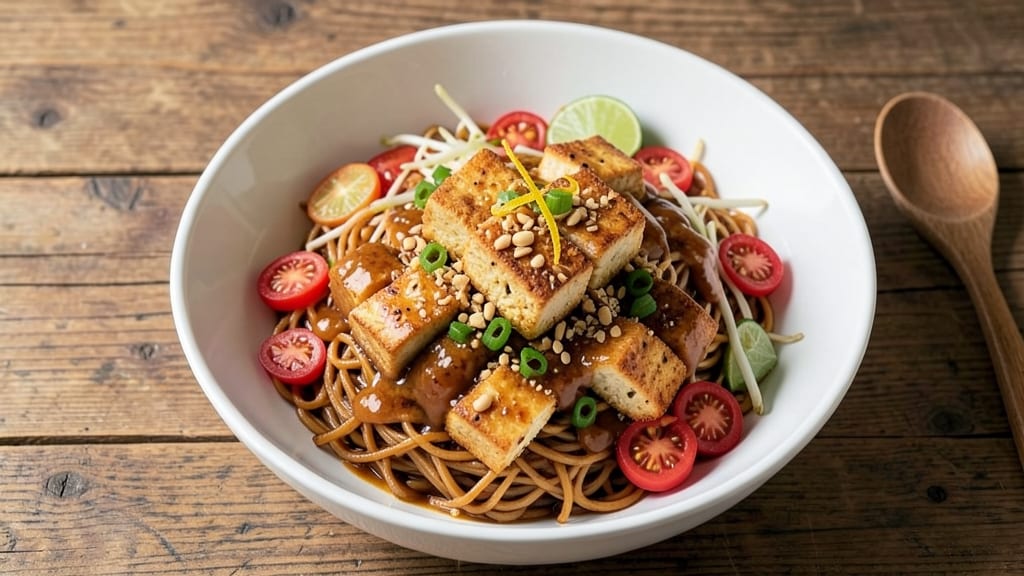
This brown rice Pad Thai noodles recipe delivers all the tangy, nutty, and umami-packed flavors of classic Thai street food—just with a healthier twist using chewy brown rice noodles.
The key is balancing tamarind's signature sourness with toasted peanuts and lime, creating a dish that's restaurant-quality but ready in 30 minutes. I've perfected this vegetarian version by omitting fish sauce and using coconut aminos for depth without sacrificing authenticity.
What sets this recipe apart is the textural contrast: perfectly chewy brown rice noodles, crisp-tender bean sprouts, silky tofu, and crunchy peanuts all tossed in a sauce that's sticky-sweet with a bright, zesty finish.
The lime zest and chili flakes add that signature Thai "zing" that keeps every bite exciting. Whether you're meal prepping for the week or whipping up dinner, this dish proves healthy eating can be bold and flavorful.
Ingredients for brown rice pad thai noodles
Chewy brown rice noodles, silky tofu, and vibrant Thai-inspired flavors come together for a restaurant-quality dish.
| Ingredient | Amount | Notes |
|---|---|---|
| Brown Rice Pad Thai Noodles 🍜 | 8 oz | Dried, uncooked, 3-inch width |
| Extra-Firm Tofu 🧇 | 1 lb | Pressed, cubed into 1-inch pieces |
| Bean Sprouts 🌱 | 3 cups | Fresh, rinsed and drained |
| Crushed Peanuts 🥜 | ½ cup | Toasted, unsalted |
| Green Onions 🧅 | 4 whole | Thinly sliced, white and green parts |
| Lime 🍋 | 2 whole | Zest and juice, seeds removed |
| Tamarind Paste 🍈 | 3 tbsp | Unadulterated, 100% pure |
| Coconut Aminos 🥫 | ¼ cup | For umami depth |
| Maple Syrup 🍁 | 2 tbsp | Grade B for richer flavor |
| Sesame Oil 🫒 | 1 tbsp | Toasted, for aroma |
| Garlic Cloves 🧄 | 4 cloves | Minced, fresh |
| Red Chili Flakes 🌶️ | 1 tbsp | Adjust to taste |
| Vegetable Oil 🫒 | 2 tbsp | High smoke point |
| Diamond Crystal Kosher Salt 🧂 | ½ tsp | For seasoning |
| Black Pepper 🌶️ | ¼ tsp | Freshly ground |
The brown rice noodles are the foundation—look for 3-inch wide, uncooked strands at Asian markets or the international aisle of Whole Foods. Brands like Rice Noodle Co. deliver consistent texture, but any organic brown rice noodle works. Soak them in warm water for 10-12 minutes until pliable but still slightly firm; over-soaking turns them mushy. For the tofu, press it between paper towels for 20 minutes to remove excess water—this ensures crisp edges when searing. Trader Joe's sells pre-pressed blocks, saving time without sacrificing texture.
No tamarind paste? Substitute 3 tbsp lime juice plus 1 tbsp brown sugar for sourness, though the depth won’t be identical. Coconut aminos are non-negotiable for that savory umami—Thai Kitchen or Annie Chun’s brands work well, but avoid soy sauce (it’s too salty). For heat, red pepper flakes are easiest, but fresh Thai chilies (muddled into the sauce) add complexity. The peanuts should be toasted until golden—skip the pre-salted kind unless you’re adjusting the overall salt later. Swap maple syrup for agave nectar if preferred, but Grade B maple has a caramel note that mimics traditional Pad Thai sweetness.
Store cooked noodles in an airtight container for 3-4 days in the fridge, though texture degrades after day 2. The sauce keeps 5 days separately—reheat gently to preserve tamarind’s tang. For meal prep, portion toppings (peanuts, sprouts, lime) in small containers to keep everything crisp. Freeze the sauce alone for up to 3 months; thaw overnight in the fridge before using. The tofu reheats well but loses crispness—best served fresh or pan-seared just before eating.
Why You'll Love This Recipe
- Noodles in Minutes: The brown rice noodles cook faster than you can chop the tofu—no soaking, no fuss. Just toss them in boiling water for 2-3 minutes, and they’re al dente. Honestly, that’s half the battle won before you even start the sauce.
- Crunchy-Creamy Magic: That first bite of crispy tofu meets the tangy, slightly sweet sauce—it’s the kind of contrast that makes you pause mid-chew. The crushed peanuts add a nutty punch, while the bean sprouts bring freshness that cuts through everything.
- Lunchbox Hero: Pack this for work or school—it holds up better than takeout and actually tastes good cold. My kids’ favorite? The extra peanuts on top because, well, they’re kids. Plus, it’s the one meal I can prep ahead and still feel like I’m serving something special.
- Budget-Friendly Powerhouse: Tofu and brown rice noodles stretch for days—this recipe feeds four for under $10. Between us, I’ve made it three times this month, and the leftovers? Even better the second day. (Yes, even on a Tuesday night.)
Step-by-step instructions for brown rice Pad Thai noodles
Here's how to craft a vibrant, gluten-free Pad Thai with perfect texture and balanced flavors.
Prepare the Tofu and Aromatics
Press the 1 lb extra-firm tofu for 15 minutes between two heavy plates to remove excess moisture. Cut it into 1-inch cubes and set aside. In a small bowl, combine the 3 tbsp tamarind paste, 0.25 cup coconut aminos, 2 tbsp maple syrup, 1 tbsp red chili flakes, 0.5 tsp Diamond Crystal kosher salt, and 0.25 tsp black pepper. Whisk until fully dissolved—this will be your signature sauce.
Heat 2 tbsp vegetable oil in a large wok or skillet over medium-high heat. Add the tofu cubes in a single layer and cook for 4-5 minutes, turning occasionally, until golden brown and crispy on all sides. Remove the tofu and set aside. In the same pan, add the 4 cloves minced garlic and cook for 30 seconds until fragrant. Immediately add 1 tbsp sesame oil and stir for 10 seconds—this preserves the oil's delicate aroma.
Cook the Noodles and Assemble the Base
Bring a large pot of water to a rolling boil. Add the 8 oz brown rice Pad Thai noodles and cook for 4-5 minutes until al dente—they should still have a slight bite. Drain immediately and rinse under cold water for 10 seconds to stop the cooking process. Toss the noodles with 1 tbsp vegetable oil to prevent sticking.
Return the wok to medium heat and add the prepared sauce mixture. Let it simmer for 2 minutes until slightly thickened. Add the cooked noodles and tofu back to the wok, tossing gently to coat everything evenly in the sauce. The noodles should absorb the sauce while maintaining their texture—this is where the magic happens.
Finish with Fresh Elements and Garnish
Add the 3 cups bean sprouts and 4 whole sliced green onions to the wok. Stir-fry for 1-2 minutes until the bean sprouts turn bright green and slightly wilted. The green onions should soften but retain their vibrant color. Remove the wok from heat and let it rest for 1 minute—this allows the flavors to meld without overcooking the delicate sprouts.
Zest and juice the 2 whole limes and divide the zest among the plates. Squeeze the juice over the noodles and toss gently. Sprinkle with the 0.5 cup crushed peanuts and any remaining green onions. Serve immediately while the noodles are warm and the peanuts are still crisp. The lime juice will brighten the dish, balancing the rich, savory sauce.
Pro Tips For Making Brown Rice Pad Thai Noodles
- SOAK NOODLES 15 MINUTES: Brown rice noodles are finicky—dry them out, and they turn to sawdust. Toss them in warm water for 15 minutes before cooking, then drain and rinse with cold water. This keeps them chewy without mush, especially when stir-frying with tofu and tamarind sauce.
- PRESS TOFU HARDER: Extra-firm tofu still holds water, and soggy tofu ruins pad thai. Wrap it in a towel, place a heavy pan on top, and let it sit for 10 minutes. The firmer it is, the better it holds up to the sauce and stir-fry—no more rubbery bites.
- STIR-FRY IN BATCHES: Crowd the pan, and the noodles steam instead of sear. Cook half the noodles first, then remove them to a plate before adding the tofu and veggies. This keeps everything crisp-tender, not limp, and lets the flavors meld properly.
- TOAST PEANUTS FIRST: Store-bought crushed peanuts taste bland because they’re stale. Toss them in a dry pan over medium heat for 2-3 minutes until fragrant—just until they smell nutty, not burnt. Sprinkle them over the dish at the end, and they’ll add real crunch instead of a sad, dry texture.
Wine and beer pairings for this brown rice pad thai noodles
Thai-Inspired White Wines
For this vibrant dish, I reach for Thai-inspired white wines that complement the tamarind's tang and peanut crunch. A crisp Riesling from Germany—like Dr. Loosen Blue Slate—cuts through the richness with its bright acidity and honeyed notes.
The slight sweetness mirrors the maple syrup in the sauce, while the citrus undertones echo the lime finish. Serve it slightly chilled (45-50°F) to preserve its refreshing qualities. 🍷
Light Lager Pairings
A Thai lager like Singha or Chang is my go-to beer match—its light body and subtle malt sweetness won’t overpower the dish. The effervescence cleanses your palate between bites, while the mild hop bit balances the tamarind’s sourness.
For a local twist, try Blue Moon Wheat Beer—its citrus notes and smooth finish mirror the lime zest. Keep it ice-cold (38-42°F) to enhance its crispness.
Rosé for Balance
If you prefer red, a dry rosé like Whispering Angel (from Provence) bridges the gap between wine and beer pairings. Its strawberry and citrus flavors harmonize with the tamarind and lime, while its acidity keeps the dish feeling fresh.
Opt for a Provence rosé—they’re typically bone-dry and food-friendly. Serve at 50-55°F to let its floral notes shine.
Non-Alcoholic Options
For a mocktail, I blend sparkling limeade with a splash of coconut water—the effervescence mimics beer’s crispness, while the lime amplifies the dish’s zing. Add a pinch of red chili flakes for heat, just like in the recipe.
For a nutty twist, stir in 1 tsp peanut butter (trust me, it works!). Serve over ice with a lime wheel garnish. ✨
Pro Pairing Tips
Always chill your wine or beer before serving—Pad Thai’s bold flavors need a cool counterpoint. Pour 5-6 oz of wine or 12 oz of beer per serving to avoid overwhelming the dish.
If using rosé, decant it for 10 minutes to open its aromas. For beer, avoid IPAs—they’ll clash with the tamarind’s sourness. 💡
Nutrition facts
Frequently asked questions
Why use brown rice noodles instead of white rice noodles?
Brown rice noodles offer 30% more fiber and a nutty flavor that pairs perfectly with the toasted peanuts and tamarind sauce. They also have a chewier texture that holds up better to stir-frying, making them ideal for this dish. Plus, they're naturally gluten-free and lower on the glycemic index than white rice noodles.
Can I make this Pad Thai vegan?
Simply replace the coconut aminos with 1 tbsp soy sauce plus 1 tsp miso paste for extra umami. For the tofu, use extra-firm organic tofu (or tempeh for more texture) and ensure your tamarind paste is vegan. The original recipe is already vegetarian-friendly without fish sauce.
How do I prevent the noodles from turning mushy?
Cook the brown rice noodles for only 4-5 minutes (they're pre-cooked) and rinse them immediately in cold water to stop cooking. Toss them with 1 tbsp oil right after draining to prevent sticking. Never over-soak them—this is the #1 cause of mushy texture. For extra insurance, cook them in a smaller pot of boiling water.
What's the best way to store leftovers?
Store the cooked noodles in an airtight container for up to 3 days in the fridge, but eat within 2 days for best texture. Keep the sauce separate—it lasts 5 days. Reheat gently in a pan with a splash of water to prevent drying. For meal prep, portion toppings (peanuts, sprouts, lime) separately to keep everything crisp.
Can I use regular peanuts instead of crushed?
While you can use whole peanuts, crushed peanuts add better texture contrast and distribute flavor more evenly. If you only have whole peanuts, lightly toast them first, then roughly chop them with a knife. For extra crunch, pulse them in a food processor for 3-4 seconds—just don't over-process or they'll turn into peanut butter!