
Main Courses
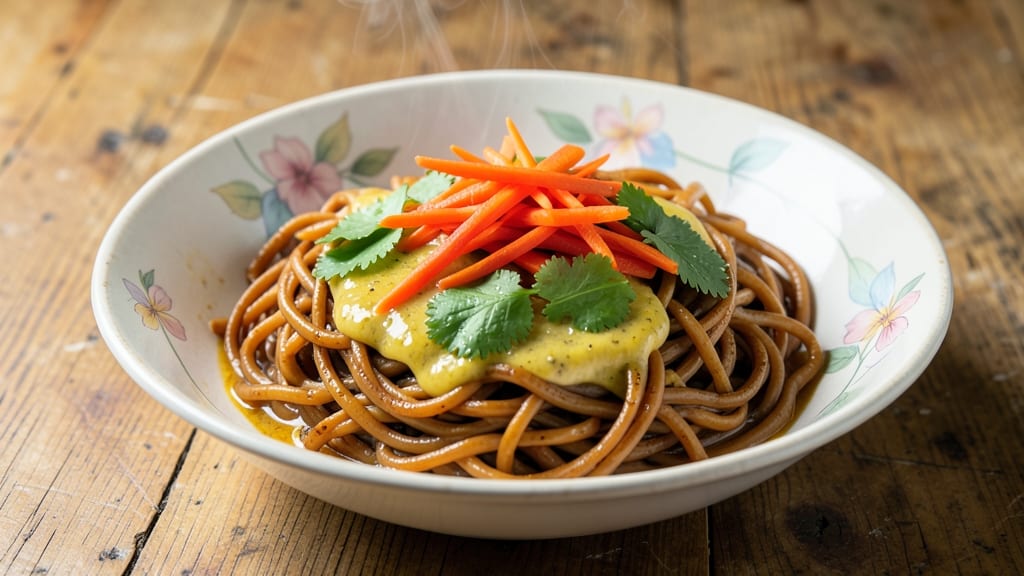
This vegetarian brown rice noodles recipe transforms simple ingredients into a vibrant, umami-rich dish that balances earthy turmeric and creamy coconut. The key lies in perfectly cooked noodles—al dente yet tender—that soak up the aromatic sauce without losing their structure.
I developed this recipe after discovering how brown rice noodles elevate Southeast Asian flavors while keeping meals light yet satisfying.
What makes this dish special is the harmony of flavors: golden turmeric adds warmth, coconut milk brings richness, and a touch of fish sauce (or vegetarian alternative) delivers that essential umami depth.
The technique is straightforward—boil the noodles just right, then toss them with a quick stir-fry of vegetables and a velvety sauce that clings beautifully. Serve it over a bed of fresh herbs or with a sprinkle of crushed peanuts for texture.
Ingredients for brown rice noodles recipe vegetarian
Golden turmeric and creamy coconut milk transform simple ingredients into a vibrant vegetarian noodle dish.
| Ingredient | Amount | Notes |
|---|---|---|
| Brown Rice Noodles 🍜 | 8 oz | Dried, rice variety preferred |
| Light Coconut Milk 🥥 | 1 cup | Full-fat for creamier texture |
| Vegetarian Fish Sauce 🍶 | 1 tbsp | Or soy sauce for umami |
| Fresh Turmeric 🌿 | 1 tbsp | Grated or powdered substitute |
| Lime Juice 🍋 | 2 tbsp | Freshly squeezed preferred |
| Carrots 🥕 | 1 medium | Julienned into matchsticks |
| Red Bell Pepper 🌶️ | 1 medium | Thinly sliced for texture |
| Garlic Cloves 🧄 | 4 cloves | Minced for aromatic base |
| Fresh Ginger 🌿 | 1 tbsp | Grated, or powdered substitute |
| Crushed Peanuts 🥜 | ¼ cup | Toasted for extra flavor |
| Fresh Cilantro 🌿 | ¼ cup | Chopped, for garnish |
| Vegetable Oil 🫒 | 1 tbsp | For stir-frying |
| Diamond Crystal Kosher Salt 🧂 | ½ tsp | For seasoning |
| Black Pepper 🌶️ | ¼ tsp | Freshly ground |
The brown rice noodles are the foundation—look for thin, rice variety at Asian markets or specialty grocery stores like Whole Foods. Fresh turmeric has more vibrant color and flavor than powdered, but if you prefer convenience, Simply Organic turmeric powder works beautifully. For the coconut milk, full-fat creates a richer sauce, though light coconut milk still delivers that essential creaminess. The vegetarian fish sauce (like Red Boat brand) is a game-changer for umami depth without any animal products.
No fresh turmeric? Powdered turmeric at half the amount works in a pinch, though the color will be slightly muted. Substituting soy sauce for the vegetarian fish sauce is perfectly acceptable—just reduce the amount slightly since soy sauce is saltier. The carrots and bell pepper can be swapped for any crunchy vegetable you prefer—jicama or snap peas add a nice contrast. For the peanuts, raw or dry-roasted both work, but toasting them briefly in a dry pan enhances their flavor. If you're short on time, pre-sliced frozen stir-fry vegetables save prep work without sacrificing texture.
The noodles cook in about 3-4 minutes—they should be al dente with a slight bite. Store any leftovers in an airtight container in the fridge for up to 3 days, though the sauce thickens slightly when reheated. For longer storage, freeze portions for up to 3 months. The sauce can be made ahead and stored separately, then combined with cooked noodles just before serving. Garnish with fresh cilantro and crushed peanuts right before eating to preserve their freshness.
Why You'll Love This Recipe
- No-Soaking Needed: I just rinse the brown rice noodles under cold water, toss them in boiling water for 3 minutes, and they’re done. No waiting, no fuss—just perfect al dente texture every time.
- Umami Magic: That vegetarian fish sauce and fresh turmeric? It’s the secret weapon here. The sauce adds this deep, savory punch while the turmeric gives it a warm, golden glow—like a hug in a bowl.
- Leftover Hero: This dish actually tastes better the next day. The noodles soften just right, the coconut milk gets even creamier, and I’ve reheated it three times for lunch without a single complaint.
- Budget Bright Spot: Brown rice noodles cost pennies, coconut milk stretches far, and a little lime juice goes a long way. Honestly, I’ve made this for under $5 per serving—and my picky roommate still asks for seconds.
Step-by-step instructions for vibrant turmeric coconut noodles
This method delivers restaurant-quality texture and depth using simple techniques.
Prepare the Aromatic Base
Heat the 1 tablespoon vegetable oil in a large wok or skillet over medium-high heat until shimmering. Add the 4 cloves minced garlic cloves and 1 tablespoon grated fresh ginger, cooking for 30 seconds until fragrant but not browned. The aroma should fill your kitchen—this is your flavor foundation.
Add the 1 tablespoon fresh turmeric and stir for 10 seconds to release its earthy notes. Immediately pour in the 1 tablespoon vegetarian fish sauce and 2 tablespoons lime juice, stirring constantly. This creates your umami-bright base that will carry through the entire dish. Keep the heat at medium-high throughout this process to maintain flavor development.
Stir-Fry the Vegetables
Add the 1 medium julienned carrot and 1 medium thinly sliced red bell pepper to the wok. Stir-fry for 3-4 minutes until the carrots soften slightly but maintain their texture—you want them to stay crisp-tender, not mushy. The bell pepper should develop a slight char on the edges, adding depth to the dish.
Season with the 0.5 teaspoon diamond crystal kosher salt and 0.25 teaspoon black pepper while cooking. Taste the vegetables at this stage—they should be vibrant and slightly sweet with a hint of acidity from the lime. If they need more brightness, add another ½ teaspoon lime juice. Remove the vegetables from the wok and set aside temporarily.
Cook the Noodles Al Dente
Bring a large pot of water to a rolling boil and add the 8 ounces brown rice noodles. Cook according to package instructions, but remove them 1 minute before they're fully tender—they'll finish cooking in the sauce. Drain immediately and rinse briefly under cold water to stop the cooking process and remove excess starch.
This al dente technique is crucial—undercooked noodles absorb sauce beautifully while maintaining their bite. The noodles should be pliable but still offer slight resistance when bitten. Work quickly now as they'll continue to soften while you assemble the dish. Toss the drained noodles with 1 tablespoon vegetable oil to prevent sticking.
Combine and Finish the Sauce
Return the cooked vegetables to the wok and add the drained noodles, tossing gently to combine. Pour in the 1 cup light coconut milk and stir vigorously for 1-2 minutes until the noodles are fully coated and the sauce thickens slightly. The coconut milk should create a silky texture that binds everything together.
Here's where the dish comes together: the turmeric's earthiness, the coconut's creaminess, and the umami from the fish sauce create a harmonious balance. Taste and adjust seasoning—you might need another ½ teaspoon lime juice or a pinch of salt to perfect the flavor profile. The sauce should cling to the noodles without being overly watery.
Garnish and Serve Immediately
Transfer the noodles to serving bowls and top with the 0.25 cup crushed peanuts and 0.25 cup chopped fresh cilantro. The peanuts add a satisfying crunch contrast to the soft noodles, while the cilantro brightens the dish with freshness. Serve immediately while the noodles are hot and the flavors are at their peak intensity.
Each bite should deliver the vibrant turmeric color, coconut creaminess, and umami depth from the fish sauce. The texture contrast between the crisp vegetables, soft noodles, and crunchy peanuts makes this dish particularly satisfying. For best results, serve with lime wedges on the side so everyone can adjust the brightness to their preference.
Pro Tips For Making Brown Rice Noodles Recipe Vegetarian
- SOAK NOODLES SEPARATELY: DESCRIPTION: If you’re using dried brown rice noodles, don’t toss them straight into the hot broth—they’ll clump like overworked dough. Instead, soak them in warm water (not boiling) for 5–7 minutes first, then drain and rinse with cold water. This keeps them distinct and prevents a mushy mess, especially when you’re adding coconut milk later.
- GRATE TURMERIC FRESH: DESCRIPTION: Store-bought turmeric powder lacks the bright punch of fresh. Use a microplane to zest about 1 teaspoon of fresh turmeric (the orange part only) for a vibrant color and deeper flavor—it blends seamlessly into the coconut milk base without overpowering. Skip the dried stuff if you want that restaurant-quality hue.
- TEMPER THE COCONUT MILK: DESCRIPTION: Light coconut milk curdles like a jealous ex if you dump it straight into a hot pan. Warm it gently first—heat 1–2 tablespoons of broth or water in the same pot, then whisk in the coconut milk slowly while stirring constantly. This keeps the sauce silky, not lumpy.
- TIGHTEN THE LIME LAST: DESCRIPTION: Add lime juice only after everything else is off the heat. The acid cuts through the richness of the coconut milk and softens the turmeric’s bite, but if you add it too early, the noodles will turn rubbery. A squeeze at the end brightens the whole dish without wrecking the texture. (Yes, even if you’re impatient like me.)
Pro cooking tips for this recipe
Noodle Cooking Mastery
Brown rice noodles require precise timing—cook them 1 minute less than package instructions suggest. They finish cooking in the sauce while absorbing flavors beautifully. I like to rinse them briefly in cold water after draining to remove excess starch, which prevents clumping and helps the sauce cling perfectly. 🍜
Sauce Thickness Control
For the perfect sauce consistency, start with light coconut milk and adjust thickness by simmering uncovered for 1-2 minutes if needed. If the sauce seems too thin, stir in ½ teaspoon cornstarch mixed with 1 teaspoon water until glossy.
The sauce should coat the noodles without being watery—this is where the magic happens. 🥥
Vegetable Prep Secrets
Julienne the carrots ½-inch wide for even cooking, and slice the bell pepper thinly to ensure quick charring. I recommend prepping all vegetables before cooking—this keeps your stir-fry moving at a brisk pace. The key is high heat to develop caramelized edges while maintaining crisp-tender texture. 🥕
Umami Depth Hacks
For extra umami without fish sauce, add 1 teaspoon miso paste or ½ teaspoon soy sauce to the aromatic base. If using powdered turmeric, toast it lightly in a dry pan for 30 seconds to deepen its flavor. These small tweaks elevate the dish from good to restaurant-quality. 🌶️
Equipment Upgrades
A carbon steel wok is ideal for stir-frying, but a heavy stainless steel skillet works too. Invest in a microplane for garlic and ginger—it creates finer textures that dissolve beautifully into the sauce. I also recommend a fine-mesh strainer for rinsing noodles efficiently. 🔥
Flavor Balancing
Taste as you go! The sauce should balance sweet (carrots), sour (lime), salty (fish sauce), and umami (turmeric). If it's too acidic, add a pinch of sugar; if too bland, a splash more fish sauce. The goal is harmony—each bite should sing with layered flavors. ✨
Nutrition facts
Frequently asked questions
Can I substitute white rice noodles for brown rice noodles?
While you can use white rice noodles, brown rice noodles offer a nuttier flavor and higher fiber content. For the best texture, choose thin brown rice noodles and cook them 1 minute less than white noodles since they're denser. The recipe's earthy turmeric and coconut flavors complement brown rice noodles perfectly, but white noodles will work in a pinch.
How do I make this dish gluten-free?
This recipe is naturally gluten-free if you use certified gluten-free brown rice noodles and verify your other ingredients. Double-check that your vegetarian fish sauce and soy sauce substitute (if used) are gluten-free. The coconut milk, vegetables, and spices are all safe. Always read labels carefully, as some brands may process ingredients in gluten-containing facilities.
What's the best way to store leftovers?
Store leftovers in an airtight container in the fridge for up to 3 days. The sauce may thicken slightly when reheated, so add a splash of water or coconut milk to restore creaminess. For longer storage, freeze portions for up to 3 months. Reheat gently on low heat with a splash of water to prevent drying out the noodles.
Can I make this recipe without coconut milk?
Yes! For a dairy-free alternative, use cashew cream (blend soaked cashews with water) or unsweetened almond milk with 1 teaspoon coconut oil for richness. The dish will still be flavorful, though coconut milk's natural creaminess is ideal. If avoiding nuts entirely, try a light vegetable broth with a splash of tahini for depth.
Why did my noodles turn mushy?
Overcooking is the most common cause. Brown rice noodles should be al dente—remove them 1 minute before package instructions say. Also, avoid rinsing with cold water for too long, which can break down the noodles. For extra insurance, cook them in salted water (like pasta) to help maintain structure.