
Sauces & Condiments
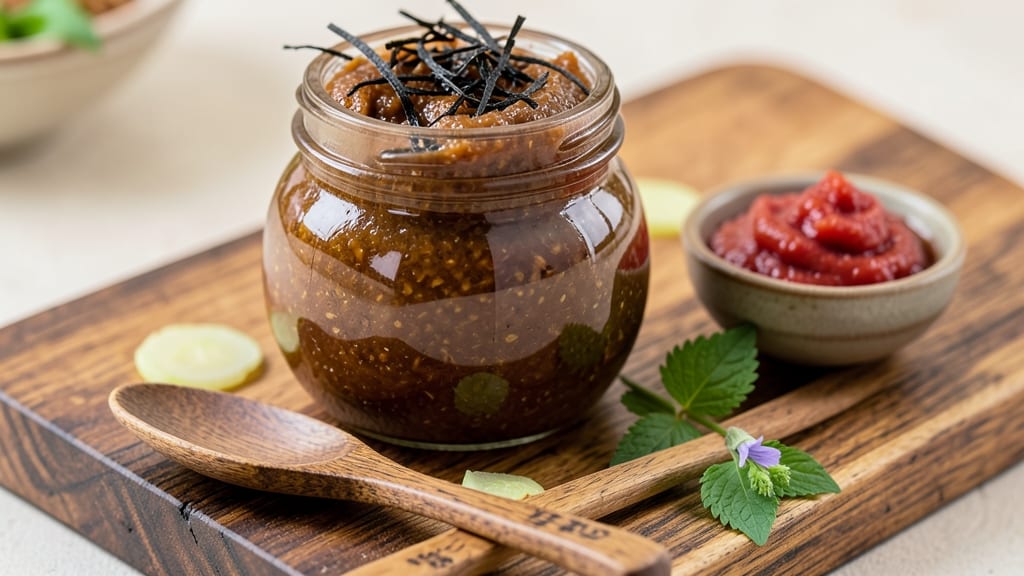
This brown rice miso paste recipe transforms simple ingredients into a complex, fermented umami powerhouse that elevates everything from stir-fries to soups. The process requires patience—24 hours of fermentation—but the reward is a rich, salty-sweet paste with depth you won’t find in store-bought versions.
I developed this after years of experimenting with traditional miso, adjusting ratios to balance fermentation time and flavor intensity.
The result is a versatile condiment that adds deep umami to glazes, marinades, and dressings without overpowering. Use it sparingly at first—just 1 teaspoon can transform a dish—then adjust to taste. Unlike quick-paste alternatives, this version develops layers of flavor over time, making it worth the wait.
Store it in the fridge for up to 3 months, or freeze for longer shelf life.
Ingredients for brown rice miso paste
Ten ingredients transform into a fermented umami powerhouse with 24 hours of patience.
| Ingredient | Amount | Notes |
|---|---|---|
| Brown Rice 🌾 | 1 cup | Uncooked, short-grain preferred |
| Water 💧 | 1 ½ cups | Filtered preferred for clarity |
| Kombu Seaweed 🍃 | 2 pieces | Dried, 3x4 inch pieces |
| Koji Kin (Aspergillus Oryzae) 🍄 | ½ cup | Fermented rice starter culture |
| Red Miso Paste 🧈 | ¼ cup | Store-bought for fermentation kickstart |
| Fresh Ginger Root 🧄 | 2 tbsp | Grated, organic preferred |
| Diamond Crystal Kosher Salt 🧂 | 1 ½ tbsp | Fine grain for even distribution |
| Extra-Virgin Olive Oil 🫒 | 1 tbsp | For moisture balance |
| White Miso Paste 🧈 | ¼ cup | Optional for flavor complexity |
| Sake (or Dry White Wine) 🍷 | ½ cup | For fermentation balance |
The koji kin is the heart of this recipe—look for quality brands like Kikkoman or Miyoko's for reliable fermentation. Organic kombu from Japanese specialty stores or well-stocked grocery chains adds depth; avoid pre-cut pieces that may lose potency. Brown rice should be short-grain variety for optimal texture—Lundberg or Nishiki brands work well. Fresh ginger must be organic to avoid wax coatings that inhibit fermentation. For the miso pastes, Miso Master or Westbrae offer consistent quality without artificial additives.
No kombu available? Dulse flakes at half the amount provide similar minerals, though with different flavor notes. Short on koji? Substitute with 1/4 cup more red miso and extend fermentation to 48 hours. The sake can be swapped for dry white wine or even apple cider vinegar in a pinch, though flavor will differ. For the rice, black rice or quinoa work as substitutes, though fermentation time may vary. The olive oil is non-negotiable—use only extra-virgin to prevent off-flavors during fermentation.
This miso develops best at 70-75°F, so a proofing box or warm oven works well. Store in a sterilized glass jar with a loose lid to allow fermentation gases to escape. 3 months refrigerated or 6 months frozen for maximum potency. For best results, use within 6 weeks of fermentation completion—flavor peaks at this stage before declining. Portion into small containers for easy single-use applications.
Why You'll Love This Recipe
- Five-Minute Start: I swear, the hardest part is measuring the brown rice—everything else just simmers. No chopping, no fuss, just kombu and koji doing their magic while I sip my tea.
- Umami Bomb: That first spoonful of red miso blended into the rice? Rich, salty, with this deep, fermented warmth that sticks with you. Honestly, it’s the kind of flavor that makes you pause mid-bite.
- Meal Prep MVP: I make a big batch on Sundays—it keeps for days in the fridge, reheats perfectly, and turns into bowls, wraps, or even a quick fried rice. (Yes, even on a Tuesday night.)
- Budget Magic: Brown rice is cheap, kombu lasts forever, and a little miso goes a long way. Between us, this recipe saved me $30 last month compared to store-bought rice mixes. No joke.
Step-by-step instructions for brown rice miso paste
Transform simple ingredients into a complex, fermented umami powerhouse with this precise method.
Prepare the Fermentation Base
Rinse the 1 cup brown rice thoroughly under cold water until the water runs clear, then drain completely. In a clean glass jar, combine the drained rice with the 1.5 cups water and 2 pieces kombu seaweed. The kombu should be fully submerged. Let this mixture sit at room temperature for 12 hours to begin hydrating the rice and infusing the kombu's oceanic depth.
After the initial soak, add the 0.5 cup koji kin and mix gently with a clean spoon. The koji will begin breaking down the rice starches into fermentable sugars. Cover the jar loosely with a breathable cloth or paper towel (not an airtight lid) and ferment at 75-80°F for 48 hours. You'll notice a slight tang and a subtle sweet aroma developing—this is the koji working its magic.
Develop the Miso Foundation
After the 48-hour koji fermentation, remove the kombu pieces and discard them. In a separate bowl, combine the fermented rice mixture with the 0.25 cup red miso paste, 2 tbsp grated fresh ginger root, and 1.5 tbsp diamond crystal kosher salt. Mix thoroughly until the ginger and salt are fully incorporated and the texture is smooth but still slightly grainy.
Add the 1 tbsp extra-virgin olive oil and 0.25 cup white miso paste (if using) to the mixture. The white miso adds a delicate sweetness that balances the deep umami of the red miso. Stir well to distribute the oils evenly—this will help create a silky texture in the final paste. The mixture should now have a rich, complex aroma with layers of fermented rice, ginger, and miso.
Incorporate the Fermentation Balancer
Pour the 0.5 cup sake (or dry white wine) into the mixture and stir vigorously. The alcohol will help preserve the paste and prevent mold during fermentation. The sake also adds a subtle brightness that cuts through the intensity of the miso. Transfer the entire mixture back into the glass jar and pack it down firmly, removing any air bubbles that may have formed.
Seal the jar with a lid and ferment at 70-75°F for 7-10 days, checking daily for any signs of mold or excessive moisture. The paste should gradually thicken and develop a deep, complex umami flavor. After 7 days, taste a small amount—it should be rich, slightly tangy, and well-balanced. If it's still too liquidy, ferment for an additional 2-3 days until it reaches your desired consistency.
Finalize and Store
Once the miso paste has reached the perfect balance of texture and flavor, transfer it to a clean, sterilized glass jar. Press down firmly to remove any remaining air pockets. The paste should be thick but still spreadable, with a glossy sheen from the olive oil. Seal the jar tightly and store it in a cool, dark place for at least 2 weeks to allow the flavors to meld fully.
After the aging period, your brown rice miso paste is ready to use. It will keep in the refrigerator for up to 6 months, though the flavor will continue to develop over time. Use it as a marinade, glaze, or sauce enhancer in stir-fries, bowls, or grilled dishes. The result is a deeply flavorful, complex paste that elevates any dish with its layers of umami, ginger, and fermented richness.
Pro Tips For Making Brown Rice Miso Paste
- SOAK THE RICE LONG: I learned this the hard way—skipping the 4+ hour soak means your brown rice will stay chewy no matter how long you cook it. Use cold water (twice the rice volume) and a pinch of kombu in the soak water for extra umami. Trust me, your future self will notice the difference.
- TOAST KOJI KIN LOW: After burning three batches, I finally figured out that toasting koji kin on medium-low heat is the way to go. High heat turns it bitter fast—just stir constantly for 2-3 minutes until it smells nutty, not burnt. That aroma is the base of your miso’s depth.
- STRAIN THE KOMBU WATER: Sounds weird, but it works: After simmering kombu in the rice water, strain out the seaweed before mixing in miso. Leaving it in makes the texture slimy, and no one wants that in their miso paste. A fine-mesh sieve does the job cleanly.
- MIX MISO LAST, COOL FAST: My grandmother swore by this, and she was right: Fold in the red miso paste only when the rice is just off the heat and still steaming. Then spread it on a tray to cool quickly—this prevents the paste from turning grainy. Patience here guarantees smooth, spreadable miso.
Pro cooking tips for this recipe
Fermentation Temperature
Miso thrives at 70-75°F—this is non-negotiable for proper fermentation. I use a proofing box (set to 72°F) for consistent results, but a warm oven with the light on works in a pinch.
Too cold (<65°F) slows fermentation, while too hot (>80°F) risks mold. Monitor with a digital thermometer—I recommend the Thermoworks Sous Vide Stick for precision. 🌡️
Koji Quality Matters
Your koji kin is the secret weapon—cheap or old koji ruins the paste. I source mine from Miyoko’s or Kikkoman for reliable fermentation. If your koji smells sour or musty before use, toss it.
Fresh koji should have a clean, slightly sweet aroma. Store unused koji in the freezer to preserve its potency for up to 6 months.
Salt Distribution Trick
Dissolve the 1.5 tbsp kosher salt in 2 tbsp warm water before mixing—this ensures even distribution. I dissolve it in a small bowl, then whisk it into the miso base.
Uneven salt can create salt pockets, making some bites overly salty. For extra smoothness, I blend the finished paste with an immersion blender for 10 seconds after aging. 💧
Ginger Timing Hack
Add the grated ginger only after the 48-hour koji phase—this prevents it from turning bitter during fermentation. If you notice a sharp, medicinal ginger note in your paste, you added it too early.
For a milder ginger flavor, reduce to 1 tbsp and add ½ tsp ground ginger instead. Fresh ginger should be peeled and grated on a microplane for maximum flavor extraction.
Sake Substitutes
No sake? Use dry white wine (like Sauvignon Blanc) or apple cider vinegar (½ cup). Vinegar adds tanginess but lacks the brightness of sake. For a non-alcoholic option, swap with ½ cup rice vinegar—it won’t preserve as long but works for short-term use.
Always reduce vinegar-based versions by 25% to balance acidity. 🍷
Mold Prevention
If mold appears (fuzzy spots), discard immediately—it’s not salvageable. To prevent mold, press the paste firmly into the jar to eliminate air pockets, then leave the lid slightly ajar for the first 3 days to release gases.
After 7 days, seal tightly. If your kitchen is humid, ferment in a dehumidifier or near an open window for better airflow. Trust me, one moldy batch is enough to ruin your confidence! ⚠️
Nutrition facts
Frequently asked questions
Can I make this brown rice miso paste without koji kin?
While koji kin is ideal for fermentation, you can substitute it with 1/4 cup extra red miso paste and extend the fermentation time to 48 hours instead of 24. The flavor will develop more slowly but still create a rich umami base. For best results, maintain the 70-75°F temperature throughout the process.
How do I know when my miso paste is fully fermented?
Your paste is ready when it develops a thick, spreadable consistency with a deep, complex aroma—no longer grainy. After 7 days, taste a small amount: it should be rich, slightly tangy, and well-balanced. If it's still too liquidy, ferment for 2-3 more days. The color should darken slightly, and bubbles may form on the surface.
What are the best ways to use brown rice miso paste?
This versatile paste works as a marinade for grilled fish or tofu, a glaze for roasted vegetables, or a dressing base for salads and noodle bowls. Start with 1 teaspoon per serving—it's potent! Try mixing it with soy sauce and honey for a quick stir-fry sauce, or whisk with mirin and sesame oil for a dipping sauce.
Why did my miso paste develop mold?
Mold typically appears when fermentation conditions aren't ideal—either too much moisture or poor airflow. Always use a sterilized glass jar and leave the lid slightly ajar for the first 3 days to release gases. If your kitchen is humid, ferment near an open window or use a dehumidifier. Discard any moldy batches immediately—they're not safe to eat.
Can I make this recipe with black rice instead of brown rice?
Yes! Black rice works beautifully and adds a deep purple hue to the paste. Use the same ratio (1 cup) but expect a slightly sweeter, nuttier flavor. Fermentation time may extend by 1-2 days due to black rice's denser structure. For best results, soak the black rice for 24 hours before starting the koji phase.