
Main Courses
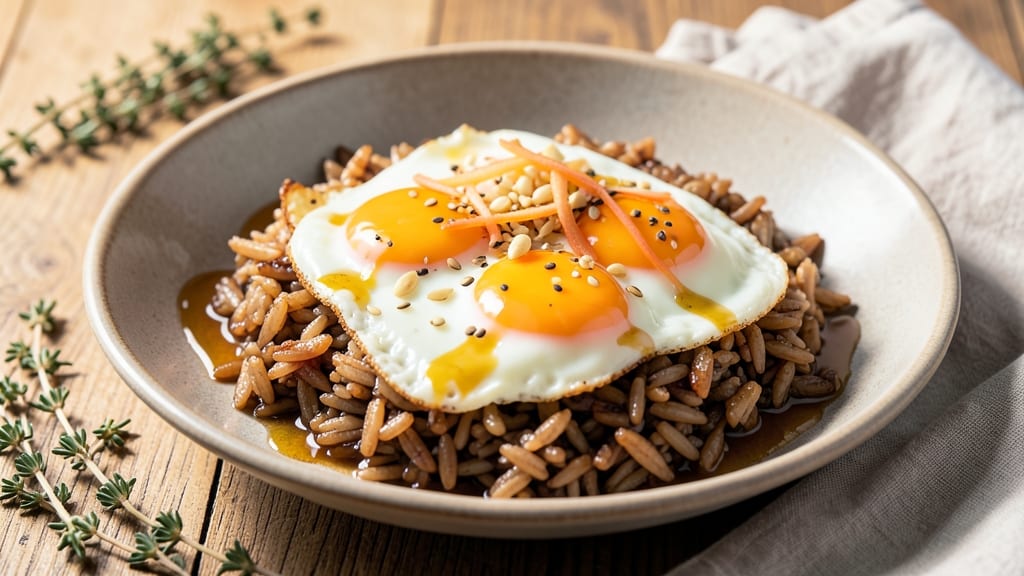
This brown rice and egg recipe transforms simple ingredients into a satisfying, protein-packed meal that’s ready in under 30 minutes. The secret lies in perfectly toasted grains with a nutty crunch and silky eggs—whether fried, scrambled, or poached—each bite delivers balanced texture and flavor.
I’ve refined this dish over years of testing, ensuring the rice stays firm yet tender while the eggs achieve that ideal runny yolk or crispy edge, depending on your preference.
What sets this dish apart is its versatility—pair it with sautéed greens, a drizzle of sesame oil, or a sprinkle of furikake for extra depth. The combination of fiber-rich brown rice and high-quality eggs makes it a nutritious, vegetarian-friendly option that feels indulgent without compromise.
Whether you’re meal prepping for the week or whipping up dinner in minutes, this recipe delivers restaurant-quality results with minimal effort.
Ingredients for brown rice and egg
Twelve ingredients combine to create a restaurant-quality vegetarian dish with nutty, toasted rice and silky eggs.
| Ingredient | Amount | Notes |
|---|---|---|
| Long-Grain Brown Rice 🌾 | 1 cup | Uncooked, rinsed thoroughly |
| Large Eggs 🥚 | 4 whole | Room temperature for even cooking |
| Extra-Virgin Olive Oil 🫒 | 2 tbsp | High-quality, fruity variety |
| Vegetable Broth 💧 | 1 ½ cups | Low-sodium preferred |
| Fresh Ginger 🌿 | 1 tbsp | Finely grated, aromatic |
| Garlic Cloves 🧄 | 3 cloves | Minced, fresh preferred |
| Sesame Oil 🫒 | 1 tsp | Toasted, for finishing |
| Diamond Crystal Kosher Salt 🧂 | 1 ½ tsp | Fine grain, adjust to taste |
| Black Peppercorns 🌶️ | ½ tsp | Freshly cracked |
| Sesame Seeds 🌰 | 1 tbsp | Toasted, for garnish |
| Furikake Seasoning 🌶️ | 1 tbsp | Optional, for umami depth |
| Baby Spinach 🌱 | 2 cups | Fresh, for serving |
| Lemon Wedges 🍋 | 2 whole | For serving |
The brown rice is the foundation—long-grain varieties like jasmine or basmati hold up best to toasting without turning mushy. For optimal texture, rinse it thoroughly before cooking to remove excess starch. Whole Foods or Trader Joe's carry high-quality organic options, but any well-marked brown rice will work. If you're short on time, pre-cooked rice from the Asian aisle (just heat and toast) can save 30 minutes, though fresh-cooked rice has superior texture. The key is toasting the rice until it develops that nutty aroma—this is where the flavor transformation happens.
Eggs should be fresh, preferably organic or pasture-raised for richer yolks and better texture. If you prefer scrambled eggs, beat them with a pinch of salt and a splash of milk for creaminess. For fried eggs, room-temperature eggs prevent cracking. Vegetable broth adds depth instead of water—Imagine or Pacific Foods brands are excellent choices. The furikake is optional but adds umami complexity; if unavailable, substitute with 1 tsp soy sauce plus 1 tsp toasted sesame seeds. Fresh ginger and garlic should be brightly colored and firm—avoid any with soft spots or mold. Toast the sesame seeds in a dry pan for 30 seconds to enhance their aroma before using.
Store cooked rice in an airtight container for up to 5 days in the fridge, though it's best enjoyed within 2 days for peak texture. Eggs should be refrigerated and used within 3 days of cooking for optimal freshness. Sesame oil and furikake keep for 6-12 months in a cool, dark place, while fresh herbs like ginger and garlic last 1 week in the fridge wrapped in damp paper towels. For meal prep, cook the rice and store separately from the eggs—reheat rice in a dry pan with a splash of water to restore crispness, then fry or scramble eggs fresh when ready to eat.
Why You'll Love This Recipe
- One-Pot Magic: I swear by this—just brown rice, eggs, and broth in one skillet. No separate pots, no extra dishes, and zero stress.
- Ginger Zing: That fresh ginger? It’s the secret weapon. Bright, warm, and just enough to wake up the rice and eggs without overpowering.
- Lunchbox Hero: Between us, this is my go-to for packed lunches. Cold or reheated, it’s solid—plus, the eggs keep it satisfying even hours later.
- Budget Buster: Brown rice and eggs are cheap, but this feels like a fancy meal. Honestly, I’ve fed four people for under $10 with leftovers that last.
Step-by-step instructions for savory toasted brown rice with silky eggs
Here's how to transform simple ingredients into a balanced, protein-rich dish with perfectly cooked grains and tender eggs.
Toast the Brown Rice for Enhanced Flavor
Heat the 2 tablespoons extra-virgin olive oil in a medium saucepan over medium-high heat. Add the 1 cup long-grain brown rice and stir constantly for 2-3 minutes until the grains become fragrant and develop a light golden color. This toasting step deepens the rice's nutty flavor and prevents mushiness during cooking.
Add the 1 tablespoon finely grated fresh ginger and 3 minced garlic cloves, stirring for another 30 seconds until the garlic becomes aromatic but doesn't brown. Immediately add the 1.5 cups vegetable broth and bring to a gentle boil. Then reduce heat to low, cover tightly with a lid, and simmer for 45 minutes. Don't peek or stir—the rice needs undisturbed cooking to develop its characteristic chewiness.
Prepare the Egg Mixture for Silky Texture
While the rice cooks, crack the 4 large eggs into a bowl and whisk vigorously with 1.5 teaspoons diamond crystal kosher salt and 0.5 teaspoon freshly cracked black peppercorns until the yolks and whites are completely combined. This ensures even cooking and prevents any rubbery egg texture. I like to use room temperature eggs—they're less likely to curdle when exposed to heat.
In a separate small bowl, combine 1 tablespoon furikake seasoning with 1 tablespoon toasted sesame seeds. This mixture will add umami depth and nutty crunch to our finished dish. Keep both mixtures nearby as we'll need them shortly.
Cook the Eggs in the Rice
Once the rice has finished cooking (it should be tender but still have a slight bite), remove it from heat and let it sit covered for 5 minutes. Then, using a fork, gently fluff the rice to separate the grains. Create four shallow wells in the rice and carefully crack one egg into each well. The residual heat from the rice will begin cooking the eggs immediately.
Cover the pan again and let it steam for 8-10 minutes until the egg whites are set but the yolks remain runny. This gentle cooking method creates silky, custard-like eggs that blend perfectly with the rice. If you prefer fully cooked eggs, increase the steaming time to 12 minutes but be careful not to overcook them.
Finish with Fresh Spinach and Garnishes
Transfer the rice and eggs to serving plates. In a separate skillet, heat 1 teaspoon sesame oil over medium heat and add the 2 cups baby spinach. Sauté for 1-2 minutes until just wilted—you want to preserve its vibrant color and crisp texture. Divide the spinach evenly among the plates.
Drizzle each serving with 1 teaspoon sesame oil and sprinkle with the furikake-sesame seed mixture. Serve immediately with the 2 lemon wedges on the side for a bright, acidic contrast. The combination of toasted rice, silky eggs, fresh greens, and nutty seasoning creates a harmonious balance of textures and flavors that's both satisfying and nutritious.
Pro Tips For Making Brown Rice And Egg
- TOAST THE RICE FIRST: Brown rice needs a head start. Dry-toast it in olive oil over medium heat for 3–4 minutes before adding broth—this breaks down the bran, cuts cooking time by 10 minutes, and prevents gummy rice. (Yes, even if it smells nutty. That’s the point.)
- GRATE GINGER FINE: Skip the mincer—use a microplane or fine grater for ginger. You want it almost paste-like so it dissolves into the broth instead of sitting in stubborn chunks. Trust me, your rice won’t taste like it’s hiding gingerroot.
- COLD EGGS WIN: Crack your eggs into a bowl first, then scramble them in the rice. Cold eggs cook more evenly and won’t turn rubbery from overstirring. Pro move: Add a splash of broth to the eggs before mixing—they’ll blend in smoother.
- SIMMER, DON’T BOIL: Once the rice is tender, switch to the lowest heat setting and let it steam under a lid for 5 minutes. This evens out the texture and lets the eggs absorb flavor without turning into a sad, dry mess. (I learned this after serving mushy rice to a crowd. Never again.)
Dietary considerations for brown rice and egg
Vegetarian Powerhouse
This dish delivers a complete vegetarian protein thanks to the combination of brown rice and eggs. Brown rice provides fiber and complex carbs, while eggs contribute all nine essential amino acids—making it a nutritionally balanced meal without meat.
The 4 large eggs supply 24 grams of protein, while the 1 cup brown rice adds 3.5 grams of fiber per serving. 💪
Gluten-Free Friendly
Naturally gluten-free, this recipe uses simple whole ingredients without any hidden gluten sources. The brown rice, eggs, and vegetable broth are all gluten-free staples, making it safe for those with celiac disease or gluten sensitivity.
Always check your furikake seasoning label—some brands contain wheat—opt for a rice-based furikake if needed.
Low-Carb Adaptation
For a lower-carb version, reduce the rice to ½ cup (cooked) and increase the eggs to 6 total. This keeps the dish high-protein while cutting carbs by nearly half.
The toasted sesame seeds and spinach add flavor without significant carbs, making it a great keto-friendly option when paired with extra greens.
Allergen Considerations
This recipe contains eggs, which are a common allergen. If avoiding eggs, try tofu or tempeh instead—they absorb flavors beautifully and can be marinated in the same ginger-garlic broth used for the rice.
For sesame allergies, skip the sesame oil and seeds, substituting with avocado oil and pumpkin seeds for garnish.
Meal Prep Potential
Cook the brown rice in bulk and store it in an airtight container for up to 5 days—it reheats perfectly when toasted in a dry pan. Keep eggs separate until ready to cook to maintain freshness.
This makes it an ideal meal prep dish for busy weeks, offering balanced nutrition without sacrificing flavor. ✨
Nutrient Boost Options
Add nutritional yeast (1 tbsp) for a cheesy, B-vitamin boost—it blends seamlessly with the rice. For extra iron, stir in chopped mushrooms when sautéing the spinach. Both additions enhance the dish’s health benefits while keeping it vegetarian and flavorful.
Nutrition facts
Frequently asked questions
Can I use white rice instead of brown rice in this recipe?
While you can substitute white rice, you'll lose the dish's nutritional benefits and nutty flavor profile. Brown rice takes about 45 minutes to cook (versus 20 minutes for white) but delivers 3.5g more fiber per serving. For a quicker version, use pre-cooked brown rice from the Asian aisle—just toast it in oil for 2-3 minutes before adding eggs to restore texture.
How do I get the eggs perfectly runny without overcooking them?
Use the 8-10 minute steaming method in the recipe—this ensures the whites set while yolks stay liquid. For extra insurance, place a lid slightly ajar during the last 2 minutes to allow steam to escape. If your eggs cook too fast, reduce heat to low and cover completely. The eggs should be just set when you lift them from the rice.
Can I make this dish ahead of time for meal prep?
Cook the brown rice in bulk and store it in an airtight container for up to 5 days. Keep eggs separate until ready to cook. When reheating, toast the rice in a dry pan for 2-3 minutes with a splash of water, then add fresh eggs cooked to your preference. The spinach should always be added fresh to maintain crispness.
What's the best way to adjust this recipe for one person?
Reduce to ½ cup brown rice and 1 egg, keeping all other ingredients proportional. Cook the rice in a small saucepan with ¾ cup broth and toast for 1-2 minutes before adding liquid. The same 8-10 minute steaming method works perfectly for a single serving—just use a smaller pan or cover the rice with a lid that fits snugly.
Why does my rice turn mushy when cooking with eggs?
This usually happens from overcooking or stirring too much. Brown rice needs undisturbed cooking—don't peek or stir during the 45-minute simmer. If using pre-cooked rice, toast it in oil until dry and fragrant before adding eggs. For extra firmness, use a 1:2 rice-to-liquid ratio (like in the recipe) and let it rest covered for 5 minutes after cooking before adding eggs.