
Main Courses
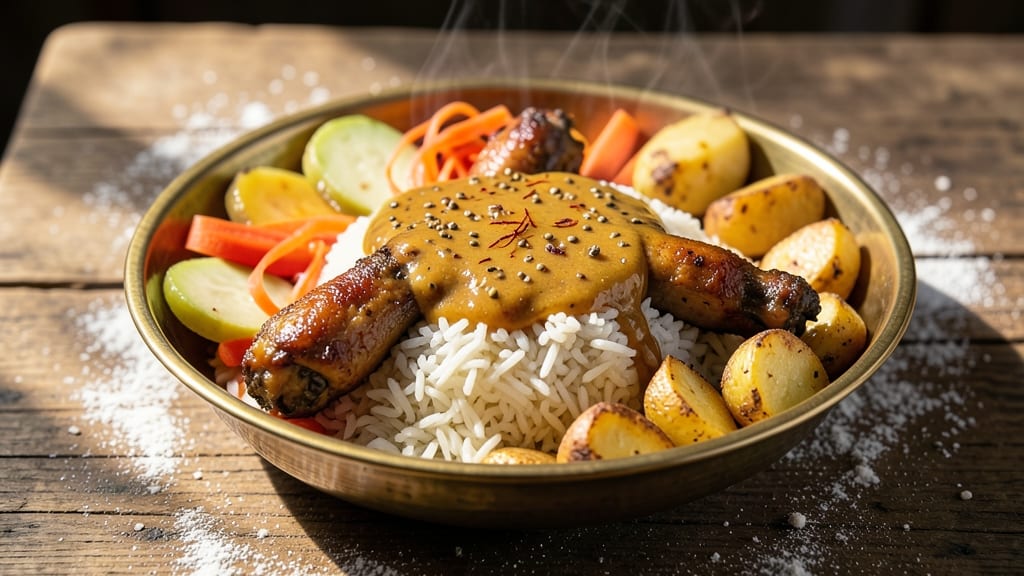
This brinji rice recipe in Tamil brings the soul of South Indian homes into your kitchen—fragrant, one-pot perfection with saffron-infused rice, tender vegetables, and a coconut-tempered finish.
The dish, traditionally served at festivals and family gatherings, marries simplicity with rich flavors, where every bite carries the essence of Tamil Nadu's culinary heritage.
What makes it special is its foolproof technique: rice and vegetables cook together, absorbing the aromatic spices and coconut milk into a cohesive, fragrant meal that requires minimal effort but maximum impact.
The magic lies in the layered flavors—saffron-dyed rice, crisp vegetables, and a coconut tempering that ties everything together with its nutty richness. This recipe stays true to tradition while adapting for modern kitchens, using simple ingredients like drumsticks, carrots, and potatoes to create a dish that's both comforting and celebratory.
Whether you're preparing for a special occasion or a weeknight dinner, this brinji rice delivers restaurant-quality results in a single pot, making it the ultimate one-pot wonder.
Ingredients for brinji rice recipe in tamil
Fragrant saffron rice, tender vegetables, and coconut milk create this Tamil Nadu specialty.
| Ingredient | Amount | Notes |
|---|---|---|
| Basmati Rice 🍚 | 1 cup | Unsoaked, long-grain preferred |
| Drumsticks 🍠 | 4 whole | Fresh, peeled, cut into chunks |
| Carrots 🥕 | 2 medium | Peeled, cut into bite-sized pieces |
| Potatoes 🥔 | 2 medium | Peeled, cut into bite-sized pieces |
| Coconut Milk 🥥 | 1 can (13.5 oz) | Full-fat for creaminess |
| Saffron Strands 🌼 | ⅛ tsp | Soaked in 2 tbsp warm water |
| Mustard Seeds 🌿 | ½ tsp | Toasted for aroma |
| Curry Leaves 🌿 | ¼ cup | Fresh, slightly crushed |
| Green Chilies 🌶️ | 3 whole | Slit lengthwise, seeds removed |
| Ginger 🧄 | 1 inch | Fresh, julienned |
| Garlic Cloves 🧄 | 5 cloves | Peeled, minced |
| Turmeric Powder 🌶️ | ½ tsp | Freshly ground preferred |
| Cumin Seeds 🌿 | ½ tsp | Toasted for depth |
| Salt 🧂 | 1 tsp | Adjust to taste |
| Ghee 🫒 | 2 tbsp | For tempering |
Saffron is the heart of this dish—look for vibrant red strands at Indian grocery stores like Patel Brothers or Apna Bazaar. The drumsticks should be firm and fresh, available at specialty markets or frozen sections. Carrots and potatoes need consistent size for even cooking; cut them into similar-sized pieces. Coconut milk should be full-fat for that rich, creamy texture—Aroy-D or Goya brands work perfectly. Fresh curry leaves are non-negotiable; dried won't give the same aromatic punch.
No fresh curry leaves? Dried leaves at one-third the amount work in a pinch, but the flavor will be subtler. Drumsticks unavailable? Substitute with eggplant or zucchini for a similar texture. For extra richness, add 1 tbsp cashew paste to the coconut milk. The saffron strands must soak in warm water for 10 minutes before adding to the rice—this ensures maximum color and flavor extraction. If your green chilies are spicy, remove seeds completely for a milder dish.
This dish tastes even better the next day as flavors meld. Store in an airtight container in the fridge for up to 3 days. For longer storage, freeze portions for up to 2 months. Reheat gently on low heat with a splash of water to restore moisture. The coconut milk can be substituted with 1 cup heavy cream for a lighter version, though tradition favors the coconut. Always prepare the tempering (ghee, mustard seeds, curry leaves) last—this seals in the flavors and adds that signature aroma.
Why You'll Love This Recipe
- One-Pot Magic: I swear by this—just toss everything into one pot, add water, and let it simmer. No fancy layers, no stressing over separate pans. The drumsticks and coconut milk melt into the rice naturally, turning it into a fragrant, cohesive dish with almost no effort.
- Coconut Cream Dream: That first spoonful of coconut milk-infused rice? Chef’s kiss. It’s rich but not heavy, with a subtle sweetness that balances the earthy drumsticks and the mild crunch of carrots. Honestly, it’s the kind of flavor that makes you pause mid-bite.
- Lunchbox Hero: Between us, this is my go-to for meal prep. The rice stays fluffy for days, and the veggies hold up perfectly—no soggy mess. Pack it in containers, and it’s a hearty, protein-packed lunch that even picky eaters won’t complain about.
- Budget Feast: Drumsticks are cheap, potatoes stretch forever, and coconut milk adds luxury without breaking the bank. I’ve made this for 6 people for under $10—filling, satisfying, and still feels like a treat. (Yes, even on a Tuesday night.)
Step-by-step instructions for brinji rice in Tamil
This traditional Tamil one-pot dish combines aromatic spices with tender drumsticks and fragrant coconut milk.
Prepare the Base Ingredients
In a heavy-bottomed pot, heat the 2 tablespoons ghee over medium heat. Add the 0.5 teaspoon cumin seeds and 0.5 teaspoon mustard seeds, allowing them to sizzle for 30 seconds until they release their distinctive aroma. This toasting step is crucial—it develops the full depth of flavor that defines brinji rice.
Next, add the 1 inch julienned ginger, 5 minced garlic cloves, and 3 slit green chilies. Sauté for 2-3 minutes until the ginger becomes translucent and the garlic turns golden. The mixture should smell intensely aromatic—this is your flavor foundation. Immediately add the 0.5 teaspoon turmeric powder and stir for 30 seconds to bloom its earthy notes.
Add Vegetables and Spices
Increase heat to medium-high and add the 2 medium peeled and chopped carrots and 2 medium peeled and chopped potatoes. Toss them with the spices, coating evenly for 2 minutes. The vegetables should begin to soften slightly at the edges but remain firm.
Pour in the 1 cup unsoaked basmati rice, stirring gently to combine with the vegetables and spices. Add 1 teaspoon salt and mix well. The rice should look evenly distributed among the vegetables—this ensures balanced texture in the final dish. Immediately pour in 1 can (13.5 oz) full-fat coconut milk, stirring once more to distribute evenly.
Cook the Drumsticks Separately
In a separate pan, heat 1 tablespoon ghee over medium heat. Add the 4 whole drumsticks (cut into chunks) and brown them on all sides for 4-5 minutes. This initial searing develops deep flavor in the meat. Remove the drumstick chunks and set aside.
Add the 0.25 cup slightly crushed curry leaves to the same pan and sauté for 30 seconds until they darken slightly. Pour this fragrant curry leaf oil over the drumstick chunks—this infusion will elevate their flavor dramatically. Set both aside for now.
Combine and Simmer
Bring the rice-vegetable mixture to a boil over high heat, then immediately reduce to low heat. Cover tightly with a lid and let it cook undisturbed for 15 minutes. After this initial cooking period, gently fluff the rice with a fork, being careful not to stir vigorously.
Add the drumstick chunks and their infused oil to the pot. Stir gently to distribute the oil evenly. The drumsticks should be partially submerged in the rice mixture. Cover again and continue cooking on low heat for 15-20 minutes, allowing the flavors to meld together.
Finish with Saffron and Rest
In a small bowl, combine the 0.125 teaspoon saffron strands with 2 tablespoons warm water and let it steep for 5 minutes. This infusion creates the signature golden color and floral aroma of brinji rice. Once steeped, pour the saffron water evenly over the rice mixture.
Cook uncovered for an additional 5 minutes on low heat, allowing the top layer to develop a slight crust while keeping the rice moist. Remove from heat and let it rest, covered, for 10 minutes. This resting period allows the rice to absorb any remaining moisture and develop its characteristic texture.
Pro Tips For Making Brinji Rice Recipe In Tamil
- SOAK DRUMSTICKS FIRST: I learned this the hard way—raw drumsticks taste like cardboard no matter how long you cook them. Chop them into 1-inch pieces and soak in salted water for 20 minutes before adding to the pot. This softens the fibers and lets them absorb the coconut-milk flavors better.
- LAYER VEGETABLES BY SIZE: Big potatoes on the bottom, carrots in the middle, and drumsticks on top—this isn’t just for looks. It ensures even cooking: potatoes take longest, carrots need mid-range time, and drumsticks finish last without turning mushy. (Yes, even if it looks like you’re stacking like a pro.)
- DON’T SKIP THE COCONUT MILK REDUCTION: After simmering the rice with coconut milk, reduce the liquid by half before adding the vegetables. This thickens the gravy and prevents the rice from turning into a watery mess. I used to rush this step, and the dish always tasted flat afterward.
- USE LESS WATER THAN YOU THINK: Brinji rice needs just enough water to cook the rice—about 1.5 cups for 1 cup of basmati—plus the coconut milk. Too much liquid dilutes the flavors, and you’ll end up with a side dish instead of a one-pot meal. (Trust me, your taste buds will notice the difference.)
Make-ahead tips for this recipe
Prep Ahead Strategy
Start your brinji rice prep the night before by soaking the saffron strands in 2 tablespoons warm water for 10 minutes—this extracts maximum color and flavor. Store the infused saffron in the fridge until ready to use.
I also prep all vegetables (peeling and chopping carrots, potatoes, and drumsticks) and store them in airtight containers for up to 2 days. This saves 30 minutes of prep time on cooking day. 🌟
Partial Cooking Shortcut
Cook the vegetables and rice base up to Step 4 (before adding drumsticks) and refrigerate the mixture in an airtight container for up to 2 days.
When ready to finish, simply reheat the mixture on low heat with ½ cup water or coconut milk, add the drumsticks, and complete the cooking process. The flavors actually deepen after partial cooking—trust me, it's a game-changer! ⏰
Drumstick Prep Tip
Brown the drumsticks completely in advance and store them with their infused curry leaf oil in a sealed container in the fridge for up to 3 days. This step can be done 2 days ahead—just reheat gently before adding to the rice.
The pre-browning develops deep flavor that carries through reheating. I like to label containers with dates to track freshness. 🥔
Make-Ahead Tempering
Prepare the tempering ingredients (ghee, mustard seeds, cumin seeds, curry leaves, and green chilies) in a small bowl and store in the fridge for up to 3 days. Just before serving, heat the ghee in a small pan and quickly toast the remaining spices—this maintains their fresh aroma.
The tempering should take just 2 minutes to prepare fresh. 🌿
Overnight Flavor Boost
For maximum flavor development, cook the entire dish (including saffron step) and let it sit overnight in the fridge. The coconut milk and spices meld beautifully, creating a richer, more cohesive dish.
When reheating, add 2 tablespoons water to restore moisture and heat gently on low heat for 10 minutes. The saffron color will be even more vibrant after resting. 💫
Freezer-Friendly Method
This dish freezes beautifully for up to 2 months. After completing Step 5, let the rice cool completely, then transfer to freezer-safe containers with 1-inch headspace for expansion.
Thaw overnight in the fridge, then reheat with 2 tablespoons coconut milk and 1 tablespoon ghee** to restore creaminess. The texture remains perfect when properly thawed. ❄️
Nutrition facts
Frequently asked questions
What makes this brinji rice different from regular rice dishes?
This recipe combines unsoaked basmati rice with coconut milk and saffron, creating a creamy, fragrant one-pot dish unlike traditional rice meals. The key difference is the coconut milk base and saffron infusion, which gives it a rich, golden hue and distinct aroma that's signature to Tamil cuisine. Plus, the drumsticks are browned separately for extra depth of flavor.
Can I use drumstick substitutes if they're unavailable?
Yes! For a vegetarian version, use eggplant or zucchini cut into similar-sized chunks. If you prefer meat, try chicken thighs or paneer instead. The cooking time may vary slightly, so check for doneness after 15 minutes of simmering with the rice. The coconut milk and spices will still create that signature brinji flavor.
Why does the recipe call for unsoaked rice?
The unsoaked rice absorbs the coconut milk and spices more evenly, creating that signature creamy texture. Soaking would make the rice too soft and watery. The low heat cooking method allows the rice to cook perfectly while maintaining its distinct texture. This is a traditional technique that ensures the rice stays separate and fragrant rather than mushy.
How do I adjust the spice level for kids or sensitive eaters?
Remove the seeds from green chilies and reduce to 1-2 whole chilies (or omit completely). You can also skip the mustard seeds if their strong flavor is too intense. For extra mildness, add 1 extra tablespoon coconut milk at the end to balance the spices. The dish will still taste delicious while being gentler on sensitive palates.
What's the best way to serve brinji rice?
This dish is traditionally served with yogurt or raita on the side to cool the palate. For a complete meal, pair it with a simple cucumber salad or papadums. The coconut-rich flavors work beautifully with the cooling effect of yogurt. In Tamil homes, it's often served during festivals or special occasions when guests are expected.