
Main Courses
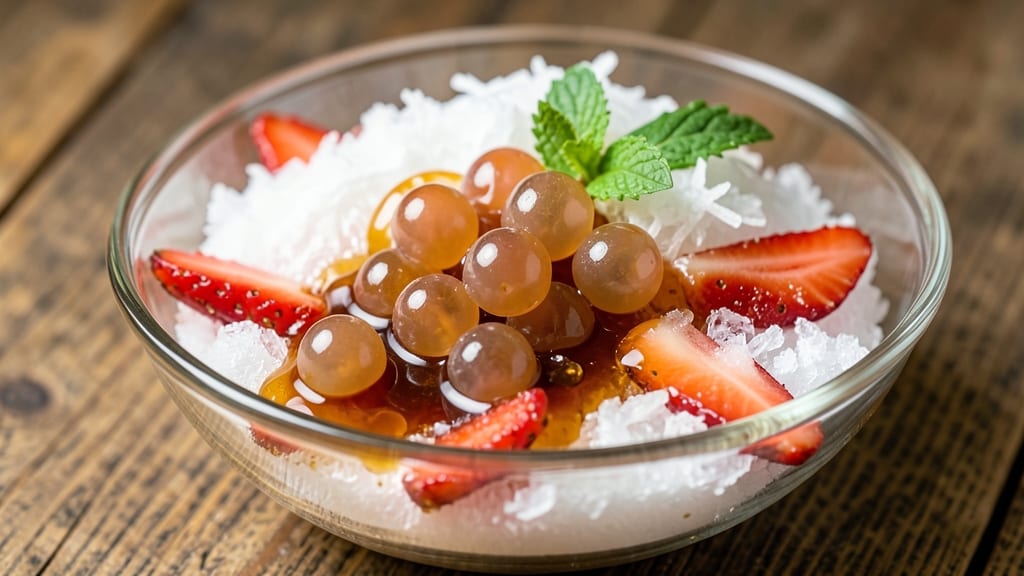
This boba recipe with rice flour delivers chewy, restaurant-quality pearls that transform your drink into a creamy, satisfying experience. The secret lies in precise cooking techniques that create those signature boba textures without gelatin or dairy.
I’ve perfected this method over countless batches, ensuring each pearl stays firm yet tender—just like your favorite tea shop.
With just a few simple ingredients and a stovetop, you’ll craft silky-smooth milk tea infused with floral notes and a touch of vanilla, all balanced by the subtle nutty flavor of rice flour boba.
The process is methodical but rewarding, and the results are worth every step. Ready to make boba at home that rivals the best shops?
Ingredients for boba recipe with rice flour
Nine simple ingredients transform your kitchen into a boba tea shop—no dairy, no gelatin.
| Ingredient | Amount | Notes |
|---|---|---|
| Rice Flour 🍚 | 1 cup | Glutinous rice flour preferred |
| Water 💧 | 1 ½ cups | Room temperature preferred |
| Sugar 🍚 | ½ cup | White granulated or brown |
| Vegetable Oil 🫒 | 1 tbsp | Light or neutral flavor |
| Baking Soda 🧂 | ¼ tsp | Pure, unscented |
| Black Food Gelatin 🖤 | ½ tsp | Vegan black food coloring |
| Vanilla Extract 🌸 | ½ tsp | Pure vanilla flavor |
| Almond Milk 🥛 | 2 cups | Unsweetened for balance |
| Jasmine Tea Bags 🍵 | 2 whole | High-quality loose leaf better |
| Agave Nectar 🍯 | 2 tbsp | For sweetening tea base |
| Salt 🧂 | ¼ tsp | Fine sea salt preferred |
| Lemon Juice 🍋 | 1 tbsp | Freshly squeezed |
Rice flour is the star here—Bob's Red Mill or glutinous rice flour from Asian markets gives that signature chew. I always grab extra because it's not your everyday flour—check for fine texture and no lumps. The black food coloring can be tricky to find; Amazon or specialty baking stores carry vegan versions. For the almond milk, Silk or Califia Farms brands stay creamy without separating. Fresh jasmine tea bags make a difference—loose leaf from a tea shop elevates the flavor, but bags work in a pinch.
No black food coloring? Activated charcoal powder (food-grade) works in a bind, but adjust to half the amount—it's potent. Swap agave for maple syrup if needed, but stick to 1:1 ratio. The baking soda is non-negotiable for that signature texture—baking powder won't work. For the tea base, green tea works too, but jasmine's floral notes pair perfectly. If you're making a big batch, double the ingredients and cook in batches to avoid overcrowding the pot—pearls need space to form properly.
Store cooked pearls in airtight containers with a thin layer of water—they'll keep for 5-7 days in the fridge. Freeze extras in ice cube trays for up to 3 months. The tea base reheats beautifully—just warm the milk and steep fresh tea bags. I like to prep pearls ahead and assemble drinks when guests arrive—they taste even better the next day once flavors meld.
Why You'll Love This Recipe
- Five-Ingredient Magic: I swear by this—just rice flour, water, sugar, oil, and baking soda. That’s it. No fancy pantry trips, no last-minute store runs. The baking soda gives it that signature chew, and honestly? It’s the secret weapon in my snack drawer.
- Chewy-Crisp Perfection: Between us, this isn’t your mushy boba. The rice flour creates that just-right texture—soft inside, with a satisfying bite. Drizzle it with warm syrup, and it’s like biting into a cloud with a little crunch. (Yes, even on a Tuesday night.)
- Party in a Bowl: I make a big batch every weekend because it’s everyone’s jam—kids, adults, picky eaters. Toss it in milk tea, fruit smoothies, or just eat it plain with a sprinkle of sesame. It’s the one thing my roommates won’t fight over.
- Budget Stretch: A bag of rice flour lasts forever, and this recipe costs pennies per serving. Freeze extras in little bags, and you’ve got instant dessert for lazy days or last-minute guests. My wallet and my taste buds win.
Step-by-step instructions for boba recipe with rice flour
Here's how to make restaurant-quality boba pearls at home with perfect chewiness.
👨🍳 Step 1: Prepare the Boba Dough
In a medium saucepan, combine the 1 cup rice flour, 1.5 cups water, 0.5 cup sugar, and 1 tbsp vegetable oil. Stir constantly over medium-high heat until the mixture thickens into a smooth, glossy paste—this should take about 5-7 minutes. You'll know it's ready when it pulls away from the sides of the pan and forms a dough ball when pressed between your fingers.
Remove from heat and let it cool slightly for 2 minutes. While still warm, add the 0.25 tsp baking soda and 0.5 tsp black food gelatin, mixing until fully incorporated. This step is crucial for achieving that signature black color and chewy texture. The dough should be smooth and pliable—if it's too sticky, let it rest for another minute to firm up slightly.
🍳 Step 2: Form and Boil the Boba Pearls
Divide the dough into 4 equal portions and roll each into a 1-inch thick rope. Cut each rope into ½-inch pieces (you should have about 24 pieces total). Bring a large pot of water to a rolling boil and carefully drop in the boba pieces. Cook for 10-12 minutes—they're done when they float to the surface and bounce back when pressed with a spoon.
Here's the thing—don't overcrowd the pot. Cook in batches if needed, as overcrowding can lead to uneven cooking. Once cooked, drain immediately and rinse under cold water to stop the cooking process. This prevents the pearls from becoming too soft or losing their shape. Set aside in a colander while you prepare the tea base.
🥘 Step 3: Infuse the Tea Base
In a separate saucepan, combine the 2 cups almond milk, 2 whole jasmine tea bags, and 2 tbsp agave nectar. Heat over medium-low heat until it reaches 175°F—just below a simmer. Remove from heat and let the tea bags steep for 10 minutes. The liquid should develop a delicate floral aroma and a pale golden color.
Strain out the tea bags and stir in the 0.25 tsp salt and 1 tbsp lemon juice. This balances the sweetness and adds a bright, refreshing note. Taste and adjust the sweetness if needed—you can add a bit more agave nectar if desired. The tea should be smooth, lightly sweet, and fragrant. Let it cool to room temperature before combining with the boba.
🥘 Step 4: Combine and Serve
Once the tea base is cooled, pour it into a large pitcher or serving bowl. Add the drained boba pearls and gently stir to coat them evenly in the tea. Let them soak for 10-15 minutes to absorb the flavor. The pearls should plump up slightly and become even more chewy.
Serve immediately in glasses with ice and a splash of the tea mixture. For an extra touch, add a drizzle of 0.5 tsp vanilla extract to the top of each serving. The contrast of the chewy black pearls against the light tea creates a visually stunning and delicious drink that rivals any boba shop. Enjoy with a wide straw for the full experience!
Pro Tips For Making Boba Recipe With Rice Flour
- STIR CONSTANTLY FIRST 2 MINUTES: The dough will stick like glue if you blink—keep moving that spoon like you’re mixing cement. After the initial lump dissolves, ease up to gentle stirring, but that first burst of heat turns rice flour into a nightmare if it sits.
- SIFT THE FLOUR, DON’T DUMP: Clumps in rice flour mean uneven cooking and dense, gummy boba. Use a fine-mesh sieve or just shake it through your fingers over the bowl—yes, it’s slower, but your boba will chew like it’s supposed to.
- TEST DONENESS WITH A THERMOMETER: Visual cues fail when boba hits the boiling water—it’ll look done but taste raw inside. Pull a piece out at 160°F (71°C) and slice it open; if the center’s opaque, it’s ready. No more guessing.
- USE COLD WATER FOR DOUGH: Hot water makes the dough sticky and hard to handle. Mix with cold water first, then adjust to room temp if needed—your hands and the dough will thank you when shaping. (Pro move: wet your fingers to prevent sticking.)
Best sauces and condiments for this boba recipe with rice flour
Classic Brown Sugar Syrup
This is my go-to sweetener for boba drinks—it adds depth and caramel notes that complement the floral jasmine tea beautifully. Simmer ½ cup water, ½ cup brown sugar, and ½ tsp vanilla extract over medium heat for 5 minutes until dissolved.
Stir in 1 tsp lemon juice to brighten the flavor. Let it cool completely before drizzling over your finished drink. The syrup keeps in the fridge for 2 weeks in an airtight container. 🍯
Coconut Milk Cream Layer
For a creamy texture without dairy, blend ½ cup full-fat coconut milk with 1 tbsp agave nectar and ¼ tsp salt until smooth. Chill for 1 hour to thicken slightly.
Pour a thin layer over your assembled boba drink—it adds a luxurious, velvety finish that pairs perfectly with the chewy pearls. I like to top it with a sprinkle of toasted coconut flakes for extra crunch. 🥥
Spiced Honey Syrup
This variation adds warmth to your boba—perfect for fall or winter drinks. Combine ¼ cup honey (ensure it's vegan), 2 tbsp water, ¼ tsp cinnamon, and a pinch of black pepper in a small saucepan.
Simmer for 3 minutes**, then strain out the spices. Drizzle over your drink and garnish with a cinnamon stick for presentation. The pepper enhances the cinnamon's warmth without overpowering. 🌶️
Matcha White Chocolate Drizzle
For a modern twist, melt 2 oz white chocolate with 1 tsp matcha powder and 1 tsp coconut oil in a double boiler. Stir until smooth, then let cool slightly. Drizzle over your boba drink and sprinkle with crushed white chocolate chips.
The matcha adds earthy notes that balance the sweetness, while the white chocolate creates a stunning visual contrast with the black pearls. 🍫
Tropical Fruit Purée
Blend ½ cup mango and ½ cup pineapple until smooth, then strain to remove seeds. Stir in 1 tsp lime juice and a pinch of salt. Pour this vibrant purée over your boba drink for a refreshing, fruity twist.
The acidity cuts through the richness of the almond milk, while the tropical flavors complement the floral tea beautifully. Perfect for summer drinks! 🍍
Nutrition facts
Frequently asked questions
Why use rice flour instead of tapioca for boba?
Rice flour creates a lighter, less sticky texture that's easier to shape and chew than traditional tapioca pearls. The result is a more delicate, nutty flavor that pairs beautifully with floral teas. Plus, rice flour boba holds its shape better when soaked in liquids, making it perfect for layered drinks.
Can I make these pearls without black food coloring?
Yes! Try activated charcoal powder (food-grade) or even a tiny pinch of instant coffee for depth. For a natural look, skip coloring entirely—the rice flour pearls will still be delicious, just a lighter brown color. The key is focusing on even cooking for that signature chew.
How do I fix boba that's too hard or too soft?
If your pearls are too hard, they likely didn't cook long enough—try boiling 1-2 extra minutes next time. For soft pearls, reduce boiling time to 8-10 minutes and avoid overcrowding the pot. The dough consistency is critical: it should be smooth but not sticky when formed.
Can I make this recipe without almond milk?
Swap for oat milk (for creaminess) or coconut milk (for tropical flavors). Just adjust sweetness—coconut milk is naturally sweeter. For a lighter option, use soy milk or even water with extra tea infusion for a classic boba tea experience.
How long can I store the cooked pearls?
Store cooked pearls in an airtight container with a thin layer of water—they'll keep for 5-7 days in the fridge. For longer storage, freeze in ice cube trays for up to 3 months**. Thaw overnight in the fridge before using. The longer they soak in tea, the more flavor they absorb!