
Main Courses
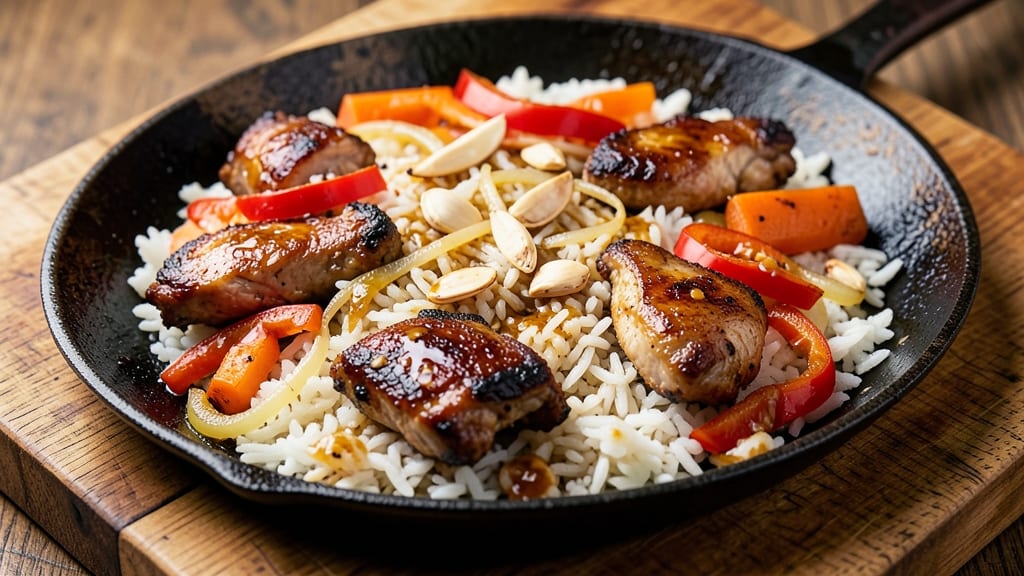
This Blackstone griddle stir-fry rice recipe transforms weeknight dinners into restaurant-quality meals with minimal cleanup. The key lies in high-heat searing and quick cooking—where the griddle’s cast iron surface creates those coveted caramelized edges while keeping the rice perfectly fluffy.
I’ve perfected this technique over countless weeknights, ensuring tender proteins, crisp vegetables, and aromatic rice all cooked in one pan.
The magic happens when you work in batches: sear proteins until golden, then toss in prepped vegetables for vibrant color and texture before folding in seasoned rice. The result is a dish with smoky depth, vibrant colors, and a satisfying crunch that disappears in seconds.
Whether you’re cooking for two or feeding a crowd, this method delivers professional-quality stir-fry rice without the fuss of multiple pans or takeout containers.
Ingredients for blackstone griddle stir fry rice
Restaurant-quality stir-fry rice relies on these carefully chosen ingredients for smoky depth and vibrant crunch.
| Ingredient | Amount | Notes |
|---|---|---|
| Long-Grain White Rice 🍚 | 1 ½ cups | Uncooked, jasmine or basmati preferred |
| Boneless Chicken Thighs 🍗 | 1 ½ lb | Cut into 1-inch pieces, skin-on preferred |
| Carrots 🥕 | 1 ½ cups | Julienned into thin matchsticks |
| Bell Peppers 🧅 | 2 whole | Assorted colors, sliced into thin strips |
| Yellow Onion 🧅 | 1 whole | Sliced into half-moons, 1/4-inch thick |
| Garlic Cloves 🧄 | 6 cloves | Minced for aromatic depth |
| Soy Sauce 🥢 | ½ cup | Low-sodium preferred for balance |
| Sesame Oil 🫒 | 1 tbsp | Toasted for nutty aroma |
| Oyster Sauce 🍜 | 2 tbsp | Vegetarian version if needed |
| Vegetable Oil 🫒 | 2 tbsp | High smoke point for searing |
| Green Onions 🧅 | ¼ cup | Sliced, white and green parts separated |
| Toasted Sesame Seeds 🌾 | 1 tbsp | For garnish and texture |
| Diamond Crystal Kosher Salt 🧂 | 1 ½ tsp | Adjust to taste |
| Ground Black Pepper 🌶️ | ½ tsp | Freshly cracked for heat |
The chicken thighs are the foundation—skin-on for extra flavor and moisture during searing. Look for plump, evenly sized pieces at the butcher counter or pre-cut frozen packs from Trader Joe's or Costco. If using fresh, pat dry thoroughly to ensure a perfect sear. The rice should be jasmine or basmati for its distinct aroma and texture, though long-grain white works in a pinch. For the vegetables, freshness matters most—wilted carrots or mealy onions will yield a subpar stir-fry. Buy organic bell peppers if possible, as their thicker skins hold up better to high heat. The garlic should be freshly minced just before cooking to preserve its pungent flavor.
No boneless chicken thighs? Pork tenderloin or shrimp work equally well, though cooking times will vary. Substitute soy sauce with coconut aminos for a gluten-free option, but reduce the amount slightly as it's more potent. The oyster sauce can be omitted entirely if avoiding seafood, though it adds that signature umami depth. For the sesame oil, toasted is non-negotiable—regular sesame oil lacks the nutty complexity. If you can't find it, lightly toast regular sesame oil in a dry pan for 30 seconds before using. The green onions should be sliced just before serving to maintain their vibrant color and crisp texture.
Prep your ingredients in advance for a seamless cooking process—julienne the carrots and slice the peppers while the rice cooks. The griddle should be preheated to medium-high (400°F) before adding oil. Leftover rice reheats beautifully—spray with a light mist of water before covering with a damp towel in the microwave for 30 seconds. Store cooked portions in airtight containers for up to 4 days in the refrigerator, or freeze for 3 months. For extra authenticity, serve with steamed egg rolls or a side of pickled ginger to cut through the richness.
Why You'll Love This Recipe
- One-Pan Magic: The Blackstone handles everything—rice, chicken, veggies—all in one go. No pots, no pans, just toss, sear, and stir. (Yes, even on a Tuesday night.)
- Crispy-Creamy Balance: That first bite? Juicy chicken with a caramelized crust, bright crunch from the peppers, and buttery onions melting into the rice. It’s the kind of flavor that sticks around long after dinner.
- Meal Prep MVP: Cook once, eat twice (or three times). The leftovers reheat like a dream—just a splash of water, a quick stir, and it’s back to that perfect texture. My lunchbox’s new best friend.
- Budget-Friendly Feast: Chicken thighs stay tender and cheap, carrots and peppers stretch across the plate, and rice fills everyone up. Honestly, it’s the kind of meal that makes grocery day feel like a win.
Step-by-step instructions for Blackstone griddle stir fry rice
Master this one-pan technique for restaurant-quality stir fry rice with perfect texture and bold flavors.
Prepare and Cook the Rice
Rinse the 1.5 cups long-grain white rice thoroughly under cold water until the water runs clear. This removes excess starch that can make the rice mushy. Drain well and spread the rice on a clean kitchen towel to dry completely—this prevents clumping during cooking.
Heat a small pot of water to boiling and add the rice along with 1.5 teaspoons diamond crystal kosher salt. Reduce heat to medium-low, cover, and simmer for 15 minutes. Then turn off the heat and let it steam, covered, for another 10 minutes. The rice should be tender but still slightly firm—this ensures it holds up when stir-fried later.
Sear the Chicken on the Blackstone Griddle
Preheat your Blackstone griddle over medium-high heat until it's hot enough to sizzle when you sprinkle a few drops of water. Add 2 tablespoons vegetable oil and let it get shimmering hot. Pat the 1.5 lb boneless chicken thighs dry with paper towels—this ensures a good sear.
Arrange the chicken pieces in a single layer on the griddle, leaving space between them. Cook undisturbed for 4-5 minutes until the bottoms develop a golden-brown crust. Flip carefully and cook another 4-5 minutes until the chicken reaches 165°F internally and is no longer pink. Remove the chicken and set aside on a plate, tented loosely with foil to keep warm.
Stir-Fry the Vegetables
In the same griddle, add the 2 tablespoons vegetable oil if needed to maintain heat. Add the 1 whole yellow onion and cook for 2 minutes until softened. Push the onions to one side and add 6 cloves minced garlic and 1 tablespoon toasted sesame oil, stirring constantly for 30 seconds until fragrant—this prevents burning.
Add the 1.5 cups julienned carrots, 2 sliced bell peppers, and the cooked rice. Stir-fry vigorously for 3-4 minutes until the vegetables begin to soften but still retain their bright color. The rice should start to release its starch, creating a light coating on the vegetables. If the mixture looks dry, add 1-2 tablespoons water to help steam the vegetables.
Combine and Season
Return the chicken to the griddle and stir everything together. Add the 0.5 cup soy sauce, 2 tablespoons oyster sauce, and 0.5 teaspoon ground black pepper. Toss well to coat everything evenly in the sauce. Cook for another 2-3 minutes until the sauce thickens slightly and clings to the rice and chicken.
Taste and adjust seasoning—you may need a bit more soy sauce or salt to balance the flavors. The stir fry should have a savory, umami-rich taste with a hint of sweetness from the vegetables. Remove from heat and let it rest for 1-2 minutes to allow the flavors to meld.
Garnish and Serve
Transfer the stir fry to serving plates, garnishing each portion with 0.25 cup sliced green onions (white and green parts separated) and 1 tablespoon toasted sesame seeds. The green onions add freshness, while the sesame seeds provide a nutty crunch that contrasts beautifully with the tender rice and vegetables.
Serve immediately while everything is hot and sizzling. The Blackstone griddle's even heat distribution ensures every bite delivers perfectly cooked rice with a crisp-tender vegetable medley and juicy chicken. This one-pan method keeps the flavors concentrated and the texture ideal—no soggy rice or overcooked vegetables here.
Pro Tips For Making Blackstone Griddle Stir Fry Rice
- CRANK THE HEAT HIGH: That Blackstone won’t work magic if it’s lukewarm—get it screaming hot before tossing in the chicken. I used to play it safe, but now I blast it for 3-4 minutes, then wipe with a paper towel. The chicken sears in minutes instead of steaming, and those peppers actually char slightly for depth.
- SLICE CHICKEN THICK: Thin cuts mean dry chicken on a griddle. Cut those thighs into ½-inch chunks—thick enough to hold shape but small enough to cook fast. I learned this after watching my first batch turn to rubber; now they stay juicy even with all that veggie competition.
- PREP ONIONS LAST: Onions release moisture like a faucet, turning your stir-fry into soup. Dice them right before they hit the griddle and toss them in at the very end—just 30 seconds before serving. Your rice stays separate, and the onions stay crisp instead of soggy.
- USE DAY-OLD RICE: Fresh rice is a disaster on a griddle—it sticks, clumps, and turns mushy. Cool your rice completely, then spread it on a tray to dry out for 20 minutes. It’ll toast up perfectly instead of gluing itself to the surface. (Yes, even if you’re impatient like me.)
Common mistakes when making your blackstone griddle stir fry rice
Overcrowding the Griddle
One of the biggest mistakes is overloading the Blackstone griddle with too many ingredients at once. When you crowd the pan, the temperature drops dramatically, leading to steamed instead of seared food. I’ve seen beginners dump everything in at once, resulting in soggy rice and undercooked veggies.
Instead, work in batches—sear the chicken first, then remove it before adding vegetables. This ensures each component gets the high heat it needs for that perfect caramelized crust. 🔥
Skipping the Resting Step
After cooking, many people rush to serve their stir-fry immediately, but this is a critical mistake. Letting the dish rest for just 1-2 minutes allows the juices to redistribute, especially in the chicken. Without this step, you’ll end up with dry meat and uneven flavors.
I always tent my chicken with foil while I finish the veggies, then let everything sit together before serving. This small pause makes a huge difference in texture and taste.
Using Cold Ingredients
Pulling ingredients straight from the fridge and tossing them into the hot griddle is a recipe for disaster. Cold vegetables and proteins will cool down the cooking surface, causing uneven cooking and a lack of that coveted smoky flavor.
Always prep your ingredients while the griddle is heating up, and let them sit at room temperature for 5-10 minutes before cooking. This ensures everything cooks evenly and absorbs the flavors beautifully.
Ignoring the Griddle’s Heat Zones
The Blackstone griddle has natural hot and cool spots, and ignoring this can lead to uneven cooking. I’ve learned the hard way that placing all your ingredients in one spot won’t give you consistent results. Instead, rotate the pan or move ingredients to different sections as needed.
For example, sear the chicken on the hottest part first, then move it to a cooler spot to finish cooking. This ensures everything gets that perfect sear without burning.
Underseasoning the Rice
Many home cooks focus so much on the protein and veggies that they forget the rice is a key player in the flavor profile. Plain rice can make your entire dish taste bland.
To avoid this, season your rice with 1.5 teaspoons kosher salt while cooking, and don’t be afraid to add a splash of soy sauce or a pinch of garlic powder to the rice before stir-frying.
The rice should have its own subtle depth of flavor, not just act as a neutral base. 💡
Not Preheating the Griddle Properly
A common oversight is jumping straight into cooking without preheating the griddle to the right temperature. If the griddle isn’t hot enough, your food will steam instead of sear, leading to mushy textures and a lack of flavor.
Always preheat your Blackstone over medium-high heat for at least 5 minutes before adding oil. You’ll know it’s ready when a drop of water sizzles and evaporates instantly. This step is non-negotiable for achieving that restaurant-quality crunch.
Nutrition facts
Frequently asked questions
Can I use leftover rice for this Blackstone griddle stir-fry?
Yes, but with a few adjustments! Leftover rice works best if it's day-old and slightly dried out. Lightly spray it with water and microwave for 30 seconds before stir-frying to restore moisture. For extra flavor, add 1 teaspoon soy sauce to the rice before cooking. Just avoid using freshly cooked rice—it's too moist and will turn mushy when stir-fried.
How do I adjust this recipe for shrimp instead of chicken?
Shrimp cooks much faster than chicken, so work quickly! Toss 1.5 lb peeled shrimp with 1 teaspoon cornstarch and 0.5 teaspoon salt before searing on the griddle for just 1-2 minutes per side until pink (145°F internal temp). Remove immediately and set aside. The shrimp will continue cooking when combined with the vegetables, so don't overcook. Add them back at the very end with the sauce for 30 seconds of tossing.
What's the best way to clean my Blackstone griddle after cooking?
While the griddle is still warm, scrape off food debris with a metal spatula, then wipe with a paper towel. For stuck-on bits, sprinkle with coarse kosher salt while warm and scrub with a chainmail scrubber. After cooling, wash with hot, soapy water and dry completely. Never soak—this can cause rust. For extra care, apply a thin layer of food-safe mineral oil after each use to maintain the seasoning.
Can I make this stir-fry rice vegetarian?
Swap the chicken for 1.5 lb extra-firm tofu pressed for 15 minutes and cut into cubes. Toss tofu with 1 tablespoon soy sauce and 1 teaspoon cornstarch before searing for 3-4 minutes per side until golden. Add 1 cup mushrooms and 1 cup snap peas with the other vegetables. For umami depth, use 1 tablespoon vegetarian oyster sauce or 1 teaspoon miso paste in place of the regular oyster sauce.
Why does my stir-fry rice turn out dry?
Dry stir-fry rice usually happens from overcooking or using too much oil. First, ensure your rice is cooked to al dente (slightly firm) before stir-frying. Second, don't exceed 2 tablespoons oil total—too much creates steam instead of caramelization. If needed, add 1-2 tablespoons water during the vegetable cooking stage to help steam the ingredients. Finally, work quickly—long cooking times evaporate moisture.