
Side Dishes
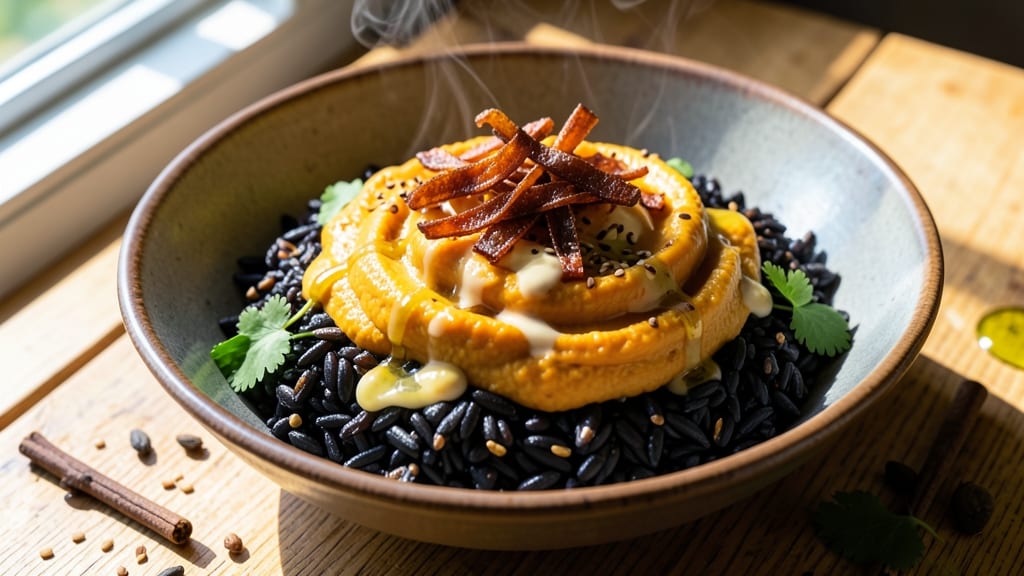
This black rice and butternut squash recipe transforms simple ingredients into a rich, vegan side dish with deep earthy flavors and satisfying texture. The contrast between nutty black rice and sweet, caramelized squash creates a balanced, restaurant-quality meal that pairs beautifully with proteins or stands alone.
What makes this recipe special is how the flavors meld together through gentle roasting and simmering, resulting in a dish that's both comforting and visually striking.
With just a few simple techniques—roasting the squash until tender and fragrant, cooking the black rice to perfection, and combining them with aromatic spices—you'll achieve a dish that's packed with nutrients and flavor.
The result is a hearty, satisfying plate that feels indulgent without being heavy, perfect for weeknight dinners or special occasions. Ready in under 45 minutes, this recipe delivers a complete, balanced meal that's as nutritious as it is delicious.
Ingredients for black rice butternut squash
Earthy black rice meets sweet squash in this nutrient-rich vegan dish—simple ingredients for restaurant-quality flavor.
| Ingredient | Amount | Notes |
|---|---|---|
| Black Rice 🍚 | 1 cup | Uncooked, rinsed thoroughly |
| Butternut Squash 🎃 | 2 cups | Cubed, 1-inch pieces |
| Vegetable Broth 💧 | 2 cups | Low-sodium preferred |
| Coconut Milk 🥥 | 1 can | Full-fat, 13.5 oz |
| Olive Oil 🫒 | 2 tbsp | Extra-virgin for richness |
| Garlic Cloves 🧄 | 3 cloves | Minced for depth |
| Fresh Ginger 🌿 | 1 tbsp | Grated, fresh preferred |
| Coconut Sugar 🍯 | 1 tbsp | Or maple syrup substitute |
| Ground Cinnamon 🌶️ | ½ tsp | Freshly ground preferred |
| Ground Turmeric 🌿 | ¼ tsp | For vibrant color |
| Ground Black Pepper 🌶️ | ¼ tsp | Freshly cracked |
| Fresh Thyme Leaves 🌿 | 2 tsp | Or 0.5 tsp dried |
| Salt 🧂 | ½ tsp | Diamond Crystal preferred |
| Lemon Juice 🍋 | 1 tbsp | Freshly squeezed |
The black rice is the foundation here. Look for authentic black rice at specialty grocery stores or Asian markets—it's darker than regular rice and has a distinct nutty flavor. Trader Joe's carries it, but if you can't find it, substitute with wild rice for a similar earthy profile. The butternut squash should be firm with no soft spots; local farmers markets often have the freshest, most flavorful squash. For the coconut milk, full-fat canned varieties work best—avoid the light versions, which lack richness. If you're prepping ahead, roast the squash a day in advance and store it in the fridge until ready to combine with the rice.
No coconut sugar? Maple syrup or agave nectar work beautifully—just reduce the amount slightly since they're sweeter. Fresh ginger is ideal, but substitute with 0.5 tsp ground ginger if needed. The turmeric adds vibrant color and subtle warmth; if you're sensitive to its earthy taste, reduce to 0.125 tsp. For the thyme, fresh leaves are preferred, but dried thyme works at one-third the amount. The vegetable broth should be low-sodium to avoid over-salting the dish—Pacific Foods or Imagine brands are excellent choices. If you're making this ahead, the flavors intensify overnight, so reheat gently to preserve moisture.
This dish keeps beautifully in the fridge for 4-5 days, with the flavors deepening over time. For longer storage, freeze portions for up to 3 months—the rice holds up well when reheated. The lemon juice can be added fresh when serving, or it can be incorporated during cooking if you prefer. To reheat, add a splash of water or broth and warm through gently on the stove. The squash will soften further, becoming even more tender and sweet. Portion into meal prep containers for easy grab-and-go lunches—it's perfect for workweek meals.
Why You'll Love This Recipe
- One-Pan Magic: I swear by this—just roast the squash and rice together, then pour in the broth and coconut milk. No pots, no pans, no stress. The squash caramelizes while the rice soaks up all that creamy, nutty goodness right next to it.
- Rich & Earthy: That deep black rice? It’s like a little flavor bomb—nutty, almost smoky, with a satisfying chew. Pair it with the sweet, buttery squash and a splash of coconut, and you’ve got a dish that tastes like it simmered for hours (even though it didn’t).
- Meal Prep MVP: Make a big batch on Sunday, and you’re set for lunches all week. The rice stays firm, the squash holds its shape, and reheating it just makes the coconut milk taste even richer. Honestly, it’s my go-to for lazy afternoons.
- Budget-Friendly Feast: Black rice might sound fancy, but it’s actually cheaper than white rice, and squash is one of the most affordable veggies out there. A few cans of broth, some coconut milk, and olive oil stretch this into a hearty meal for four—without breaking the bank.
Step-by-step instructions for black rice and butternut squash
Here's the method for achieving perfectly balanced flavors and textures in this vibrant dish.
Sauté Aromatics and Prepare the Base
Heat the 2 tablespoons olive oil in a large pot over medium heat. Add the 3 cloves minced garlic cloves and 1 tablespoon grated fresh ginger, cooking for 2-3 minutes until fragrant but not browned. This step builds the aromatic foundation that carries through the entire dish.
Next, stir in the 2 cups cubed butternut squash, coating each piece evenly with the oil and aromatics. Sprinkle with 0.5 teaspoon salt, 0.5 teaspoon ground cinnamon, 0.25 teaspoon ground turmeric, and 0.25 teaspoon ground black pepper. Toss gently to distribute the spices evenly. Cook for 5 minutes, stirring occasionally, until the squash begins to soften slightly at the edges but remains firm to the touch.
Develop the Flavor Base with Broth and Spices
Pour in the 2 cups vegetable broth and bring to a gentle simmer. Add the 1 cup uncooked black rice, stirring to combine. The rice should be fully submerged in the liquid. Here's the thing—black rice requires slightly more liquid than white rice to prevent sticking, so don't be tempted to reduce the broth.
Simmer uncovered for 15 minutes, stirring occasionally. You'll notice the rice begins to absorb the liquid and the squash softens further. The dish should smell rich and earthy, with the cinnamon and turmeric contributing warm, vibrant notes. If the liquid reduces too quickly, add ¼ cup water to maintain the proper consistency.
Incorporate Coconut Milk and Sweetener
Reduce heat to low and stir in the 1 can coconut milk and 1 tablespoon coconut sugar. The coconut milk adds creamy richness that balances the earthy flavors, while the coconut sugar enhances the natural sweetness of the squash without overpowering the dish. Stir well to combine, ensuring the rice and squash are fully coated in the creamy mixture.
Simmer gently for 20-25 minutes, stirring occasionally. You'll know it's ready when the rice is tender (it should have a slight bite but be fully cooked) and the squash is fork-tender with just a hint of resistance. The dish should have a thick, creamy consistency similar to a hearty porridge. If it's too thick, add 2-3 tablespoons water to reach your desired texture.
Finish with Fresh Herbs and Acid
Remove the pot from heat and stir in the 2 teaspoons fresh thyme leaves and 1 tablespoon fresh lemon juice. The thyme adds a bright, herbal note that cuts through the richness, while the lemon juice introduces a subtle acidity that enhances all the flavors. Taste and adjust seasoning if needed—you might need a pinch more salt or a splash more lemon juice to balance the dish.
Let the dish rest, covered, for 5 minutes. This resting period allows the flavors to meld completely and the rice to absorb any remaining liquid. Serve warm, garnished with additional thyme leaves if desired. Each bite should deliver a harmonious blend of nutty black rice, sweet butternut squash, and creamy coconut milk with warm spice notes.
Pro Tips For Making Black Rice Butternut Squash
- Roast Squash Until Tender: I used to undercook the squash just to save time, but that leaves you with a mushy, flavorless mess. Cut the butternut into 1-inch cubes, toss them in olive oil, salt, and pepper, then roast at 400°F (200°C) for 25-30 minutes—flip halfway—until they’re fork-tender with caramelized edges. No peeking, or you’ll steam them instead of crisping them.
- Toast Black Rice First: Skipping this step is where the texture goes wrong. Before adding any liquid, dry-toast the black rice in a pot over medium heat for 3-4 minutes until it smells nutty and fragrant. This prevents mushiness later and deepens the rice’s earthy flavor—worth the extra minute.
- Simmer, Don’t Boil: The moment you add coconut milk and broth, reduce the heat to a gentle simmer. Boiling will break the coconut milk, making it split and curdle, and the rice will turn gluey. Keep it at a low bubble—just enough to see tiny ripples—and stir occasionally to avoid sticking.
- Deglaze with Broth Early: After roasting the squash, don’t just scrape the pan clean. Add a splash of vegetable broth right away to loosen the fond (those sticky brown bits) before adding the rice and coconut milk. You’ll get more flavor for less effort—no extra broth needed, just a quick 30-second scrape and pour.
Troubleshooting this dish
Squash Too Soft
If your butternut squash turns mushy before the rice is done, you likely over-roasted it during the initial sauté. Start by reducing the sauté time to just 3-4 minutes instead of 5 minutes—the squash should soften further in the broth.
For extra insurance, cut the squash into slightly larger 1.5-inch cubes so they hold their shape longer. I’ve found that using a sharp chef’s knife for cutting (like a Victorinox 8-inch) ensures cleaner cuts that seal better and resist over-softening. 🎃
Rice Undercooked
Black rice needs patience—if it’s still firm after 35 minutes of simmering, it’s undercooked. The key is maintaining a gentle simmer (not a rolling boil) and ensuring the liquid-to-rice ratio stays at 2:1. I recommend using a lid with a small vent to let steam escape gradually.
If the rice is still crunchy, add ¼ cup hot water, cover, and simmer for another 5-10 minutes. Pro tip: Rinse the rice thoroughly before cooking to remove excess starch that can cause gumminess. 🍚
Dish Too Dry
A common issue is the rice absorbing all the liquid too quickly, leaving the dish dry. To fix this, stir in 2-3 tablespoons coconut milk or broth at the end if the texture is too thick.
If the squash is dry but the rice is perfect, add a splash of broth and let it simmer for 2-3 minutes uncovered to rehydrate. For future batches, reduce the rice by ¼ cup or increase the broth by ¼ cup to maintain creaminess. 💧
Flavors Muted
If the dish lacks depth, the spices likely weren’t toasted enough. Before adding the broth, let the cinnamon, turmeric, and black pepper bloom in the oil for 30 seconds to release their aromas.
For extra punch, add a pinch of smoked paprika or a dash of fish sauce (if not vegan) to umami depth. Freshly grated ginger and garlic also make a difference—don’t substitute with powdered versions. Taste as you go and adjust with lemon juice or salt to brighten flavors. 🌶️
Black Rice Discoloration
If your black rice turns grayish or metallic-tasting, it’s reacting with aluminum or overcooking. Use a stainless steel or ceramic pot (never aluminum) and avoid boiling vigorously. The rice should simmer gently with occasional stirs.
If discoloration happens, stir in 1 teaspoon lemon juice or apple cider vinegar to neutralize any metallic notes. For extra vibrancy, add ½ teaspoon turmeric to the cooking water—it enhances color naturally. ✨
Nutrition facts
Frequently asked questions
Can I use regular white rice instead of black rice?
While you can substitute white rice, the dish will lose its distinctive nutty depth and vibrant color. Black rice has a chewy texture and earthy flavor that pairs perfectly with the sweet squash. If you must use white rice, increase the coconut milk by 2 tablespoons to maintain creaminess and add ½ teaspoon smoked paprika for extra warmth.
How do I make this dish gluten-free?
This recipe is naturally gluten-free! Just ensure your vegetable broth is certified gluten-free and check the labels on coconut milk and spices for hidden gluten. For extra safety, use a dedicated pot that hasn't been contaminated with gluten-containing foods. The black rice and butternut squash remain completely safe as-is.
Can I prepare this ahead of time?
This dish actually tastes better the next day as the flavors meld. Cook it completely, then store in an airtight container in the fridge for up to 4-5 days. Reheat gently with a splash of water or broth to restore moisture. For freezing, portion into individual servings and freeze for up to 3 months—thaw overnight in the fridge before reheating.
What are the best toppings for this dish?
Fresh herbs elevate this dish beautifully! Try topping with cilantro, toasted sesame seeds, or chopped scallions for brightness. For crunch, add crushed peanuts or pumpkin seeds. A drizzle of tahini-lemon sauce or spicy chili oil adds dimension. Keep it simple with a squeeze of lemon or a sprinkle of flaky sea salt for a clean finish.
Why does my squash turn out watery?
Watery squash usually means it wasn't cooked long enough to release its natural sugars. Simmer uncovered for 5 extra minutes to reduce excess liquid, or stir in 1 tablespoon arrowroot powder mixed with 2 tablespoons water to thicken. For future batches, reduce the broth by ¼ cup or add the squash slightly later in the cooking process.