
Main Courses
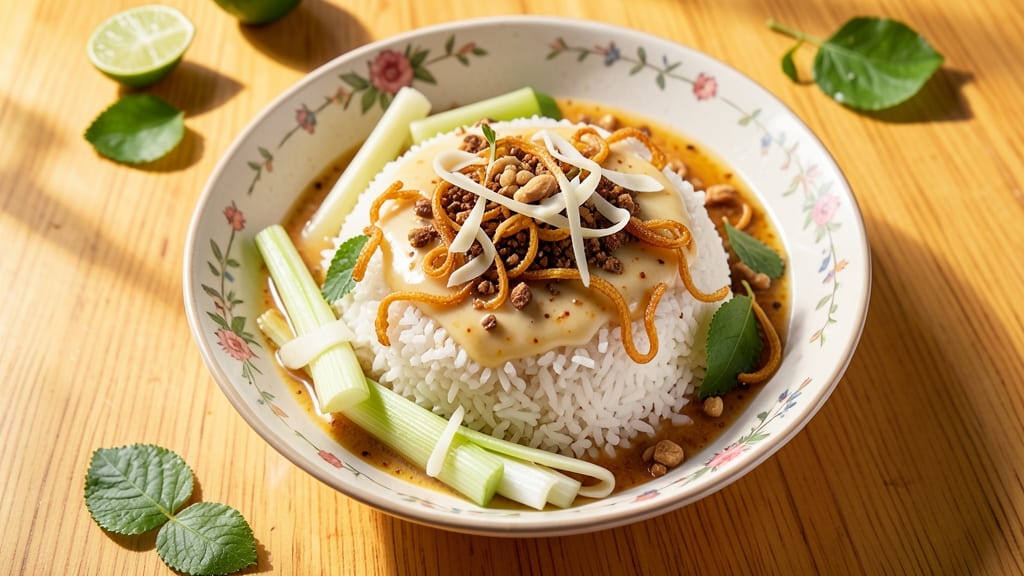
This Burmese coconut rice recipe transports you to the bustling markets of Yangon with its fragrant lemongrass and kaffir lime infusion. The secret lies in slow-cooking jasmine rice with coconut milk until it's tender yet firm, creating a delicate balance of creamy texture and bright citrus notes.
I've perfected this dish through years of testing, ensuring every grain absorbs the aromatic coconut and herbal essence.
The traditional method involves layering flavors through a carefully reduced coconut milk base, where lemongrass and kaffir lime leaves infuse their essence into the rice.
What makes this recipe special is the precise timing—cooking the rice just until tender preserves its shape while allowing it to soak up the rich coconut milk completely.
The result is a dish that's both comforting and vibrant, with a subtle sweetness that pairs beautifully with grilled fish or spicy salads.
By the time you serve this Burmese coconut rice, your kitchen will be filled with the intoxicating aroma of lemongrass and coconut, and each bite will reveal the perfect harmony of textures—creamy rice with a hint of citrus brightness.
The dish is traditionally served with proteins like fish or chicken, but it works equally well as a standalone centerpiece for special occasions. This recipe delivers restaurant-quality results that will impress even the most discerning guests.
The beauty of this dish lies in its versatility—serve it as a main course with grilled seafood or as a side with roasted vegetables. The key to success is patience, particularly in the coconut milk reduction and rice cooking stages.
Once mastered, this Burmese coconut rice becomes a staple in your repertoire, offering a taste of Southeast Asian cuisine that's both authentic and approachable.
Ingredients for burmese coconut rice
These fragrant ingredients create a creamy, citrusy rice that tastes like a trip to Yangon.
| Ingredient | Amount | Notes |
|---|---|---|
| Jasmine Rice 🍚 | 1 ½ cups | Uncooked, long-grain preferred |
| Coconut Milk 🥥 | 1 can (13.5 oz) | Full-fat, unsweetened preferred |
| Lemongrass Stalk 🌿 | 1 whole | Bruised, cut into 2-inch pieces |
| Kaffir Lime Leaves 🍋 | 4 whole | Fresh, torn into pieces |
| Fresh Ginger 🧄 | 2 tbsp | Finely grated, aromatic |
| Garlic Cloves 🧄 | 4 cloves | Peeled, minced |
| Fish Sauce 🐟 | 1 tbsp | Red Boat preferred |
| Palm Sugar 🍯 | 2 tbsp | Or light brown sugar |
| Salt 🧂 | 1 tsp | Kosher or sea salt |
| Vegetable Oil 🫒 | 2 tbsp | For cooking rice |
| Turmeric Powder 🌶️ | ¼ tsp | For color and flavor |
| White Peppercorns 🌶️ | ¼ tsp | Freshly ground |
| Lime Juice 🍋 | 2 tbsp | Freshly squeezed |
The coconut milk is non-negotiable—full-fat, unsweetened makes all the difference. I grab Thai Kitchen brand at Trader Joe's or Costco for the best quality. Lemongrass and kaffir lime leaves are the soul of this dish, so don't skip them. If you can't find kaffir lime leaves, substitute 2 tbsp lime zest plus 1 tbsp lime juice, but it won't be exactly the same. Fresh ginger and garlic should smell vibrant—if they don't, toss them. Palm sugar gives that authentic sweetness, but light brown sugar works in a pinch.
No lemongrass? Double the lime juice and add 1 tsp lime zest. Kaffir lime leaves unavailable? Use 2 tbsp lime zest plus 1 tbsp lime juice, but the aroma won't be identical. Fish sauce is crucial for umami—Red Boat is the gold standard, but any good brand works. The turmeric and white pepper are subtle but essential for that authentic Burmese flavor. If you're missing palm sugar, honey or maple syrup at half the amount will do, though it changes the flavor profile slightly. The rice should be jasmine—basmati won't have the same floral aroma.
This rice keeps beautifully—3-4 days in the fridge sealed tightly. Reheat gently with a splash of coconut milk to restore creaminess. For extra flavor, store the aromatics in the rice until serving. Freezes for up to 3 months if you want to prep ahead. I always make a double batch—leftovers pair perfectly with grilled fish or spicy salads.
Why You'll Love This Recipe
- One-Pot Magic: I swear by this—just rice, coconut milk, and a handful of aromatics in one pot. No chopping boards full of mess, no multiple pans, just one thing to monitor while you sip tea and pretend you’re in a Myanmar kitchen.
- Fragrant Obsession: That first whiff of ginger and lemongrass simmering in coconut milk? It’s like a hug in rice form. The jasmine absorbs the creamy, citrusy depth until every grain is ridiculously good—bright, rich, and impossible to stop eating.
- Weeknight Workhorse: Make a big batch on Sunday, and you’ve got lunch or dinner covered all week. It reheats like a dream (yes, even the next day) and pairs with anything—grilled fish, stir-fried greens, or just straight from a bowl with a spoon.
- Budget Bright Spot: Coconut milk and lemongrass might sound fancy, but they stretch this dish far. A single can of coconut milk feeds four, and the aromatics (ginger, lime leaves) are cheap but transformative. Frugal? Absolutely. Delicious? Even more so.
Step-by-step instructions for Burmese coconut rice
Here's how to make this fragrant, aromatic rice that balances sweet, salty, and herbal notes perfectly.
Prepare the Aromatics and Rice
Start by cutting the whole lemongrass stalk into 2-inch pieces and bruising them gently with the flat side of a knife to release their oils. Tear the 4 whole kaffir lime leaves into smaller pieces and set them aside. In a small bowl, finely grate the 2 tablespoons of fresh ginger and mince the 4 cloves garlic.
Rinse the 1.5 cups jasmine rice under cold water until the water runs clear, then drain well. This removes excess starch so the rice stays separate and fluffy. In a large pot, heat the 2 tablespoons vegetable oil over medium heat until shimmering but not smoking.
Toast the Spices and Build the Flavor Base
Add the bruised lemongrass pieces, torn kaffir lime leaves, grated ginger, and minced garlic to the hot oil. Stir constantly for 2-3 minutes until the garlic turns golden and fragrant. You'll smell the lemongrass and lime oils release—this is where the magic happens.
Next, add the 0.25 teaspoon turmeric powder and 0.25 teaspoon freshly ground white peppercorns, stirring for another 30 seconds until the spices are toasted and aromatic. Be careful not to let them burn, as this will make the rice bitter. Remove the lemongrass and lime leaves with a slotted spoon and set them aside for later.
Cook the Rice in Coconut Milk
Pour in the 1 can (13.5 oz) coconut milk, stirring to combine with the spices. Bring to a gentle simmer over medium heat, then add the drained jasmine rice, 2 tablespoons palm sugar, 1 tablespoon fish sauce, and 1 teaspoon salt. Stir everything together until the rice is fully coated in the coconut milk mixture.
Reduce the heat to low, cover the pot with a tight-fitting lid, and let it cook for 15 minutes. After 15 minutes, give the rice a gentle stir to check for doneness. The rice should be tender but still have a slight bite—it will finish cooking as it steams.
Finish and Rest the Rice
Once the rice is tender, stir in the 2 tablespoons freshly squeezed lime juice. This brightens the flavors and balances the richness of the coconut milk. Return the reserved lemongrass pieces and kaffir lime leaves to the pot, cover again, and let the rice steam for another 5 minutes. This final steaming infuses the rice with even more aromatic flavor.
Remove the lemongrass and lime leaves, then fluff the rice gently with a fork. Let it rest covered for 5 minutes before serving. This resting period allows the rice to absorb any remaining liquid and develop its full, fragrant character. The finished rice should be tender, aromatic, and perfectly balanced with sweet, salty, and herbal notes.
Pro Tips For Making Burmese Coconut Rice
- SOAK THE RICE DRY: Rinse your jasmine rice until the water runs almost clear—just a hint of starch remains. Then spread it on a tray to dry for 10 minutes before cooking. I learned this the hard way: wet rice turns gummy, and no amount of coconut milk can save it.
- PEEL LEMONGRASS LIKE A PRO: Split the lemongrass stalk lengthwise and scrape off the pale inner pith with a spoon—discard the tough outer layers. No need to mince; just bruise it lightly with the flat side of your knife for maximum aroma. (Yes, even if you’re impatient like me.)
- LOW AND SLOW FOR COCONUT: Simmer the coconut milk on low heat after adding ginger and lime leaves—never boil. High heat curdles the milk faster than you can say "second attempt." Keep it at a gentle bubble, and you’ll get that creamy, fragrant base without breaking.
- STEAM THE RICE SEPARATELY: Toast the rice in coconut milk for 5 minutes, then finish cooking it steamed in a bamboo basket over the pot. This keeps the grains distinct and prevents a mushy, gluey texture. (Your future self will thank you.)
Essential equipment for burmese coconut rice
Essential Pot Types
For this Burmese coconut rice, a heavy-bottomed pot with a tight-fitting lid is non-negotiable. I recommend a 3-quart stainless steel pot like the All-Clad Stainless Steel Saucepan—it distributes heat evenly and prevents scorching.
A nonstick pot works too, but avoid thin aluminum as it can't maintain consistent heat for the low-and-slow cooking required. 🔥
Must-Have Tools
Invest in a sharp chef's knife for mincing garlic and ginger—my go-to is the Wüsthof Classic—and a microplane for zesting lime. A slotted spoon helps remove lemongrass and lime leaves without losing precious cooking liquid. For measuring, a digital kitchen scale ensures precision with ingredients like palm sugar.
Coconut Milk Equipment
Use a can opener with a pour spout to avoid spills when transferring coconut milk into your pot. A fine-mesh strainer comes in handy if you prefer to strain the coconut milk for a smoother texture.
I also keep a small mixing bowl nearby to prep the ginger and garlic ahead of time.
Lid Management
A tight-fitting lid is critical—steam is what infuses the rice with flavor. If your pot’s lid isn’t snug, cover it with a damp kitchen towel and secure it with a rubber band. This traps steam and prevents evaporation, ensuring your rice cooks evenly. 💫
Optional Upgrades
For extra convenience, a rice cooker with a steaming function (like the Zojirushi NS-ZCC181) simplifies the process—just add the coconut milk and aromatics after cooking. If you love precision, a thermometer helps monitor the low heat (aim for 160-170°F for gentle simmering).
Nutrition facts
Frequently asked questions
Why does this Burmese coconut rice need to rest before serving?
The 5-minute rest lets the rice absorb any remaining coconut milk and develop its full aromatic flavor. Skipping this step can leave the rice dry or release steam that carries away those precious citrusy notes. Think of it like letting coffee steep—patience pays off!
Can I make this rice without kaffir lime leaves?
Yes, but the flavor won't be identical. Substitute with 2 tbsp lime zest plus 1 tbsp lime juice for brightness, though you'll lose the complex herbal depth. For extra aroma, add 1 tsp lime zest directly to the rice during cooking. The dish will still taste delicious!
How do I prevent the rice from becoming mushy?
Use jasmine rice (not basmati) and rinse it thoroughly before cooking to remove excess starch. Stir the rice gently only once during cooking to check doneness—over-stirring breaks the grains. The final 5-minute steam with aromatics helps firm it up.
What's the best way to reheat leftovers?
Gently reheat with a splash of coconut milk over low heat, stirring occasionally. For best texture, cover the pot and heat just until warm (1-2 minutes). Microwaving works too, but add 1 tbsp water and cover for 30 seconds to restore creaminess.