
Main Courses
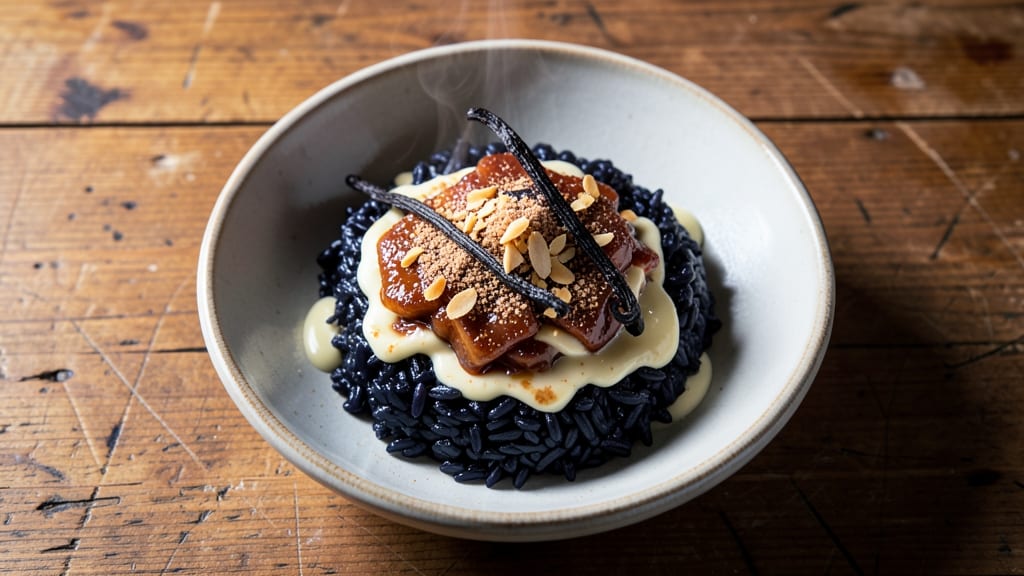
This black glutinous rice biko recipe delivers the perfect balance of crispy edges and chewy sweetness—just like your favorite Filipino dessert table.
The secret lies in soaking the rice overnight to achieve that signature sticky texture, then steaming it until tender before caramelizing the top for that golden, crackly finish.
I've perfected this method to ensure every bite is rich with coconut milk and brown sugar, creating a dessert that's both nostalgic and foolproof.
What sets this recipe apart is its versatility—traditional versions use coconut milk and brown sugar, but you can easily adapt it with chocolate or ube for a modern twist. The result is a crispy-topped, fragrant cake that's naturally vegetarian and can be made vegan with simple substitutions.
Ready in under an hour, it's the ideal treat for celebrations or a comforting homemade dessert any day of the week.
Ingredients for black glutinous rice biko
Pantry staples plus a few specialty ingredients for that signature Filipino dessert texture.
| Ingredient | Amount | Notes |
|---|---|---|
| Black Glutinous Rice 🍚 | 2 cups | Uncooked, soaked overnight |
| Coconut Milk 🥥 | 13 ½ oz | Full-fat can for richness |
| Brown Sugar 🍯 | 1 cup | Packed, light or dark |
| Unsalted Butter 🧈 | ½ cup | Melted for crispy top |
| Water 💧 | 1 ½ cups | For steaming mixture |
| Salt 🧂 | ¼ tsp | Fine sea salt preferred |
| Vanilla Extract 🌿 | 1 tsp | Pure vanilla preferred |
| Baking Powder 🍞 | ½ tsp | For slight lift |
| Toasted Coconut Flakes 🥥 | ¼ cup | For garnish (optional) |
| Vegetable Oil 🫒 | 2 tbsp | For greasing mold |
| Ube Halaya (optional) 🍠 | ½ cup | For modern twist |
| Dark Chocolate Chips (optional) 🍫 | ½ cup | For chocolate variation |
The black glutinous rice is the star—look for it in Asian grocery stores or online if your local market doesn't carry it. Thai Kitchen or Golden Gate brands are reliable. Soaking overnight is non-negotiable; it transforms the rice from firm to that signature chewy, sticky texture. If you can't find black rice, white glutinous rice works in a pinch, though the color will differ. For coconut milk, full-fat canned is best—the richness carries through the caramelization. I always buy two cans because I use the second for smoothies.
No brown sugar? Coconut sugar or muscovado sugar work beautifully—they've got that same molasses depth. Want to skip the butter? Coconut oil at the same amount delivers a similar crispy finish. The baking powder is subtle but helps create that signature crackly top. For the optional variations, ube halaya adds purple swirls (find it in Asian markets or online), while chocolate chips let you make a dessert that feels both nostalgic and modern. The vanilla extract? Pure, not imitation—it makes all the difference in that final aroma.
Store the soaked rice in the fridge overnight in its soaking water. The finished biko keeps 3-4 days in an airtight container at room temperature, though it's best enjoyed fresh. For longer storage, wrap tightly in plastic wrap and freeze for up to 3 months. Reheat gently in the microwave or oven—just until warmed through, as it can dry out if overcooked. I always make a double batch because it disappears faster than expected.
Why You'll Love This Recipe
- Five-Ingredient Magic: I swear by this recipe—just rice, coconut milk, brown sugar, butter, and water. No fancy prep, no hidden shortcuts. Honestly, the only "work" is soaking the rice overnight, which I do while I’m already in bed.
- Velvet-Smooth Texture: That slow simmer with coconut milk and butter turns the rice into a creamy, melt-in-your-mouth pudding. The brown sugar caramelizes just enough to give it a subtle depth—like dessert for breakfast, but still feels like a proper meal.
- Weeknight or Holiday: Make a big batch on Sunday and reheat portions all week. Or bring it to a potluck—it’s the kind of dish that disappears fast, and no one will guess it’s just five simple ingredients. (Yes, even on a Tuesday night.)
- Budget-Friendly Luxury: Black glutinous rice is pricier than white, but a single bag stretches for multiple servings. The coconut milk and butter make it feel indulgent without breaking the bank. I’ll be real: my grocery bill thanks me for this one.
Step-by-step instructions for black glutinous rice biko
Master the art of creating crispy edges and chewy centers with this precise method.
Prepare the Black Glutinous Rice Mixture
In a large mixing bowl, combine the soaked 2 cups Black Glutinous Rice with the 13.5 oz Coconut Milk, 1 cup Brown Sugar, 0.5 cup Unsalted Butter, 1.5 cups Water, 0.25 tsp Salt, 1 tsp Vanilla Extract, and 0.5 tsp Baking Powder. I like to use my hands for this step to ensure everything is thoroughly mixed and the rice absorbs the coconut milk completely.
Mix until the texture is smooth and uniform, with no dry spots remaining. The mixture should be thick but still pourable. If you've added the optional 0.5 cup Ube Halaya or 0.5 cup Dark Chocolate Chips, fold them in now for a modern twist. The batter should be rich and glossy, with a deep purple hue from the black rice. Let it rest at room temperature for 10 minutes while you prepare your baking dish.
Grease and Assemble the Biko Mold
Lightly grease an 8-inch round cake pan or similar baking dish with the 2 tbsp Vegetable Oil, making sure to coat the bottom and sides thoroughly. This prevents sticking and ensures that crispy edges form perfectly. I find that using a well-seasoned cast iron skillet works beautifully for this recipe, as it naturally creates a non-stick surface.
Pour the prepared rice mixture evenly into the greased pan. Tap the pan gently on the counter a few times to remove any air bubbles that may have formed. The surface should be smooth and level. If you're using optional ingredients, sprinkle the 0.25 cup Toasted Coconut Flakes evenly over the top for added texture and flavor. This step is crucial for achieving that signature crispy crust.
Steam with Precision for Perfect Texture
Place the pan in a steamer basket over a pot of boiling water, ensuring the water doesn't touch the pan. Cover with a tight-fitting lid and steam over medium-high heat for 45-50 minutes. The key here is patience—the biko needs time to develop its signature texture. You'll know it's ready when the top is golden brown and slightly crispy, while the center remains moist and chewy.
I recommend checking the doneness by inserting a toothpick into the center. It should come out clean but slightly moist. If the top isn't crispy enough, you can broil it for 2-3 minutes at the end for extra browning. Remember to keep the lid on during steaming to maintain moisture and prevent the top from drying out.
Rest and Serve for Optimal Texture
Remove the biko from the steamer and let it rest in the pan for 10 minutes before attempting to unmold. This resting period is essential—it allows the internal structure to set and makes slicing much easier. I always find that biko is more stable and holds its shape better after this brief rest.
Run a thin knife around the edges of the pan to loosen it, then invert the biko onto a serving plate. The crispy bottom will naturally release if you've greased the pan properly. Serve warm, cut into wedges, and enjoy the perfect balance of crispy edges and chewy, sweet centers. The aroma alone will make your kitchen smell like a tropical paradise.
Pro Tips For Making Black Glutinous Rice Biko
- SOAK RICE OVERNIGHT: I learned this the hard way—rushing the soak leaves your biko gummy and uneven. Black glutinous rice needs at least 8 hours (overnight is ideal) in room-temperature water to soften properly. Drain right before cooking, or it’ll turn mushy when you add the coconut milk.
- STIR CONSTANTLY AT FIRST: The first 5 minutes of simmering are non-negotiable. Black glutinous rice releases starch like crazy, and if you don’t stir it aggressively, you’ll end up with a gluey mess instead of a tender, creamy texture. Use a wooden spoon—it won’t scratch your pot like metal.
- USE FULL-FAT COCONUT MILK: Skimping on the creaminess here is a mistake. Light coconut milk won’t give you that rich, velvety finish. For a shortcut, mix canned full-fat with a splash of heavy cream (about 2 tablespoons) for extra depth—your biko will taste like it came from a Filipino bakery.
- SWAP BROWN SUGAR FOR JAGGARY: Brown sugar crystallizes and can make your biko grainy. Jaggery (or muscovado sugar) dissolves smoothly and adds a deeper caramel note. If you must use brown sugar, wet it with a little warm water first to break up the clumps—trust me, it makes all the difference.
Best sauces and condiments for this black glutinous rice biko
Coconut Caramel Sauce
Elevate your biko with a homemade coconut caramel sauce that mirrors the dessert's natural flavors. Simmer 1 cup coconut milk with ½ cup brown sugar and 1 tbsp butter until thickened to a glossy consistency.
Let it cool slightly before drizzling over slices—it enhances the coconut richness without overpowering. For extra depth, add ½ tsp vanilla extract and a pinch of salt. 🥥
Ube Jam Swirl
Transform your biko into a vibrant purple masterpiece with ube jam swirls. Mix ½ cup ube halaya with 1 tbsp coconut milk> to loosen it, then swirl it into the batter before steaming.
The jam adds natural sweetness and a striking visual contrast. For a modern twist, top with toasted coconut flakes after baking. This variation feels luxurious but requires just 5 extra minutes of prep.
Chocolate Ganache Drizzle
For chocolate lovers, replace the coconut caramel with a dark chocolate ganache. Melt ½ cup dark chocolate chips with ¼ cup coconut cream> over a double boiler, then drizzle over warm biko slices.
The bitterness balances the sweetness beautifully. I recommend 70% cacao chocolate> for depth without overpowering the dessert's natural flavors. 🍫
Toasted Coconut Crunch
Add texture with toasted coconut flakes—either mixed into the batter or sprinkled on top before baking. Toast ½ cup coconut flakes> in a dry pan over medium heat> for 3-4 minutes> until golden and fragrant.
The nutty aroma complements the coconut milk perfectly. For extra crunch, press them into the top of the biko before steaming.
Pandan Leaf Infusion
Infuse the coconut milk with pandan leaf for an aromatic twist. Simmer 1 pandan leaf> in 1 cup coconut milk> for 10 minutes>, then strain and use it in your batter.
The subtle floral notes elevate the dessert's complexity. This works especially well with the chocolate variation, creating a sophisticated flavor profile. 🌿
Sweet Condensed Milk Glaze
Finish your biko with a condensed milk glaze for an extra-sweet touch. Heat ½ cup condensed milk> with 1 tbsp butter> until smooth, then drizzle over warm slices. The glaze caramelizes slightly, adding a sticky, golden finish.
For a lighter option, thin it with 1 tsp coconut milk> before applying. This is my go-to for family gatherings—it's always a crowd-pleaser. 🍯
Nutrition facts
Frequently asked questions
Why does the black glutinous rice need to soak overnight?
Soaking overnight is essential to achieve that signature chewy, sticky texture—the rice absorbs moisture and softens completely. Skipping this step results in a gummy or undercooked center. For best results, use 4 cups of water per 2 cups of rice and let it soak for at least 8 hours (overnight is ideal).
Can I make this recipe without a steamer?
Yes! If you don’t have a steamer, use a baking dish with a water bath—place your pan in a larger roasting pan filled with 1 inch of boiling water. Cover tightly with foil and bake at 350°F (175°C) for 50-60 minutes. The key is keeping the heat gentle to avoid drying out the center.
What’s the secret to getting crispy edges?
The crispy edges come from proper greasing and steaming. Use vegetable oil to coat the pan thoroughly, and ensure the water in your steamer doesn’t touch the pan. For extra crispiness, broil the finished biko for 2-3 minutes at the end. A well-seasoned cast iron skillet also helps achieve that perfect texture!
How do I store leftovers to keep them fresh?
Store in an airtight container at room temperature for up to 3-4 days. For longer storage, wrap tightly in plastic and freeze for 3 months. To reheat, microwave for 20-30 seconds or warm gently in the oven at 300°F (150°C) for 10 minutes to restore moisture.
Can I substitute white glutinous rice if I can’t find black?
Yes, but the color and slight earthy flavor will differ. Use the same ratio and soaking method. For a closer match, mix 1 cup black rice with 1 cup white rice—this blends the colors while keeping the texture. The result won’t be identical, but it’s a great workaround!