
Side Dishes
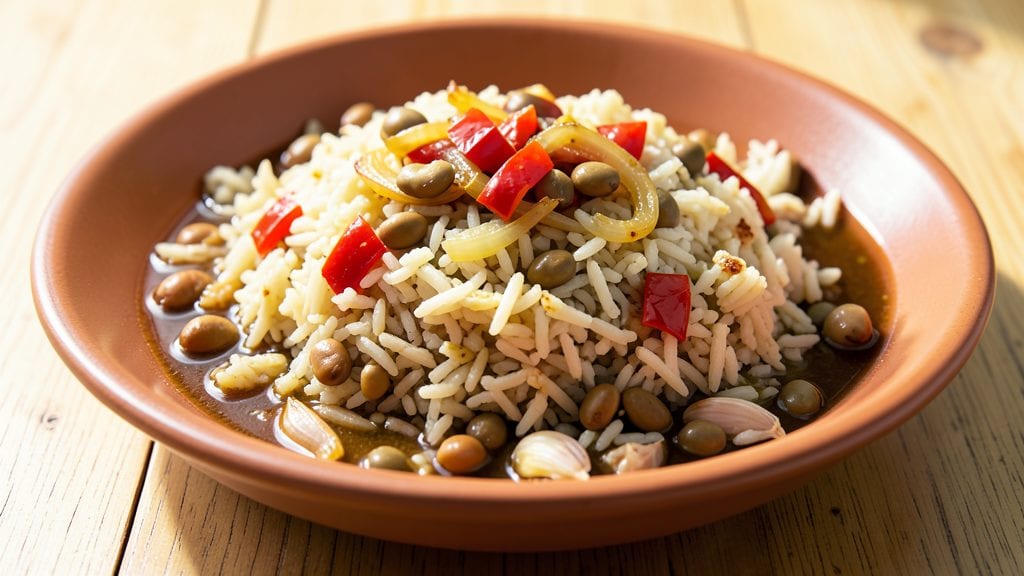
This authentic Puerto Rican rice with pigeon peas—known as arroz con gandules—is the heart of every island table, where sofrito-infused flavors and tender pigeon peas create a dish that’s both comforting and deeply traditional.
The secret lies in the slow-cooked rice, simmered just right to achieve that signature caldo consistency, where every grain absorbs the rich, aromatic base built from bell peppers, onions, garlic, and culantro. I’ve perfected this one-pot method over years of family gatherings, ensuring the flavors develop authentically without shortcuts.
The foundation of this dish is the sofrito—a fragrant blend of vegetables and herbs that forms the soul of Puerto Rican cooking. Toasting the rice in oil before adding liquid creates a nutty depth, while the pigeon peas (available canned or dried) add a satisfying texture and subtle sweetness.
Traditional recipes often include annatto for color, though it’s optional, and pilon rice if you want the most authentic texture. This method delivers restaurant-quality results in a single pot, with minimal cleanup.
What makes this recipe truly special is how it transforms simple ingredients into a dish that feels like a hug—creamy yet firm rice, pigeon peas that stay tender, and a sauce that’s just thick enough to cling to each bite.
The aroma alone will transport you to a Puerto Rican parrilla, where this dish is served alongside pernil, mofongo, or tostones. The beauty of this recipe is its versatility: use sweet or savory pigeon peas, adjust the sofrito to your taste, and let the flavors shine.
Whether you’re cooking for a celebration or a weeknight dinner, this authentic Puerto Rican rice with pigeon peas brings the warmth of Boricua tradition to your kitchen. The key is patience—letting the rice simmer until the liquid is absorbed and the flavors meld into harmony.
Once you try this version, you’ll never settle for anything less than the real deal. Let’s get cooking!
Ingredients for authentic puerto rican rice with pigeon peas
Pilon rice, pigeon peas, and sofrito—three essentials for authentic Puerto Rican flavor in one pot.
| Ingredient | Amount | Notes |
|---|---|---|
| Pilon Rice 🍚 | 1 ½ cups | Uncooked, long-grain preferred |
| Canned Pigeon Peas 🌱 | 1 can (15 oz) | Sweet or savory variety |
| Sofrito 🍅 | 2 cups | Homemade or quality jarred |
| Chicken Broth 💧 | 2 cups | Low-sodium preferred |
| Bell Peppers 🌶️ | 1 whole | Red or green, diced |
| Yellow Onion 🧅 | 1 whole | Medium, finely chopped |
| Garlic Cloves 🧄 | 6 cloves | Fresh, minced |
| Culantro 🌿 | ¼ cup | Fresh leaves, chopped |
| Tomato Paste 🍅 | 1 tbsp | Smooth, not chunky |
| Annatto Seeds 🌶️ | ½ tsp | Optional, for color |
| Vegetable Oil 🫒 | 2 tbsp | For toasting rice |
| Salt 🧂 | 1 ½ tsp | Kosher or sea salt |
| Ground Black Pepper 🌶️ | ½ tsp | Freshly ground preferred |
| Cumin Seeds 🌿 | ½ tsp | Toasted for depth |
| Bay Leaves 🌿 | 2 whole | Dried, removed later |
The sofrito is non-negotiable here. Homemade is best—blend bell peppers, onions, garlic, culantro, and a touch of tomato paste—but Goya or La Costeña jarred versions work in a pinch. Look for sofrito with vibrant color and no added preservatives. Pilon rice, if you can find it, gives that signature texture, but long-grain white rice works too. The pigeon peas? Sweet or savory—both are traditional, but sweet has a slightly sweeter finish. For the annatto, Penzeys or Latin markets carry the seeds, but skip it if you can't find them—this dish still shines without it.
No sofrito? Blend 1 cup chopped bell peppers, 1 onion, 6 garlic cloves, and 0.25 cup culantro with 0.5 cup broth. Short on culantro? Cilantro or parsley at half the amount gets you close. Using dried pigeon peas? Soak them overnight—1 cup dried equals 1 can. The cumin seeds should be toasted in a dry pan for 30 seconds first—that nutty aroma is key. For extra depth, add a pinch of achiote powder or a bay leaf to the sofrito while blending. The tomato paste is your flavor anchor—don’t skip it, even if it’s just a tablespoon.
This dish tastes even better the next day—double the batch if you can. Store leftovers in an airtight container for 4-5 days in the fridge. Freezes beautifully for 3 months, though the rice texture softens slightly. I always make extra to reheat for lunches—just add a splash of broth when warming. The sofrito base keeps for 1 week in the fridge, so blend extra if you’re making multiple dishes. For serving, a sprinkle of fresh culantro on top? Game changer.
Why You'll Love This Recipe
- Here’s what sold me: that deep, aromatic sofrito base—garlic, onions, cilantro, and peppers—infusing every grain. It’s the soul of the dish, and honestly? It’s the only way I’ll eat rice now. The pigeon peas add this earthy, slightly sweet contrast that makes it ridiculously good.
- One-Pot Magic: I swear by this recipe because it’s all in one pot—no fussy layers, no extra dishes. Just toss in the pilon rice, canned pigeon peas, and sofrito, let it simmer, and boom. The broth reduces into that perfect, saucy consistency without any extra work.
- Sofrito Love: Here’s what sold me: that deep, aromatic sofrito base—garlic, onions, cilantro, and peppers—infusing every grain. It’s the soul of the dish, and honestly? It’s the only way I’ll eat rice now. The pigeon peas add this earthy, slightly sweet contrast that makes it ridiculously good.
- Meal Prep MVP: This is my go-to for Tuesdays and leftovers. The rice keeps its texture for days, and the pigeon peas hold up beautifully. Pack it in lunches, reheat it for dinner, or serve it cold with plantains—it’s that versatile. My kids even ask for it when I forget to make something "fancy."
Step-by-step instructions for authentic Puerto Rican sofrito rice
This one-pot method delivers restaurant-quality arroz con gandules every time.
Prepare the Sofrito Base
Heat the 2 tablespoons vegetable oil in a heavy-bottomed pot over medium heat. Add the 1 whole yellow onion and 1 whole bell peppers, both finely chopped, along with the 6 cloves garlic cloves that have been minced. Cook for 5-6 minutes until the vegetables soften and the garlic becomes fragrant—you'll notice the onions turn translucent and the peppers release their sweet aroma.
Next, add the 1 tablespoon tomato paste and stir to coat the vegetables completely. Cook for another 2 minutes until the paste darkens slightly and develops a rich, caramelized flavor. This is your flavor foundation, so don't rush this step. The paste will deepen the sauce's complexity and give it that authentic Puerto Rican character.
Now stir in the 2 cups sofrito, the 0.5 teaspoon cumin seeds, and the 2 whole bay leaves. Let this mixture cook together for 3-4 minutes until the sofrito releases its oils and the cumin seeds begin to sizzle gently. This combination creates the aromatic backbone of your dish—where the magic starts.
Toast the Rice for Perfect Texture
Add the 1.5 cups pilon rice to the pot and stir vigorously for 1-2 minutes to coat each grain with the sofrito mixture. This toasting step is crucial—it develops the nutty flavor and prevents the rice from becoming mushy. You'll see the rice turn slightly translucent at the edges as it absorbs the oil and sofrito.
Here's where attention to detail matters: continue stirring and toasting until the rice grains are fully coated and begin to develop a faint golden hue. This should take about 3 minutes. If you notice the rice sticking to the bottom, add a splash of chicken broth to loosen it. The goal is to create a light crust at the bottom of the pot—this adds depth of flavor to every bite.
Once the rice is properly toasted, pour in the 2 cups chicken broth and bring the mixture to a gentle boil. Immediately reduce the heat to low and stir once more to distribute the liquid evenly. The broth should just cover the rice—this ensures proper hydration without making the dish watery.
Simmer to Perfect Doneness
Cover the pot tightly with a lid and let the rice simmer undisturbed for 20 minutes. This is where patience pays off—resist the temptation to peek or stir. The rice needs time to absorb the flavors and cook evenly. You'll notice steam rising from the pot and a subtle aroma of sofrito filling your kitchen.
After 20 minutes, gently fluff the rice with a fork, being careful not to press down on the grains. This helps distribute any liquid that may have settled at the bottom. Then add the 1 can (15 oz) canned pigeon peas (drained and rinsed), the 0.25 cup culantro, the 1.5 teaspoon salt, and the 0.5 teaspoon ground black pepper. Stir gently to combine, ensuring the peas are evenly distributed throughout the rice.
Continue simmering on low heat for another 10-12 minutes, until the rice has absorbed all the liquid and the grains are tender but still have a slight bite. The perfect rice should be moist but not soupy, with each grain distinct and flavorful. If the mixture looks dry before the rice is fully cooked, add 1-2 tablespoons of water to maintain moisture.
Finish with Annatto and Rest
For that signature Puerto Rican color, stir in the 0.5 teaspoon annatto seeds during the final 2 minutes of cooking. The seeds will dissolve into the rice, giving it a beautiful golden hue. Remove the 2 whole bay leaves at this point—they've served their purpose and can be discarded.
Once the rice is fully cooked, turn off the heat and let it sit covered for 5 minutes. This resting period allows the flavors to meld and the rice to absorb any remaining liquid. The result should be perfectly tender rice with peas evenly distributed, infused with sofrito's rich, complex flavors, and just the right amount of seasoning.
Serve immediately with a sprinkle of fresh culantro on top. The rice should be aromatic, with each bite delivering a balance of sofrito's sweetness, the peas' earthiness, and the rice's satisfying texture. This one-pot tradition captures the heart of Puerto Rican cuisine in every delicious mouthful.
Pro Tips For Making Authentic Puerto Rican Rice With Pigeon Peas
- Rinse the Pilon Rice: Skip the pre-rinse if you’re in a hurry, but if you want that classic Puerto Rican texture—fluffy yet slightly firm—give it a quick 30-second swirl under cold water. I learned this the hard way after serving mushy rice to a crowd who expected the real deal. Just drain well afterward, or your pot will boil over like a volcano.
- Sauté the Sofrito First: Don’t just dump it in cold. Cook the sofrito in oil for 3–4 minutes until the onions and peppers soften and release their aroma—that’s when the flavor actually sticks to the rice. I used to add it raw, and the dish always tasted like I’d forgotten a step. High heat for the first minute, then lower to let it caramelize slightly.
- Use Two Broth Batches: Start with 2 cups of broth, let the rice absorb it halfway through cooking, then add another cup. This keeps the rice from drying out or turning mushy. After burning three batches of rice (yes, really), I realized the broth needs to work in stages, not all at once.
- Toast the Pigeon Peas: Drain the canned peas, pat them dry, and sear them in a little oil for 2 minutes before mixing into the rice. The Maillard reaction adds depth—trust me, it’s the difference between "good" and "restaurant-quality." I was skeptical until I tried it, and now I never skip this step.
Make-ahead tips for leftovers
Prep Ahead Sofrito
Make your sofrito 1-2 days ahead—it tastes even deeper after resting. Blend 1 cup bell peppers, 1 onion, 6 garlic cloves, ¼ cup culantro, and 1 tbsp tomato paste with ½ cup broth.
Store in an airtight container in the fridge. This saves time and intensifies the flavor when reheated. 🌶️
Rice Toasting Shortcut
Toast your pilon rice in the pot while you prep other components. Keep the heat at medium and stir constantly for 3 minutes—this prevents burning. If you’re short on time, use 1 tbsp butter instead of oil for extra richness. Just watch it closely to avoid browning. ⏱️
Broth Prep Tip
Make extra chicken broth while cooking—simmer 2 chicken bones with 1 onion, 1 carrot, and 1 celery stalk for 1 hour. Strain and store in the freezer. This homemade broth elevates the dish and keeps for 3 months. Use 2 cups per batch of rice. 💧
Pea Prep Efficiency
Drain and rinse your pigeon peas in a colander while the rice simmers. If using dried peas, soak them overnight in 4 cups water with 1 tsp salt. Drain before adding to the rice—this removes excess starch and prevents mushiness. Sweet or savory? I prefer sweet for balance. 🌱
Make-Ahead Full Batch
Double the recipe and store in an airtight container for 4-5 days in the fridge. Reheat gently on low heat with 2 tbsp broth to restore moisture. For freezing, portion into quart-sized bags—this prevents freezer burn and makes reheating easier. Thaw overnight in the fridge before reheating. ❄️
Flavor Boost While Waiting
While the rice cooks, toast ½ tsp cumin seeds in a dry pan for 30 seconds—their nutty aroma will fill your kitchen. Add them directly to the pot with the sofrito.
For extra depth, stir in 1 tsp achiote powder (if available) when toasting the rice. This step is optional but adds authentic color and warmth. 💡
Nutrition facts
Frequently asked questions
What's the difference between sweet and savory pigeon peas in this recipe?
Sweet pigeon peas have a slightly sweeter, creamier texture while savory ones are more earthy and firm. Both work in this dish, but sweet peas add natural sweetness that balances the sofrito's savory depth. For authenticity, use sweet peas—they're traditional in most Puerto Rican homes.
Can I substitute pilon rice with regular long-grain rice?
Yes, but pilon rice gives that signature Puerto Rican texture—slightly sticky yet distinct grains. Use long-grain white rice (like Carolina or jasmine) as a 1:1 substitute, but expect slightly less separation between grains. For extra authenticity, toast the rice longer to prevent mushiness.
Why does my rice turn out mushy?
Mushy rice usually means too much liquid or insufficient toasting. Always toast the rice for 3 minutes until golden, then use just enough broth to cover (about 2 cups for 1.5 cups rice). If it looks dry mid-cooking, add 1 tbsp water at a time, not broth.
How do I make this dish vegetarian?
Swap chicken broth for vegetable broth and add 1 cup cooked chickpeas or 1 block firm tofu (cubed) for protein. For umami depth, stir in 1 tsp soy sauce during the final simmer. The sofrito's flavors still shine—just ensure your broth is well-seasoned.
Can I use frozen pigeon peas instead of canned?
Yes, but thaw and drain them first to remove excess moisture. For 1 can (15 oz), use 1 cup frozen peas. Rinse well to prevent a watery texture. Frozen peas work best when added during the final 10 minutes of cooking to maintain their texture.