
Side Dishes
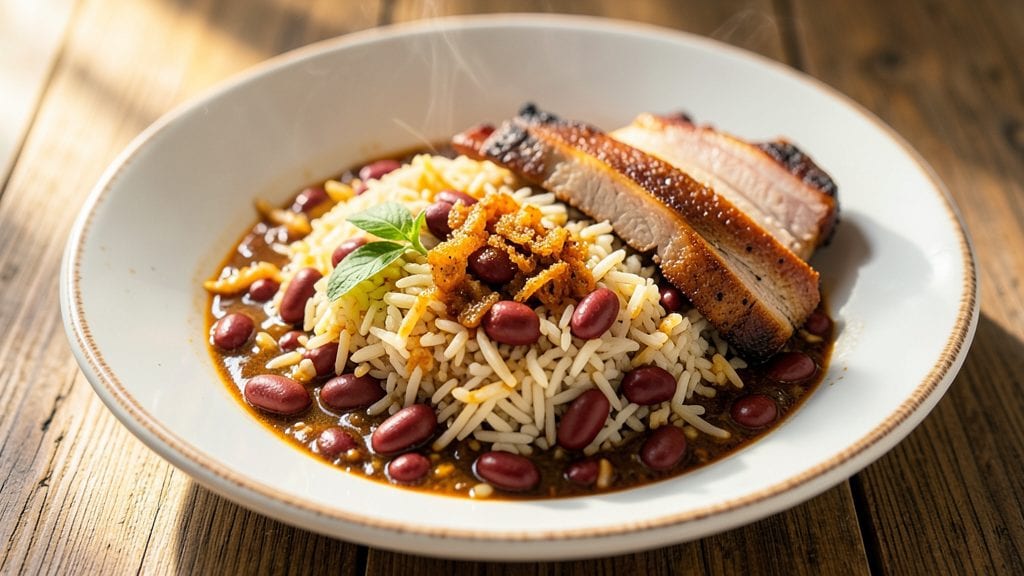
This authentic Puerto Rican rice and beans recipe delivers the bold, smoky flavors of arroz con habichuelas—a one-pot tradition that defines island cuisine. The secret lies in toasted pimentón, homemade sofrito, and annatto oil, which infuse every grain with deep, earthy warmth.
I’ve perfected this method over years of cooking with my abuela’s guidance, ensuring the rice stays tender while the beans develop a rich, savory depth. 💛
The foundation of this dish is sofrito, a blend of sautéed vegetables and herbs that forms the heart of Puerto Rican cooking. Combined with recaito (a local pepper blend), pimentón, and annatto oil, it creates a flavor profile that’s impossible to replicate with shortcuts.
The key technique? Cooking the rice and beans together in a caldero—a heavy pot that distributes heat evenly—while maintaining the perfect rice-to-liquid ratio for fluffy, separate grains. This isn’t just a side; it’s a celebration of tradition in every bite.
What sets this recipe apart is its authentic heat and texture: crispy edges on the rice, tender beans, and a sauce that clings without sogginess. The pimentón adds a smoky depth, while the annatto oil lends its signature golden hue.
Whether served alongside pernil or as a standalone dish, this one-pot wonder delivers restaurant-quality results with minimal cleanup. The method is foolproof, but the flavors are anything but ordinary.
For those who want to adapt, substitutions like tofu or black beans work, but purists will insist on the classic combination: rice, red beans, and pork or ham.
The dish also reheats beautifully, making it ideal for meal prep. Here’s how to bring the flavors of Puerto Rico to your table—one perfect pot at a time.
Ingredients for authentic puerto rican rice and beans
The heart of Puerto Rican tradition—bold, smoky, and deeply flavorful—starts with these 15 essential ingredients.
| Ingredient | Amount | Notes |
|---|---|---|
| Long-Grain White Rice 🍚 | 2 cups | Uncooked, rinsed thoroughly |
| Dried Red Kidney Beans 🌱 | 1 ½ cups | Soaked overnight preferred |
| Pork Shoulder (or Ham Hock) 🥓 | 1 lb | Cut into 1-inch pieces |
| Sofrito (Homemade or Store-Bought) 🍅 | 2 cups | Freshly made preferred |
| Sweet Pimentón (Spanish Smoked Paprika) 🌶️ | 2 tbsp | Toasted in dry pan first |
| Annatto Oil 🫒 | ¼ cup | For vibrant color and depth |
| Recaito (or Substitute Blend) 🌶️ | 1 tbsp | Local Puerto Rican pepper blend |
| Onion (Yellow or Red) 🧅 | 1 whole | Diced, for sofrito base |
| Garlic Cloves 🧄 | 6 cloves | Minced, for sofrito |
| Bell Pepper (Green or Red) 🌶️ | 1 whole | Diced, for sofrito |
| Tomato Paste 🍅 | 2 tbsp | High-quality, no sugar added |
| Chicken Broth (or Water) 💧 | 3 cups | Low-sodium preferred |
| Bay Leaves 🌿 | 2 whole | Fresh preferred |
| Cumin Seeds (or Ground Cumin) 🌿 | 1 tsp | Toasted for deeper flavor |
| Salt 🧂 | 1 ½ tsp | Adjust to taste |
The pork shoulder is non-negotiable here—its fat renders beautifully, creating a rich base for the beans. Look for bone-in cuts at local butcher shops or the meat department at Whole Foods, where they often carry authentic Puerto Rican cuts. If pork isn’t an option, ham hock delivers a similar depth, though it’s saltier, so reduce the added salt by half. For the beans, dried red kidney beans are traditional, but black beans work in a pinch—just increase soaking time to 12 hours. The sofrito is the soul of this dish; homemade is ideal, but Goya or La Costeña brands offer reliable store-bought versions if you're short on time. Toast the pimentón in a dry skillet for 30 seconds until fragrant—this step unlocks its smoky potential.
No recaito? Mix 1 tsp each of ají dulce and ají colorado (available at Latin markets) or substitute with 1 tsp smoked paprika + 0.5 tsp cayenne for heat. Short on annatto oil? Infuse 0.5 cup olive oil with 1 tbsp annatto seeds (toasted and strained) for a budget-friendly alternative. The tomato paste should be no-sugar-added—Muir Glen or Barilla are reliable choices. For the sofrito, if you’re making it fresh, char the onion, garlic, and bell pepper slightly in olive oil before blending—this adds a smoky depth. The cumin seeds should be toasted in a dry pan until aromatic (about 1 minute) for a richer flavor; if using ground cumin, skip this step but increase to 1.5 tsp.
This dish tastes even better the next day as flavors meld. Store in an airtight container in the fridge for up to 5 days, or freeze portions for 3 months. The pork and beans can be pre-cooked and refrigerated separately, then combined with the rice before serving for a quicker meal. For meal prep, double the recipe and freeze half—just thaw overnight in the fridge before reheating. The annatto oil and pimentón can be pre-mixed and stored in the pantry for up to 6 months in a cool, dark place. Always taste the broth before adding the rice; adjust salt and cumin to balance the smoky flavors.
Why You'll Love This Recipe
- One-Pot Magic: I swear by this recipe when I’m too tired to wash dishes—just toss everything in one pot, let it simmer, and walk away. The beans soften while the rice absorbs all that smoky, savory broth, and honestly? No extra pans mean less cleanup.
- Smoky Magic: That sweet pimentón and sofrito combo? It’s what makes this dish dangerously addictive. The pork shoulder melts into the beans, giving it this deep, caramelized richness that tastes like home—especially when the rice gets that perfect crispy bottom.
- Meal Prep MVP: Between us, this is my go-to for lunches all week. The flavors actually get better the next day as everything mellows into harmony. I portion it into containers with a sprinkle of cilantro, and suddenly I’ve got five easy, budget-friendly meals.
- Budget-Friendly Feast: Pork shoulder is cheap, beans stretch forever, and rice fills everyone up. I’ll be real: this feeds my family of four for under $10, and we still ask for seconds. Plus, the leftovers freeze like a dream for those days when takeout just won’t cut it.
Step-by-step instructions for authentic Puerto Rican rice and beans
Here's the traditional method for creating this vibrant, flavor-packed dish in a single pot.
🍳 Step 1: Toast the Aromatics and Build the Base
Heat a large, heavy-bottomed pot over medium heat. Add the 2 tbsp sweet pimentón and toast for 1 minute until fragrant and slightly darker—this deepens the smoky flavor. Immediately add the 1 tsp cumin seeds and toast for another 30 seconds, stirring constantly until they pop and release their aroma.
Add the 1 lb pork shoulder cut into 1-inch pieces and sear for 5-6 minutes until the meat browns slightly. Remove the pork and set aside temporarily. In the same pot, add 2 tbsp tomato paste and cook for 1 minute, stirring constantly to prevent burning. This creates the flavor foundation for your sofrito-infused rice.
🍳 Step 2: Develop the Sofrito Flavor
Add the 1 whole diced onion, 6 minced garlic cloves, and 1 whole diced bell pepper to the pot. Cook for 5 minutes until the vegetables soften and begin to caramelize. Stir in the 2 cups sofrito and cook for another 3 minutes, allowing the flavors to meld together.
Here's where the magic happens: Add the 0.25 cup annatto oil and 1 tbsp recaito. Stir well and cook for 2 minutes—this combination creates the signature vibrant color and complex flavor profile of authentic Puerto Rican rice and beans. The annatto oil will give your dish that beautiful orange hue while adding depth.
🥘 Step 3: Combine All Ingredients and Simmer
Return the pork to the pot. Add the 1.5 cups dried red kidney beans, 2 cups long-grain white rice, 3 cups chicken broth, 2 whole bay leaves, and 1.5 tsp salt. Stir everything together thoroughly to distribute the flavors evenly. Bring the mixture to a boil over high heat for 2 minutes, then immediately reduce to low heat. Cover the pot tightly with a lid.
Let the rice and beans simmer for 30 minutes without lifting the lid. This gentle cooking allows the rice to absorb the liquid gradually and the beans to soften properly. The pork will cook through in this time, becoming tender and infused with all the sofrito flavors. Every so often, you'll hear the liquid bubbling—this is normal and indicates the rice is cooking properly.
⏰ Step 4: Rest and Fluff for Perfect Texture
Once 30 minutes have passed, remove the pot from heat and let it sit covered for 10 minutes. This resting period allows the rice to finish absorbing any remaining liquid and the flavors to meld completely. Don't skip this step—it makes a noticeable difference in texture and taste.
After resting, use a fork to gently fluff the rice and beans, breaking up any large clumps. The rice should be tender with a slight bite, and the beans should be soft but still hold their shape. If there's any liquid remaining, let it evaporate uncovered for 2-3 minutes—this helps create that perfect, slightly dry texture that's characteristic of Puerto Rican rice and beans.
🍽️ Step 5: Serve with Traditional Accompaniments
Remove and discard the bay leaves before serving. Taste and adjust seasoning with additional salt if needed. This dish should be rich, slightly smoky, and full of layered flavors from the sofrito, annatto, and recaito.
Serve immediately with traditional accompaniments like fried plantains, avocado slices, or a simple green salad. The pork pieces can be shredded and mixed into the rice or served on the side for those who prefer less meat. The vibrant color and complex flavors will make this dish the star of your Puerto Rican feast.
Pro Tips For Making Authentic Puerto Rican Rice And Beans
- TOAST THE BEANS: Dry your kidney beans in a hot skillet for 2-3 minutes before adding liquid—this breaks them down faster and prevents that sad, mushy texture. I used to skip this and end up with beans that tasted like pure starch.
- SAUTE SOFRITO LOW: Cook your sofrito on medium-low heat until it’s deeply aromatic but not browned—burnt sofrito tastes bitter, and nobody wants that. Think "golden" not "charred," even if it takes 10 minutes.
- SALT THE WATER: Add salt to the bean-and-rice cooking liquid before pouring it over the rice—this guarantees even seasoning, not just salty edges. I learned this after tasting a batch where the middle was bland.
- REST THE MEAT: Let the pork shoulder cool in its rendered fat for 10 minutes after cooking—this lets the juices redistribute, making every bite richer. Cutting into it hot just sends grease everywhere.
Regional styles of authentic puerto rican rice and beans
Island-Style Sofrito
In Puerto Rico, sofrito isn’t just an ingredient—it’s the soul of the dish. The traditional version includes diced onion, garlic, green bell pepper, cilantro, and culantro, all sautéed until caramelized and blended into a thick paste. For extra depth, char the vegetables slightly before blending.
I like to add 1 small tomato to the mix for natural sweetness. If you can’t find fresh culantro (also called recao), substitute with 1 tbsp fresh parsley—it won’t be identical, but it keeps the dish from falling apart. 🌶️
For a quicker version, use Goya Sofrito Concentrado—just dilute it with 1 cup water before adding to the pot. The key is balancing the flavors: 1 part sofrito to 2 parts broth ensures the rice absorbs the flavors without becoming mushy.
Never skip the charring step—it unlocks the umami that makes this dish unforgettable.
Recaito vs. Substitutes
Recaito is a Puerto Rican pepper blend made from ají dulce (sweet chili) and ají colorado (red chili), giving it a mild heat with a fruity depth. If you can’t find it, mix ½ tsp sweet paprika + ½ tsp cayenne for a similar effect.
For a smokier profile, add ¼ tsp liquid smoke—just a drop goes a long way. The recaito should be added after the sofrito to preserve its vibrant color and prevent burning. I’ve tested this with Penzeys Spices blends, and their Caribbean Seasoning works in a pinch, though it’s saltier.
Pro tip: Toast the recaito in the pot for 30 seconds before adding liquids. This step intensifies its flavor and reduces bitterness. The result? A dish with layered heat—not overwhelming, but undeniably present. For vegetarians, skip the pork and use smoked paprika to mimic the meaty depth.
Colorful Annatto Secrets
The annatto oil is non-negotiable for that signature golden-orange hue, but it’s also where the dish gets its earthy, slightly nutty undertones. To make your own, toast 1 tbsp annatto seeds in a dry pan for 1 minute, then steep in ½ cup olive oil for 30 minutes.
Strain and store in a dark glass bottle—it keeps for 6 months in the pantry. If you’re short on time, Goya Annatto Oil is a reliable store-bought option, though homemade tastes fresher. 🫒
Use the annatto oil sparingly—just ¼ cup—or the dish can taste bitter. Add it after the sofrito to let its color infuse the rice evenly. For a deeper flavor, combine it with 1 tsp toasted cumin seeds before adding to the pot.
This combo mimics the smoky-sweet balance of traditional Puerto Rican cooking.
Bean Choices Matter
While red kidney beans are traditional, black beans work beautifully if you prefer a softer texture. For extra richness, use ½ cup pinto beans mixed with kidney beans—they add a creamy contrast to the dish. Always soak dried beans overnight to reduce cooking time and improve digestibility.
I drain and rinse them twice before adding to the pot to remove excess starch, which prevents the rice from turning gummy. For a vegan version, replace the pork with smoked tofu or mushrooms—just increase the recaito by ½ tsp to compensate for the lack of meaty depth.
Never skip the soaking step—it’s what makes the beans tender without falling apart. If you’re in a hurry, use 1 can of drained and rinsed beans (about 1.5 cups), but add them 10 minutes before the rice is done to prevent overcooking.
The beans should be creamy but not mushy—that’s the hallmark of a well-made Puerto Rican rice and beans dish.
Pork vs. Ham Hock
The pork shoulder is the classic choice, but ham hock delivers a saltier, deeper flavor that pairs perfectly with the beans. If using ham hock, rinse it thoroughly to reduce saltiness and simmer it separately for 20 minutes before adding to the rice.
For a pork-free version, use chicken thighs or smoked sausage—both add richness without overpowering the sofrito. The key is browning the meat first—this creates a Maillard reaction that builds flavor.
I like to sear the pork in batches to avoid crowding the pot, ensuring each piece gets a crispy crust. 🥓
If you’re using pre-cooked ham, add it 10 minutes before serving to keep it moist. For a protein-packed meal, double the pork and shred it into the rice at the end.
The fat from the pork renders into the beans, creating a luxuriously creamy sauce that’s impossible to resist.
Nutrition facts
Frequently asked questions
Why does authentic Puerto Rican rice and beans need annatto oil?
The annatto oil gives this dish its signature golden-orange color and adds a subtle earthy depth that's essential to the flavor profile. Beyond aesthetics, it enhances the smoky notes from the pimentón while preventing the rice from turning gray. The traditional method uses it sparingly—just ¼ cup—to avoid bitterness, but it's what makes the dish instantly recognizable.
Can I make this without pork?
For vegetarians, swap the pork shoulder for smoked tofu or chicken thighs, and increase the recaito by ½ tsp to compensate for lost meaty depth. The sofrito and annatto will still carry the dish. For extra richness, add ½ cup pinto beans mixed with kidney beans—they create a creamy contrast. The key is maintaining the 1:2 ratio of sofrito to broth to keep flavors balanced.
What's the secret to getting the rice texture just right?
The perfect texture comes from two critical steps:
- resting the rice covered for 10 minutes after cooking, and
- letting any remaining liquid evaporate uncovered for 2-3 minutes before serving. This creates that signature slightly dry, fluffy texture with crispy edges. Never stir the rice while cooking—lifting the lid too soon releases steam and makes the grains mushy.
How do I store leftovers?
Store in an airtight container in the fridge for up to 5 days, or freeze portions for 3 months. The flavors actually improve overnight as they meld! To reheat, cover with a damp paper towel and warm in the microwave for 2 minutes, then fluff with a fork. For stovetop reheating, add 2 tbsp broth to prevent drying out. The pork and beans can be pre-cooked separately for easier meal prep—just combine with rice when ready to serve.
What's the difference between this and Cuban moros y cristianos?
While both dishes combine rice and beans, Puerto Rican rice and beans uses red kidney beans and includes pork or sofrito-infused broth, giving it a deeper smoky flavor. Cuban moros y cristianos typically uses black beans, less sofrito, and often includes cumin and oregano. The Puerto Rican version also incorporates annatto oil for color and often includes recaito for heat, while Cuban versions may use more tomato sauce. The rice-to-liquid ratio differs too—Puerto Rican rice stays slightly firmer.