
Main Courses
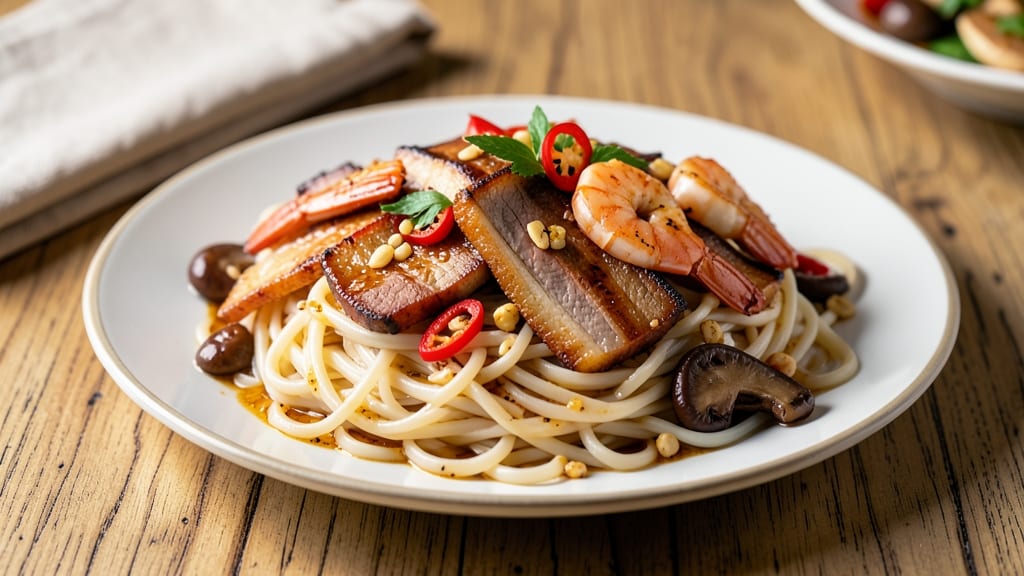
Cantonese rice noodles deliver that signature wok-hei smokiness and silky texture that makes every slurp worth it. This dish transforms simple ingredients into a restaurant-quality bowl with just the right balance of chewy noodles, savory broth, and tender protein.
The secret lies in the high-heat stir-fry technique that infuses the noodles with aromatic wok flavors.
What sets this recipe apart is the layered depth—starting with a fragrant broth base (pork or seafood), then building complexity with charred proteins like pork belly or shrimp, and finishing with traditional toppings that add freshness and crunch.
Whether you prefer the Hong Kong-style richness or Singaporean heat, this method delivers authentic results without shortcuts.
Ingredients for cantonese rice noodle
Silky rice noodles, aromatic wok flavors, and tender proteins create this authentic Cantonese dish.
| Ingredient | Amount | Notes |
|---|---|---|
| Flat Rice Noodles 🍜 | 8 oz | Thin or medium thickness preferred |
| Pork Belly Slices 🐖 | 1 lb | Thinly sliced, marinated in soy sauce |
| Shrimp 🦐 | 1 lb | Large, peeled, deveined, tails on |
| Dried Shiitake Mushrooms 🍄 | 6 whole | Rehydrated in warm water |
| Garlic Cloves 🧄 | 8 cloves | Minced, for aromatic base |
| Thai Bird's Eye Chilies 🌶️ | 4 whole | Seeds removed for mild heat |
| Light Soy Sauce 🥢 | ½ cup | Kikkoman preferred for balance |
| Dark Soy Sauce 🥢 | 1 tbsp | For deeper color and umami |
| Oyster Sauce 🥢 | 2 tbsp | Lee Kum Kee for authentic flavor |
| Sesame Oil 🫒 | 1 tbsp | Toasted, for finishing aroma |
| Neutral Oil 🫒 | ½ cup | Peanut or vegetable oil |
| Green Onions 🧅 | 4 whole | Thinly sliced, for garnish |
| Fresh Cilantro 🌿 | ¼ cup | Chopped, for freshness |
| Lime Wedges 🍋 | 2 whole | For serving |
| Salt 🧂 | 1 tsp | Diamond Crystal preferred |
The rice noodles are the foundation—look for flat, chewy varieties at Asian markets like 99 Ranch or H Mart. Rehydrate them in hot water for 3-4 minutes, then rinse with cold water to stop cooking. Pork belly should be thinly sliced and marinated in soy sauce for at least 30 minutes before cooking. For shrimp, freshness is critical—opt for wild-caught when possible. Dried shiitake mushrooms add depth; rehydrate them in warm water to preserve their texture. Garlic and chilies should be minced finely for proper infusion during the high-heat stir-fry.
No pork belly? Substitute char siu (Chinese BBQ pork) or extra shrimp for a seafood-forward version. Light soy sauce can be swapped for tamari if gluten-free, but dark soy sauce is essential for color—no substitute will replicate its caramelized richness. For heat, Sichuan peppercorns can replace bird's eye chilies if you prefer a numbing spice. Oyster sauce is non-negotiable for umami; Lee Kum Kee is the gold standard, but homemade with mushrooms and soy works in a pinch. Fresh herbs like cilantro and green onions should be added at the end to preserve their bright flavors.
Prep the marinade and broth base ahead of time—they keep for up to 3 days in the fridge. Store cooked noodles separately from the sauce to maintain texture; toss them together just before serving. The dish reheats beautifully—microwave with a splash of water to restore moisture. Portion into containers for meal prep, but add lime wedges and fresh herbs freshly before eating. Leftovers keep for 2 days in the fridge, though texture softens slightly.
Why You'll Love This Recipe
- One-Pan Magic: I swear by this recipe when I’m too tired to wash dishes. The pork belly renders its own fat, the shrimp sizzles in seconds, and those flat rice noodles soak up the sauce without a fight—just toss everything in one wok, and you’re done.
- Umami Bomb: That dried shiitake mushroom soaking in hot water? Absolute flavor gold. Rehydrated, they add this deep, earthy punch that makes the dish taste like it simmered for hours—even though it’s ready in 20 minutes.
- Lunchbox Hero: Between us, this is my go-to for packed lunches. The noodles stay tender for days, the pork belly stays juicy, and I can swap in leftover shrimp or even chicken without breaking a sweat. (Yes, even on a Tuesday night.)
- Budget Wins: Pork belly might sound fancy, but a few slices stretch across multiple meals, and dried shiitake mushrooms last forever. I’ve made this for under $10 per serving—plus, the leftovers reheat like they’re fresh off the stove.
Step-by-step instructions for Cantonese rice noodle dish
Master the art of wok-hei with this precise method for silky, aromatic rice noodles.
Prepare the Noodles and Protein Components
Begin by soaking the 8 oz flat rice noodles in warm water for 10-12 minutes until pliable but still slightly firm to the touch. Drain immediately and toss with 1 tablespoon sesame oil to prevent sticking. This light coating also enhances the noodles' natural aroma.
For the pork belly, combine the 1 lb pork belly slices with 0.5 cup light soy sauce and 1 teaspoon salt in a bowl. Let marinate for at least 30 minutes at room temperature. Meanwhile, rehydrate the 6 whole dried shiitake mushrooms in warm water for 20 minutes, then drain and slice. Peel and devein the 1 lb shrimp, leaving the tails intact for presentation.
Build the Aromatic Base
Heat 0.5 cup neutral oil in a wok or large skillet over high heat until shimmering. Add the marinated pork belly and sear for 2-3 minutes until lightly browned but not fully cooked. Remove and set aside. In the same wok, add 8 cloves minced garlic and 4 whole Thai bird's eye chilies (seeds removed), stir-frying for 30 seconds until fragrant but not colored.
Add the sliced shiitake mushrooms and cook for 2 minutes until they release their moisture and begin to caramelize. This step develops the umami depth that defines Cantonese flavors. The mushrooms should be tender but still hold their shape, with edges turning slightly golden.
Combine Sauces and Return Protein
Lower the heat to medium-high and add 1 tablespoon dark soy sauce, 2 tablespoons oyster sauce, and the reserved pork belly back to the wok. Stir to combine, allowing the pork to finish cooking through while absorbing the sauce. The dark soy sauce will create that signature mahogany glaze while the oyster sauce adds richness.
Push the pork to one side of the wok and add the shrimp. Cook for 1-2 minutes until just opaque and curled. The shrimp should be tender but still firm to the bite—overcooking will make them rubbery. Remove both proteins and set aside temporarily.
Finish with Noodles and Garnishes
Return the wok to high heat and add the drained noodles, tossing vigorously to coat in the remaining sauce and aromatics. Cook for 1-2 minutes until the noodles are heated through and slightly wok-hei infused. The high heat ensures they maintain their silky texture rather than becoming mushy.
Return the pork and shrimp to the wok, tossing everything together for 30 seconds to meld the flavors. Divide among serving plates and garnish with 4 whole thinly sliced green onions and 0.25 cup chopped fresh cilantro. Serve immediately with 2 whole lime wedges on the side for brightness.
Pro Tips For Making Cantonese Rice Noodle
- SOAK NOODLES SEPARATELY: Flat rice noodles stick like glue if you toss them straight into boiling water. Instead, spread them in a colander and pour just enough hot water to cover—about 15 minutes should soften them perfectly. I learned this the hard way when my noodles turned into a mushy mess because I didn’t give them space to absorb water evenly.
- CRACK PORK BELLY FIRST: Skip the whole slab—slice pork belly into ½-inch thick pieces before cooking. Thinner cuts render fat faster and crisp up better, especially when stir-frying later. I used to fight with thick slices that stayed greasy and chewy, and it’s a game-changer to prep them this way.
- REHYDRATE MUSHROOMS RIGHT: Dried shiitake mushrooms need a 10-minute soak in warm water (not boiling) to plump up properly. Slice them after soaking—this keeps them tender instead of turning to sawdust. I once skipped this and ended up with a bowl of mush where I wanted texture.
- STIR-FRY IN BATCHES: Don’t crowd the wok—cook pork belly and shrimp separately if needed. Overloading steams the ingredients instead of searing them. My first attempt left everything soggy because I tried to rush it; now I work in stages for that classic wok-hei flavor.
Best sauces and condiments for this dish
Broth Base Secrets
Start with a simple pork-based broth by simmering 1 lb pork bones with 8 cups water, 1-inch ginger slice, 4 star anise pods, and 1 cinnamon stick for 1.5 hours. Strain and reduce by half for intensity.
For seafood lovers, use 1 lb shrimp shells and ½ lb fish heads instead—simmer for 20 minutes with 1 tbsp soy sauce and 1 tsp sugar. 🍲
For extra depth, add 1 tbsp fermented black beans or 2 dried red chilies to the broth. These ingredients are key in Hong Kong-style versions, adding a funky, savory complexity. I always keep a small batch in the fridge for quick noodle bowls.
Umami Boosters
The oyster sauce is non-negotiable—Lee Kum Kee is my go-to, but homemade works too. Mix ½ cup soy sauce, 2 tbsp sugar, 1 tbsp Shaoxing wine, and 1 tsp sesame oil, then simmer until thickened.
For a vegetarian twist, swap in mushroom-based umami with 2 tbsp soy sauce, 1 tbsp miso, and 1 tsp nutritional yeast.
Don’t skip the dark soy sauce—it’s what gives those rich mahogany hues. A 1 tbsp splash at the end of cooking transforms the dish. If you’re out, a mix of light soy + ½ tsp molasses mimics the color, though not the depth. 🥢
Spice and Heat
Thai bird’s eye chilies are traditional, but Sichuan peppercorns add a numbing heat that’s perfect for Singaporean-style noodles. Toast 1 tsp whole peppercorns in the oil before adding aromatics—they’ll infuse the whole dish with their signature tingling warmth.
For milder heat, reduce to 2 chilies or swap in ½ tsp chili flakes.
Balance heat with sweetness—a splash of 1 tsp honey or ½ tsp sugar at the end tames spice while enhancing caramelization. I often drizzle 1 tsp chili oil (homemade or store-bought) over the dish for a smoky, spicy finish. 🌶️
Finishing Touches
A drizzle of toasted sesame oil right before serving unlocks the dish’s aroma. Heat 1 tbsp in a dry pan until fragrant (just 30 seconds), then cool slightly before adding.
Fresh lime wedges are a must—they cut through the richness and add brightness. For extra crunch, top with crispy fried shallots or toasted sesame seeds.
Pro tip: Save 1 tbsp of the cooking oil from the wok—it’s packed with wok-hei flavor. Drizzle it over the noodles just before eating for that restaurant-quality smokiness. Trust me, it’s a game-changer. ✨
Nutrition facts
Frequently asked questions
What's the best way to store leftover Cantonese rice noodles?
Store cooked noodles separately from the sauce in an airtight container for up to 2 days in the fridge. Reheat gently with a splash of water to restore moisture. The sauce can be kept separately for 3 days—just toss with fresh noodles when reheating. For longer storage, freeze the sauce in ice cube trays for easy portioning.
Can I make this recipe vegetarian?
Replace pork belly with extra shrimp or firm tofu marinated in soy sauce. For umami depth, use 2 tbsp soy sauce + 1 tbsp miso instead of oyster sauce. Add shitake mushrooms and fermented black beans to boost savory flavors. The texture will be lighter but still packed with wok-hei aroma.
Why do my noodles turn mushy?
Overcooking is the main culprit—rice noodles only need 1-2 minutes in the wok after draining. Use high heat and toss constantly to prevent steaming. Also, rinse noodles with cold water after cooking to stop the cooking process immediately. For extra insurance, soak them in ice water for 1 minute before draining.
What's the difference between Hong Kong and Singaporean styles?
Hong Kong versions focus on rich, pork-based broths with fermented black beans and dark soy sauce for deep color. Singaporean styles often include Sichuan peppercorns for numbing heat and more chili. Both use rice noodles, but Singaporean versions tend to be slightly spicier and more aromatic from spices like lemongrass.
Can I use instant ramen noodles instead?
Not recommended—they lack the chewy, silky texture of authentic rice noodles. For a quick substitute, use udon noodles (soaked in hot water for 5 minutes) or vermicelli rice noodles. The flavor profile will differ, but the technique remains the same: high heat and quick cooking. For best results, stick with traditional flat rice noodles from Asian markets.