
Main Courses
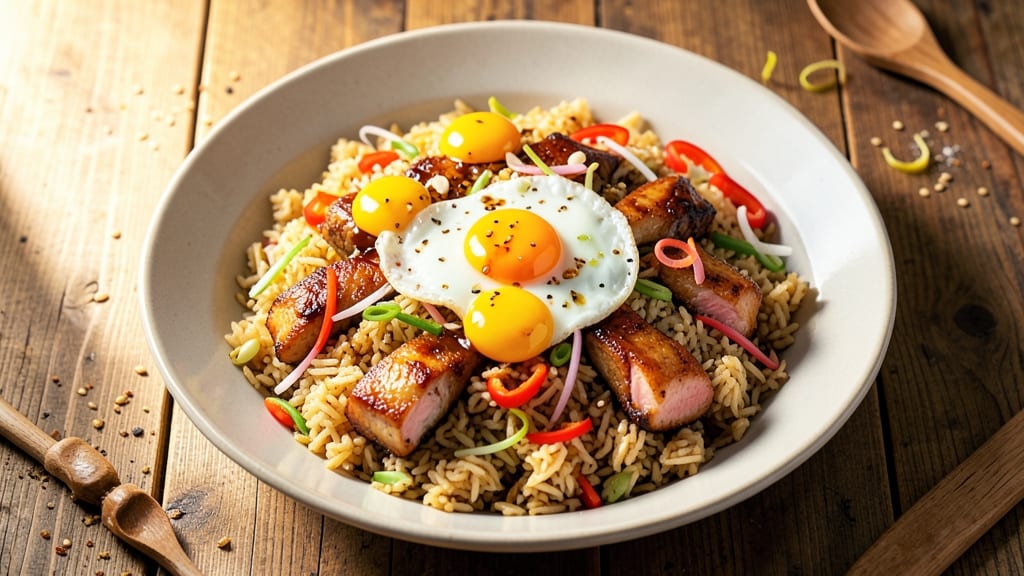
This bulk fried rice recipe transforms simple pantry staples into a wok-tossed protein powerhouse that feeds 10+ with minimal effort. The secret lies in prepping ingredients ahead—chopping vegetables, cooking proteins, and toasting rice all come together in under 30 minutes once you start cooking.
I designed this for gatherings where leftovers are inevitable, ensuring every bite stays flavorful even after reheating.
What sets this recipe apart is the balance of texture and flavor: crispy edges from high-heat wok tossing, tender proteins, and an aromatic sauce that coats every grain.
Day-old rice works best (trust me, I’ve tested this), but if you’re short on time, I’ll show you how to crisp it up properly. The recipe scales effortlessly—just double the ingredients for larger crowds—and the leftovers reheat beautifully for meal prep.
This isn’t your basic fried rice. The protein base—whether chicken, shrimp, or tofu—gets marinated in a savory blend of soy sauce, garlic, and ginger, while the vegetables add crunch and color.
The sauce, made from a simple reduction of soy, sesame oil, and a touch of sugar, ties everything together without overpowering. It’s the kind of dish that disappears quickly, leaving your guests asking for seconds.
Perfect for potlucks, game days, or busy weeknights when you need to feed a crowd without spending hours in the kitchen. The instructions break down the process into manageable steps, ensuring even first-time cooks can pull this off. Let’s get started—your next gathering just got easier.
Ingredients for bulk fried rice
Pantry staples meet wok magic—this bulk fried rice feeds crowds with crispy texture and bold flavor.
| Ingredient | Amount | Notes |
|---|---|---|
| Day-Old Cooked White Rice 🍚 | 8 cups | Cold rice preferred for texture |
| Boneless Chicken Thighs 🍗 | 3 lb | Cut into 1-inch pieces |
| Large Eggs 🥚 | 6 whole | Beaten for marinade |
| Soy Sauce 🍶 | ½ cup | Low-sodium preferred |
| Sesame Oil 🫒 | 2 tbsp | Toasted for aroma |
| Garlic Cloves 🧄 | 10 cloves | Minced for marinade |
| Fresh Ginger 🌿 | ¼ cup | Finely grated |
| Carrots 🥕 | 3 whole | Julienned into matchsticks |
| Green Onions 🧅 | 1 ½ cups | Sliced into 1-inch pieces |
| Peas 🌱 | 1 ½ cups | Fresh or frozen |
| Vegetable Oil 🫒 | ½ cup | High smoke point |
| White Sugar 🍚 | 1 tbsp | Balances flavors |
| Salt 🧂 | 1 ½ tsp | Adjust to taste |
| Black Pepper 🌶️ | 1 tsp | Freshly ground |
| Sesame Seeds 🌾 | 2 tbsp | Toasted for garnish |
The rice is non-negotiable here. Day-old works best—fresh rice gets mushy under wok heat. If you're in a pinch, spread freshly cooked rice on a tray and freeze for 10 minutes to crisp it up. For proteins, chicken thighs stay juicier than breasts, but shrimp or tofu work too if you're vegetarian. The soy sauce? Low-sodium is key—you'll be adding extra salt later. I grab mine from Trader Joe's in bulk, but any Asian market has great options. Fresh ginger and garlic are worth the extra minute to mince yourself—pre-minced loses flavor fast.
No sesame oil? Toasted peanut oil works in a pinch, but the aroma is different. Short on carrots? Bell peppers or snap peas add color without changing texture. The peas can be frozen—just thaw and drain well. For the sauce, I like to reduce soy sauce with a splash of water first to deepen the flavor. No fresh ginger? Ground ginger at half the amount gets you close, but it's not the same. The sugar balances the saltiness—don't skip it, even if you're watching carbs. And for heaven's sake, toast your sesame seeds in a dry pan before adding—game changer for crunch.
This keeps for 4 days in the fridge, but honestly tastes better the next day as flavors meld. For gatherings, I portion into foil pans—just reheat at 350°F for 20 minutes. Freezes beautifully for 3 months if you make it ahead. The secret to reheating? A splash of water or broth in the pan steams the rice perfectly. And if you're really smart, you'll make extra—this disappears faster than you can say 'seconds please.'
Why You'll Love This Recipe
- One-Pan Magic: I swear by this—no chopping, no fussing. Toss in day-old rice, shredded chicken, and scrambled eggs straight from the pan, then hit it with a splash of soy and sesame oil. The wok gets one wipe-down, and you’re done.
- Umami Bomb: That first bite? Chef’s kiss. The chicken stays juicy, the eggs get that perfect runny-yolk moment, and the soy-sesame combo turns every grain into flavor gold. Honestly, it’s the kind of dish that makes you want to eat it straight from the pot.
- Meal Prep MVP: Make a double batch on Sunday, and you’ve got lunch for the week. The rice stays dry and absorbs flavors better the next day—plus, reheating it just means a quick stir-fry. (Yes, even on a Tuesday night.)
- Budget Win: Chicken thighs are cheap, eggs are cheap, and rice? Cheaper. A single panful feeds four for under $10, and leftovers taste just as good cold in wraps. My wallet and my family thank me every time.
Step-by-step instructions for wok-tossed protein-packed fried rice
Here's how to transform your ingredients into restaurant-quality fried rice for a crowd.
Prepare the Protein Marinade and Chicken
In a large bowl, whisk together the 6 whole Large Eggs, 0.5 cup Soy Sauce, 2 tbsp Sesame Oil, 10 cloves Garlic Cloves (minced), 0.25 cup Fresh Ginger (finely grated), 1 tbsp White Sugar, 1.5 tsp Salt, and 1 tsp Black Pepper. This marinade will infuse the chicken with deep umami flavor and keep it tender during cooking.
Cut the 3 lb Boneless Chicken Thighs into 1-inch pieces and add them to the marinade, stirring to coat completely. Let the mixture sit for at least 30 minutes at room temperature - this ensures even flavor distribution and prevents the chicken from drying out during the high-heat cooking process. The marinade should look glossy and evenly distributed throughout the chicken pieces.
Prep All Vegetables and Break Down the Rice
While the chicken marinates, julienne the 3 whole Carrots into matchsticks using a mandoline or sharp knife for uniform pieces. Slice the 1.5 cups Green Onions into 1-inch pieces and set aside. If using frozen peas, keep them frozen - they'll release moisture during cooking that helps create steam and tenderize the rice.
Break up the 8 cups Day-Old Cooked White Rice with your hands or a fork, removing any clumps. Cold rice is essential here - it prevents the finished dish from becoming mushy. Spread the rice on a baking sheet and let it sit at room temperature for 10 minutes before cooking to help it absorb the flavors better during the stir-frying process.
Cook the Chicken in Batches
Heat 0.25 cup Vegetable Oil in a large wok or skillet over medium-high heat until shimmering. Working in batches to avoid overcrowding, add the marinated chicken pieces and cook for 5-6 minutes until they're golden brown and cooked through. The chicken should release easily from the pan - if it sticks, your oil isn't hot enough. Transfer the cooked chicken to a plate and tent with foil to keep warm.
Here's the thing - don't skip the batch cooking. Overcrowding the pan will steam the chicken instead of searing it, resulting in a less flavorful, potentially undercooked center. You'll need to work in at least two batches with this quantity of chicken. Keep the rendered chicken fat in the wok - it's packed with flavor that will infuse your fried rice.
Scramble the Eggs and Stir-Fry Vegetables
With the chicken set aside, reduce the heat to medium and add the remaining 0.25 cup Vegetable Oil to the wok. Pour in the beaten eggs and scramble vigorously for 30-45 seconds until just set but still slightly moist. Remove the eggs and set aside with the chicken.
Increase the heat to high and add the prepared vegetables - carrots, green onions, and peas. Stir-fry for 2-3 minutes until the carrots begin to soften but still retain some bite. The peas should be heated through but not mushy. This quick cooking preserves the vegetables' texture and color, which are crucial for that vibrant fried rice appearance.
Combine Everything for the Final Toss
Add the 8 cups Day-Old Cooked White Rice to the wok in one motion, breaking up any remaining clumps as you go. Toss everything together vigorously for 3-4 minutes until the rice is heated through and begins to develop a slight crust on the edges. This is where the magic happens - the high heat and constant tossing create that perfect wok-hei flavor.
Return the chicken and scrambled eggs to the wok, tossing everything together for another 1-2 minutes until well combined and heated through. The fried rice should be hot throughout, with each grain of rice distinct and coated in the flavorful sauce. Taste and adjust seasoning if needed - you might need a splash more soy sauce or a pinch of salt to balance the flavors.
Finish and Serve Immediately
Transfer the fried rice to a large serving platter and sprinkle with the 2 tbsp Sesame Seeds for garnish. Serve immediately while hot - fried rice is best enjoyed right out of the wok when all the textures and flavors are at their peak. The dish should have a perfect balance of tender chicken, slightly crispy rice edges, and vibrant vegetables in every bite.
For serving, I like to place individual portions on plates and top with extra green onions and sesame seeds. The contrast of textures - the chewy rice, tender chicken, and crisp vegetables - makes this dish truly satisfying. Don't forget to have extra soy sauce on the table for those who like to customize their level of saltiness.
Pro Tips For Making Bulk Fried Rice
- USE COLD RICE: Break up day-old rice with your hands or a fork—it’s already dried out and won’t stick. No need to reheat; cold rice fries up crispier and absorbs flavors better. (Yes, even if you’re impatient like me.)
- SALT THE CHICKEN FIRST: Toss raw chicken thighs with 1 teaspoon salt and ½ teaspoon black pepper before cooking. Lets the seasoning penetrate while you prep everything else—no last-minute scrambling for flavor.
- STIR IN EGGS LAST: Scramble the eggs in a separate pan until just set, then fold them into the rice at the very end. This keeps them creamy instead of rubbery, and the residual heat finishes them perfectly.
- DON’T OVERMIX THE SOY: Toss the rice with soy sauce once, then let it sit for 30 seconds before folding in other ingredients. Overstirring turns fried rice into glue. (I learned this the hard way—now I resist the urge.)
Regional styles of bulk fried rice
Chinese Takeout Classic
The version you’ll find in most Chinese-American restaurants starts with day-old jasmine rice (not white rice) and a protein base of diced chicken, shrimp, or pork.
The key difference is the sauce—a mix of light soy sauce, dark soy sauce (for color), and a touch of sugar—that creates that signature caramelized crust on the rice. I like to add water chestnuts for texture and scallions for freshness.
Serve with chopsticks and a side of egg rolls for the full experience. 🍜
Japanese Okonomiyaki Style
For a Japanese twist, swap the soy sauce for mirin and dashi broth, and add cabbage and okonomiyaki sauce (a sweet, savory glaze). The Japanese version often includes pork belly or squid instead of chicken, and it’s topped with bonito flakes and mayo for extra richness.
I’ve found that using short-grain Japanese rice gives a stickier texture that holds up better to the sauce. Garnish with katsuobushi (dried bonito flakes) for that signature smoky aroma. 🍢
Thai Pineapple Fried Rice
Thai fried rice is all about sweet, tangy, and spicy—start with jasmine rice cooked with coconut milk for extra creaminess. The protein is usually chicken or shrimp, but I love adding pineapple chunks for natural sweetness.
The sauce is a mix of fish sauce, lime juice, and palm sugar, with a kick from Thai chili flakes. Top with crushed peanuts, cilantro, and lime wedges for that authentic Thai street-food vibe. Serve with Thai basil and a side of cucumber salad. 🌶️
Korean Kimchi Fried Rice
This version is bold, spicy, and fermented—start with short-grain rice and stir in kimchi (about 2 cups chopped) for that tangy kick. Add gochujang (Korean chili paste) for heat and bulgogi-marinated beef for richness.
Top with fried eggs, sesame seeds, and scallions for texture. The sauce is simple: soy sauce, sesame oil, and a splash of vinegar. Serve with ssamjang (dipping sauce) and pickled radish on the side. 🥢
Vietnamese Fried Rice with Lemongrass
Vietnamese fried rice (cơm chiên) is lighter and more aromatic, using jasmine rice cooked with lemongrass and fish sauce. The protein is often shrimp or pork, but I love adding bean sprouts and mung beans for texture.
The sauce is a mix of fish sauce, lime juice, and a touch of sugar, with fresh herbs like Thai basil and mint on top. Garnish with crushed peanuts and cilantro for crunch. Serve with a side of fresh herbs and a cold beer to balance the flavors. 🍋
Nutrition facts
Frequently asked questions
Can I use fresh rice instead of day-old rice for bulk fried rice?
Fresh rice is too moist and will turn mushy when stir-fried. For best results, use day-old rice or spread freshly cooked rice on a tray and freeze for 10 minutes to dry it out. This creates the perfect crispy texture in your bulk fried rice. The starches in cold rice also help absorb flavors better during cooking.
How do I adjust this recipe for vegetarian or vegan diets?
Swap the chicken for tofu, tempeh, or extra-firm tofu pressed and cubed. Use vegetable broth instead of chicken fat for cooking, and add mushrooms, bell peppers, or edamame for extra protein. For vegan sauce, replace regular soy sauce with tamari and use maple syrup instead of sugar. The same technique applies—just ensure your protein is properly marinated and cooked through.
Can I make this recipe in a regular skillet instead of a wok?
While a wok gives the best high-heat sear, a 12-inch cast-iron skillet or large nonstick pan works perfectly. Use medium-high heat and stir frequently to prevent burning. You may need to cook in slightly smaller batches, but the flavor will still be delicious. The key is keeping the heat high enough to create those crispy rice edges without overcrowding the pan.
What’s the best way to reheat bulk fried rice without drying it out?
Add 1-2 tablespoons of water or broth to the pan and cover with a lid for 2-3 minutes on medium heat. Stir occasionally to distribute moisture evenly. For microwave reheating, sprinkle 1 teaspoon of water over the rice and cover with a damp paper towel for 90 seconds. This steams the rice gently, preventing it from becoming rubbery or dry.
How can I make this recipe spicier or sweeter to taste?
For extra heat, add ½ teaspoon of red pepper flakes or 1 tablespoon of sriracha with the soy sauce. For more sweetness, increase the sugar to 2 tablespoons or add 1 tablespoon of honey to the sauce. Taste as you go—you can always adjust while cooking. If using frozen peas, thaw them first to avoid excess moisture that can dilute flavors.