
Main Courses
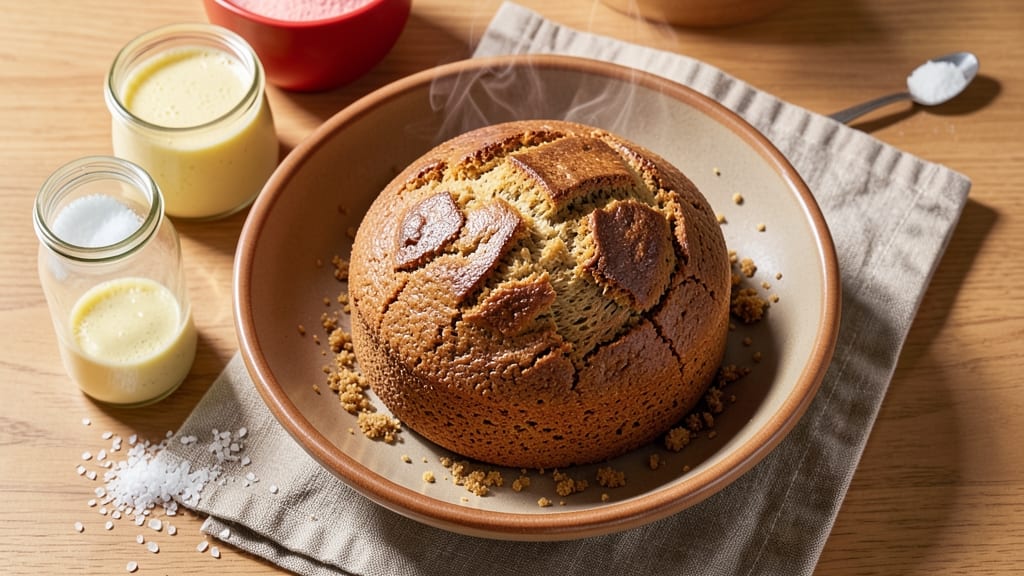
This brown rice flour gluten-free bread recipe delivers a surprisingly artisanal loaf with an open crumb structure and satisfying chew—no gluten, no compromise.
The secret lies in proper hydration and binding agents that mimic wheat flour's elasticity, creating a bread that's sturdy enough for sandwiches yet tender enough to melt in your mouth.
What sets this recipe apart is the open crumb magic achieved through precise proofing techniques and a touch of xanthan gum, which gives the dough structure without the need for gluten.
The result is a loaf with a crisp crust, airy interior, and just enough density to hold up to toasted butter or jam. Perfect for those avoiding gluten but craving real bread texture.
Ingredients for brown rice flour bread recipe gluten free
Precision-measured ingredients transform brown rice flour into a bread with artisanal texture and open crumb structure.
| Ingredient | Amount | Notes |
|---|---|---|
| Brown Rice Flour 🌾 | 3 ½ cups | Fine grind for optimal texture |
| Tapioca Starch 🌾 | ½ cup | For elasticity and chew |
| Xanthan Gum 🧪 | ½ tsp | Essential for gluten-free structure |
| Instant Yeast 🍞 | 2 tsps | Active dry works if adjusted |
| Granulated Sugar 🍚 | 1 tbsp | Feeds yeast for rise |
| Salt 🧂 | 1 ½ tsps | Diamond Crystal preferred |
| Extra-Virgin Olive Oil 🫒 | ½ cup | High-quality for flavor |
| Water 💧 | 1 ½ cups | Warm, not hot (105°F) |
| Flaxseed Meal 🌰 | 1 tbsp | For egg replacement |
| Apple Cider Vinegar 🍎 | 1 tbsp | Activates flaxseed binder |
| Psyllium Husk Powder 🌿 | 1 tbsp | For open crumb structure |
| Ground Flaxseed 🌰 | 1 tbsp | Additional binding agent |
The brown rice flour is the foundation—opt for fine grind from brands like Bob's Red Mill for optimal texture. Tapioca starch is non-negotiable here; it mimics gluten's elasticity, and Bob's Red Mill or Anthony's are reliable sources. Xanthan gum must be pure food-grade—Bob's Red Mill or Now Foods work best. For yeast, Red Star Instant Yeast activates faster than active dry. The psyllium husk powder (available at Whole Foods or Trader Joe's) is crucial for that signature open crumb, while ground flaxseed adds subtle nuttiness and binds like eggs. Extra-virgin olive oil should be fruity and peppery—California Olive Ranch or Colavita elevate the flavor.
No xanthan gum? Psyllium husk powder at double the amount provides some structure, though texture will differ. Tapioca starch can be swapped for arrowroot powder in a pinch, but expect slightly less chew. Flaxseed meal substitutes for eggs—Bob's Red Mill or Barlean's are best. Apple cider vinegar can be replaced with white vinegar or lemon juice for acidity. Brown rice flour substitutes like white rice flour or sweet rice flour work, but nut flour blends (almond, cashew) add richness at the cost of moisture control. Psyllium husk must be powdered finely—use a coffee grinder if needed.
Store dry ingredients in airtight containers for 6 months; yeast lasts 3 months refrigerated. Flaxseed meal oxidizes quickly—keep in the freezer for 3 months. Once mixed, dough stays fresh 24 hours refrigerated or 3 months frozen. For proofing, use a proofing box or instant-read thermometer to maintain 80-85°F. Bake immediately after shaping for best texture—this bread doesn't reheat well.
Why You'll Love This Recipe
- No-Fuss Mix-In: I swear by the 5-minute prep—just toss the brown rice flour, tapioca starch, and xanthan gum in a bowl. The yeast activates while I’m still measuring sugar, so no waiting around.
- Nutty-Sweet Surprise: That toasted brown rice flavor? It’s like a warm, earthy hug in every bite, especially when you brush it with melted butter. The tapioca starch gives it just enough chew to feel satisfying—not gummy, not dry.
- Meal Prep MVP: Slice it fresh, toast it later. I keep a loaf in the fridge all week—perfect for quick sandwiches or garlic butter toast when I’m too tired to think. Freezes like a dream too.
- Budget Bread Win: Brown rice flour is a pantry staple, and this recipe stretches farther than store-bought. Honestly, I’ve made three loaves from one bag, and the xanthan gum keeps it light without breaking the bank.
Step-by-step instructions for artisan gluten-free bread
Mastering this recipe delivers a bread with open crumb structure and satisfying chew—key for gluten-free baking.
Activate the Yeast and Prepare Binders
In a small bowl, whisk together the 1.5 cups warm water (105°F), 2 tsps instant yeast, and 1 tbsp granulated sugar. Let this mixture sit for 5-7 minutes until it becomes foamy and bubbles form along the sides. This confirms the yeast is active and ready to work.
In a separate small bowl, combine the 1 tbsp flaxseed meal, 1 tbsp apple cider vinegar, and 1 tbsp ground flaxseed. Whisk vigorously until fully dissolved—this mixture replaces eggs and creates the binding structure. Let it sit for 2 minutes while you prepare the remaining ingredients. The flaxseed mixture should thicken slightly, resembling a gel.
Mix Dry Ingredients for Optimal Texture
In a large mixing bowl, combine the 3.5 cups brown rice flour, 0.5 cup tapioca starch, 0.5 tsp xanthan gum, 1.5 tsps salt, and 1 tbsp psyllium husk powder. Whisk these dry ingredients together for 1-2 minutes to ensure even distribution. The psyllium husk powder is particularly important—it creates that signature open crumb structure by absorbing moisture and expanding during baking.
Create a well in the center of the dry ingredients mixture and pour in the yeast mixture and flaxseed binder. Add the 0.5 cup extra-virgin olive oil as well. Using a wooden spoon or silicone spatula, gently mix everything together until just combined. Avoid overmixing—you'll want to see some dry flour remaining in the bowl. The dough will be thick and sticky, similar to wet sand.
Develop Gluten-Free Structure Through Kneading
Transfer the dough to a lightly oiled surface and knead gently for 3-4 minutes. The gluten-free nature means you won't develop traditional gluten strands, but this step helps distribute the psyllium husk powder and olive oil evenly throughout the dough. The dough should come together into a cohesive mass that's slightly tacky but holds its shape when pressed.
Shape the dough into a round loaf and place it seam-side up in a lightly oiled 9x5-inch loaf pan. Cover the pan with a damp kitchen towel and let the dough rise at room temperature for 1 hour. You'll know it's ready when the dough has expanded to fill about 75% of the pan and shows slight doming. This rise is crucial for achieving that artisan bread texture.
Proof and Bake for Perfect Crust and Crumb
Preheat your oven to 375°F. While the oven heats, place a small baking sheet on the lower rack and fill it with 1 cup of water. This creates steam during baking, which helps develop that beautiful open crumb structure and crisp crust.
Carefully transfer the risen dough to the preheated oven. Bake for 45-50 minutes until the bread reaches an internal temperature of 205-210°F and the crust is deep golden brown. The bread should sound hollow when tapped on the bottom. If the top browns too quickly, tent loosely with aluminum foil after 30 minutes to prevent over-browning while the interior finishes baking.
Cool and Develop Final Texture
Remove the bread from the oven and let it cool in the pan for 10 minutes. Then transfer it to a wire rack to cool completely for at least 1 hour. This cooling period is essential—it allows the internal structure to fully set and prevents the bread from becoming gummy. The crumb will develop its characteristic open, airy texture as it cools.
Once fully cooled, slice with a serrated knife for clean cuts. Each slice should reveal that beautiful open crumb structure with pockets of air, and the crust should be crisp yet tender. Store wrapped in a bread bag at room temperature for up to 3 days, or freeze for longer storage. The bread will continue to develop flavor as it sits, making it even more delicious the next day.
Pro Tips For Making Brown Rice Flour Bread Recipe Gluten Free
- Mix the Dry First: Brown rice flour is stubborn—it clumps like a teenager refusing to share the WiFi. Whisk your dry ingredients (flour, tapioca starch, xanthan gum, yeast, sugar) together before adding liquids. I learned this the hard way after kneading a brick of dough that refused to soften, no matter how long I punched it.
- Weigh Your Xanthan Gum: That tiny packet of xanthan gum is not a garnish—it’s the glue holding your bread together. Use a scale (0.25% of your flour weight max) because the scoop in the package is a lie. I once skipped this and ended up with bread that crumbled like stale crackers. Trust me, measure it like you’re dosing medication.
- Let the Dough Rise Twice: Brown rice flour dough is lazy—it won’t bounce back like wheat. After the first rise (when it’s puffy but still dense), punch it down and let it rise again for another 30–45 minutes. This isn’t optional; it’s how you get that light, airy texture instead of a hockey puck. (Yes, I’ve made hockey pucks. Twice.)
- Steam the First 10 Minutes: Gluten-free bread hates dry heat. Before baking, spray the inside of your Dutch oven with water (or place a metal bowl of boiling water on the oven rack) and let the bread steam for the first 10 minutes. This guarantees a crisp crust without burning the outside while the inside stays dense. I was skeptical until I tried it—now I never bake it any other way.
Best sauces and condiments for these flavors
Herbed Olive Oil
Drizzle 2 tablespoons extra-virgin olive oil (like California Olive Ranch) over slices before serving. Infuse it with 1 tsp dried rosemary, 1 tsp dried thyme, and a pinch of Diamond Crystal salt by heating gently for 2 minutes.
The earthy notes complement the nutty brown rice flour beautifully. 🌿
Garlic-Herb Butter
Mix 2 tbsp softened European-style butter (such as Plugrá) with 1 minced garlic clove, ½ tsp chopped fresh parsley, and ¼ tsp lemon zest. Spread on warm slices for a luxurious finish. The garlic enhances the bread's natural chew while adding brightness. 🧄
Spicy Harissa Spread
Blend 2 tbsp tahini with 1 tsp harissa paste (like Bella Spice), 1 tsp honey, and a splash of apple cider vinegar. Spread on toasted bread for a smoky-sweet kick. The heat balances the bread's earthy texture perfectly. 🌶️
Creamy Avocado Mash
Mash ½ ripe avocado with 1 tbsp Greek yogurt (like Fage), ½ tsp lime juice, and salt to taste. Spread thickly on slices for a rich, velvety contrast to the bread's crisp crust. The healthy fats make this a satisfying pairing. 🥑
Sweet Almond Butter
Warm 2 tbsp almond butter (such as Justin's) with 1 tsp maple syrup and a pinch of cinnamon. Drizzle over slices for a sweet-savory balance. The nutty depth mirrors the brown rice flour's flavor profile. 🌰
Smoky Chipotle Aioli
Whisk ¼ cup mayonnaise (like Duke's) with 1 tsp adobo sauce from canned chipotles, ½ tsp smoked paprika, and 1 tsp lime juice. Serve with sliced bread and pickled onions for a smoky, tangy bite. The heat cuts through the bread's density beautifully. 🔥
Nutrition facts
Frequently asked questions
Why does this gluten-free bread need psyllium husk powder?
The psyllium husk powder is essential for creating that signature open crumb structure. It absorbs moisture and expands during baking, forming air pockets that mimic traditional bread's texture. Without it, the bread would be denser and lack the airy quality. Think of it as the gluten-free equivalent of gluten's elasticity!
Can I substitute xanthan gum if I don't have any?
Yes, but with limitations. Try 1 tbsp psyllium husk powder (double the amount) as a partial substitute, though the texture will differ slightly. For best results, use ½ tsp guar gum instead—it provides similar binding properties. Always test small batches first to adjust to your preferences.
How do I know when the dough is fully risen?
Your dough is ready when it expands to fill about 75% of the pan and shows slight doming. It should also feel springy when gently pressed—like pressing a jelly. If it doesn't rise enough, your kitchen may be too cool; try proofing near a warm oven with the light on.
Why does my gluten-free bread taste bland?
Brown rice flour has a mild flavor, so enhancing it is key! Try adding 1 tsp garlic powder or ½ tsp onion powder to the dry ingredients, or brush the crust with olive oil after baking. For extra depth, mix 1 tbsp nutritional yeast into the dough—it adds a cheesy, umami note.
Can I make this bread without a loaf pan?
Shape the dough into a free-form round or oval and bake on a parchment-lined baking sheet. For a rustic look, score the top with a sharp knife before baking. The baking time may increase by 5-10 minutes, so check for doneness at 40 minutes. The crust will be slightly thicker, but the texture remains excellent.