
Main Courses
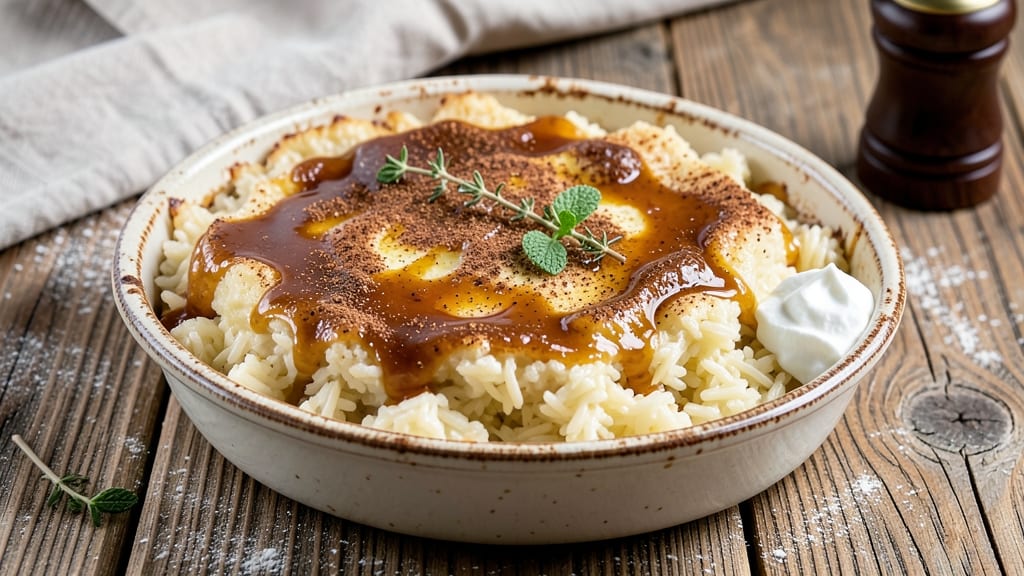
This British baked rice pudding recipe delivers the comforting, spiced perfection of a classic British dessert with its signature creamy texture and warm cinnamon-vanilla aroma. 💛 The secret lies in slow baking—just 45 minutes at 350°F—which transforms simple rice into tender, custard-like bites infused with vanilla and nutmeg, finished with a golden, caramelized top.
What makes this version special is its balance of traditional techniques and modern convenience: no pre-cooking the rice, no complicated custard layers, just a one-bowl method that yields restaurant-quality results every time.
The subtle sweetness of raisins (optional) and the warmth of cinnamon create that nostalgic British flavor profile that feels like a hug in dessert form.
Ingredients for british baked rice pudding
Sixteen ingredients transform into a creamy, spiced British dessert with golden perfection.
| Ingredient | Amount | Notes |
|---|---|---|
| Long-Grain White Rice 🍚 | 1 ½ cups | Uncooked, rinsed thoroughly |
| Whole Milk 🥛 | 3 cups | Full-fat for creaminess |
| Granulated Sugar 🍯 | 1 cup | Light brown preferred |
| Unsalted Butter 🧈 | ½ cup | Cold, cubed for baking |
| Pure Vanilla Extract 🌿 | 1 tbsp | High-quality, not imitation |
| Ground Cinnamon 🌶️ | 1 ½ tsp | Freshly ground preferred |
| Ground Nutmeg 🌿 | ½ tsp | Freshly grated nutmeg |
| Salt 🧂 | ½ tsp | Fine sea salt |
| Raisins 🍇 | ½ cup | Optional, plump variety |
| Large Eggs 🥚 | 2 whole | Room temperature |
| All-Purpose Flour 🌾 | ¼ cup | For golden crust |
| Breadcrumbs 🍞 | ¼ cup | Panko for extra crunch |
| Powdered Sugar 🍯 | 2 tbsp | For dusting |
The rice is the foundation—long-grain white works best for its tender bite. Rinse it well to remove excess starch, which prevents grittiness. For the milk, whole milk delivers the richest texture, though 2% works in a pinch. Butter matters here; use unsalted so you control the seasoning. The sugar should be light brown for subtle caramel notes, but white granulated is fine if that's what you have. Vanilla extract? High-quality pure makes all the difference—imitation won't cut it. For the spices, freshly ground cinnamon and nutmeg elevate the flavor profile. Penzeys or local spice shops carry the best quality.
No raisins? Skip them entirely—this recipe still shines. Short on butter? Coconut oil in equal measure works, though the flavor won't be identical. The eggs can be separated if you prefer a lighter texture, but whole eggs ensure that signature custard-like richness. For the crust, panko breadcrumbs create a delightful crunch, but regular breadcrumbs suffice. The powdered sugar is optional but adds a professional touch. If you're baking for a crowd, double the crust ingredients—it's worth the extra crunch. Prefer a less sweet dessert? Reduce the sugar by 2 tablespoons and add an extra pinch of cinnamon for warmth.
This pudding tastes even better the next day—3-4 days in the fridge is ideal. For make-ahead convenience, bake it 24 hours early and reheat covered at 300°F for 15 minutes. Store leftovers in an airtight container with parchment between layers to maintain moisture. Freeze for up to 3 months—thaw overnight in the fridge before serving. The crust stays crisp if you reheat it covered, then uncover for the final 2 minutes to crisp it up. Serve warm with a dollop of whipped cream or a dusting of cinnamon for that authentic British touch.
Why You'll Love This Recipe
- No-Fuss Baking: I swear by this recipe because it’s basically hands-off after the initial mix. Just toss the rice, milk, butter, and sugar into a dish, stir once, and let the oven do the work—no stirring every 10 minutes like some custards demand. The butter melts into something silky, and the vanilla sneaks in warmth without overpowering.
- Creamy Vanilla Hug: That first spoonful? Pure comfort. The rice soaks up the milk until it’s tender but still has a slight bite, while the butter and sugar caramelize just enough to give it a golden crust that cracks like a perfect hug. Honestly, it’s the kind of dessert that makes me forget I’m even eating something "fancy."
- Leftovers That Win: Between us, this pudding tastes better the next day. The flavors meld overnight, and it reheats in seconds—just pop it in the microwave or warm it gently in the oven. I make a big batch on Sundays and have it for breakfast, dessert, or even a quick lunch with a sprinkle of cinnamon.
- Pocket-Friendly Luxury: Five ingredients, one bowl, and you’ve got a dessert that feels indulgent but costs pennies. Whole milk and butter make it rich without breaking the bank, and the rice stretches to feed four for under $3. It’s my go-to when I want to impress guests but still keep my wallet happy.
Step-by-step instructions for British baked rice pudding
Transform simple ingredients into a velvety, spiced dessert with this classic British technique.
👨🍳 Step 1: Prepare the Rice Mixture
In a large saucepan, combine the 1.5 cups long-grain white rice, 3 cups whole milk, 1 cup granulated sugar, 0.5 cup unsalted butter, 1.5 tsp ground cinnamon, 0.5 tsp ground nutmeg, and 0.5 tsp salt. Stir until the sugar and butter dissolve completely, creating a smooth, creamy base. I like to use a wooden spoon for this—it prevents scratching the saucepan and helps distribute the butter evenly.
Bring the mixture to a gentle boil over medium-high heat, then immediately reduce to a simmer. Watch carefully—you want small, steady bubbles forming at the edges, not a rolling boil. Let it cook uncovered for 20-25 minutes, stirring occasionally, until the rice is tender and the mixture thickens noticeably. You'll know it's ready when it coats the back of a spoon and pulls away cleanly. This step builds the pudding's signature creamy texture.
🍳 Step 2: Add Raisins and Cool the Mixture
Stir in the 0.5 cup raisins, letting them soak in the warm mixture for 5 minutes. This allows them to plump slightly and absorb the spiced milk. Remove from heat and let the pudding cool to room temperature—about 30 minutes. I know it's tempting to rush this step, but cooling prevents the eggs from scrambling when added later. The pudding should thicken further as it cools, becoming almost custard-like.
While cooling, preheat your oven to 350°F. Grease a 9x13-inch baking dish generously with butter—this prevents sticking and ensures easy removal. The dish should be large enough to hold all the pudding in an even layer, about 1 inch thick when baked.
🥘 Step 3: Create the Crust Layer
In a medium bowl, whisk together the 2 whole large eggs, 0.25 cup all-purpose flour, and 0.25 cup breadcrumbs. This mixture forms the golden, crunchy crust that tops traditional British rice pudding. Spread half of this mixture evenly over the bottom of your prepared baking dish, pressing down gently with a spatula to create an even layer.
Pour the cooled rice pudding over the crust layer, spreading it evenly with a spatula. The pudding should come up to about ¾ inch from the top of the dish. Here's the thing—don't worry if it looks uneven at this stage. The pudding will settle slightly as it bakes, and the crust will expand beautifully.
🔥 Step 4: Bake to Golden Perfection
Top the pudding with the remaining egg mixture, spreading it evenly over the surface. The crust should cover the entire pudding completely. Bake in the preheated oven for 45-50 minutes until the top is deep golden brown and the edges are set. You'll see the crust puff up slightly and develop a beautiful caramelized color—this is your signal that it's nearly done.
For the final touch, sprinkle the 2 tbsp powdered sugar evenly over the top. Return to the oven for 2-3 minutes to caramelize the sugar slightly. This creates that classic British rice pudding sheen and adds a delicate sweetness. The pudding should be just set in the center when done—it will continue firming up as it cools.
⏰ Step 5: Rest and Serve Warm
Remove from the oven and let the pudding rest for 10 minutes before serving. This resting period allows the pudding to set properly and makes it easier to slice. The crust should be firm and crisp, while the interior remains creamy and comforting. Serve warm, straight from the baking dish, for the best texture and flavor experience.
Each serving delivers that perfect balance of creamy rice, spiced warmth from cinnamon and nutmeg, and the satisfying crunch of the breadcrumb crust. The raisins add just the right amount of chewy contrast. I like to pair it with a dollop of whipped cream or a scoop of vanilla ice cream for an extra touch of indulgence.
Pro Tips For Making British Baked Rice Pudding
- TOAST THE RICE FIRST: I learned this the hard way—skipping toasting means your pudding will taste raw and floury. Heat the rice in a dry pan over medium for 3-4 minutes until it’s golden and smells nutty. This step builds flavor and prevents that sad, starchy mouthfeel.
- USE FULL-FAT MILK: Whole milk is non-negotiable here—it’s what gives British rice pudding its creamy, velvety texture. Skip skim or almond milk, even if you’re watching calories. The fat coats the rice and carries the vanilla properly, so don’t water it down.
- STIR ONCE MIDWAY: After the first 30 minutes of baking, give the pudding a single stir—just enough to break up any surface crust or uneven browning. Then leave it alone. Overmixing releases starch and turns the pudding gluey, so resist the urge to check constantly.
- ADD VANILLA LATE: My grandmother swore by this, and she was right: fold in the vanilla extract after removing the pudding from the oven, not before baking. Heat dulls vanilla’s bright flavor, so adding it last keeps that warm, spiced aroma front and center.
Regional styles of this recipe
English Country Style
This classic version hails from English countryside kitchens, where it was traditionally served as a comforting dessert after Sunday roasts. The key difference here is the addition of 1 tbsp lemon zest to the rice mixture, brightening the warm spices.
I find this variation particularly special when served with a drizzle of honey instead of powdered sugar on top. The honey adds a floral note that complements the cinnamon beautifully. 🌿
Scottish Creamy Version
In Scotland, rice pudding often includes ½ cup chopped dates instead of raisins, along with a pinch of cardamom (about ¼ tsp) for a more exotic twist. The crust is typically made with crushed digestive biscuits instead of breadcrumbs, giving it a slightly softer texture.
Serve this version with a dollop of clotted cream—a Scottish specialty—for the ultimate indulgence.
Welsh Spiced Variation
The Welsh take their rice pudding seriously with a bold spice blend: 1 tsp cinnamon, ½ tsp allspice, and a pinch of cloves. They also add ½ cup currants instead of raisins.
The crust is often made with finely chopped shortbread cookies for extra richness. This version tastes even better the next day, making it perfect for make-ahead entertaining. 💫
Irish Whiskey Infusion
For a boozy twist, Irish cooks often add 1 tbsp Irish whiskey (like Jameson) to the rice mixture during cooking. The alcohol cooks off completely, leaving behind warm, caramelized notes.
Top with a sprinkle of toasted flaked almonds before baking for added crunch. This version pairs wonderfully with a cup of Irish coffee for a cozy dessert experience.
Modern Twist with Vanilla Bean
For a restaurant-quality upgrade, replace the vanilla extract with 1 vanilla bean, split and scraped. The seeds add depth and flecks of vanilla throughout the pudding. I also recommend adding 2 tbsp sour cream to the crust mixture for extra richness.
This version feels luxurious but maintains the traditional baking approach. The vanilla bean makes all the difference—it's worth the investment! ✨
Nutrition facts
Frequently asked questions
Can I make this rice pudding without eggs?
Yes, you can create an egg-free version by replacing the eggs with a 1:1 mixture of cornstarch and water (2 tbsp cornstarch + 2 tbsp water). This helps thicken the pudding while maintaining the creamy texture. The crust will be softer without eggs, so consider adding 1 tbsp extra breadcrumbs for structure. The flavor remains delightful, though the texture will be slightly more custard-like than traditional.
Why does my rice pudding turn out watery?
Watery rice pudding usually happens when the rice isn't cooked long enough or the pudding isn't baked at the right temperature. First, ensure you simmer the rice mixture for the full 20-25 minutes until it thickens. Then, bake at 350°F for the full 45-50 minutes—the center should be just set, not jiggly. If it's still too loose, bake an additional 5-10 minutes covered with foil to prevent over-browning.
Can I use instant rice instead of long-grain?
While not traditional, you can use instant rice in a pinch, but adjust the cooking time. Reduce the simmering time to 10-12 minutes since instant rice cooks much faster. The texture will be slightly different—less chewy and more like a rice custard—but it still works well. For best results, rinse the instant rice thoroughly to remove excess starch.
How do I make this pudding less sweet?
To reduce sweetness, cut the sugar by 2-3 tablespoons and enhance the flavor with extra spices. Add ½ tsp more cinnamon or nutmeg and consider a pinch of orange zest for brightness. The raisins also add natural sweetness, so you can omit them entirely if you prefer a milder taste. Balance is key—taste as you go!
Can I bake this in a different-sized dish?
Yes, but adjust the baking time accordingly. For a 8x8-inch dish, bake for 35-40 minutes (the pudding will be thicker), while a 9x13-inch dish works best for the original 45-50 minutes. Use a metal pan for even baking—glass may require 5-10 extra minutes. The pudding should be golden and set in the center when done.