
Main Courses
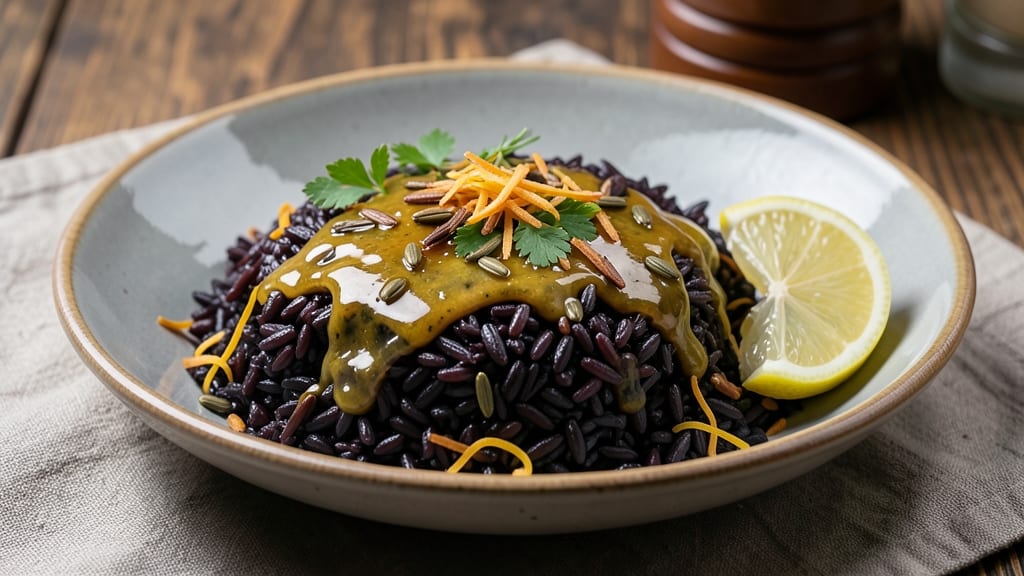
This vegan black rice recipe transforms simple grains into a stunning purple dish with deep, earthy flavor and satisfying texture. The secret lies in proper rinsing and soaking to unlock its natural sweetness while maintaining that signature vibrant color.
Unlike white rice, black rice benefits from a gentle cooking method that preserves its rich nutrients and striking appearance.
What makes this dish special is the contrast of toasted celery seeds for subtle crunch and aromatic depth—no dairy, eggs, or meat needed. The result is a visually striking, nutrient-packed bowl that works as a complete meal or elegant side.
Ready in just 30 minutes, this recipe delivers restaurant-quality results with minimal effort, proving plant-based cooking can be both beautiful and satisfying.
Ingredients for black rice recipe vegan
Simple grains, bold flavors—this vegan black rice recipe delivers restaurant-quality results with minimal effort.
| Ingredient | Amount | Notes |
|---|---|---|
| Black Rice (Forbidden Rice) 🌾 | 1 cup | Uncooked, rinsed thoroughly |
| Water 💧 | 2 ½ cups | Filtered preferred for clarity |
| Celery Seeds 🌿 | 1 ½ tbsp | Toasted until fragrant |
| Extra-Virgin Olive Oil 🫒 | 2 tbsp | For toasting seeds |
| Fresh Ginger 🧅 | 1 tbsp | Grated, for brightness |
| Lemon Juice 🍋 | 1 tbsp | Freshly squeezed |
| Red Curry Paste 🌶️ | 1 tbsp | Vegan-certified preferred |
| Coconut Milk (Full-Fat) 🥥 | ½ cup | Canned, unsweetened |
| Vegetable Broth 💧 | 1 cup | Low-sodium preferred |
| Garlic Cloves 🧄 | 3 cloves | Minced, for depth |
| Sea Salt 🧂 | ½ tsp | Diamond Crystal preferred |
| Black Pepper 🌶️ | ¼ tsp | Freshly ground |
| Sesame Seeds 🌱 | 1 tsp | Toasted for garnish |
| Fresh Cilantro 🌿 | ¼ cup | Chopped, for freshness |
Black rice is the star here, and forbidden rice from Asian markets has the deepest color and richest flavor. Rinse it thoroughly before cooking—this removes excess starch and prevents mushiness. The best brands like Lotus Foods or organic options from Whole Foods maintain their vibrant purple hue. If you can't find it, wild rice blends work as a backup, though the texture differs slightly. Toasting the celery seeds in olive oil until fragrant unlocks their nutty depth—don't skip this step, as it transforms the dish from ordinary to extraordinary.
No celery seeds? Toasted cumin seeds or ground coriander provide similar earthy notes. Fresh ginger is ideal, but powdered ginger at half the amount works in a pinch. The red curry paste should be vegan-certified—Maesri or Thai Kitchen brands are reliable. For extra creaminess, cashew cream can replace coconut milk, though the flavor shifts slightly. Prefer a lighter dish? Swap half the coconut milk for vegetable broth. The sesame seeds add crunch, but toasted pumpkin seeds work beautifully too.
Cooked black rice keeps its vibrant color for 3-4 days in the fridge, though it's best enjoyed within 2 days. For longer storage, freeze portions for up to 3 months. Toasted seeds lose their crunch after 2 days, so store them separately and add fresh when serving. The dish reheats beautifully—just add a splash of water or broth to restore moisture. Double the batch and freeze half for quick meals later; it's perfect for meal prep and reheats like a dream.
Why You'll Love This Recipe
- Five-Ingredient Magic: I swear by this—just rice, water, a pinch of celery seeds, olive oil, and ginger. That’s it. No chopping mountains of veggies or hunting for obscure spices. The black rice does all the heavy lifting with its deep, nutty flavor, and the ginger adds this bright, zesty kick that makes it feel special without the fuss.
- Nutty Earthy Crunch: Between us, the first time I tasted black rice, I was hooked. It’s got this rich, almost toasty depth that regular rice can’t touch. Pair that with the warm, slightly peppery celery seeds and a hit of fresh ginger, and you’ve got a dish that’s bold but balanced—like a hug in a bowl.
- Lunchbox Superstar: Honestly, this is my go-to for meal prep. Cook a big batch on Sunday, and you’ve got a solid base for bowls, wraps, or even a quick stir-fry all week. The rice holds up perfectly, and the ginger-infused oil keeps it from getting bland. (Yes, even on a Tuesday night.)
- Budget-Friendly Luxury: Black rice might sound fancy, but it’s actually cheaper than most grains once you buy in bulk. Plus, the other ingredients—ginger, olive oil, celery seeds—are pantry staples that stretch far. You’re getting restaurant-quality flavor without the markup, and leftovers? They’re even better the next day.
Step-by-step instructions for vibrant purple black rice
Master this vegan black rice dish with rich flavors and nutty celery crunch—simple yet sophisticated.
Toast the Celery Seeds for Depth of Flavor
Heat the 2 tablespoons extra-virgin olive oil in a dry skillet over medium heat. Add the 1.5 tablespoons celery seeds and toast them for 2-3 minutes until they turn a rich golden brown color and release their fragrant aroma. You'll notice the kitchen filling with a warm, nutty scent—this is your signal they're ready. Immediately transfer the toasted seeds to a small bowl and set aside, reserving the fragrant oil in the pan.
This toasting step is crucial—it enhances the celery seeds' natural nuttiness and prevents them from becoming bitter during cooking. Don't overcrowd the pan or they'll steam instead of toast. If the oil starts to smoke, reduce the heat slightly and continue toasting until golden.
Cook the Black Rice to Perfect Tenderness
In the same skillet (with the reserved celery oil), add the 1 cup black rice (forbidden rice) and stir to coat it evenly in the fragrant oil. Cook for 1 minute until the grains become slightly translucent at the edges. Add the 2.5 cups water, 0.5 teaspoon sea salt, and 0.25 teaspoon black pepper, then bring to a gentle boil.
Once boiling, reduce heat to low and cover tightly with a lid. Simmer for 30-35 minutes until the water is completely absorbed and the rice is tender but still holds its shape. You'll know it's done when the grains are plump and the liquid has evaporated—press a grain between your fingers to check for tenderness. If any liquid remains, continue cooking uncovered for another 2-3 minutes to evaporate completely.
Build the Flavorful Coconut-Ginger Sauce
In a separate saucepan, combine the 1 cup vegetable broth, 1 tablespoon red curry paste, 3 minced garlic cloves, and 1 tablespoon grated fresh ginger. Bring to a gentle simmer over medium heat for 3-4 minutes until the mixture becomes fragrant and slightly thickened. Stir in the 0.5 cup full-fat coconut milk and 1 tablespoon lemon juice, then simmer for another 2 minutes until the sauce reaches your desired consistency—it should coat the back of a spoon but still be pourable.
Taste and adjust seasoning with additional sea salt or black pepper if needed. The sauce should balance sweet, spicy, and tangy notes. Remove from heat and set aside, keeping it warm until ready to combine with the rice.
Combine and Finish with Fresh Herbs
Return the cooked black rice to the skillet and gently fold in the coconut-ginger sauce until every grain is evenly coated. The rice should absorb the sauce while maintaining its vibrant purple hue. Stir in the 0.25 cup chopped fresh cilantro and the reserved 1 teaspoon toasted sesame seeds, mixing just until combined. The dish should now have a beautiful contrast of deep purple rice with bright green herbs and golden sesame seeds.
Let the rice sit covered for 5 minutes to allow the flavors to meld together. Serve immediately while still warm, garnished with an additional sprinkle of sesame seeds for extra crunch. The dish should deliver a perfect balance of nutty, spicy, and citrusy flavors with each bite of the purple grains.
Pro Tips For Making Black Rice Recipe Vegan
- SOAK THE RICE: Black rice stays rock-hard if you skip this. Toss it in water for at least 30 minutes—better yet, overnight—and drain before cooking. Trust me, your chew will thank you.
- TOAST THE GINGER: Peel and slice the ginger thin, then dry-toast it in olive oil for 30 seconds until fragrant. This brings out its warmth way better than raw ginger ever could—no, it won’t overpower, but you’ll taste it.
- SIMMER, DON’T BOIL: Once the rice hits the pot, keep heat low and cover tight. If you let it boil hard, the grains turn mushy and lose that deep, jammy texture. Think gentle bubbles, not a rolling boil.
- SALT THE WATER: Yes, even vegan rice needs salt. Add a pinch to the cooking water—it seasons the grains better than tossing salt in later. (I learned this after eating bland rice straight from the pot.)
Make-ahead tips for leftovers
Prep Ahead
Cook the black rice up to 2 days in advance—it actually tastes better as the flavors meld! Store in an airtight container in the fridge, but keep the toasted celery seeds separate to preserve their crunch.
Reheat gently with a splash of water or broth to restore moisture. The vibrant purple color stays stunning when stored properly. ✨
Freezer-Friendly
Double the batch and freeze portions for up to 3 months—this is perfect for busy weeks. Use quart-sized freezer bags (squeeze out air to prevent freezer burn) or airtight containers.
Thaw overnight in the fridge before reheating. The texture holds up beautifully when frozen, though the seeds may lose slight crunch.
Sauce Prep
Make the coconut-ginger sauce 1 day ahead and store it in the fridge. It keeps its rich flavor and thickens slightly overnight—just stir in a splash of water when reheating.
This shortcut saves time on busy days while maintaining deep flavor. The red curry paste's spices mellow slightly, adding complexity. 🌶️
Garnish Strategy
Toast sesame seeds fresh before serving to guarantee maximum crunch. Store them in a small jar at room temperature for up to 1 week. Fresh cilantro should be added just before eating to preserve its bright flavor.
Keep these garnishes separate until the last minute for the best texture and aroma.
Meal Prep Hack
Assemble complete bowls in advance by storing the rice and sauce separately. When ready to eat, just reheat and mix. Add fresh herbs and toasted seeds at the table.
This method keeps everything vibrant and fresh-tasting, perfect for lunchboxes or quick dinners. The colors stay vibrant when components are stored separately. 💫
Reheating Tips
For best results, reheat rice and sauce separately over low heat with 2 tablespoons water or broth to prevent drying. Stir frequently and cover until warmed through. The sauce may separate slightly—just stir vigorously to recombine.
The dish reheats best when not overcooked initially. A splash of lemon juice at the end brightens flavors after reheating.
Nutrition facts
Frequently asked questions
Why does my black rice turn gray instead of purple?
Overcooking or using aluminum pots can cause black rice to lose its vibrant color. Always use stainless steel or glass cookware and simmer uncovered for the last 2-3 minutes to evaporate excess moisture. The purple hue comes from anthocyanins, which fade when exposed to heat too long or metallic cookware.
Can I substitute coconut milk with another plant-based milk?
While coconut milk adds richness, you can use cashew cream (blended soaked cashews) for a neutral base or soy milk for a lighter texture. However, coconut milk's fat content helps carry the spices beautifully—try ½ cup coconut milk + ½ cup broth for a balanced compromise.
How do I make this recipe gluten-free?
This recipe is naturally gluten-free, but check your red curry paste and vegetable broth labels for hidden gluten. Use certified gluten-free versions if needed. The celery seeds and all other ingredients are inherently gluten-free, so no substitutions are required beyond verifying your pantry staples.
What's the best way to serve this black rice dish?
This vibrant rice pairs perfectly with grilled tofu, steamed bok choy, or crispy chickpeas for a complete vegan meal. For a dessert twist, serve warm with coconut yogurt and toasted coconut flakes—the purple grains look stunning in sweet applications too!
Can I use black rice for sushi or rice bowls?
For sushi, rinse the cooked rice thoroughly and mix with rice vinegar, sugar, and salt. For bowls, the coconut-ginger sauce works beautifully with avocado slices, edamame, and pickled veggies. The texture holds up well for both applications when cooked to perfect tenderness.