
Main Courses
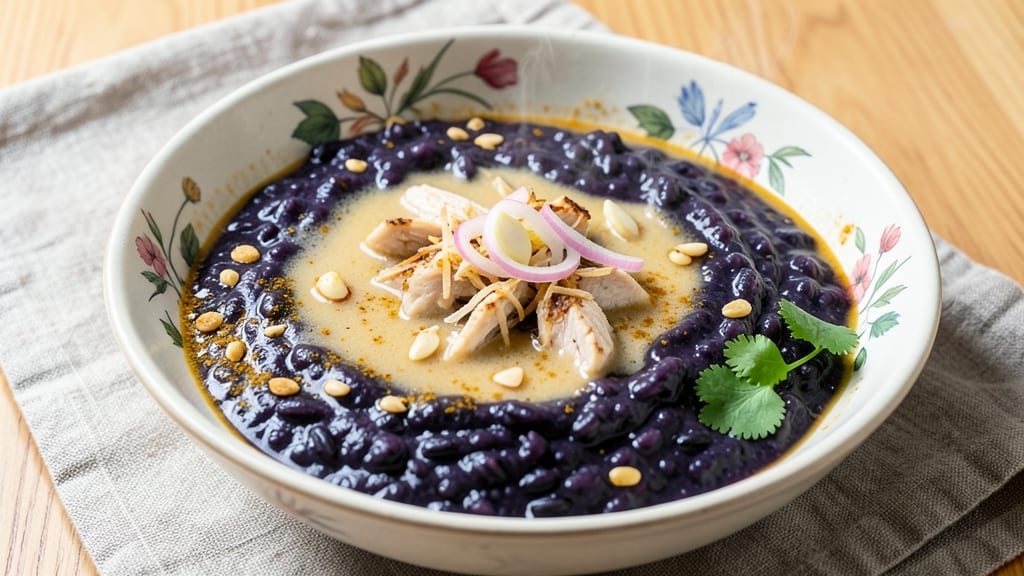
This black rice congee recipe delivers the ultimate in comforting, silky texture with just 30 minutes of hands-off cooking. The deep, earthy flavor of black rice—often called forbidden rice—infuses the broth with natural sweetness and a subtle nuttiness, creating a dish that’s both nourishing and deeply satisfying.
What makes this version special is the turmeric-infused broth, which adds a golden hue and gentle warmth without overpowering the rice’s natural taste.
The secret to achieving that signature velvety consistency lies in proper soaking and simmering. Unlike traditional congee, black rice requires a longer initial soak to soften its firm grains, but the result is worth the patience—a luscious, almost custard-like texture that clings to every spoonful.
Once mastered, this recipe becomes a go-to for quick, restaurant-quality comfort food that’s equally perfect for breakfast or a light dinner.
Ingredients for black rice congee
Black rice, ginger, and turmeric blend into a velvety congee that's restaurant-quality in 30 minutes.
| Ingredient | Amount | Notes |
|---|---|---|
| Black Rice (Forbidden Rice) 🌾 | 1 cup | Uncooked, rinsed thoroughly |
| Chicken Broth 🍲 | 4 cups | Homemade or high-quality store-bought |
| Turmeric Powder 🌿 | 1 tsp | Freshly ground preferred |
| Fresh Ginger 🧄 | 2 tsp | Grated, aromatic quality |
| Garlic Cloves 🧄 | 3 cloves | Minced, fresh preferred |
| Shallots 🧅 | 2 whole | Thinly sliced, 1 tbsp total |
| Coconut Milk 🥥 | ½ cup | Full-fat for creaminess |
| Sesame Oil 🫒 | 1 tbsp | Toasted, for aroma |
| Light Soy Sauce 🍶 | 1 tbsp | Kikkoman preferred |
| Honey 🍯 | 1 tbsp | Raw preferred for purity |
| Scallions 🧅 | 3 whole | Thinly sliced, for garnish |
| Toasted Sesame Seeds 🌱 | 1 tsp | For garnish, store-bought or homemade |
| Salt 🧂 | ½ tsp | Diamond Crystal preferred |
| White Pepper 🌶️ | ¼ tsp | Freshly ground for warmth |
The black rice is the heart of this dish—forbidden rice from Asian markets delivers the deepest flavor and richest color. Look for whole grains, not pre-cooked or dyed varieties, as they lack the authentic nuttiness. Trader Joe's carries a solid option, but specialty stores often have superior quality. Soak the rice overnight in cold water to soften its firm texture, then rinse thoroughly before cooking. The turmeric should be freshly ground for maximum potency—Penzeys or bulk bins at natural food stores are ideal sources. Avoid pre-ground spices, which lose their vibrant color and potency quickly.
No fresh ginger? Powdered works at half the amount, though it lacks the aromatic depth. Substitute shallots with 1 tbsp finely chopped red onion if needed, but the shallots add a delicate sweetness that's hard to replicate. For coconut milk, full-fat canned versions provide the best creaminess, while lighter versions may make the congee too thin. The sesame oil should be toasted—look for the dark, nutty kind in Asian markets, not the light, neutral variety. If you're avoiding honey, maple syrup or agave works in a 1:1 ratio, though honey's floral notes complement the dish beautifully. Pre-minced garlic from jars lacks freshness, so chop your own for the best flavor.
This congee tastes even better the next day as flavors meld. Store leftovers in an airtight container in the fridge for up to 4 days. For longer storage, freeze portions in ice cube trays—thaw overnight in the fridge and reheat gently. The texture will be slightly thicker after freezing, so add a splash of broth when reheating. Garnish with scallions and sesame seeds just before serving to preserve their freshness. For a quicker version, use pre-soaked black rice from Asian markets, though homemade always tastes superior.
Why You'll Love This Recipe
- No-Fuss Simmer: I swear by this—just toss in the black rice, broth, and a pinch of turmeric, then let it bubble. No stirring every two minutes, no watching like a hawk. The rice softens into that perfect, creamy texture all by itself while I sip my coffee.
- Earthy Magic: That deep, nutty aroma from the forbidden rice? It’s like a warm hug in a bowl. The turmeric gives it a golden glow, and the garlic-ginger combo—chef’s kiss—adds a punch that lingers without overpowering. It’s the kind of flavor that makes you pause mid-bite.
- Leftover Goldmine: This congee actually improves the next day. The flavors meld even deeper, and reheating takes seconds. Pack it for work, freeze portions, or serve it cold with chili oil—it’s my go-to for lazy mornings or impromptu potlucks. No waste, all win.
- Budget-Friendly Luxury: Black rice might sound fancy, but a little goes a long way—one cup stretches into four servings. Chicken broth is cheap, ginger and garlic are pantry staples, and turmeric? A dollar’s worth lasts forever. Fancy ingredients, humble cost. My wallet thanks me every time.
Step-by-step instructions for black rice congee
Transform simple ingredients into velvety black rice congee with deep earthy tones and warming spices.
Prepare the Black Rice Base
Rinse the 1 cup Black Rice (Forbidden Rice) thoroughly under cold water until the water runs clear—this removes excess starch that can make your congee gummy. Place the rinsed rice in a heavy-bottomed pot and add the 4 cups Chicken Broth. The broth should cover the rice by about 1 inch.
Bring to a gentle boil over medium-high heat, then immediately reduce to the lowest simmer possible. You're aiming for a barely perceptible bubble at the surface—this slow cooking is what transforms rice into congee. Stir occasionally to prevent sticking, especially during the first 20 minutes when the rice absorbs the most liquid.
Build the Aromatic Foundation
While the rice simmers, heat 1 tablespoon Sesame Oil in a small saucepan over low heat. Add the 2 whole Shallots (thinly sliced), 3 cloves Garlic Cloves (minced), and 2 teaspoons Fresh Ginger (grated). Cook for 3-4 minutes until the shallots soften and become translucent—this prevents them from overpowering the delicate congee flavor.
Remove from heat and stir in 1 teaspoon Turmeric Powder and 0.25 teaspoon White Pepper. Let this aromatic blend cool slightly while you prepare the coconut milk mixture. The turmeric will give your congee its signature golden hue, while the white pepper adds subtle warmth without overpowering the ginger's brightness.
Finish with Creamy Depth
After the rice has simmered for 30 minutes, it should have broken down into a thick, porridge-like consistency. Stir in the 0.5 cup Coconut Milk and 1 tablespoon Honey, then return the heat to low. Simmer gently for another 10 minutes, stirring occasionally, until the congee reaches your desired thickness—it should coat the back of a spoon but still be spoonable.
Season with 0.5 teaspoon Salt and 1 tablespoon Light Soy Sauce, adjusting to taste. The soy sauce adds umami depth while balancing the sweetness of the honey. Taste as you go—this is where you fine-tune the flavor profile. If the congee thickens too much, add 1-2 tablespoons of warm water to reach your preferred consistency.
Garnish and Serve Warm
Ladle the congee into serving bowls and immediately garnish with 3 whole Scallions (thinly sliced) and 1 teaspoon Toasted Sesame Seeds. The scallions add freshness that cuts through the richness, while the sesame seeds provide a nutty crunch. Serve immediately while still warm—this congee is best enjoyed fresh from the pot when the textures are at their peak.
For the ultimate comfort experience, pair with a soft-boiled egg or steamed dumplings. The contrast of temperatures and textures makes each bite even more satisfying. The black rice's nutty depth, combined with the warming spices and creamy coconut milk, creates a truly comforting bowl that's perfect for any season.
Pro Tips For Making Black Rice Congee
- Rinse the Black Rice Twice: Black rice is sticky—like, sticky—and unrinsed grains will clump into a gluey mess. Split the rinse into two steps: first under cold water to remove surface starch, then a quick swish in warm water to soften the hull. I learned this the hard way when my congee turned into a thick, unappetizing paste.
- Toast the Turmeric First: Turmeric powder burns faster than you’d think, and scorched spices taste bitter. Bloom it in the broth before adding ginger or garlic—just sprinkle it in and let it sit for 30 seconds while you prep the rest. This guarantees a warm, earthy flavor without any off-notes.
- Simmer Low and Slow: Black rice congee needs patience—like, all day patience. After the initial boil, drop the heat to the lowest setting possible and let it bubble gently. I used to rush it, and the result was always grainy or undercooked. Trust the process; it’ll turn creamy on its own.
- Use Cold Broth for Finish: The last 15 minutes make or break the texture. Stir in cold chicken broth to stop the cooking abruptly—this keeps the grains intact and prevents mushiness. It’s a small step, but it guarantees that perfect, al dente bite in every spoonful.
Regional styles of this dish
Chinese Cantonese Style
The Cantonese version of black rice congee, known as hei mi fan, is traditionally served with a soft-boiled quail egg (dan bing) and pickled vegetables (ya cai).
The broth is often enriched with pork ribs or chicken feet for extra collagen, creating a richer, jelly-like texture. I like to add 1 cup shredded pork belly during the final 10 minutes of simmering for authentic depth.
Garnish with crispy fried shallots instead of sesame seeds for that signature Cantonese crunch. 🥚
Japanese Okayu-Inspired
In Japan, this dish would be called kuromai okayu, where the focus shifts to umami-forward ingredients. Replace chicken broth with dashi (made from kombu and bonito flakes) and add 1 tbsp mirin instead of honey.
Stir in 1 tsp grated daikon radish during the final simmer for a subtle sweetness. Top with thinly sliced scallions, toasted nori strips, and a drizzle of yuzu kosho for a bright, citrusy kick. This version is lighter but equally comforting. 🍶
Thai-Inspired Khao Tom
Thai black rice congee (khao tom) incorporates coconut milk as a primary ingredient, making it naturally creamy. Add 1 stalk lemongrass (bruised) and 1 kaffir lime leaf (torn) to the broth for aromatic depth.
Sweeten with palm sugar instead of honey and finish with crushed peanuts, Thai basil, and a squeeze of lime. The Thai version is often served with grilled pork ribs on the side for dipping. This tropical twist adds a vibrant, herby complexity. 🌿
Vietnamese Cháo
Vietnamese black rice congee (cháo gạo đen) often includes pork liver or chicken heart for a nutrient-packed boost. Simmer the rice with 1 cup pork broth instead of chicken, then stir in 1 tbsp fish sauce and 1 tsp sugar during the final 5 minutes.
Garnish with fried garlic, bean sprouts, and a drizzle of chili oil for a balance of savory, fresh, and spicy flavors. This version is heartier and perfect for breakfast or post-workout meals. 🌶️
Modern Fusion Twist
For a contemporary take, blend ½ cup pumpkin puree into the coconut milk before adding it to the congee. Stir in 1 tsp smoked paprika and top with crumbled chorizo, avocado slices, and a dash of hot honey.
This fusion version works brilliantly for brunch—it’s sweet, smoky, and packed with texture. The smoky chorizo adds a depth that pairs perfectly with the earthy black rice. 🔥
Nutrition facts
Frequently asked questions
Why does black rice congee have a deeper color than regular congee?
Black rice contains high levels of anthocyanins, the same antioxidants that give blueberries their color. When simmered, these compounds release into the broth, creating that rich, almost purple-black hue. The turmeric also enhances the golden tones, making the final dish visually striking and packed with antioxidants.
Can I make black rice congee without coconut milk?
Yes! Skip the coconut milk and use an extra ½ cup chicken broth> instead. For creaminess, stir in 1 tablespoon neutral oil> (like vegetable) during the final 5 minutes> of simmering. The texture will be lighter but still comforting. If you prefer dairy, substitute with ½ cup heavy cream> for a richer result.
How do I fix congee that's too thick or too thin?
For thick congee, stir in 1-2 tablespoons warm water> or broth until smooth. For thin congee, remove from heat and let it sit for 5-10 minutes>—it will thicken naturally. If it's still too runny, simmer uncovered for 2-3 minutes> to reduce the liquid. The key is patience—black rice needs longer simmering than white rice to reach the perfect texture.
Is black rice congee gluten-free?
This recipe is naturally gluten-free as long as you use gluten-free chicken broth and soy sauce. Double-check labels on all ingredients, especially broth and soy sauce. For extra safety, substitute with tamari> (a gluten-free soy sauce alternative) and ensure your rice is certified gluten-free. The dish remains delicious while being safe for gluten-sensitive diets.
Can I make this ahead of time?
Congee tastes even better the next day as flavors meld. Store in an airtight container> in the fridge for up to 4 days>. Reheat gently on low heat, stirring frequently, and add a splash of warm water if needed. For longer storage, freeze portions in ice cube trays**>—thaw overnight in the fridge for the best texture. The reheated version is perfect for quick breakfasts or light dinners.